
 10 min read
 10 min read
Florence Thurmes has been the general director of the Chemnitz Art Collections for almost a year; one of the largest municipal art collections in Germany. The native Luxembourger with professional experiences in Dortmund and Dresden took on an ambitious legacy in a divided city. Chemnitz will be the European Capital of Culture next year and has already shone through in recent years with events such as the city-wide exhibition "Gegenwarten" or the art festival "Begehungen". On the other hand: Hardly any other major city experiences the rightward shift so threateningly. The former head of the art collections, Frédéric Bußmann, was beaten up by neo-Nazis on his way home. Furthermore: The national savings pressure has recently also affected the Chemnitz city politics. Luise Wolf met Florence Thurmes in Chemnitz on November 27 to learn how the 43-year-old is dealing with the challenges.
Luise WolfMrs. Thurmes, what can we expect from the European Capital of Culture 2025?
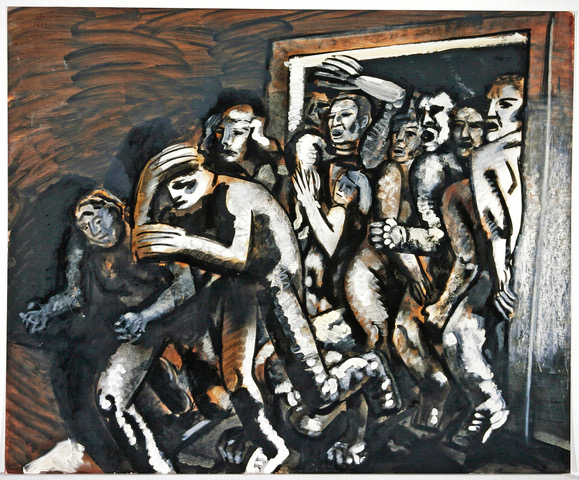
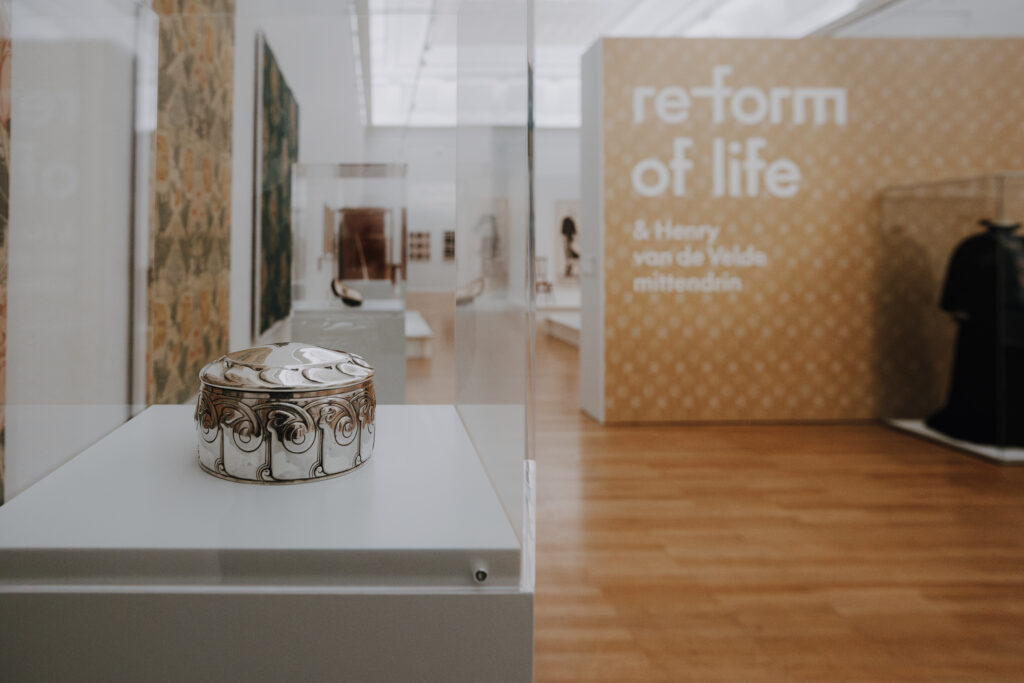
Florence ThurmesWe are looking forward to our highlight exhibitions "European Realities" in the spring – on the occasion of the European Centenary of New Objectivity – and "Edvard Munch. Angst" in the summer of 2025. However, our inaugural exhibition is dedicated to the architect and designer Henry van der Velde, he was a European networker. He is more well known for his Art Nouveau-style design of textiles and furniture. Here, however, we focus on his textile design and furniture designs and show that he was influenced by the Arts and Crafts Movement He was influenced by the Bauhaus movement in Weimar and laid the foundations for it. He also designed the local Esche Villa and suggested that the industrialist of the same name invite Edvard Munch to Chemnitz – and he did so.
Luise WolfThey recently told the regional press, "A 'shout' would be good for Chemnitz". Are you optimistic that this will work?
Florence ThurmesYes. The three paintings in Oslo are no longer being loaned out because two of them have been stolen. But there are still various editions of graphics of this motif available. However, that takes time, because we have to request one after the other.
Luise WolfYou have another focus for the exhibition "Angst", don't you? Namely "Die Einsamen".
Florence ThurmesIt was a wonderful stroke of luck that we managed to do this; yes. The first director of the art collections, Friedrich Schreiber-Weigand, bought the painting at the time for the Chemnitz Museum. However, it had to be sold to Norway during the Nazi era and eventually ended up in the USA. It was not subject to confiscation during the "degenerate art" era, but it did not fit into the Nazi ideology. Now, after 90 years, it is being shown in Chemnitz for the first time, or rather in Germany or – one could even say – Europe.
Luise WolfWe visited the Chemnitz Open Space today – before our conversation here at the Art Collections at the Theaterplatz – which is a temporary space within the Art Collections. What is the purpose of this place?
Florence ThurmesThe Open Space was launched in 2018; a time that was difficult for Chemnitz with the large marches of right-wing populists and neo-Nazis. The space was founded on the initiative of my predecessor for the city community. Anyone can apply here to organize an exhibition or event; this works independently of the artistic program of the collections. Next year, however, we will be exhibiting something on the subject of fear as part of "Edvard Munch".
Luise WolfWhat makes the art collections in Chemnitz different from those in West Germany?
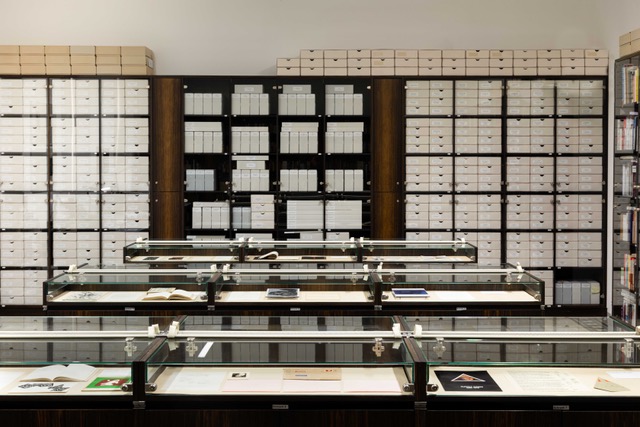
Florence ThurmesWhen looking at the period after 1945, one finds massive differences when it comes to artists from the GDR. The West is lagging behind – if I may say so. We house here, for example, the archive of the avant-garde artist Carlfriedrich Claus or the estate of the sculptor Karl Clauss Dietel. We have Clara Mosch, the artist group that was active since the 1970s, or the entire graphic oeuvre of the painter, graphic designer and sculptor Wolfgang Mattheuer. On our part, of course, we also have to work on making these artists more known in West Germany and internationally. After the Cultural Capital Year 2025, we want to design exhibitions that can be moved. As for the financial aspects, there are also structural differences between the museums. Less than ten percent of the foundations are located in East Germany. Among the DAX companies, no company has its headquarters here. There are therefore very distinct differences, and you can also see them in the museum. Also in terms of personnel.
Luise WolfHer predecessor, Frédéric Bußmann, told the Sächsische Zeitung after his departure in August 2023: "The team works to the point of exhaustion; we would need twice as many female employees." I assume that the situation has not improved.
Florence ThurmesAs far as personnel is concerned, we are not well-equipped. We all need to dedicate ourselves to this intensive period, as the European Capital of Culture is just around the corner. From 2026 onwards, we will have to consider how to counteract this deficit, for example by extending exhibition periods.
Luise WolfSince the municipal council elections on June 9 of this year, 18 of the 59 seats in the city council have gone to right-wing extremist members of AfD and Pro Chemnitz or Freie Sachsen. Are there concerns about how this could affect cultural policy?
Florence ThurmesWe are definitely already in a financially difficult situation right now.
Luise WolfIn 2020, an exhibition about Antifa caused a lot of attention. Would an Antifa exhibition be possible again today?
Florence ThurmesWe currently live in a time where art is very activist-oriented and it is difficult to separate artists and their work from one another. At the same time, all museums must think more deeply about who they exhibit and why they exhibit these works. However, I generally have different interests than my predecessors. Classicism, for example, is an important topic for me and for Chemnitz. Very little has been done here so far, even though Chemnitz was a city of workers. And I also want to show female perspectives across the eras, thereby setting a contrast to patriarchal structures.
Luise WolfBußmann also spoke to the Sächsische Zeitung about the task of museums to foster dialogue. Initially, he believed that there was a willingness to talk, but then he said, "After five years, I wonder who actually wants to talk with whom." Can you understand his statement?
Florence ThurmesWe all have to ask ourselves this question today: how far should the dialogue go and where should we interrupt it, and do we want to do it? Because if we do, then we give up hope. That we do not have the discourse with right-wing extremists – and I always say this too – in the museum is clear, because that puts us in the illegal sphere. But in between there is a wide spectrum. I believe that we should keep the communication channels open for as long as possible. We must constantly motivate ourselves to do this and find that willingness within ourselves. But it is important that museums continue to offer a platform for a wide range of city and rural society. As educational institutions, we have a trust advance in society, and we must not let that be lost. It is important that museums highlight different aspects and bring people into conversation with each other.
Luise WolfFrédéric Bußmann was someone who showed commitment. He was awarded an honorary prize for his civic engagement. But the situation is now very serious.
Florence ThurmesThe situation has been serious for a long time. When I worked in Dresden, it was already very serious. There, one stands even more under the political spotlight than here. [Note by the editor: Florence Thurmes was the head of the program department of the State Art Collections of Dresden from 2016 to 2022. From 2014 to October of this year, the extremist Pegida demonstrations took place in Dresden.]
Luise WolfBußmann also said that "definitely too little has been done by the organizers of the cultural capital" regarding the right structures here in the city. How do you see that?
Florence ThurmesThat is a difficult question, because art and culture cannot solve the work of politics and the police. In terms of content, there are various strands of the Culture Capital initiative, such as "Capacity Building," where we address exactly these issues. I have been experiencing for a year that the city and the organizers are very committed and engaged in these topics. However, I believe that the quote I mentioned is not a conclusion about what Bußmann has achieved here.
Luise WolfOn his way home from the museum through the Konkordiapark, Bußmann spoke to a group of five young people who were shouting "Sieg Heil!" and making the Hitler salute. After that, they beat up and attacked Bußmann, who was able to escape. This is of course an event that one has to think about in your position.
Florence ThurmesNo, not really. Because that didn’t happen to him in that position; he was just a civilian. He wasn’t beaten because he was the director of the art collections, but because he showed civil courage – and that really deserves high praise. But I’m not projecting this event onto my position. Of course, I’ve considered it, especially from the perspective of being a woman: would I go for a walk in the park in the evening?
Luise WolfWould you?
Florence ThurmesNo.
Luise WolfBecause of the rightists or because of men in general?
Florence ThurmesGenerally speaking. And not only in Chemnitz, but in numerous other cities and countries as well.
Luise WolfYes, I don't either. In that sense, I understand you, of course.
Florence ThurmesAs a woman, you have learned to walk through a city differently.
Luise WolfWhere do you still notice the patriarchal structures in this city that you mentioned earlier?
Florence ThurmesIn the museum’s historical program and in the history of the city, I notice them very strongly, also in the program of the European Capital of Culture year. Marianne Brandt or other female artists could have been featured as well. The female positions are very underrepresented in our museums. The proportion is – similar to the situation throughout Germany – always only 10 to 15 percent. In parallel, the acquisition rate of art collections is going down to zero as part of the austerity policy. That means that we cannot create a realistic cross-section of a specific artistic era. And that is the situation alone with regard to women and men; we’re not even talking about non-binary positions.
Luise WolfWhat do you expect from the politics of the coming years?
Florence ThurmesI wish that politics would not only focus on the mandatory tasks – youth and social affairs are undoubtedly the most important, but culture must be recognized as a place of social exchange and extracurricular learning, as a place where one can offer people something positive. A good example of this is: In Canada, people with long COVID or burnout are prescribed museum visits as part of therapy. I hope that politics will value the participatory work of museums and fight to ensure that it can be continued.
Luise WolfIs there any concern that there could be censorship in the arts?
Florence ThurmesThere is always concern. When you look at Hungary or Poland before the last election – works by various female artists who were uncomfortable were put into storage and no longer shown. That can always happen. But we have to fight against it.
Among the Chemnitz Art Collections
The Kunstmuseen Krefeld are dedicating the first retrospective in Germany to Charlotte Perriand’s multifaceted and astonishingly contemporary work.
 7 min read
World Heritage Site Völklinger Hütte: Spectacular Son-et-Lumière Art
 1 min read
The exhibition "Six Five Four Three Two" featuring works by the New York-based artist Josephine Meckseper at the Heppenheim Art Society.
 9 min read