
 6 min read
 6 min read
Visiting Minh Duc Pham
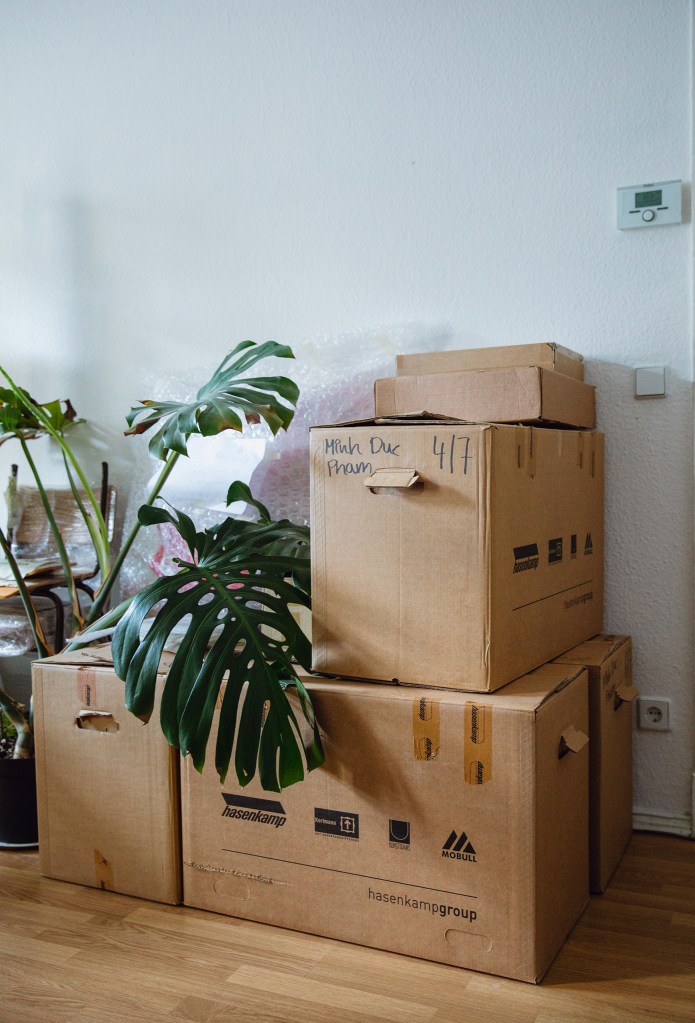
I open the apartment door and it locks at 45 degrees – the entrance area is full of boxes. Minh Duc Pham’s small apartment in an old building fills up as quickly as his portfolio, and his studio is no longer enough. "Still no bigger project found?", I ask. "Unfortunately not. And this year, ten new works are definitely coming."
In the study room next to the kitchen, Pham sits at his Eiermann table. Opposite him is a wall of countless tropical green and flowering plants. After receiving a warm welcome, slippers, and a cup of coffee, he immediately begins to tell me about his latest works and recent achievements: exhibition requests, scholarship offers, prize nominations, invitations and acquaintances, fee negotiations, sometimes good and sometimes bad, and his own time management, which becomes increasingly difficult with all the orders. Two solo exhibitions and at least five group exhibitions are scheduled for this year. In 2024, he exhibited, among other places, at the Kunsthaus Dresden, Haus der Kulturen der Welt, and the Museum of Asian Art in the Humboldt Forum in Berlin, where he will curate a special exhibition this year. Wherever there is currently talk about the topics of queerness, migration and contractual work, Pham is asked to be a guest artist, performer or speaker.
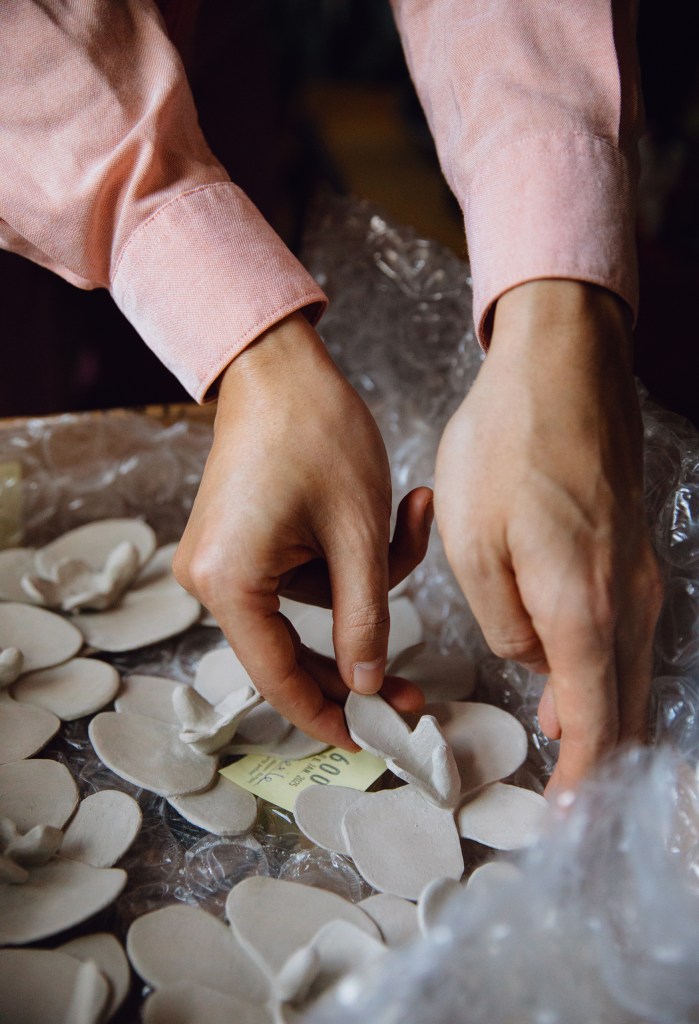

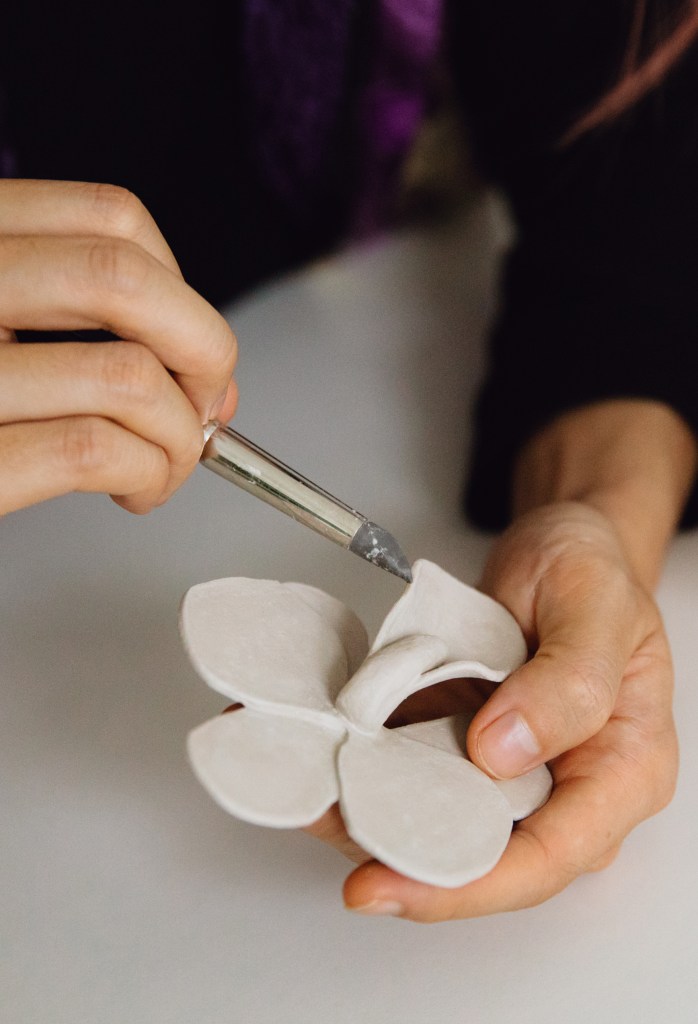
Pham, who is now 33 years old, speaks with a certain gravitas as if it were a homework assignment. These are work reports; a habit that has to do with his upbringing. Pham is the first son of Vietnamese contract workers from the Saxon Vogtland region. After his parents lost their residency status and employment status after the turn of the century, they had to become self-employed in order to remain in Germany, and opened a small shop. It was a time characterized by open racism on the streets and extreme unemployment. Minh Duc Pham grew up with the teachings, "you have to be twice as good as the others" and "you must not stand out"—a paradox. His family was the only Vietnamese-origin family in their small town. Pham was the only Vietnamese-looking child in his school. And not a single teenager in his school was openly queer. It simply seemed "not self-evident to be there at all." Pham still feels this way today, among other things in the form of a fear that "everything will just stop." He often fears that he is just a "one-day visitor." In contrast, he works with the instruments that his parents gave him: with excessive diligence and kindness.
Pham studied exhibition design and scenography at the HfG Karlsruhe and the UdK in Berlin. In the visual arts and performance, he ultimately found not only a socially accepted space to show himself and his body. He was able to have a say in how this was perceived; an "attempt to reclaim my body". His early works from 2016 onwards therefore set out to deconstruct the other's gaze; the fetishizing, exoticizing or discriminatory gaze. He created queer clothes, flower installations, fabric sculptures and action photographs.
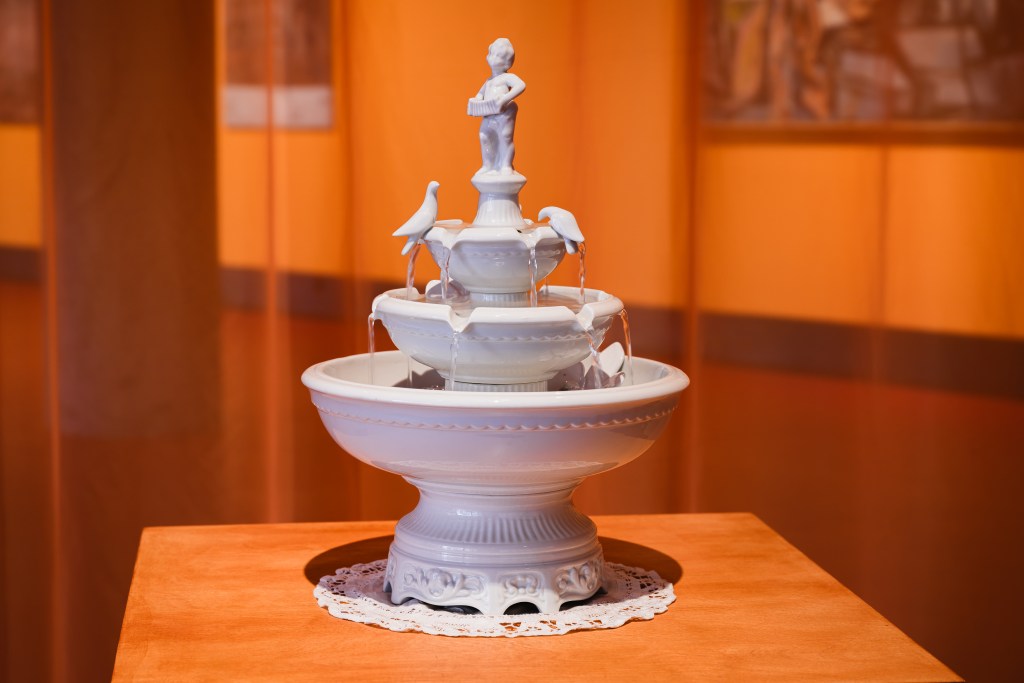
Initially, Pham’s art was about self-acceptance. In 2018, that changed as he began to delve deeper into the social and political conditions under which he grew up. He began to research Vietnamese culture and the (East) German immigration history and noticed that art gave him the opportunity to address even difficult and unspoken experiences of his parents" generation. Last year, he showed a work at the HKW in Berlin in the exhibition "Echoes of the Brother Nations" that addressed the forced abortions among Vietnamese contract workers in the GDR: A porcelain fountain exudes lily scent, invites one to linger, and a conversation between Pham and his never-born brother can be heard. In the fountain, four handmade white orchid blossoms made of ceramic are floating. They symbolize the memories of the siblings. A similarly intimate work was already presented by Pham the year before in the exhibition "Re-Connect.” Art and Struggle in the Homeland" at the Museum of Fine Arts Leipzig. This installation consisted of 56 empty urns made of sky-blue-white-morphed ceramics. Here, Pham linked the silent mourning and the lack of social reflection on the forced abortions to the countless victims of the Vietnam War.


Minh Duc Pham’s works are delicate, sensual, and complex. They criticize but do not complain; they point out but do not single out anyone. Their surface is glossy-smooth, soft, or sweet; their deeper meaning is often moving and painful. They contrast with thinking in grand interpretations and categories of identity—East German, Vietnamese, queer. His works illustrate that such categories tell little about the lived reality of people. And for him, this reality is not just material for creating artistic products. Too often he himself has been in this situation; invited to participate in quotas or as representatives of a desired category. Pham does things differently; he captures the stories of those affected with great sensitivity and without preconceived expectations.
In contrast, today the right-wing and far-right groups in Saxony are taking to the streets in large numbers and loudly. Their marches and slogans at last year's Christopher Street Days caused fear. Pham was at some of them. The right-wing counterprotests were organized by the "Third Way," a far-right party that calls for "returning foreigners" and claims there is a "threat of mass death." When Pham told me about the CSD in Görlitz last year, I was concerned and said he had to be careful what he wore. He replied: "Next time I'll wear a dress!"
Pham is also concerned. Earlier this year it was revealed that SPD MP Helge Lindh received a threatening letter stating: "We will get you, trust us. Nowhere are you safe." It was signed "NSU 3.0". Pham says, "When the term NSU 3.0 appeared, there was a concrete physical threat. In this social climate, that is not at all unlikely." But he is combative and wants to become more visible. But what if this sentiment translates into realpolitik? Vietnamese and queer might then be categories that will again take up more space in Pham's life. He barely notices the savings in the arts and culture sector. But in some places, the right-wing discourse is already infiltrating cultural programs; art is supposed to be unpolitical and simply "beautiful" there. How can one still make art, Minh Duc Pham? "Back to the Trojan Horse strategy." So art that is apolitical on the surface but critical on the inside. It is a strategy that was widely practiced in the GDR; in a sense, it was the dress under the suit.
The Kunstmuseen Krefeld are dedicating the first retrospective in Germany to Charlotte Perriand’s multifaceted and astonishingly contemporary work.
 7 min read
World Heritage Site Völklinger Hütte: Spectacular Son-et-Lumière Art
 1 min read
Alex Katz at the Tübingen Art Gallery
 8 min read