 8 min read
 8 min read
Some artists do not quite fit into the stylistic categories into which they are nevertheless pigeonholed, because there seem to be no better ones to offer. However, when Alex Katz is described as a "precursor" or "pioneer" of Pop Art, this at best attests to the increasing use of the copy-and-paste process or Artificial Intelligence, which reproduces what circulates in the digital space without being able to form its own judgment. When American Pop Art began to develop around 1962, Katz already had several gallery exhibitions behind him, but they received little attention. His early works do not yet possess the powerful colors that later led him closer to artists like Andy Warhol or Roy Lichtenstein. A portrait of the choreographer Paul Taylor from 1959, now on display at the Tübingen Art Hall, shows him as a simple, face-on figure in white clothing against a monotonous grey background. One can speak of a simplification of form, but not of Pop Art.
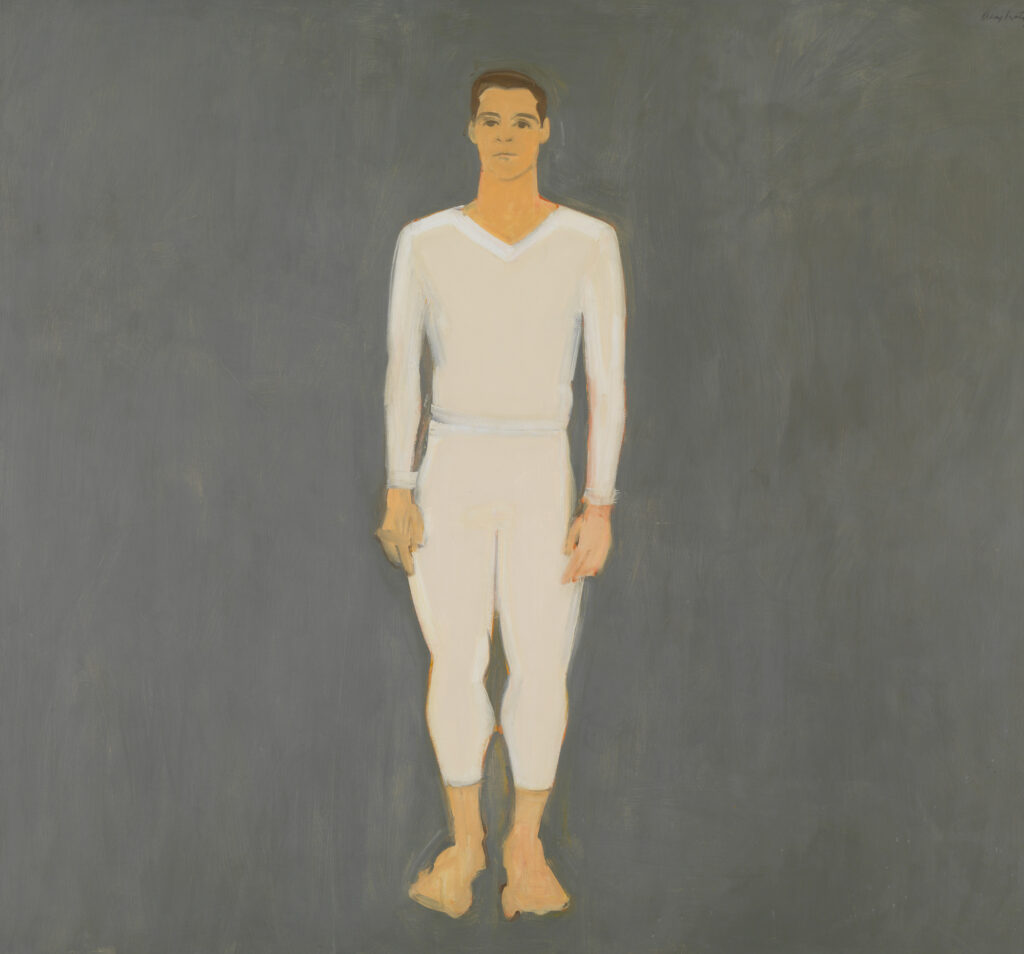
The Kunsthalle is showing the portrait not to highlight the artist’s stylistic development, but as part of a biographical introduction. As long as Katz could not live from his art, he designed costumes and sets for that very Paul Taylor. Katz, like so many New Yorkers, comes from a Jewish family that migrated from Eastern Europe. His father owned a factory that had been lost to the Russian Revolution. His mother was an actress. In New York, she performed in Yiddish and Hebrew plays, but then took a break until her sons grew up. The family is part of the New York cultural elite. Katz grew up surrounded by literature, theater, and art. He studied at Cooper Union in Manhattan, just like George Segal, who was also shown in pop art exhibitions when plastic works were sought. His son Vincent writes poetry and once curated a major exhibition at the Reina Sofia Museum in Madrid on Black Mountain College, the birthplace of modern American art where Bauhäusler met American artists such as John Cage and Robert Rauschenberg.
In front of the portrait of Paul Taylor, the entire wall is covered with a photo of Times Square. "Where Did Our Love Go" echoes through the space, the first major hit of the Supremes, the soundtrack to the short film Square Times of the director Rudy Bucrckhardt, who is friends with Katz and documents the vibrant life in the center of Broadway. In 1977 Katz was commissioned to paint 23 six-meter-high female portraits that looked down on the square from billboards high up in the sky.
"When I looked at the work of Alex Katz, the question that particularly interested me was how the movement came to be in his paintings," explains Nicole Fritz, the director of the Kunsthalle. With a retrospective at the Whitney Museum of American Art in 1987, she explains, it began "when Katz re-adjusted his painting to the European Impressionist style and painted more freely. That interested me." Two exhibitions in 2024 at the Museum Brandhorst in Munich – from which the portrait of Paul Taylor comes – and at the Fondazione Giorgio Cini in Venice, from which four works are now on display in Tübingen, provided an opportunity to approach him. "I was introduced to him," says Fritz, "and we developed a concept so that he agreed to support me in the first presentation of his late work in Germany." She visited him in his studio in downtown Manhattan, where he has been working since 1968. That was two years ago.
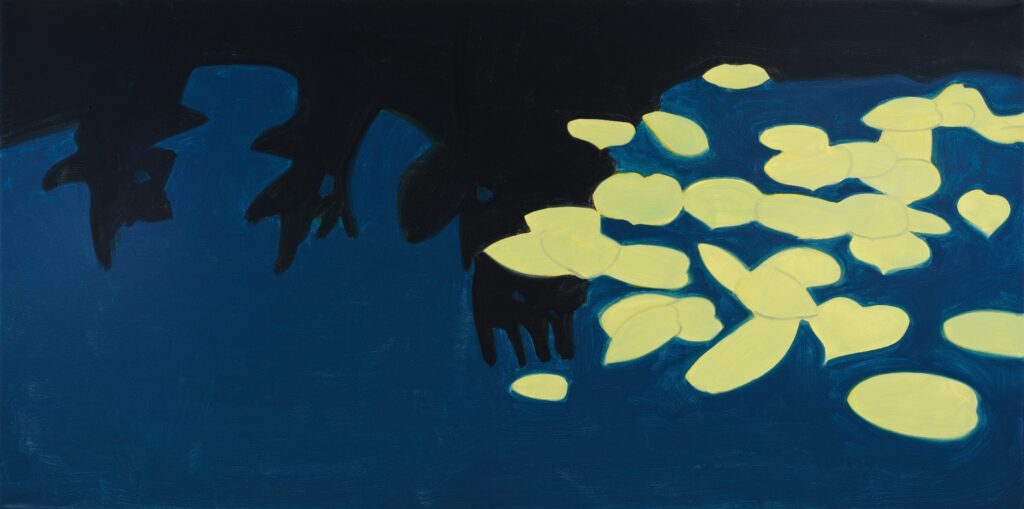
The connection to the Impressionists is clearly shown in two paintings that bear the title Homage to Monet "Monet perceives colors that others normally do not see," says the artist. "He captures the overall picture while other painters get lost in details." This is also characteristic of Katz himself, who consciously avoids too direct references. The two works employ a strong simplification and extreme color contrasts. Bright yellow oval shapes, devoid of any internal structure, float in front of a uniformly dark background, in which only upon closer inspection do darker contours become visible: shadows of trees that reflect in the lake, but which seem to grasp hold of the image like hands.
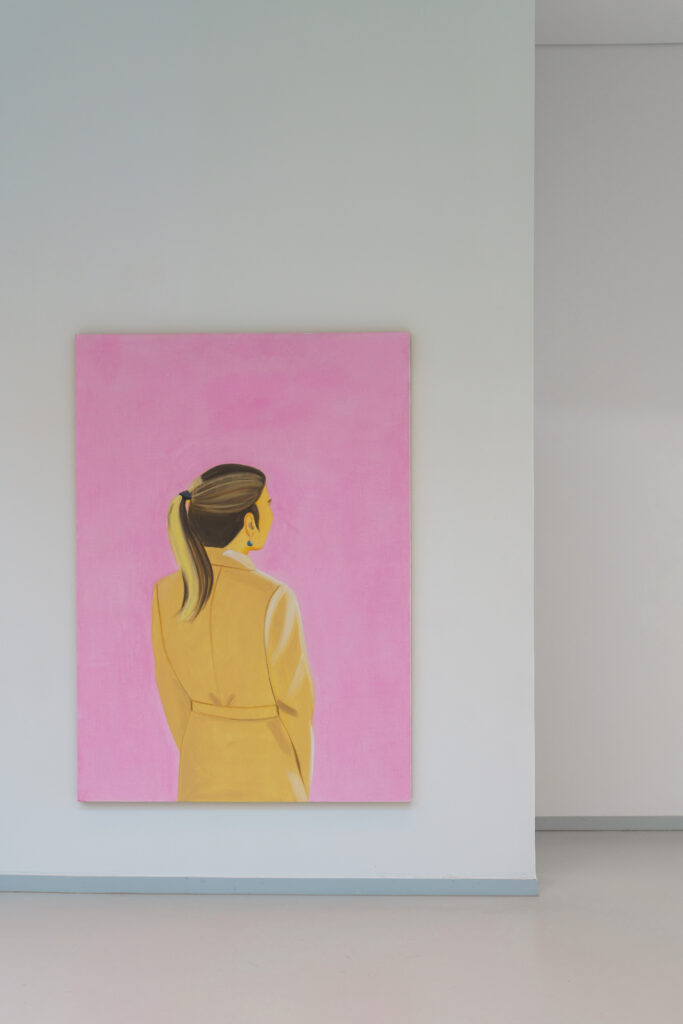
The movement that Fritz addresses arises in a very similar way to the Japanese ukiyo-e woodblock prints from which the Impressionists themselves drew inspiration: asymmetries, cut-out shapes, reflections in water; the spatial depth suggests, although objectively everything is quite flat. "From the fluidly perishable world" Ukiyo-e Translated, and that is exactly what Katz is interested in: moments, snapshots, sensory impressions, capturing life in its transience. He paints flowers that soon wither, fleeting light impressions in the evening twilight; the changing seasons. Movement is also evident in body movements and sequences of cut-off glances at the same person. The backgrounds are often monochromatic, little has changed compared to Paul Taylor’s portrait. The color speaks: New Pink A portrait of a woman is shown obliquely from the rear against a background of bright pink. The Coca-Cola Girls One of the screen printing series presents their white swimsuits in bright red.
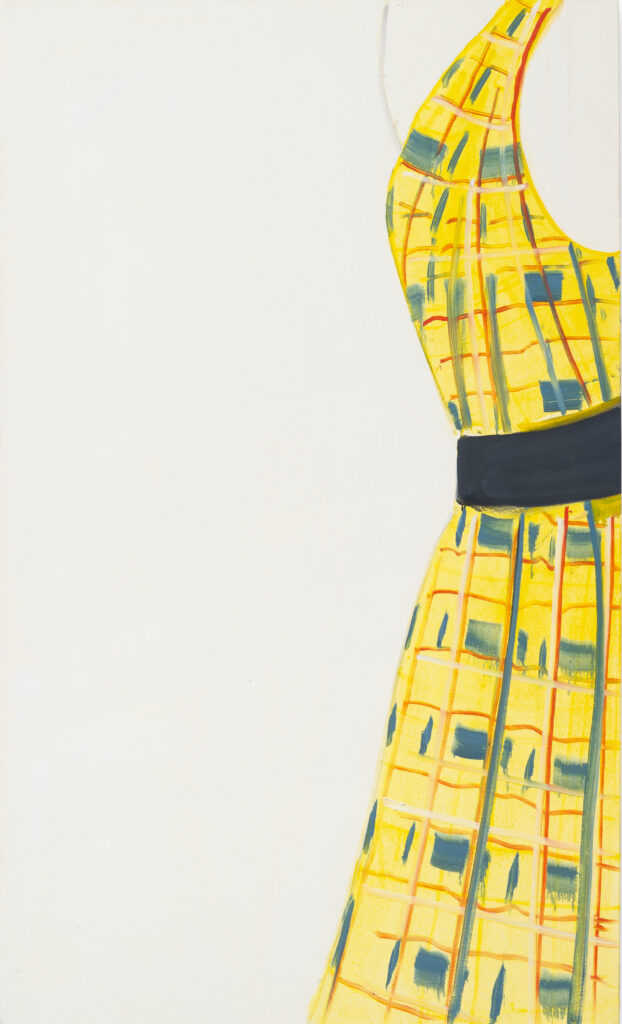
The exhibition showcases 40 large-format paintings, prints, and drawings, mostly from the last twenty years. Katz works with cardboard, transferring the perforated preliminary drawing with charcoal dust onto the canvas, just as the fresco painters of the Renaissance did; then, similarly to them, he quickly paints wet-on-wet. Four of these cardboard panels in one room were the starting point for the paintings in the exhibition or similar works. A large room is dedicated to fashion, also a fleeting phenomenon. The figures appear like dress-up dolls; everything except the clothing is only hinted at in contours. The designer Claire McCardell, whose creations Katz immortalizes here, died in 1958. After 70 years, the artist explains, these suddenly came to him like from nowhere.
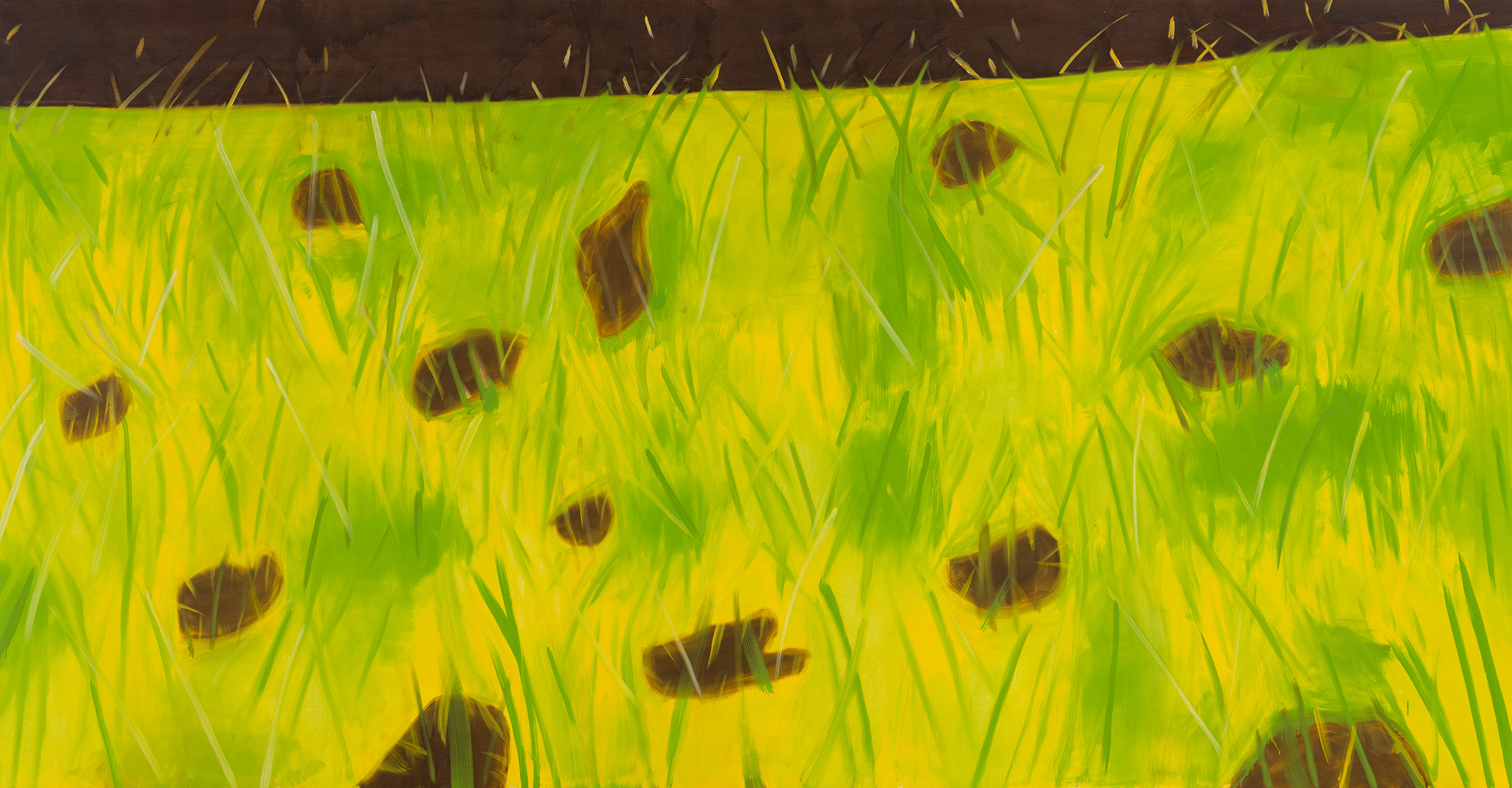
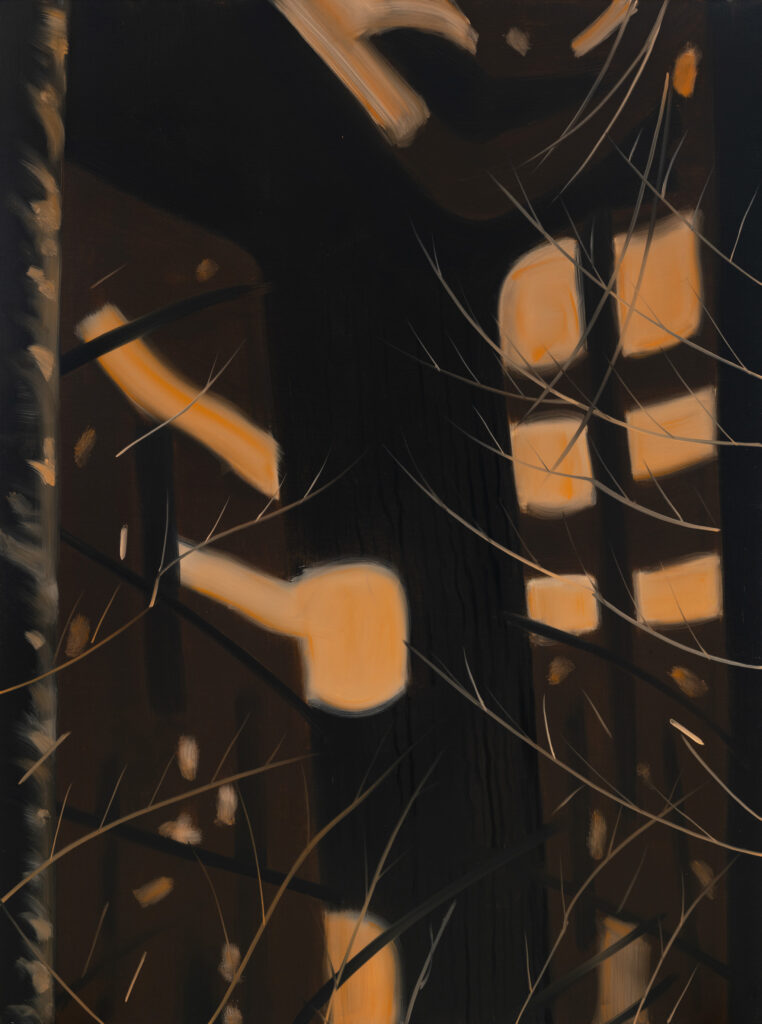
The exhibition is divided into themes, just as the titles of the works are banal: Grass, Tree, Yellow Leaves, Spring. The intention is not to create a realistic representation of reality, but only to convey the impression of a fleeting moment through simplification of form and contrast of colors. The deep dark blue of the lake corresponds to the dark blue of the sky when there is strong sunlight, which in turn makes the water lilies appear bright yellow. The paintings, which are up to six meters wide, aim to create an immersive effect: the viewer immerses themselves in the image. A visitor has intuitively grasped this and has taken a photo of themselves in front of a snowy forest landscape using their mobile phone. In this way, they become part of the image, as it were, standing in the forest. It is noticeable that the ascending, not very high, rooms of the Kunsthalle are excellently suited for this type of approach: one cannot take much distance at all.

An elderly man leads a group of three children through the exhibition; they do not just wander around, but listen attentively. How he does this is not immediately obvious, but it is certain that the Kunsthalle is nominated for the Commerzbank Foundation’s Future Good Award, the most highly endowed prize for cultural outreach; the decision will be made on June 24. The exhibition appeals to a wide and diverse audience. The Kunsthalle has been a foundation since 2003. When asked whether this offers advantages in times of tight finances, the director answers: "The concept of a house funded both from municipal and private funds has proven to be viable precisely in today’s times. I can allocate two-thirds of my exhibition budget from the proceeds of the foundation and one-third from the third-party funding I acquire annually in addition."
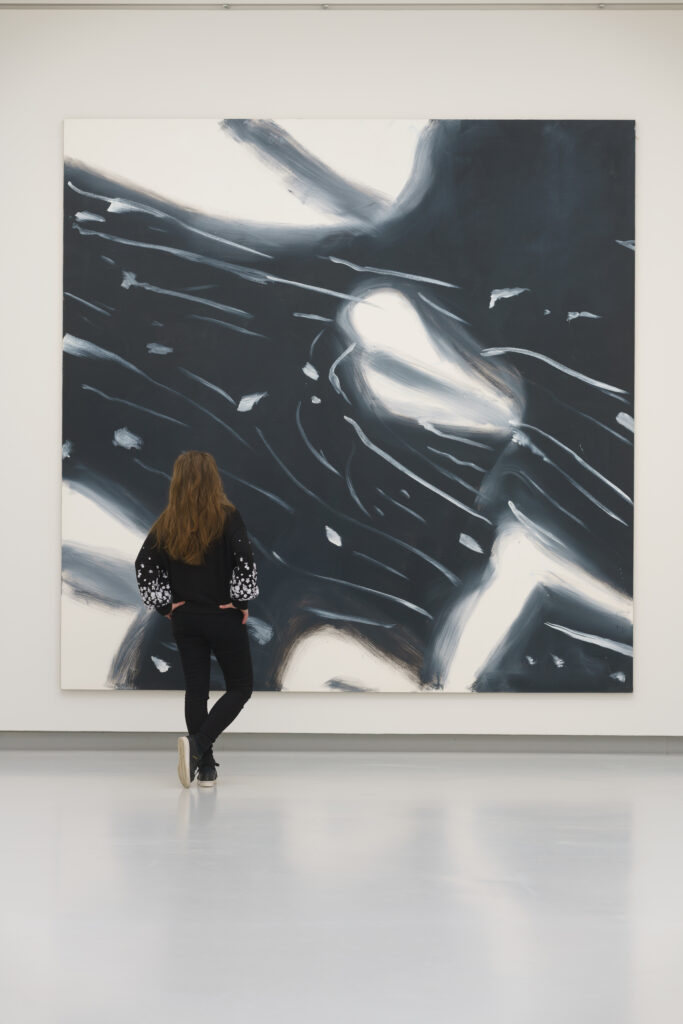
With the works exhibited in Venice in 2024 Ocean-In his series Katz has further radicalized his process of capturing movement, if not the time itself. While other works, including newer ones, glow bright green or lemon yellow, the canvases here consist only of white brushstrokes on a black background. The darkness creates the impression of depth, as in other works. With the white dots, lines, and surfaces, Katz is, so to speak, trying to reproduce the constantly changing foam crowns and light reflections in reality in real time. This is in keeping with the abstract painting of Informal Not far away, but he continues to live from the association of the object Ocean, at the boundary between pure perception and symbol. "Eternity exists in the minutes of absolute awareness," says the artist. "Painting appears when it succeeds as a synthetic reflection of this state." On July 24, he turns 99 years old. Happy Birthday, Mr. Katz!
The exhibition "Alex Katz, Dancing with Reality" runs until September 13 and is open from Tuesday to Sunday from 11 a.m. to 6 p.m., and on Thursdays until 7 p.m. https://kunsthalle-tuebingen.de
The Kunstmuseen Krefeld are dedicating the first retrospective in Germany to Charlotte Perriand’s multifaceted and astonishingly contemporary work.
 7 min read
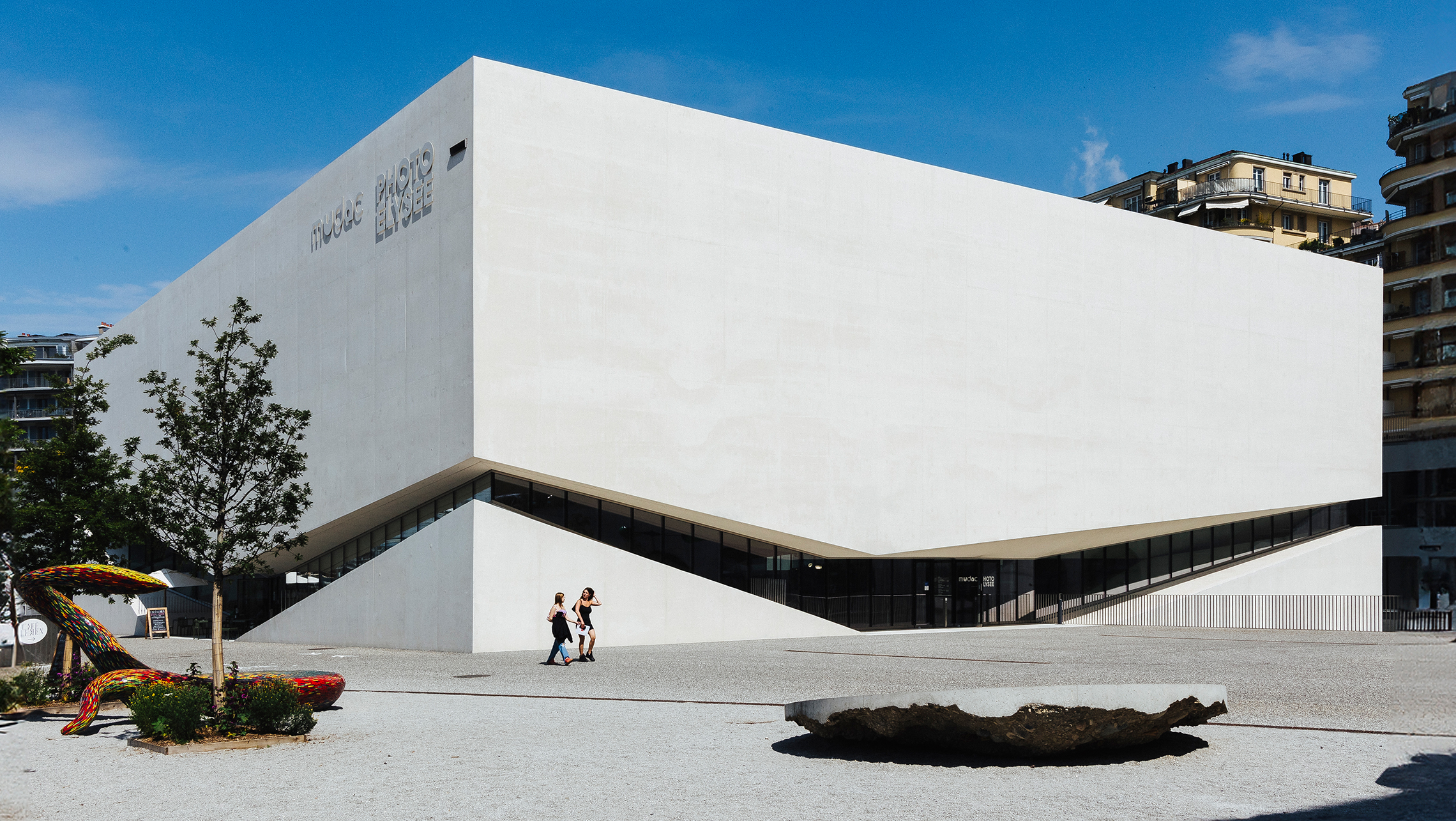
In the new premises of Plateforme 10 in Lausanne, the Photo Elysée Museum can finally unfold its potential.
 12 min read
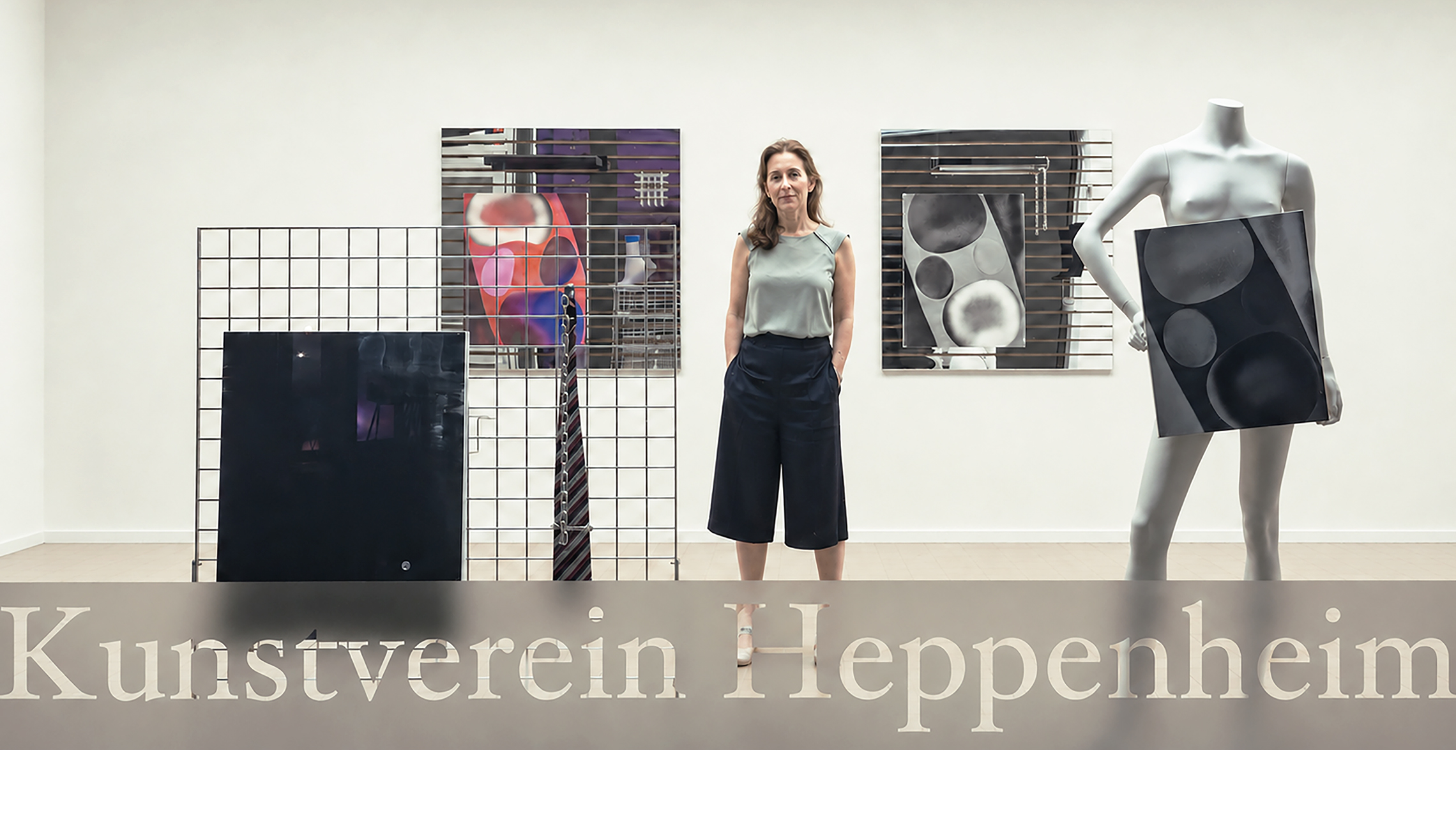
The exhibition "Six Five Four Three Two" featuring works by the New York-based artist Josephine Meckseper at the Heppenheim Art Society.
 9 min read