 7 min read
 7 min read
As I approach the building from the riverbank, images of the works of Berlinde de Bruyckere come to mind, photographic representations that I had seen somewhere before. "Kreupelhout" stands clearly before my eyes; the installation with which the artist represented her homeland Belgium at the Venice Biennale in 2013. In situ, I have never encountered her works before. In the photographs in my mind, they appear carefully staged; often they stand out as a stark contrast to the darkness that surrounds them. As I recall, this darkness is the natural habitat of her works. At this moment, I am relatively certain that the interplay of light and darkness plays a prominent role in the artist's calculus.
When one enters Richard Meier’s building on the railway line between Bonn and Koblenz through the long access tunnel and then slides up the elevator, one slowly realizes that in this place one is confronted with the artist in a completely different way. Jutta Mattern takes up exactly this point, who will lead us through the exhibition a few minutes later as curator. She emphasizes the term “White Cube.” With this reference, she underlines that thanks to its white walls and the art lighting, the space is not only brilliantly bright, but also forces the consideration of the daylight that travels through the floor-deep window fronts. This is also the case elsewhere; here the exhibition poses a special challenge: In one way or another, Berlinde de Bruycker’s works in the Arp Museum have to do without the Claire-obscur that often surrounds them like incense.
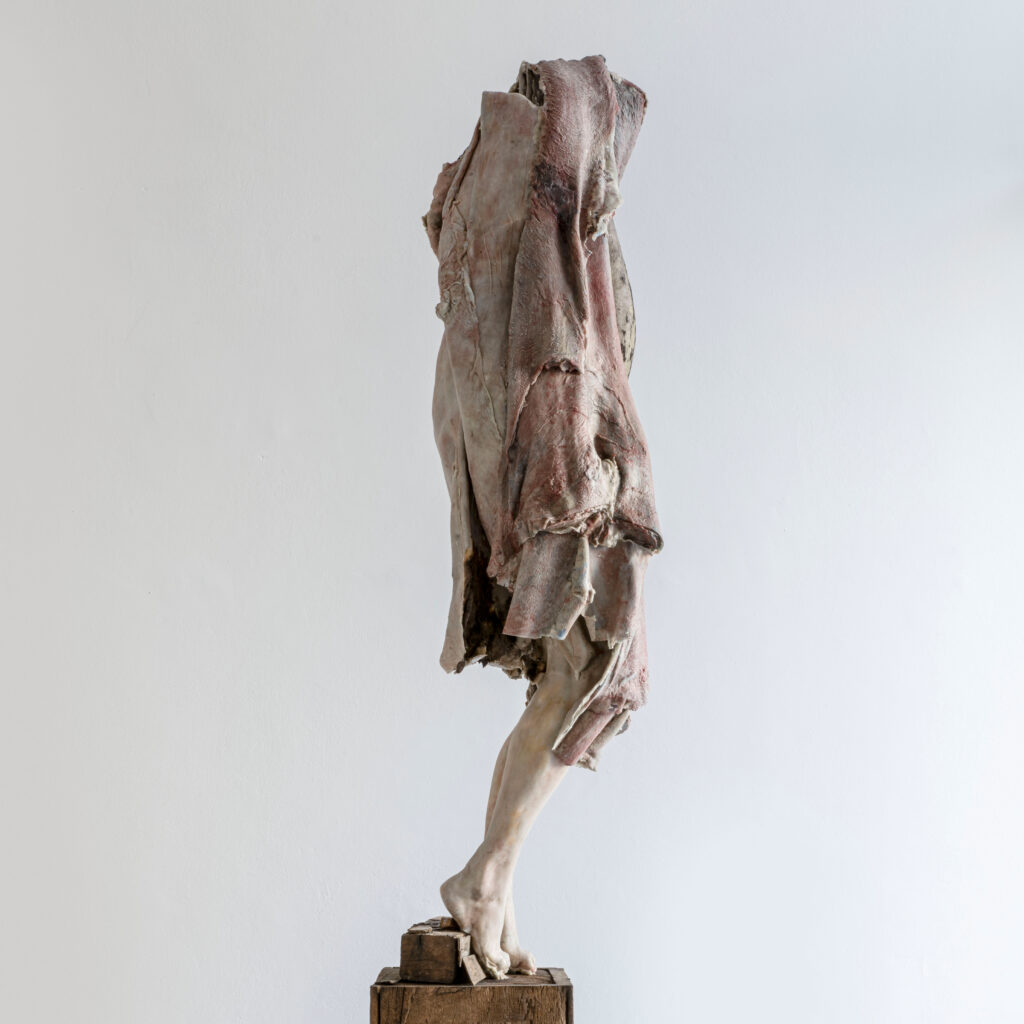
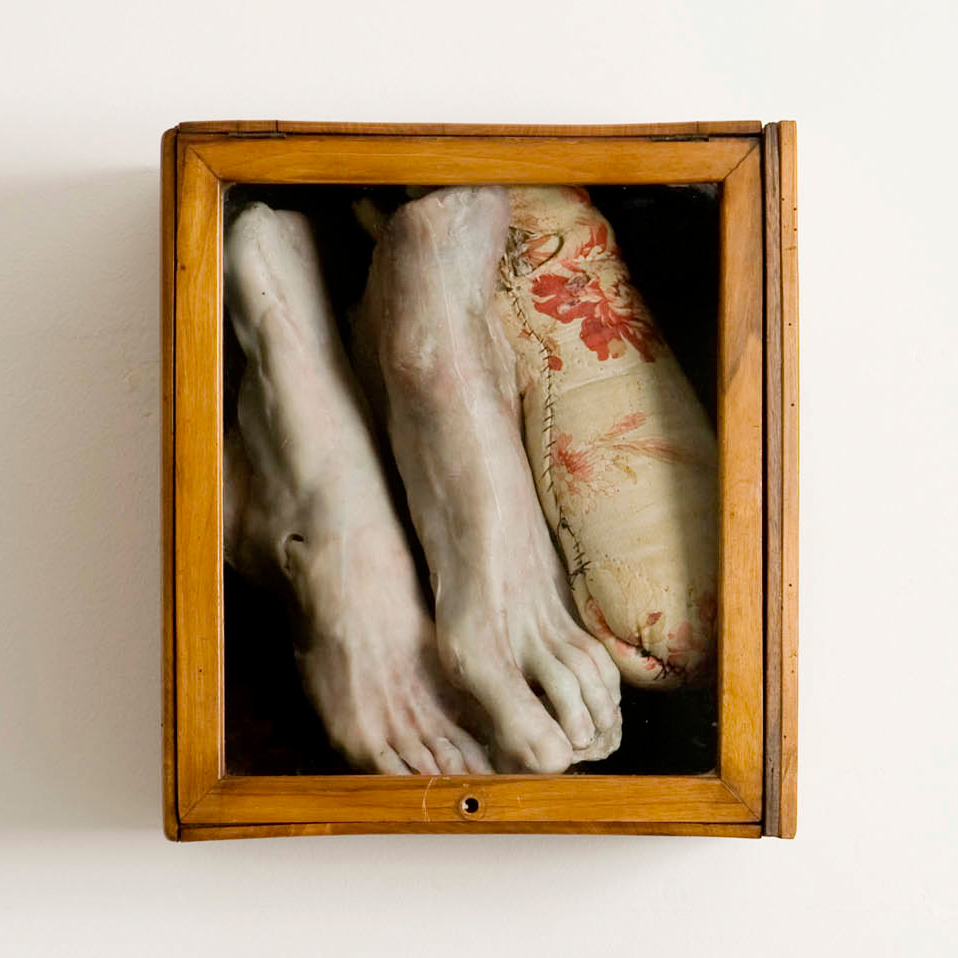
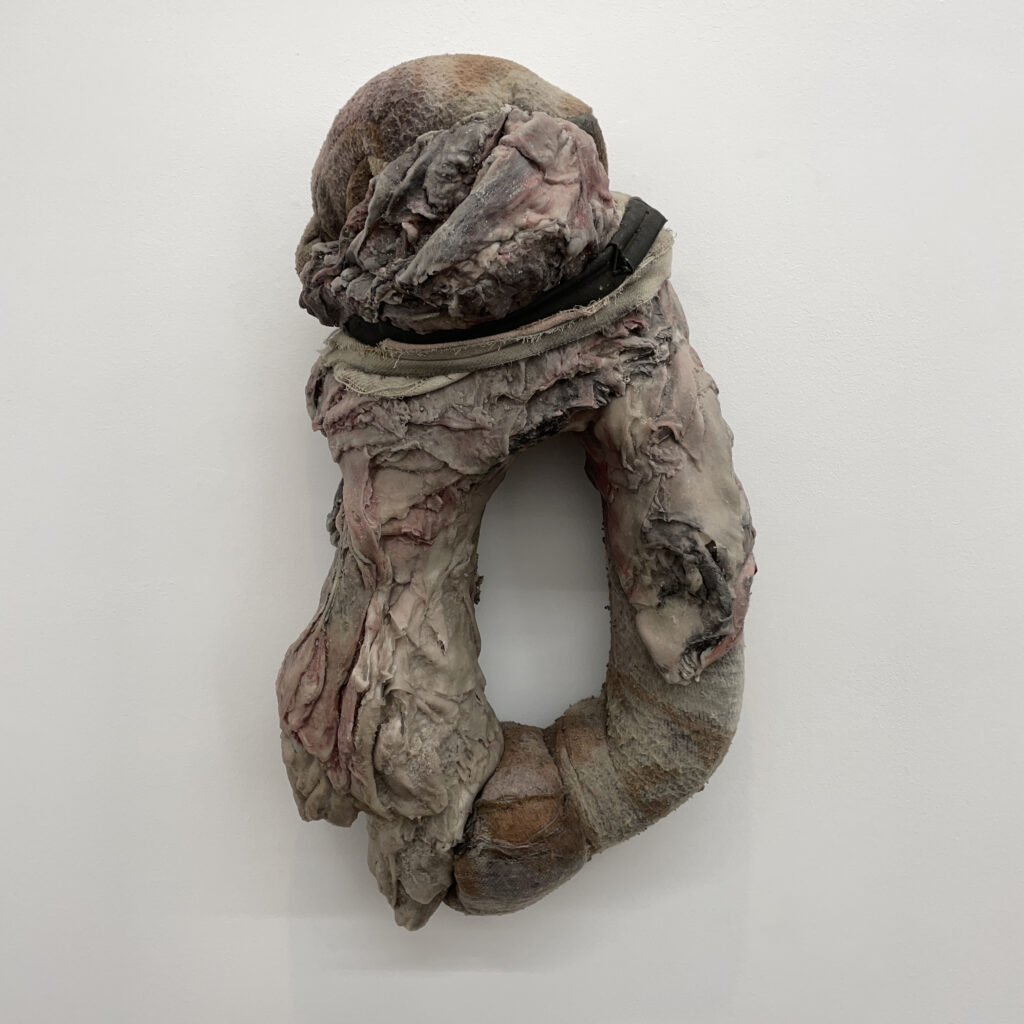
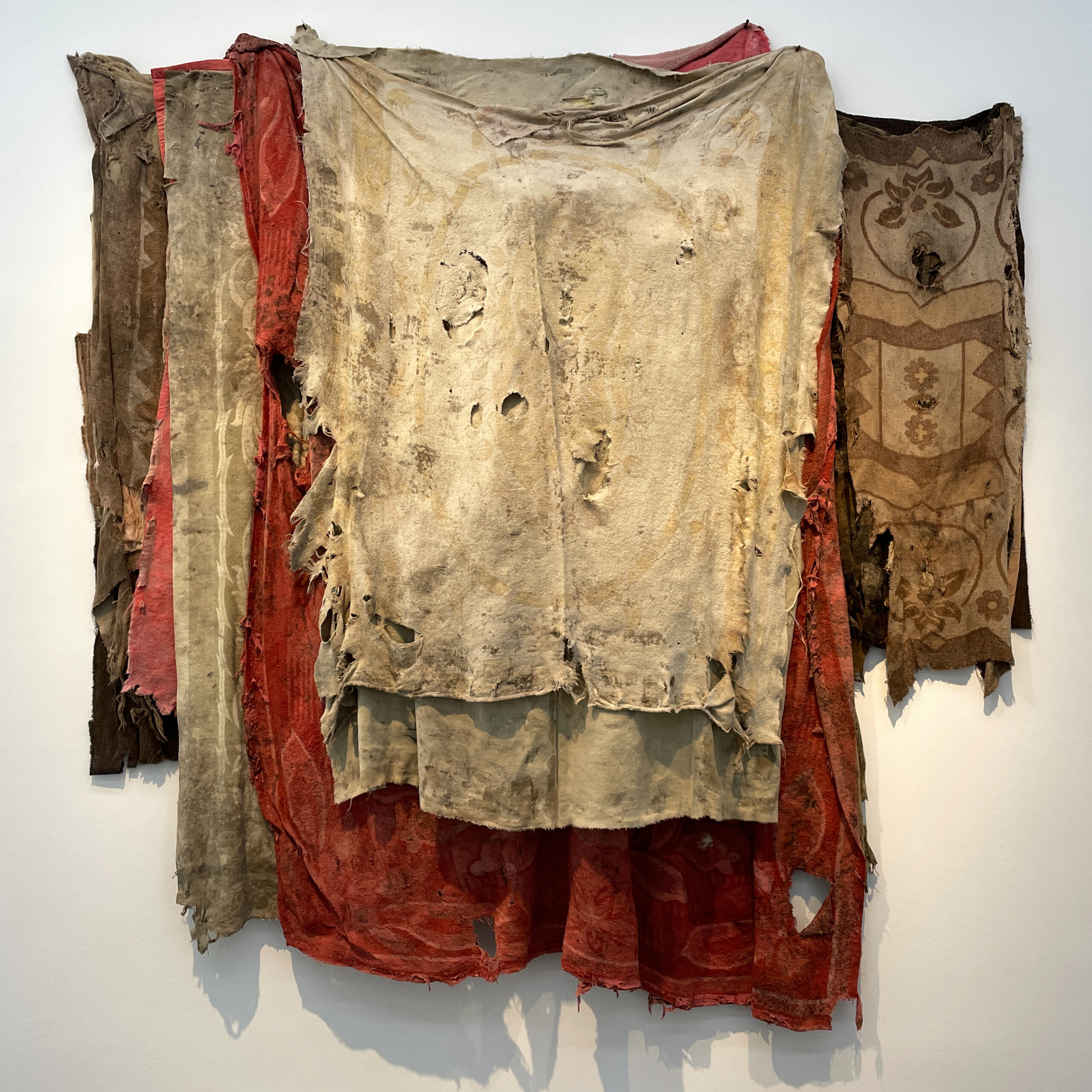
The exhibits themselves, 34 in total, are well chosen; they systematically present de Bruycker’s work: relevant stages of his creation are shown, as well as the various genres represented in his work. Immediately striking are parts of the human body, headless torsos or deformed limbs, displayed in glass cases or in vitrines as relics, with textiles attached. Alongside this are cadaver forms reminiscent of horse carcasses, with flaked fur piled up on iron stands. Humans and animals are faceless, thus preventing any attempt at individualization. This also rules out the possibility of a conciliatory narrowing down of the subject matter; for, despite the first appearance, it is not about concreteness but universality. De Bruycker's artifacts are accompanied by an arsenal of contributing objects, debris, offerings, bones or textiles, for example, which are imbued with the appearance of the forgotten, the left behind, the worn out or decaying. These are remnants, as one would expect when, for example, a tomb is opened.
The light is indeed not any less bright on this cloudy day than on other days, but it is rather grey. One can speak of a sober atmosphere whose brightness is laboriously and uniformly spread over de Bruyckere’s works. It is therefore completely different from the impression I had when I entered the space. The cool setting certainly surprises, but it cannot touch de Bruyckere’s installations. The objectivity of the light is well-known to us; it is a typical characteristic of spaces that we only enter with a certain amount of caution because they are about illness and death. Without a doubt, that fits in. Berlinde de Bruyckere’s approach to her material is direct in this atmosphere, even brutal, and yet it is not devoid of tenderness. For the wax, her material, is characterized by its gentle melting, which also benefits the incarnation of the deformed and cadaveric body parts that are shown to us in clinical light.
The explanations given by the curator leading us through the exhibition always take our gaze back to the depths of art history. For example, she refers to works by Cranach or Zurbarán, which she traces in her presentation. The artist, who kindly accompanies us on our tour and, following the impulses of the curator, provides information about her works, her working methods, and her motives, also confirms again and again the anchoring of her work in art history. And the journey back goes even further, as the significance of the works becomes increasingly clear. Metamorphoses Ovid is brought into the game for de Bruycker's work.

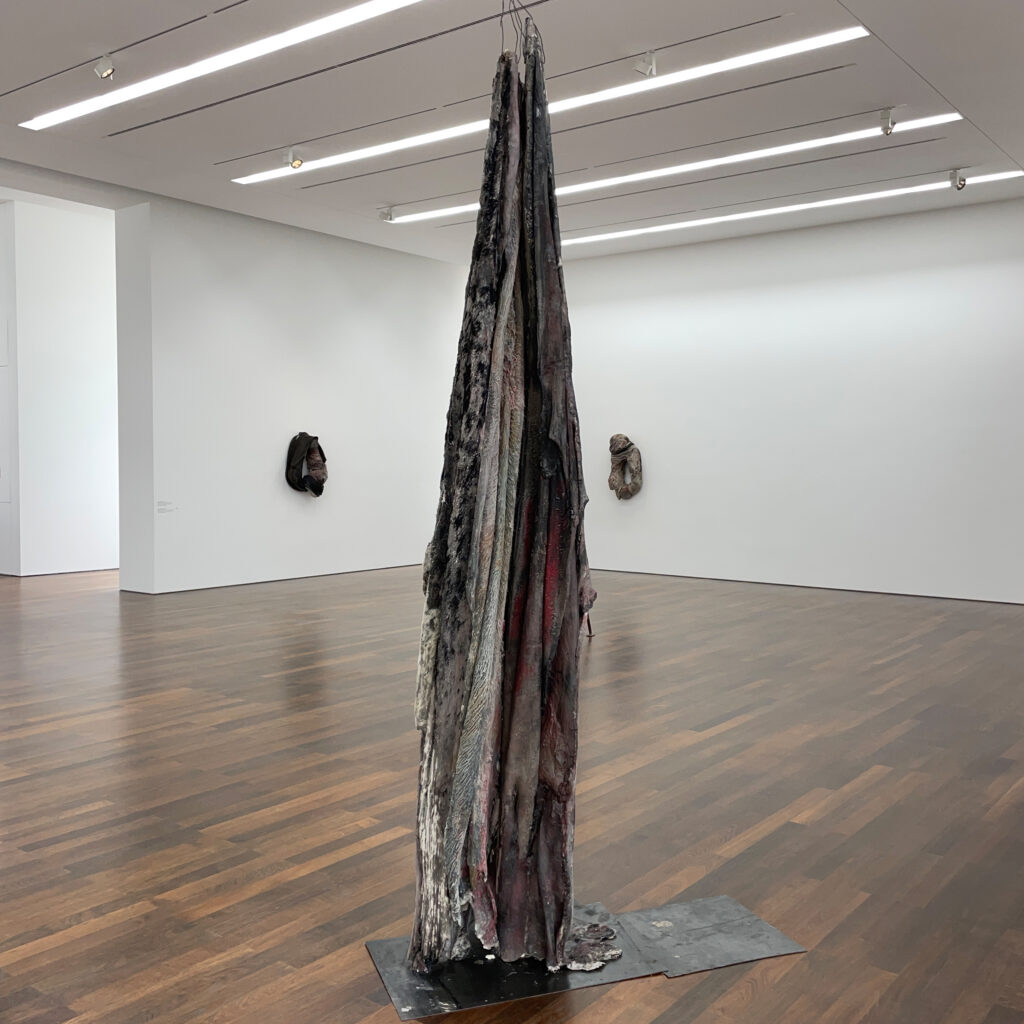
Now it is a coincidence that, less than two hundred kilometers away, a short time later, an exhibition by Anish Kapoor will also open on a mountain slope.1 Some of the exhibits displayed there, as one of the professional observers writes, reminded one of a "bloody heap of corpses".2 Other statements also point in this direction; for example, there is talk of a "slaughterhouse." Here too, at least in the reception of the critics, it is a question of the deformations of the human body, its remains, and more specifically of the perception of its fragmentation.
In this context, further comparisons arise. For example, with the works of Oda Jaune, whose last exhibition was already on display at Templon in Paris in the spring of this year. Oda Jaune primarily produces painting, and more rarely sculptures. It is said that the "dream-like aesthetics of the abnormal" is her "signature"."3. To put it more bluntly, Oda Jaune’s work is also constantly about deformations of the human body.
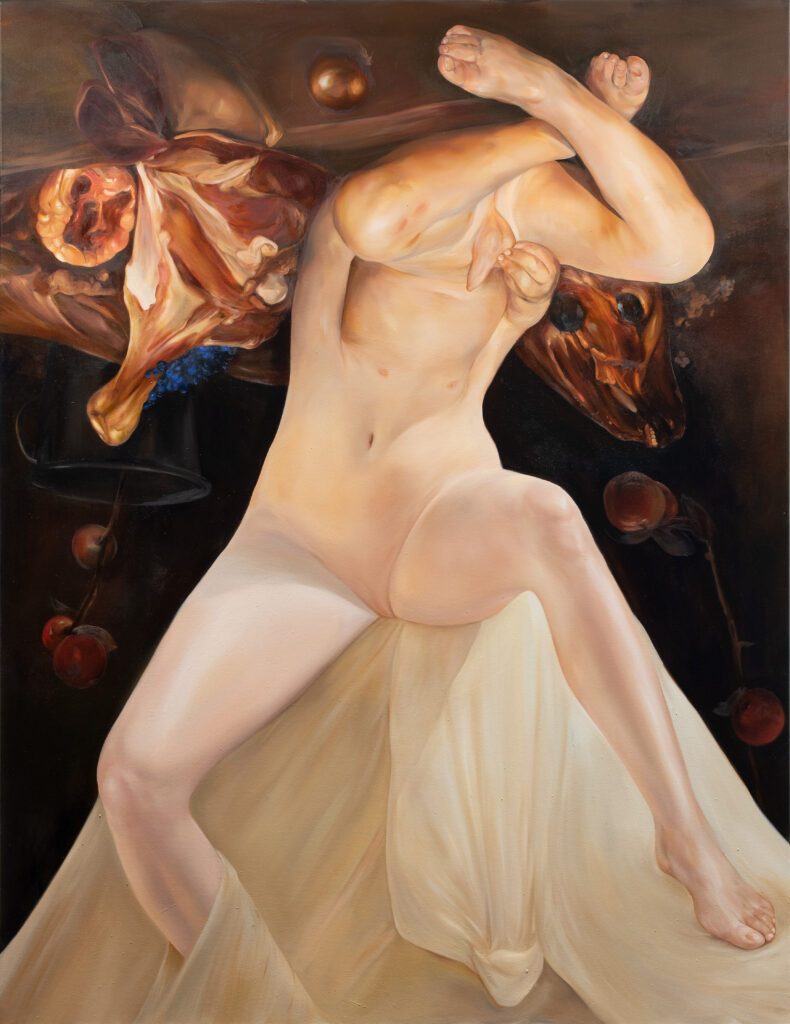
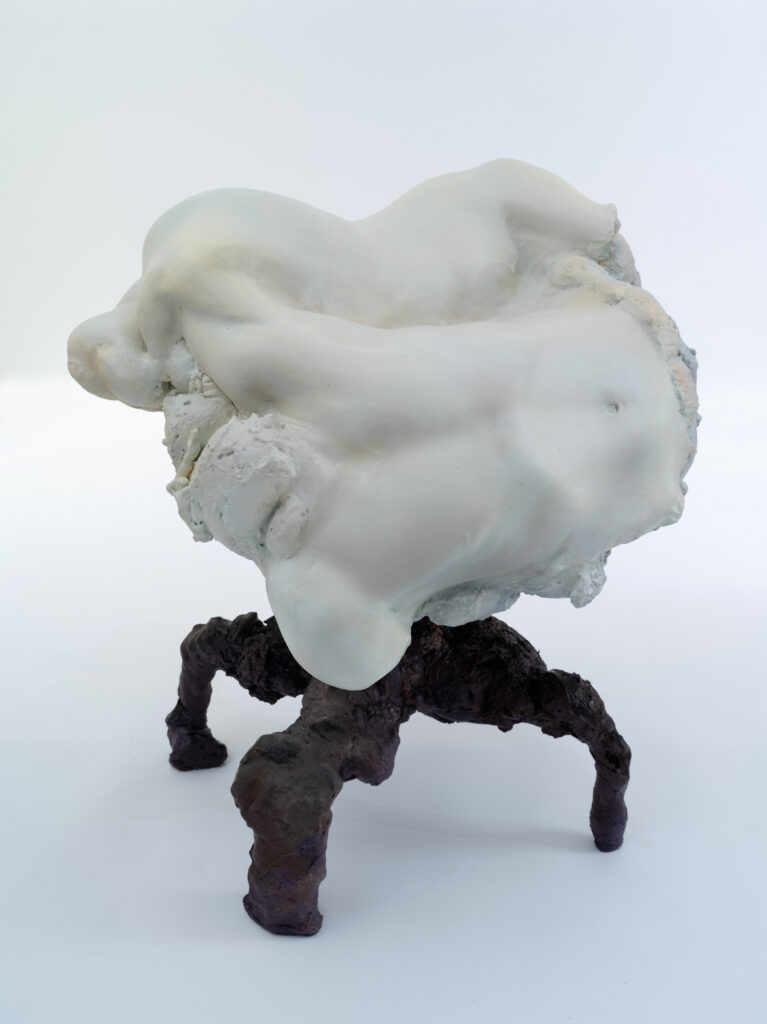
And when one focuses on this aspect for a moment, it becomes clear that Berlinde de Bruyckere’s work is not only rooted in the distant history of art, but is also anchored in the present. Representing the human body in a naturalistic language of form is a task that the fine arts have largely handed over to photography. The works of Berlinde Bruyckere, Anish Kapoor and Oda Jaune are exceptions here, which, as we observe them, carry with them their conditionality: that not only in the history of art but also in the art of our time the idea of human existence and its corporeality is associated with deformation, vulnerability and destructibility.
Berlinde de Bruyckere attests that what she is showing today cannot actually be shown in any other form than its endangerment by its finiteness. And it is quite obvious that she does not stand alone with this artistic stance that goes deep into the metaphysical. If we now restrict the overall view to the artists mentioned above, however, we also see differences that provide us with further insight into the topicality of de Bruyckere’s sculptural work: Unlike de Bruyckere, Kapoor presents the subject of meat closer to the place of its slaughter, because it is bloody. In Oda Jaune, on the other hand, it is not blood and not bloodlessness, but a tension in which there is a discussion about sexuality and the voyeurism associated with it. "I want to see if it is still beautiful," she says in conversation with Kamilla Pfeffer4, When asked if she can detect anything obscene in her own images. But even where the differences seem to overwhelm one another, there are also connections of kinship: the Christian pictorial tradition with which de Bruycker’s work is concerned is rich in examples where the inherently obscene is transformed by the halo of holiness.
This reference to art history has an important function: it can legitimize a contemporary work that might simply leave us trembling if it were not for this legitimacy. It also shows us that not only Cranach’s time, but also ours, shaped their death dances. For what reasons there may be – with or without war in Ukraine – there can apparently be causes of the greatest diversity.
1 Anish Kapoor, sculptures, August 13, 2022 to January 1, 2023 at the Sculpture Park Waldfrieden, Wuppertal.
2 "Bloodbath in Waldfrieden" (Monopol online, 16.08.22, author: Alexandra Wach), "… reminiscent of a bloody pile of corpses" (Deutschlandfunk, "Non-objects" – Anish Kapoor in the Sculpture Park Wuppertal, 18.08.22, 17:46, author: Sabine Oelze), "Symbol of all diseases" (RP online, "The Things Are Not Innocent", 11.08.22, https://rp-online.de/kultur/tony-cragg-stellt-werke-von-anish-kapoor-aus_aid-74850365,"Slaughterhouse" (Westfälischer Anzeiger, "The Sculpture Park Waldfrieden showcases monumental works by Anish Kapoor", 19.08.22, https://www.wa.de/kultur/der-skulpturenpark-waldfrieden-zeigt-monumentales-von-anish-kapoor-91735133.html).
3 Stern, "The inscrutably beautiful widow of Jörg Immendorf", 18.09.2018, https://www.stern.de/kultur/kunst/oda-jaune—die-abgruendig-schoene-witwe-von-joerg-immendorff-8358732.html.
4 "Who is Oda Jaune", documentary film by Kamilla Pfeffer, Germany 2016.
Emilija Škarnulytė at the Kunstmuseum St.Gallen Lokremise, August 22 to November 8, 2026.
 5 min read
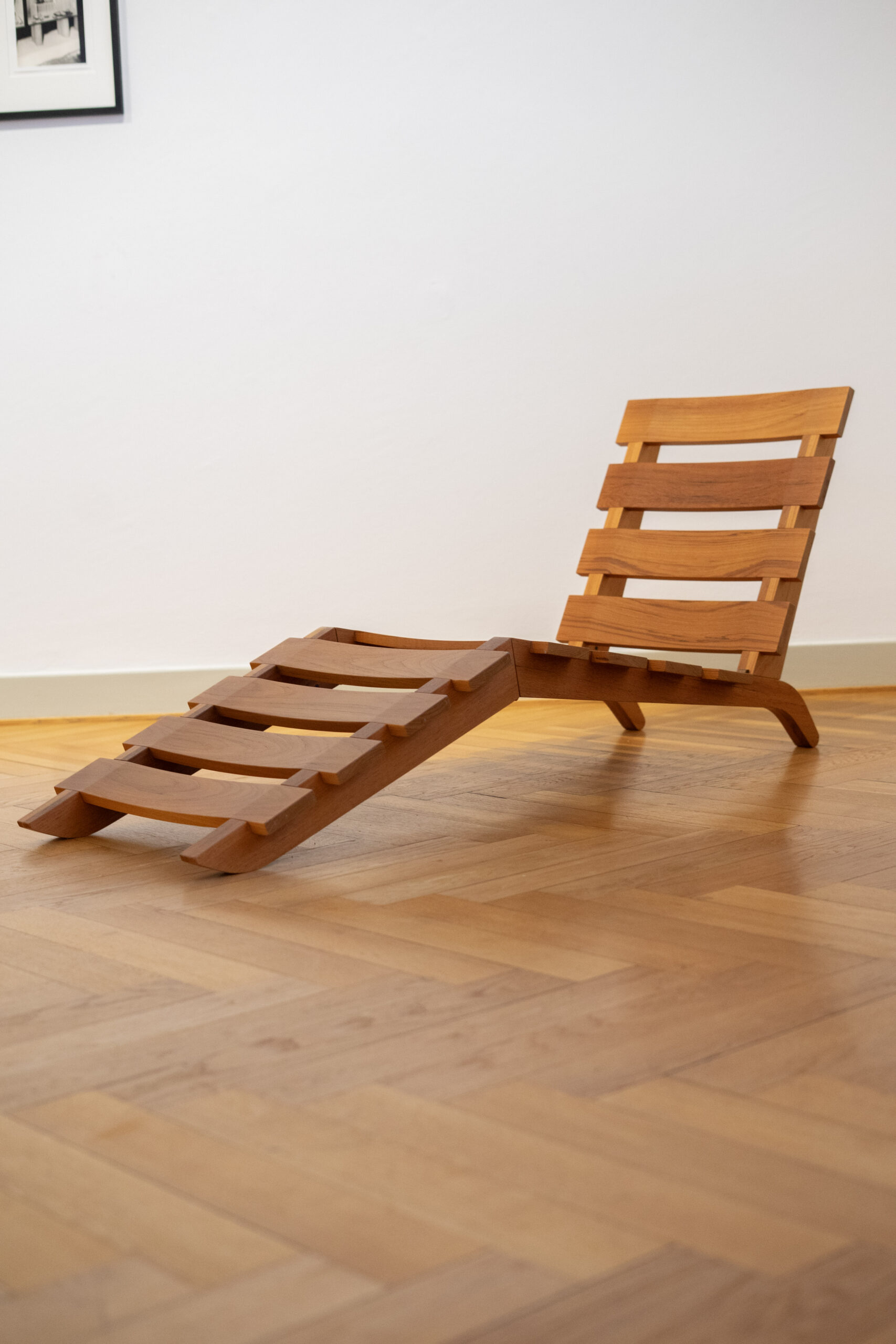
The Kunstmuseen Krefeld are dedicating the first retrospective in Germany to Charlotte Perriand’s multifaceted and astonishingly contemporary work.
 7 min read
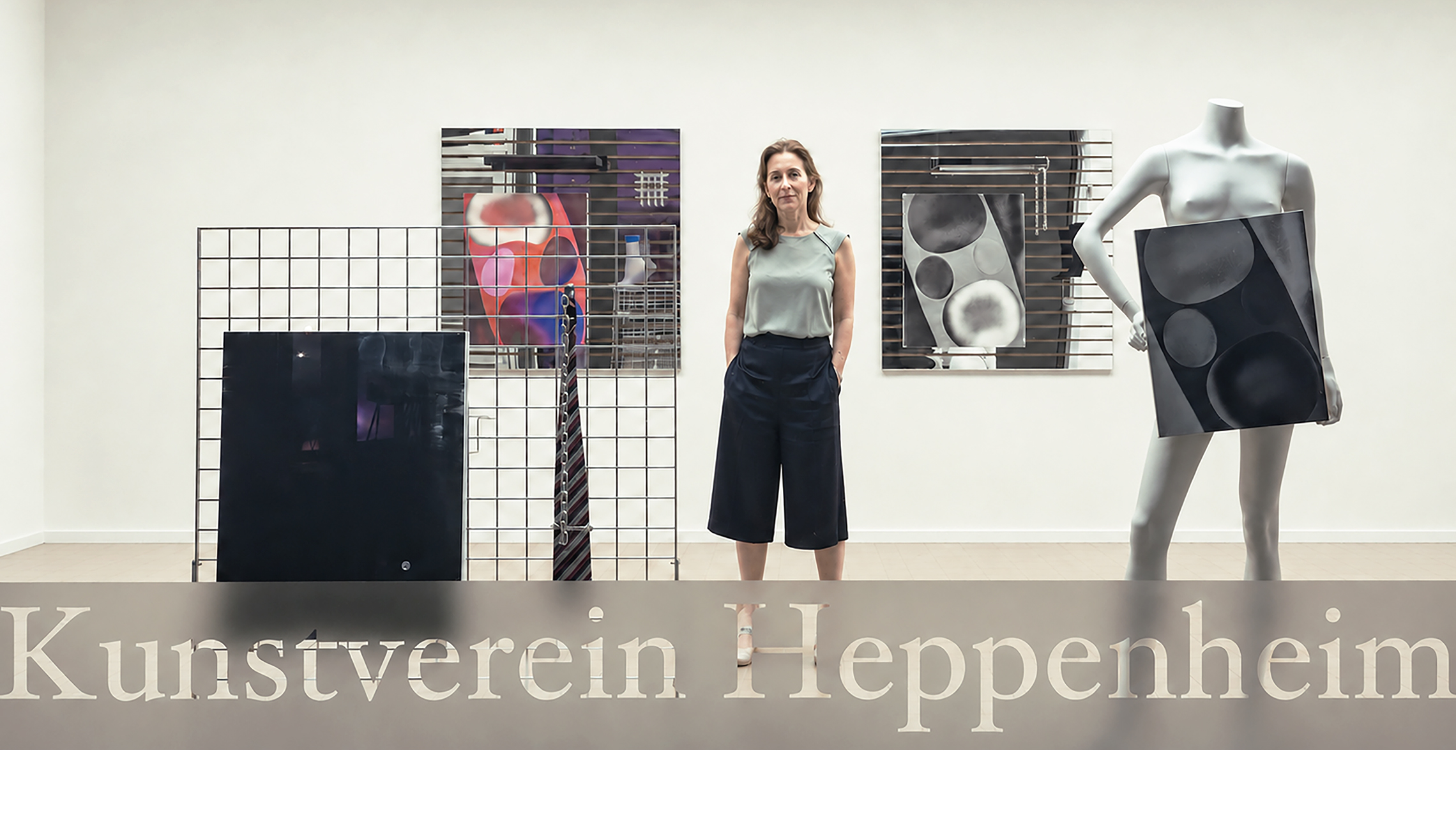
The exhibition "Six Five Four Three Two" featuring works by the New York-based artist Josephine Meckseper at the Heppenheim Art Society.
 9 min read