 6 min read
 6 min read
Until March 12, 2023, the exhibition "Who's Next? Homelessness, Architecture, and the City" can be seen at the Hamburger Museum for Art and Industry. It shows that hardly explored phenomena of homelessness are concentrated in metropolises. There, some ingenuity is used to make it difficult or even impossible for homeless people to stay in busy places. In Hamburg, for example, a protective strip of grass was installed under a bridge, near the landing bridges, with a rocky paving that makes it impossible to camp there. Homeless people who had previously camped there had to find something else. Evicted. Out of sight, out of mind.
It is similar with the furniture in public spaces. The benches are equipped with brackets so that it is not possible to lie down on them. Also, as at Hamburg Central Station, classical music is played from loudspeakers. Passers-by and travelers may find this pleasant, but in reality it is a measure to keep homeless people and drug addicts away.
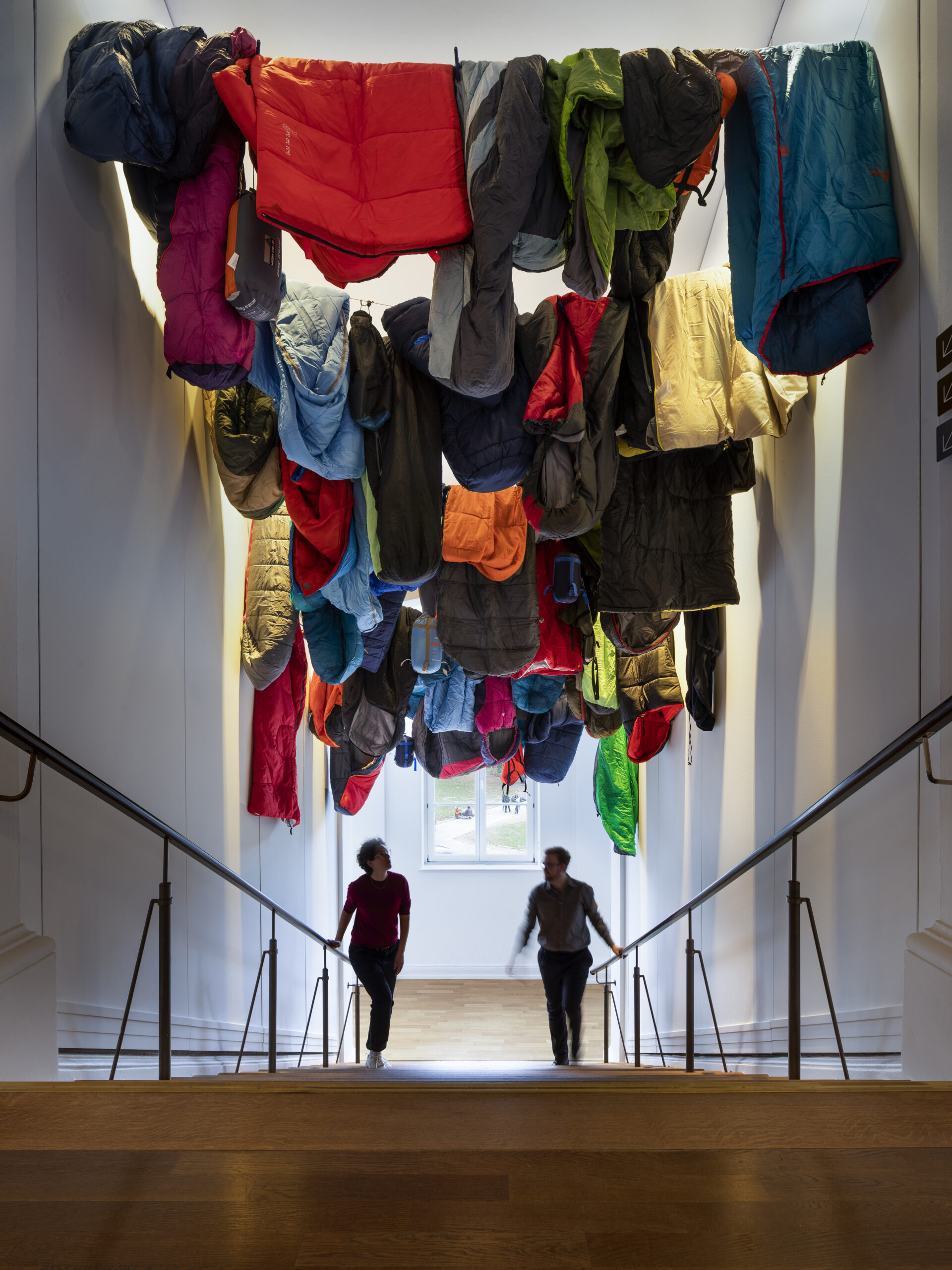
Near the center of the crowd, the Museum of Art and Industry with its quiet halls and corridors seems like a haven. This impression is dispelled as you walk towards the exhibition. Above the staircase are 43 sleeping bags, one for each person who died from the effects of their homelessness last year. The location for the installation was not chosen by chance; the window on the lower platform overlooks the area in front of the museum. Drob Inn free, in a municipal drug consumption room. Here, medically supervised addicts can inject their drugs. 75 percent of the people who do so Drob Inn They use the opportunity to declare that they are homeless. In front of them, waiting people gather, as well as many dealers.

The exhibition shows the manifestations of the widespread and rapidly increasing homelessness in eight megacities. In Mumbai, for example, it is often migrant workers who have no possibility of finding a place to live; in Tokyo, people often live on the streets due to debt. Los Angeles is considered the "capital of homelessness" because nowhere is it more visible. The homeless are constantly being evicted from their makeshift shelters. The effects of climate change, fires, heat, and water shortages are also a deadly threat for those affected.
The exhibition presents explanations of the terminology of the thematic complex on litfaßsäulen, which the exhibition organizers not only understood as a means of communication but also as a symbol for the street space. Fields are drawn on the floor with thick purple lines, symbolizing beds as they stand in the cramped confines of a large dormitory.
In video documentaries, homeless people describe their situation. However, people who have owned a home again after years on the street also speak out. In the documentary film What It Takes to Make a Home The following are examples of this: Star Apartments in Los Angeles and VinziRast is right in the middle of it all presented in Vienna. A special feature is the mixed use of residential, communal and public facilities on the various building levels. This promotes social connections among the residents and visitors. The architect of the Star Apartments Michael Maltzan defines the aesthetic appearance of architecture as a tool to show that "homelessness cannot be an anonymous problem" – as a means to initiate a dialogue. VinziRast is right in the middle of it all, A pilot project for the inclusion of homeless people was jointly designed by homeless people and students. The goal was to create and physically implement a community space. Both projects are also among the nineteen recently realized architectural examples that the exhibition organizers analyzed using models and drawings in the hall. Homeless people’s needs are addressed in various ways, for example by integrating health and social services into some projects. Often, the apartments are arranged around courtyards to create places of comfort. A stabilizing factor especially for mentally ill people who can no longer bear the open street space. Modular systems are used, cost-effectively; in some cases it is possible to relocate them to another location as needed. Other examples revitalize existing structures, such as an empty supermarket.
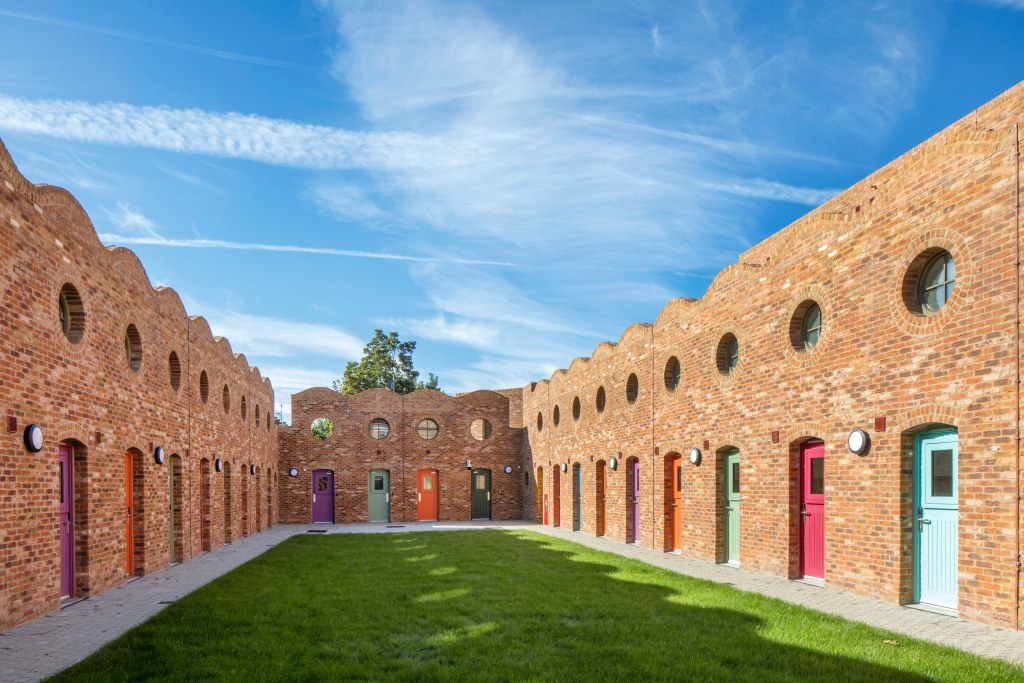

Most of these projects provide homeless people with housing without conditions as permanent accommodation, as the concept Housing First These accommodations are sometimes in line with social housing standards or are only equipped with the most necessary facilities. However, they offer a safe haven that enables those affected to find a sense of stability and, for example, overcome a substance abuse problem. In Germany, things usually work the other way around. Social welfare offices only issue housing certificates once the homeless have resolved their problems – while they are still living on the street.
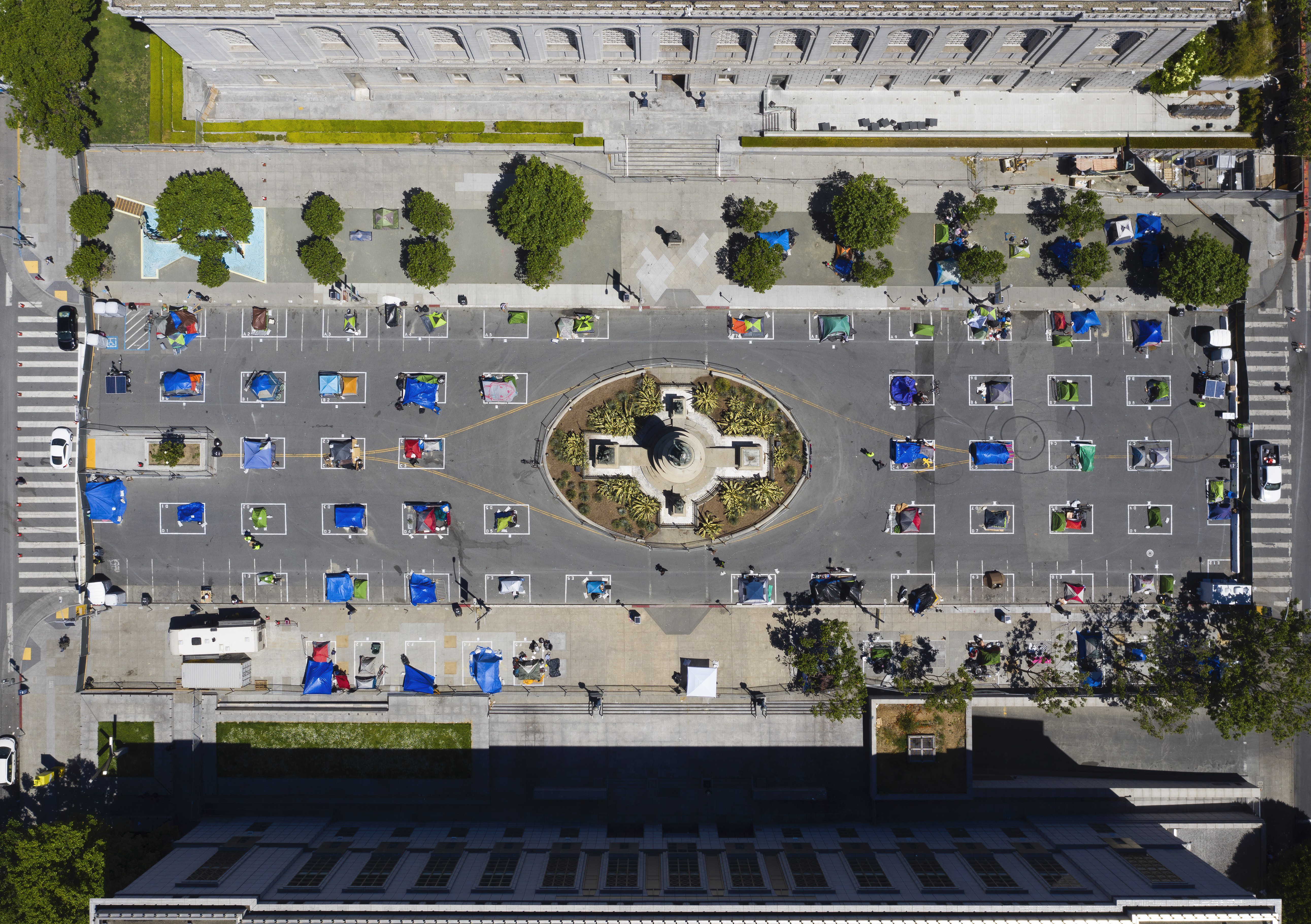
The poster for the exhibition "Who's next" literally shows it: the square in front of the San Francisco City Hall as a shelter for the homeless who camp there. But with emergency shelters, misery is only managed and prolonged. The solution to the problem requires a long-term commitment from society. A functioning welfare state that builds social housing and integrates homeless people into society. As the curator of the exhibition says in an interview: "I believe the general requirement should be: how do we create places where homeless people want to stay? That is also the work of architects."
Anyone who would like to learn more about the situation of the homeless in Hamburg can do so during a city tour organized by the street magazine Hinz&Kunzt In conjunction with the exhibition, we learn from Chris, the city guide, that many homeless people suffer from depression. The illness is usually the result of personal loss. Whether it be the termination of employment, the separation from a partner, or the death of a loved one—something the person is not able to get over. When someone is finally forced to live on the streets, they easily fall into a downward spiral. This leads to substance abuse, and the hygienic conditions do the rest. "Living on the streets makes you sick," Chris notes.
The tour takes us to a day care facility for homeless people. Anyone living on the streets in Hamburg can use this place as a postal address, because without it, no Hartz IV benefits can be paid out; there is also no insurance coverage. However, without health insurance, debt threatens after every visit to the doctor. Unpaid bills end up in the hands of the bailiff. At worst, this leads to a prison sentence. Unheated shelters for the night must also be left at the next morning. While the collective shelters provide protection from the cold in winter, they are still not visited by all the homeless people, even though this can be vital for survival. The reasons for this are manifold. For example, the fear of being robbed and the fear of violent or intoxicated people. In addition, help offers are often perceived as stigmatizing. Homeless people and those who are homeless are ashamed of their situation and do not want to be recognized as such, if possible. By the way, the day center remains closed on this day, a Sunday. This is completely incomprehensible to Chris, who himself lived on the street for seven years. "As if there are no homeless people on Sunday!"
The Kunstmuseen Krefeld are dedicating the first retrospective in Germany to Charlotte Perriand’s multifaceted and astonishingly contemporary work.
 7 min read
The exhibition "Six Five Four Three Two" featuring works by the New York-based artist Josephine Meckseper at the Heppenheim Art Society.
 9 min read
In the new premises of Plateforme 10 in Lausanne, the Photo Elysée Museum can finally unfold its potential.
 12 min read