 7 min read
 7 min read
In the exhibition currently on display at the Museum of Modern Art in Frankfurt, there is a small, somewhat darkened cabinet in which monkey heads are displayed, frontally and in small format, painted in black ink on paper. They are probably chimpanzees that have been counterfeited by Rosemarie Trockel using different facial expressions. She is the artist whose seventyth birthday Susanne Pfeffer, the director of the museum, arranged for her to vacate her home for a major, if not the largest retrospective exhibition of her work: Rosemarie Trockel has dedicated three floors to herself here.

"Hope" is the title of the series of portraits of monkeys. This does not necessarily correspond to what one sees, because the animals" expressions are very diverse and suggest very different emotional states. European art has always treated the monkey as a representation of man. In the bourgeois era, its depiction spread in the popular form of the "Singerie" as a grotesque-comic reflection of human striving and human vanity. One would be tempted to include Trockel's works in this tradition and thereby dismiss them; however, there is one piece that stands out from the rest. This work also shows a monkey head, but this time it is titled "Greta Question". Why Gretchen’s question directed at Faust about his faith, which could be based on trust, also poses a problem for an ape is only understood when, while observing his image, one thinks about how much the ape is endangered in its habitat by us, its observers.
In general, the Frankfurt exhibition makes it very clear that the fate of our fellow creatures, Rosemarie Trockel, has always preoccupied her. This is manifested in a whole series of works shown here.
So a bronze-cast seal swims before our eyes on a chain. It is suspended from its tail just as we know from the images of Arctic seal hunters. The blond strands of hair show us that wildness and our everyday world are very close together; they descend like a twisted halo from the short, bulbous neck of the seal.
Trockel's film "Napoli" from 1994 shows how the stars over Naples form into a huge swarm. This observation, which is rather due to coincidence, is a phenomenon that, in the course of its research, gave rise to the term swarm intelligence, which plays a certain role in systems theory and its foundations, but also in sociology and computer science. That knowledge can be gained from careful observation is a process that is not only significant for science but also forms an important component of Rosemarie Trockel's art: Only the more fleeting observation of her works reveals levels of meaning that do not immediately become clear.
Just a few steps away we come across three relief-like works that, immersed in deep red, hang side by side on the wall. "Shutter" is the title that conceptually connects them to form a unit; in fact, they all have roughly the same size as a window sill. They are ceramics whose jagged surfaces create rectilinear grooves. When you approach closely, you notice that the theme of the animal is once again present, as they are casts of pieces of meat that were combined to form reliefs.
One can clearly see from this theme that Rosemarie Trockel uses a wide variety of means to formulate her positions. However, it is also characteristic that the multitude of means – drawing, photography, film, sculpture, and installation – is linked to an even greater number of topics. In the four decades of her work that the exhibition looks back on, there has been a considerable number of social discourses in which the artist has taken a stand. This was already the case in her early 80s Cologne beginnings: While the male colleagues of Mülheim Freiheit celebrated the return of painting with great fanfare, at the same time, as a kind of prelude to her career, Rosemarie Trockel, with her so-called "knit paintings", provided subtle criticism of traditional gender stereotypes. A second motif that also appears in her early work and is also shown in Frankfurt is electric stove plates. They also symbolically embody the feminine sphere of the domestic, only to question this attribution immediately afterwards. To recognize this criticism as such, one requires a certain familiarity with the artist's strategies: The titles of her works do not arise as subsequent additions, but as an essential component, providing clues that can help us understand Trockel's questions. However, one must willingly engage with her methods of deconstruction in order to decipher her messages. For example, the hanging octopus is shown as a work without a title, but immediately following "Without Title" is a Karl Kraus quote in parentheses: "(There is no more unfortunate being under the sun than a fetishist who yearns for a female shoe and has to make do with a whole female before K.K.:F).".
The Frankfurt exhibition also shows that among the means Rosemarie Trockel employs is the engagement with the art of her time. Among the artists with whom she is clearly engaged are Joseph Beuys, Andy Warhol and Gerhard Richter. "Rush Hour" and "White Hope", for example, seek to engage with the early "gray" paintings of Richter, with the latter's imitator not aspiring to develop the same painterly quality as her model. Instead, this effort is strictly limited to the level of a copyist's quality. Clearly, there must be a certain amount of distance. And in that sense, the classically academic craft is also important, but only insofar as it is necessary to make it clear that craft is not of interest.
Furthermore, the use of a wide variety of means does not necessarily have to be a strategic stance. It can also simply be indifference towards what we sometimes refer to as individual expression, whereby we mean a force that we would like to count among the core essence of art. But what is this kind of art that cannot profess allegiance to this core component of artistic individuality, cannot find expression, and instead sees art as the "continuation of politics with other means"?
For art criticism and trade, Rosemarie Trockel is one of the greats of her generation. That does not mean that, when not in interviews, she nevertheless displays her membership in this exclusive club through implicit behavior—or even insists on it. Feminism for Trockel apparently also means avoiding the appearance of ambition or even striving too much. In the entrance area of the exhibition, a coherent installation hangs on three walls. It shows the airy meshes of a textile formation that was applied in blue on white ground in large format as a silkscreen print onto the wall. It is titled "Prisoner of Yourself" and marks the danger zone in which a world-class artist lives: one can very quickly end up in a drawer, while it could take a whole while and require great effort to free oneself from that drawer. Anyone who finds the artist persona of Rosemarie Trockel disappearing too far behind the displayed works can see one of the reasons why this is the case here.
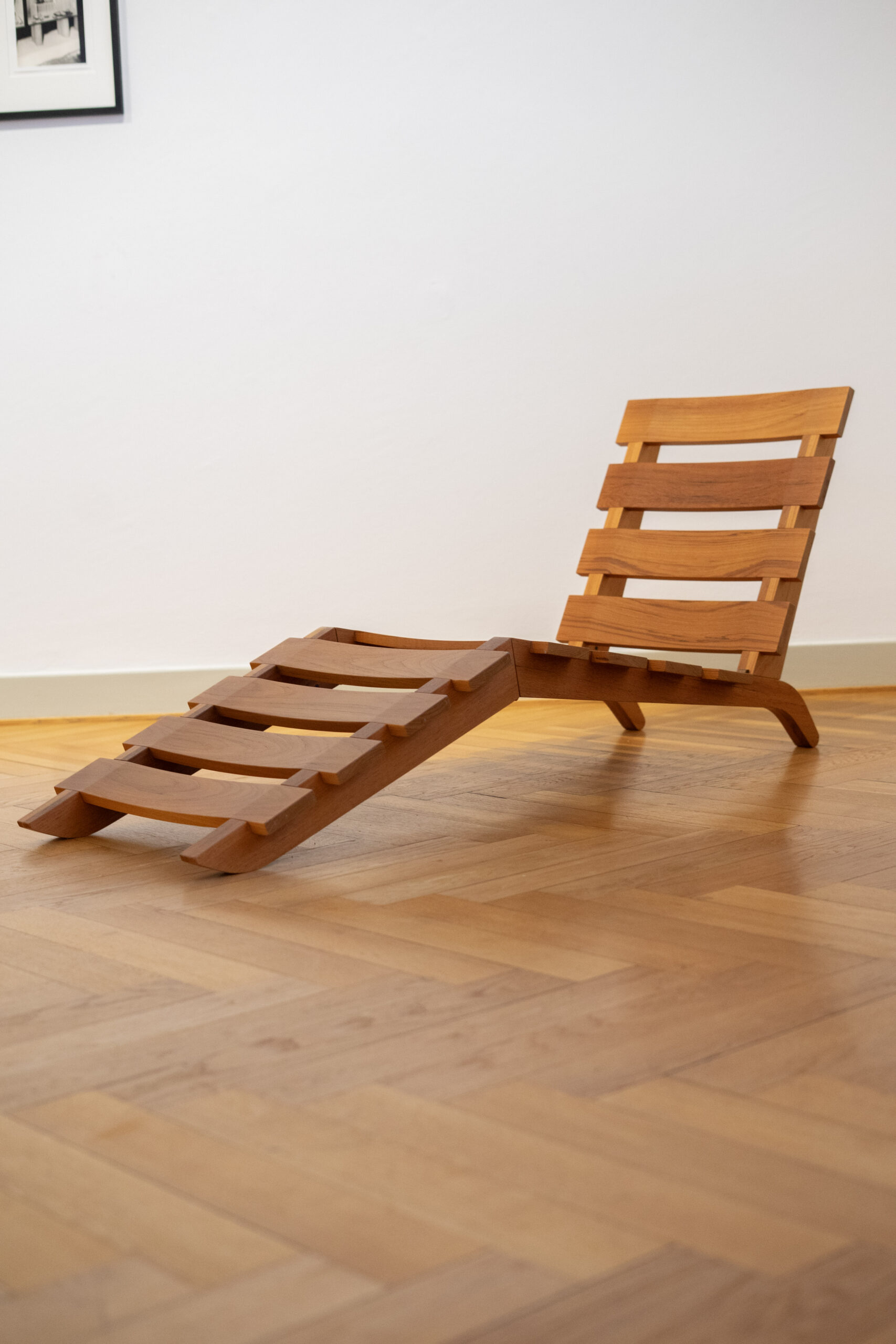
The Kunstmuseen Krefeld are dedicating the first retrospective in Germany to Charlotte Perriand’s multifaceted and astonishingly contemporary work.
 7 min read
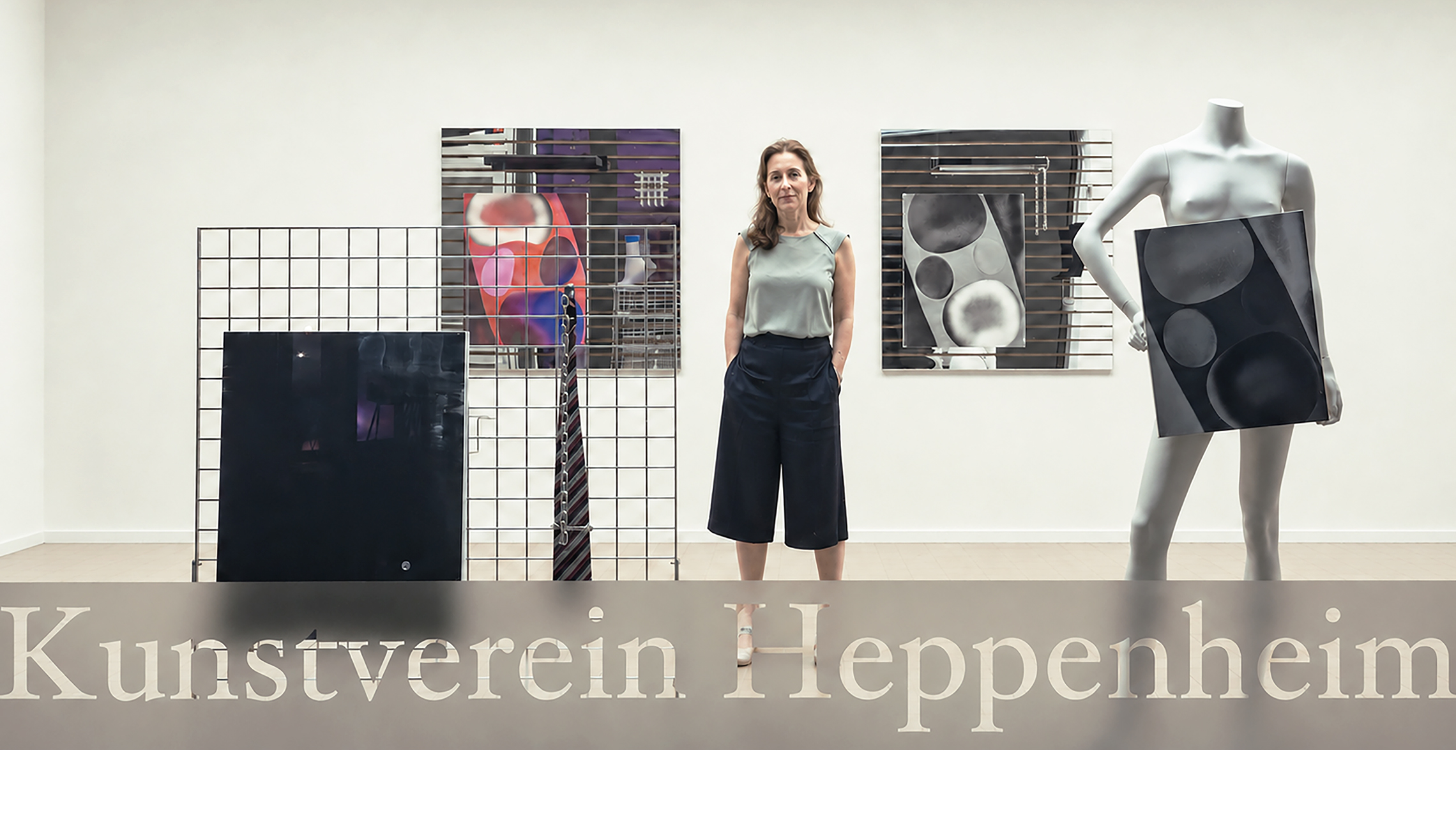
The exhibition "Six Five Four Three Two" featuring works by the New York-based artist Josephine Meckseper at the Heppenheim Art Society.
 9 min read
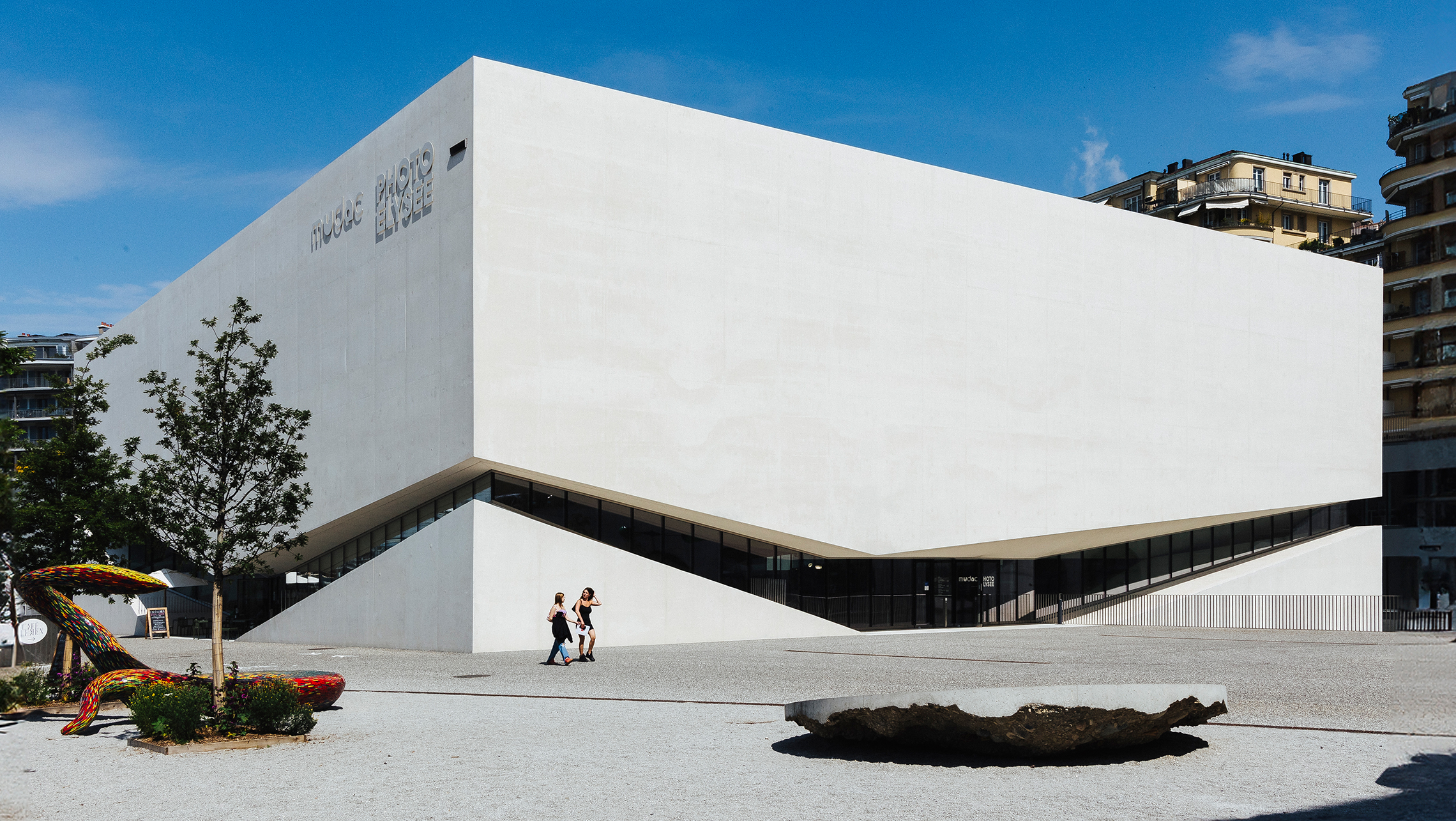
In the new premises of Plateforme 10 in Lausanne, the Photo Elysée Museum can finally unfold its potential.
 12 min read