 8 min read
 8 min read
"Sois belle et tais-toi" – be beautiful and keep quiet! Delphine Seyrig was constantly being told this phrase when she contradicted her male director as an actress. In English, no one would say that; in French, they would – even a song by Serge Gainsbourg was called that – because belle Here is something like bravo, kind That's what Seyrig meant. But Seyrig's video from the 1970s is titled that because it details exactly what was demanded of actresses: they were supposed to be beautiful and keep their mouths shut, as Seyrig's interviews with around twenty female colleagues from Jane Fonda to Juliet Berto prove.
Lost in Translation: "Resisting Muses" is the title of the exhibition at the Württembergischen Kunstverein about "Delphine Seyrig and the feminist video collectives in France in the 1970s and 1980s". This is a translation of the title. Insoumuses, under which Delphine Seyrig, Carole Roussopoulos and Ioana Wieder joined forces as video activists. A wordplay. Insoumis means literally not subject to. By doing that i by an u replacing them, they brought those who initially The muses are having fun – The muses are having fun – they had even tightened their stance even more. The ironic tone of those who do not want to be bossed around becomes humor-free resistance in German.

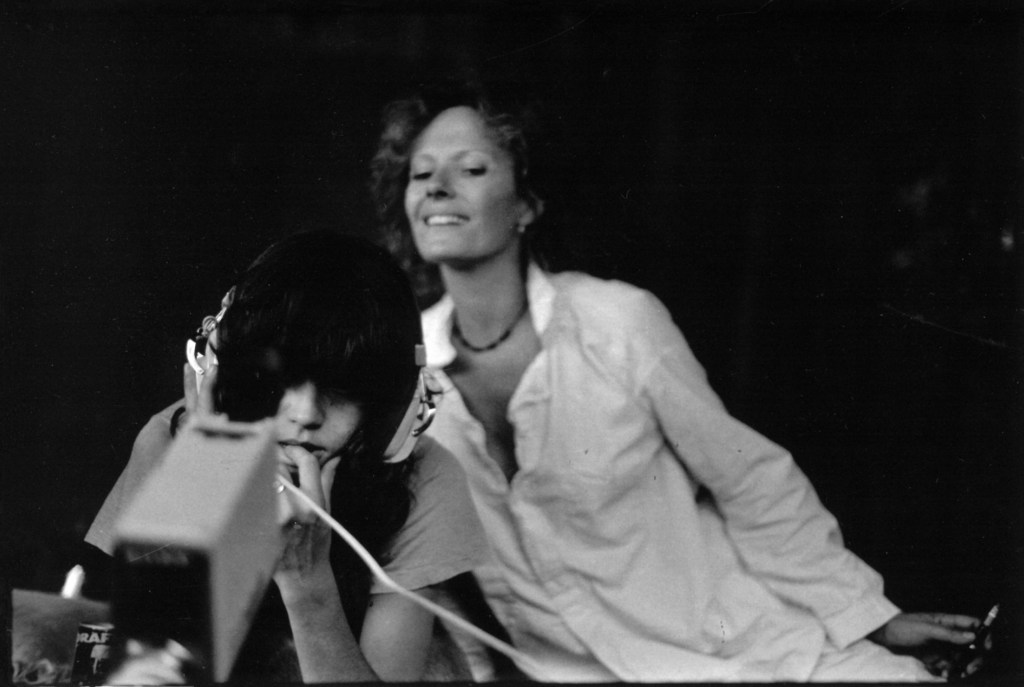
In the interview, Seyrig rejects the term militant – Activist – off, because she is primarily comedienne – Actress – be. Here too, attention should be paid to the subtext; she could have said the same thing. actress The three muses amused themselves with the fact that their video "Miso et Maso vont en bateau" – roughly: Miso and Maso in a boat – is based on a talk round with Françoise Giroud, the State Secretary for the Status of Women on December 30, 1975. Miso, that is the misogynist women's enemies who are allegedly the better lovers, a statement that the women's commissioner, Maso, the masochist, does not contradict. "Just one more day and the year of the woman is over", it is said right at the beginning: "Ouf!" is written in a speech bubble. In intertitles, images of Simone de Beauvoir and a women's demo, through repetitions of particularly embarrassing statements or by singing in between, they add a refreshing, sarcastic comment to the conversation. When Miso and Maso are sitting in a boat, it is said at some point that Maso falls into the water. "Plouff".


The muses did not hold back. In another video, Seyrig, in the center of the image, dictates the "Scum Manifesto" to Roussopoulos, written in 1967 by Valerie Solanas, who the following year carried out an assassination attempt on Andy Warhol. "The man is a biological accident," Seyrig reads, while Roussopoulos presses two fingers into the keys and military footage can be seen in the background: "He is not even fit to be a soldier." Scum Means filth. Toppling the government, abolishing the money system and the men: that is the only solution for Solanas. In the end, Roussopoulos stops typing, and the television broadcasts images of a peace demonstration by Catholic and Protestant women in Northern Ireland.

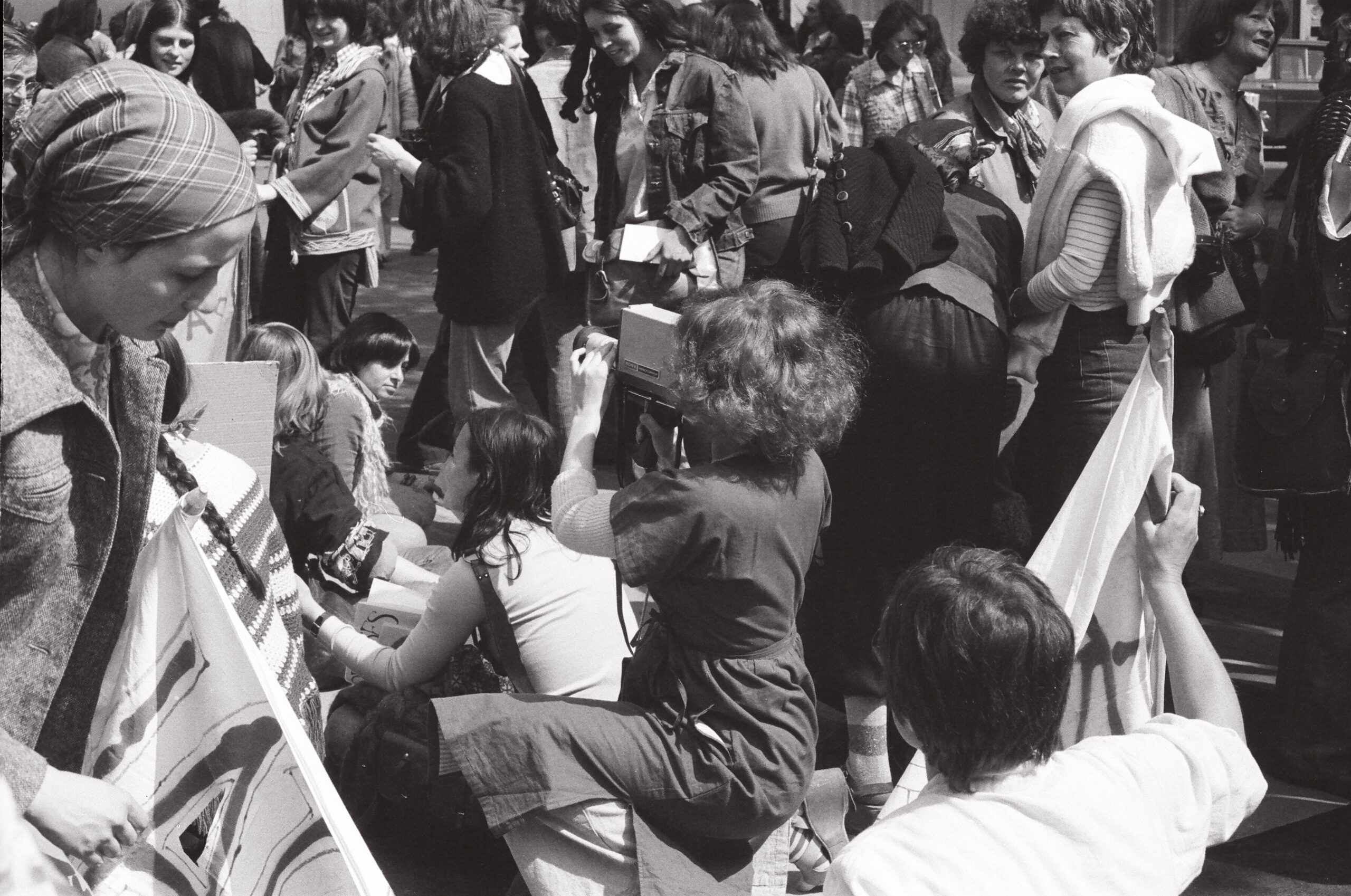
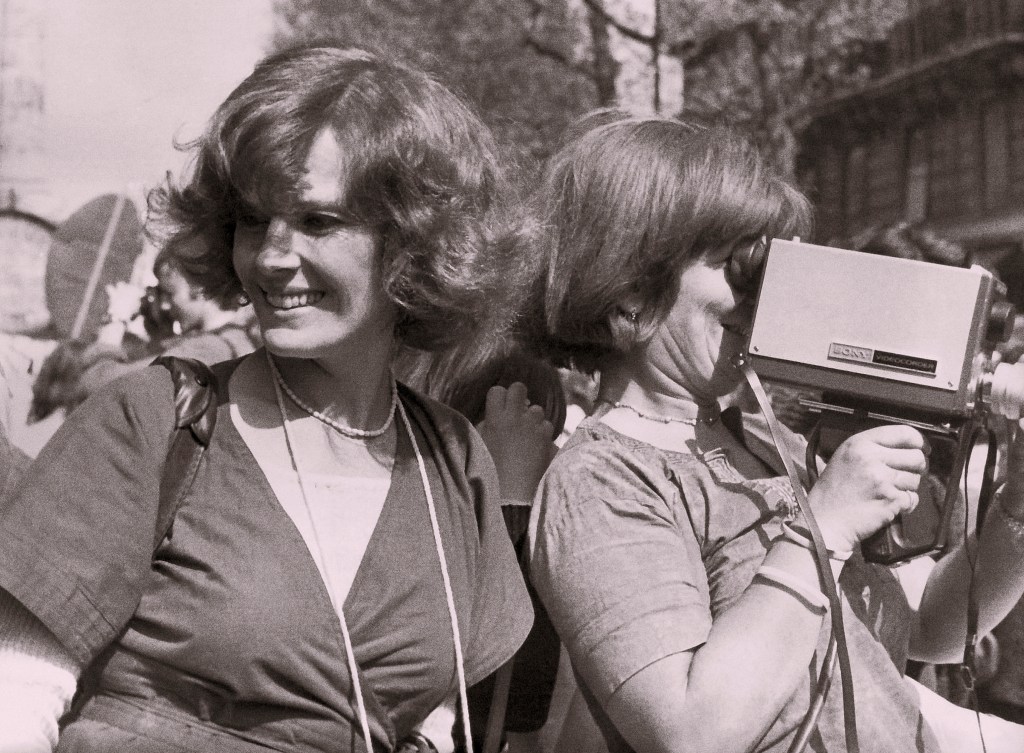
Roussopoulos was the first woman in France to become a Sony Portapak, Seyrig acquired the first portable video camera and, with her husband Paul, founded what was probably the first video activist collective. When Seyrig attended her video course with Wieder, who she had known since childhood in Lebanon, Roussopoulos was the only one who did not know who she was. Because at least in avant-garde circles Seyrig had been a well-known figure since her starring role in Alain Resnais' "Last Year in Marienbad". She had acted in theater, including with Samuel Beckett. Harold Pinter had translated her into French. She made her film debut in "Pull My Daisy", the twenty-minute film about the Beatniks by Robert Frank. She starred in films by François Truffaut and Jean-Luc Godard. None of this is on display in the exhibition; there is no room for it, say the curators Nataša Petrešin-Bachelez and Giovanna Zapperi; in previous exhibitions in Madrid and Vienna this was different. So the somewhat paradoxical observation remains that Seyrig is named in the title because – as one would already know – she is the more well-known figure, whereas, in terms of the medium of video, Roussopoulos should actually be mentioned first.
"It struck me that the people directly affected never had anything to say," was Roussopoulos' remarkable insight, which has not lost its relevance. "Always someone else spoke for them: experts, union representatives, and so on." She explained her decision to use the video medium as follows: "The people I choose to interview can watch the sequence a few times. This gives them control over their image and their statements." Her first video shows a statement by Jean Genet for Angela Davis, who had just been arrested and faced the threat of the death penalty in the worst case. This was followed by the Young Lords, originally a Puerto Rican street gang from Chicago that had become a nationwide civil rights organization; a press conference by Vietnam veterans against the war; a look at the Munich Olympic bombing; the funeral of Mahmoud al Hamchari, the PLO representative murdered by the Israeli secret service Mossad in France; later an interview with the black lawyer Flo Kennedy. Then follows, prominently featured, a video by Françoise Dasques, about the UN World Women's Conference in 1985 in Nairobi.
But who is Françoise Dasques and what does she have to do with Seyrig and Roussopoulos? The exhibition does not reveal this, not even the English-language catalogue that the Museo Reina Sofia has published as a PDF file under the title "Françoise Dasques: The Art of the Illusion". https://www.museoreinasofia.es/en/publicaciones/musas-insumisas Free of charge. Dasques is an art historian; her film was produced on behalf of the Centre audivisuel Simone de Beauvoir, which had launched the Insoumuses in 1982 to preserve the video documents of a decade of the women’s movement and commission new ones. The exhibition consists of videos, mostly excerpts from this archive, which is also the theme at the end. However, the information on who Mahmoud Al Hamschari or Flo Kennedy were is lacking. A handful of thematic focal points are highlighted. Compulsory for the women's movement: Roussopoulos filmed the first gay-lesbian demonstration in Paris, a prostitute congress in Lyon and an abortion demonstration, giving this film the beautiful title "Y'a qu'à pas baiser" – "Just don't fuck." Not exactly an invitation from the director to men to fight back, but the comment of a conservative passerby. However, most people agree with the protesters.
Seyrig was involved in the antipsychiatry movement since she played the art brut artist Aloïse Corbaz in a film by Liliane de Kermadec in 1975, who had been admitted to psychiatric hospitals since 1918 at the age of 32. In 1986 she visited Mary Barnes, who had been undergoing treatment at one of the movement’s founders, Ronald D. Laing, and had started painting there. The director Abraham Ségal filmed the encounter in a film in which Barnes paints a picture that is now on display in the exhibition.
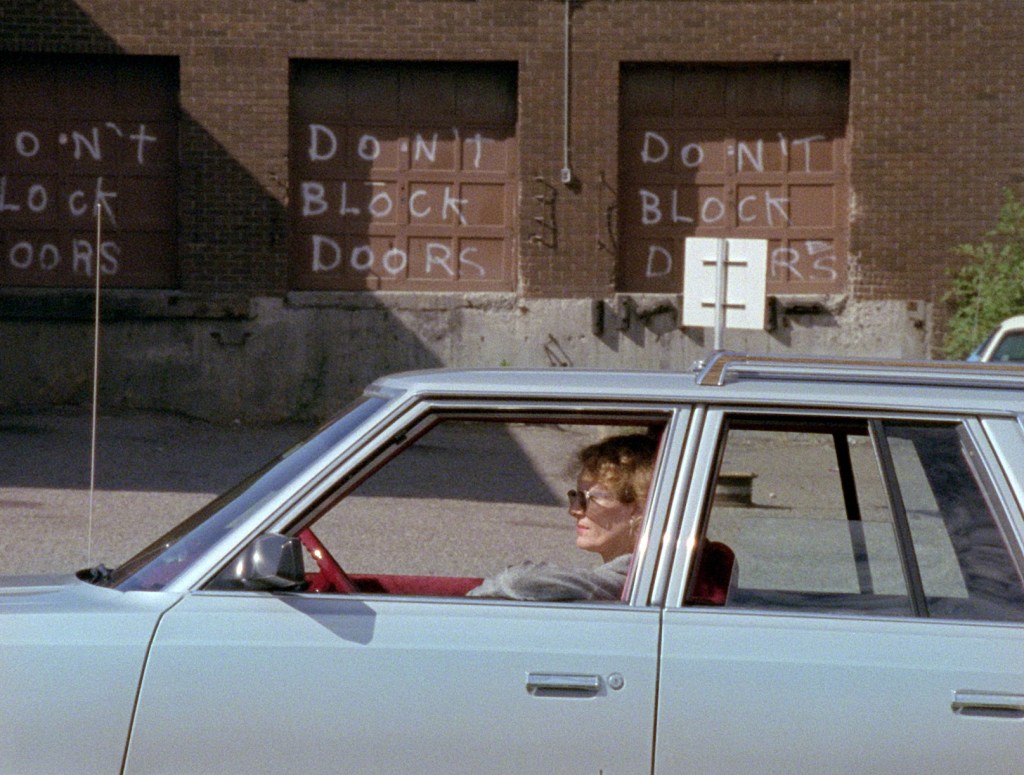
The medium of video offered Seyrig "the opportunity to make films without having to ask anyone for anything […] I found it fantastic to suddenly become a director from an actress." However, after the founding of the Centre audivisuel Simone de Beauvoir has not made any more videos. As an actress, in 1975, with the film "Jeanette Dielmann" by Chantal Akerman, something changed for her. "It is no coincidence that Chantal asked me for this film," she explains. "Here I am not just an actress, but I act in a context that means something to me." In the same year, she played the lead role in Marguerite Duras' "India Song", later in films by Ulrike Ottinger. At the end of her life, Seyrig died in 1990; she still wanted to make a film about the Wild West icon Calamity Jane, based on her letters to her daughter. It was to be a silent film, but she could not find any funding for it. However, the French-American filmmaker Babette Mangolte has recorded her journey to Billings, Montana, in search of people who knew the daughter, and recently made a film from it, which is now on display in the exhibition alongside other documents about the project.
Extracts from many of the videos shown can also be viewed on the website of the Centre audivisuel Simone de Beauvoir: https://base.centre-simone-de-beauvoir.com/diaz-510-0-0-1.html?ref=51f814f34b290368766c2daad3cbf076&
The Kunstmuseen Krefeld are dedicating the first retrospective in Germany to Charlotte Perriand’s multifaceted and astonishingly contemporary work.
 7 min read
In the new premises of Plateforme 10 in Lausanne, the Photo Elysée Museum can finally unfold its potential.
 12 min read
Alex Katz at the Tübingen Art Gallery
 8 min read