 7 min read
 7 min read
Capital is a voracious machine. It devours, as Luc Boltanski and Ève Chiapello have shown, every rebellion and turns it back into a marketable product. Nothing could better illustrate this process than Cindy Sherman. Anti-Fashion – that is the title of her exhibition in the Stuttgart State Gallery chosen by the artist herself. For capitalism, as can be read in Gilles Deleuze and Félix Guattari, is based on desire or wanting, as desire It is also translated. And the perfect example of this is fashion.
When Sherman, known in the mid-1970s for her photographic role self-portraits, first took on a commission from a fashion label in 1984, the brand was called Dorothée Bis annumed, she wanted to shock. Sensual, vulgar poses, faces as pale as junkies, the model as a mannequin, a pimple-faced face, a protruding busty appendage. The image that the State Gallery owns from this series is comparatively harmless, perhaps only the pale, dullly staring face that lends some gravitas. The magazine Vogue She did not publish the photos. But soon, fashion began to adopt such provocative poses. And Sherman, who wanted to question the circus of the fashion world, was suddenly asked to be a fashion photographer.

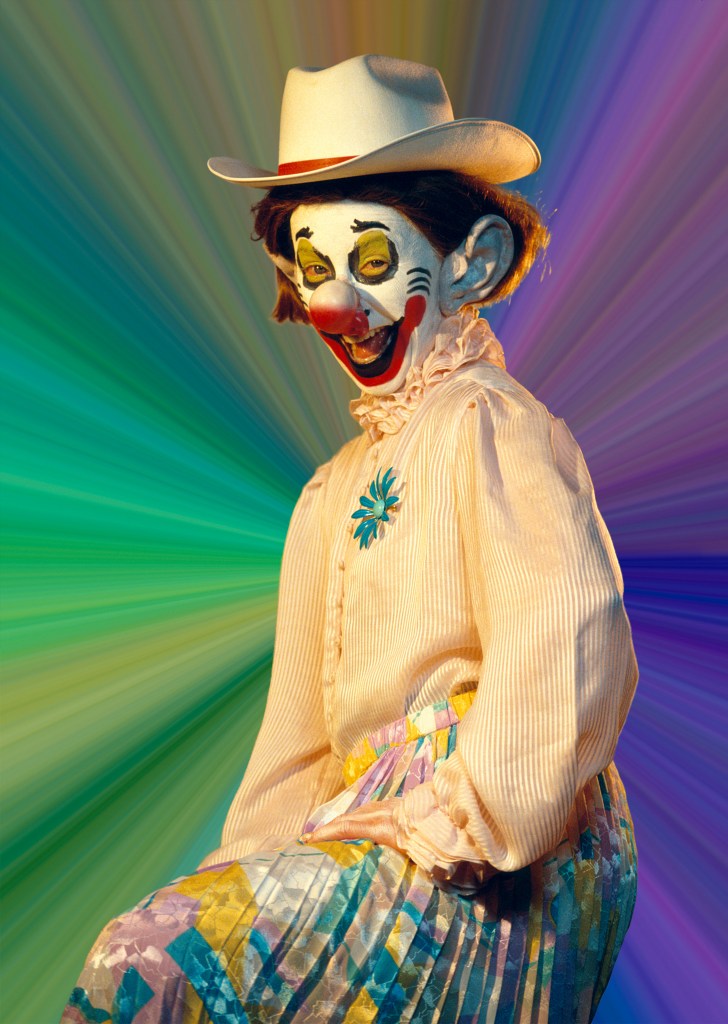
Many aspects of Cindy Sherman can be seen: the transition from the analog, small-format black-and-white photography of her early years to the large-format color prints made possible in the early 1980s; or the gender-related issues that are much discussed today, as she questions the established roles portrayed in her self-portraits. But these aspects have often been the subject of discussion. When she was commissioned two years ago to curate an exhibition about Sherman, Alessandra Nappo says she was not entirely enthusiastic. Hadn't everything already been said? She immersed herself in the subject and eventually found a new perspective: fashion photography. "I didn't even realize," admits herself State Gallery Director Christiane Lange, "that interaction with haute couture takes place among the clowns and party girls." Shermans Clowns It was created in 2003 on behalf of British Vogue, The aging partygoers in costumes from the label Balenciaga 2007/08 for the magazine Pop One.
On closer inspection, one could certainly conclude that the artist had intended from the outset to collaborate with the fashion world. Indeed, as early as 1976, she had already altered the covers of magazines such as Vogue, By intensifying the lipstick, opening her mouth, and winking with her eyes as if she were addressing the viewer directly, she showed that she was not just posing for the camera. From the same period, the exhibition shows a cut-up film in which she tries on various dresses as a dress-up doll, until a large hand grabs her and tucks her back into a plastic bag in her underwear.
Starting from these initial beginnings, the exhibition traces the various stages of Sherman’s collaboration with the fashion world. It includes the provocative images of the 1980s and the Clowns and Partygirls Followed by eight large-format images from the series Men for the first men's collection by Stella McCartney, the daughter of the Beatles guitarist: androgynous figures in masculine poses, broad-shouldered, hands in their pockets, the hand in the gesture of possession on the shoulder of a second, this time imagined as a female figure, who also embodies Sherman, so that due to the similarity an element of irritation arises.
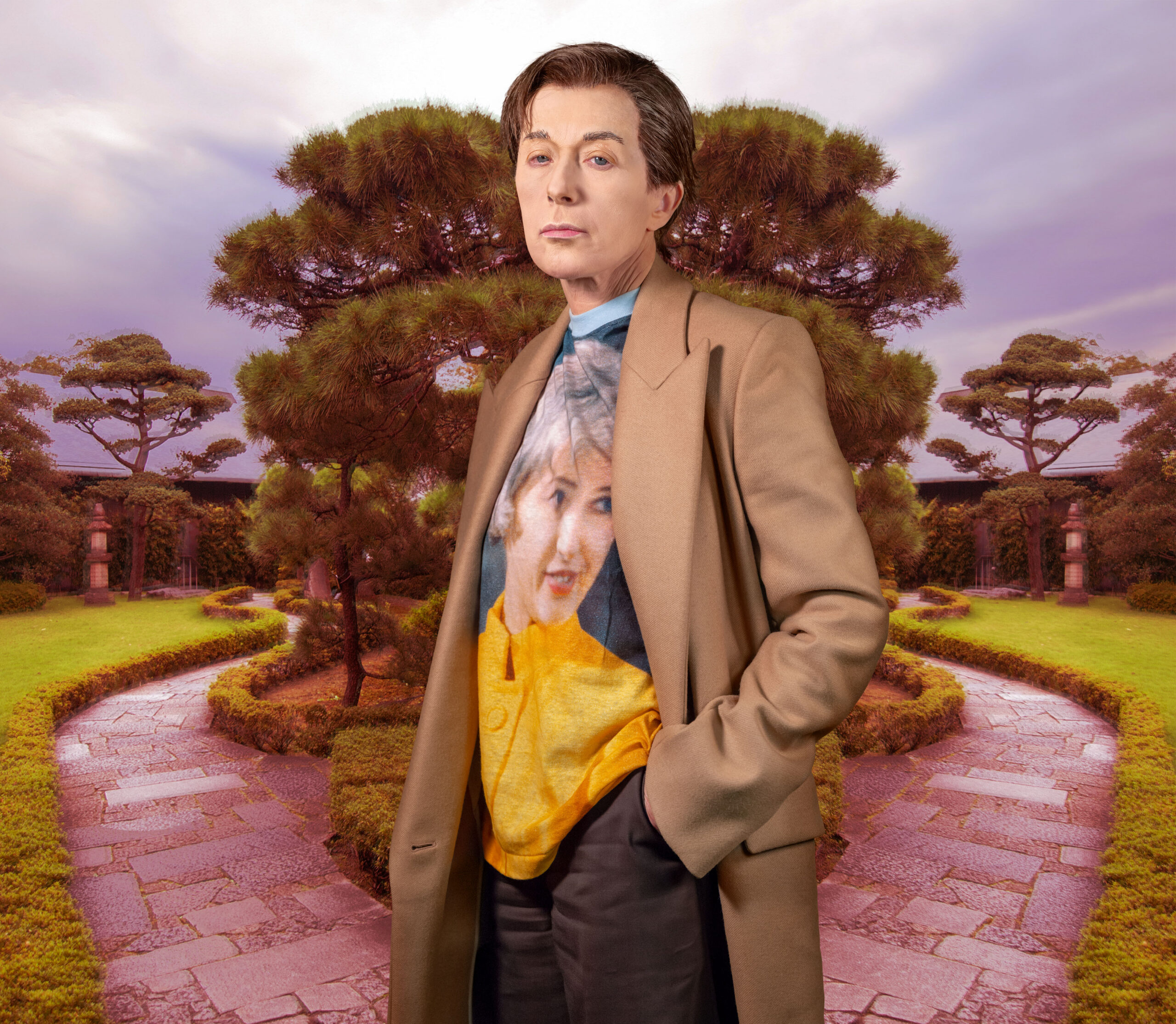
But nothing remains of the rebellious gestures of the first fashion works here. Men and couples from the upper class are depicted: One poses with a blurred expression in front of a symmetrical park, and the portrait of the young woman in the bright yellow costume, which protrudes from her T-shirt under a light brown coat, cannot really provoke. Sherman goes so far as to imitate Baroque portrait painting when a young nobleman stands historically in silk brocade on a terrace in front of the backdrop of a Mediterranean bay, perhaps the Gulf of Naples. In another image, in which male and female figures are hardly distinguishable, she slightly enlarges the faces in the violets of the forest background: an effect of digital processing that she achieves in the Clowns-The series has been used for the first time. The photographic techniques and the gender theme therefore also play a role here. But "anti" can hardly be mentioned anymore. Rather, one could speak of an auratic exaggeration.
If this can be increased even further, Sherman does so in the series created in 2010. Landscapes. The wide formats now recall more than ever canvas painting. For the scenic backgrounds, the artist has traveled from island to island: New York Shelter Island, Island, Capri, Stromboli – the finest tourism in costumes from the brand’s archive Chanel. In order to avoid staining the precious pieces, legend has it that she didn’t apply any makeup this time and instead digitally edited the footage.
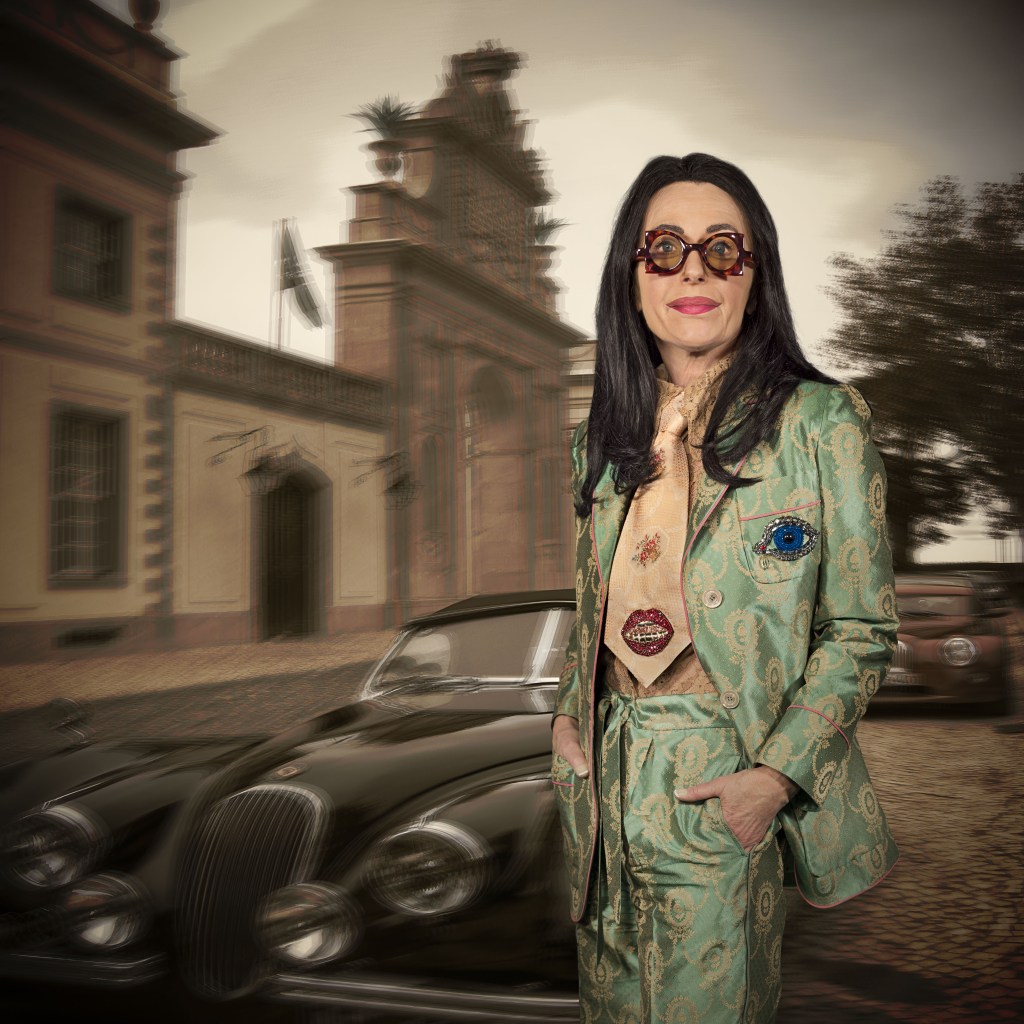
The magazine indicates that the clothing items are valuable objects. Harper's Bazaar in an article about Project Twirl His readers certainly know this. The artist costs between around 4,000 and more than 20,000 dollars for what she wears in the photos on her body. It is supposed to be a satire on Instagram photos of models posing in public: something that Sherman, who works in the studio, normally avoids. But who says that the photos were taken outdoors? The motif that the exhibition announces – for example: Sherman in green Gucci-The article shows a costume with extravagant glasses against the blurred background of a Baroque church and an old car – Harper's Bazaar in identical form in front of the facade of a Baroque palazzo, in front of which six men stand with stretched umbrellas. The blurred backgrounds are elaborately processed. This is called color sublimation printing on aluminum carrier.

Are the figures depicted here "victims of beauty standards and behavioral patterns," as stated in an announcement by the Deichtorhallen in Hamburg, where the exhibition will be on view from October? Of course, the characters portrayed are also, in a certain sense, victims of the role models they emulate. But no one forces them to do so. In the same way that no one forces Cindy Sherman to pose in $20,000 worth of clothes. Fashion Victims Alessandra Nappo had initially proposed the title "Art of Fashion Photography". The artist did not like it. The fashion world, which she once wanted to provoke with her provocative gestures, has long since embraced Sherman. The question that the exhibition does not ask, however, is: Where exactly does the boundary between art and fashion photography run? The photos, which are featured in the exhibition, are a testament to the fact that the line between art and fashion photography is blurred. Vogue or Harper's Bazaar The photographs taken are hung on the walls like canvas paintings. Their use on the covers of magazines is shown separately, as an attachment in the graphic studio. But is fashion photography art? Or is art, as far as the art market is concerned, where Sherman earns millions for individual works, nothing more than a form of fashion?
Even so, Alessandra Nappo has succeeded in pulling off a coup with the exhibition. As she recounts, Sherman was immediately enthusiastic when she first called in New York. The materials in the graphic arts studio, starting with an edition of Andy Warhol's lifestyle magazine designed by her, Interview, The works are all from the artist’s own collection and have never been shown publicly before. Sherman and fashion: No exhibition has yet been dedicated to this subject, which is why the Deichtorhallen and the Antwerpen Fotomuseum decided to take on the project. Only in this way was it possible to cover the costs, emphasizes Christiane Lange. The transport costs have increased by 60 percent. And only one work comes from the museum’s own collection. Although the State Gallery owns four more, Nappo adds, they did not fit the theme.
The Kunstmuseen Krefeld are dedicating the first retrospective in Germany to Charlotte Perriand’s multifaceted and astonishingly contemporary work.
 7 min read
In the new premises of Plateforme 10 in Lausanne, the Photo Elysée Museum can finally unfold its potential.
 12 min read
Alex Katz at the Tübingen Art Gallery
 8 min read