 6 min read
 6 min read
This exhibition was about crumbling landscapes and slaughtered animals; it was a testimony to a shattered sense of life and an existence on the margins of society. The artist’s averted gaze on the photo poster selected by the art collection for the entrance area seemed to fit well with this.
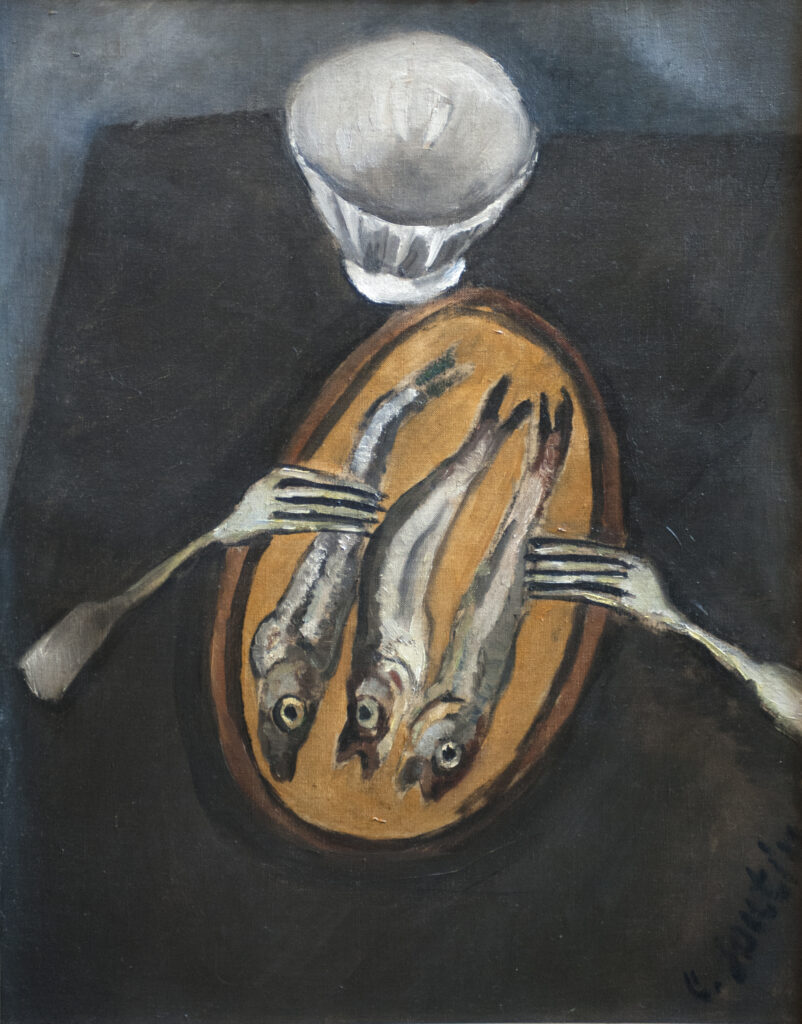
A corresponding surprise given the two still lifes at the beginning of the painting gallery, which could easily be read as a modern interpretation of their genre. It is the first encounter with original works by the painter Chaïm Soutine (1893–1943), and instead of the expected drama, one discovers grandiose paintings, including many impressive portraits.
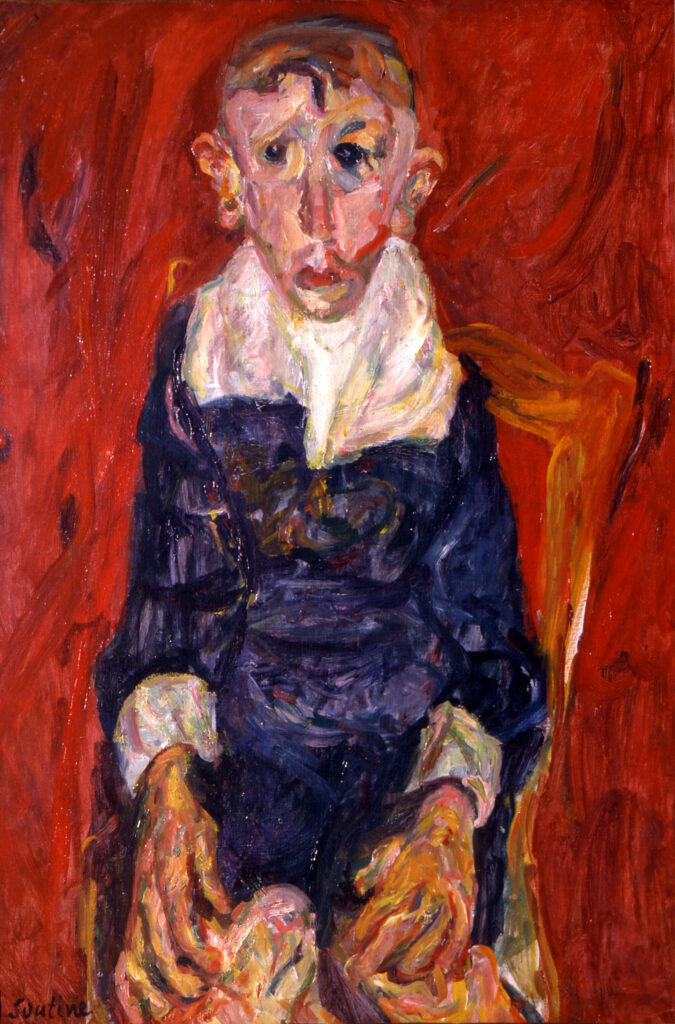
A portrait shows a boy in a blue suit with a white collar and cuffs on a chair against a red background. It is painted in a motionless style and on closer inspection many more colors are found in the contrasting color fields that are used as accents or are connected during the painting process. The dramatic title of the painting is "Dorftrottel" (1920) – who gave this name to the child is unknown. But the painter has captured the child's uncertainty and discomfort in a touching way, who presumably does not sit in his Sunday suit voluntarily.
Chaïm Soutine created still lifes, portraits, and landscapes, and probably did not use photographs or sketches for his paintings; instead, he painted in the studio or in nature directly in front of the selected subject of the painting.
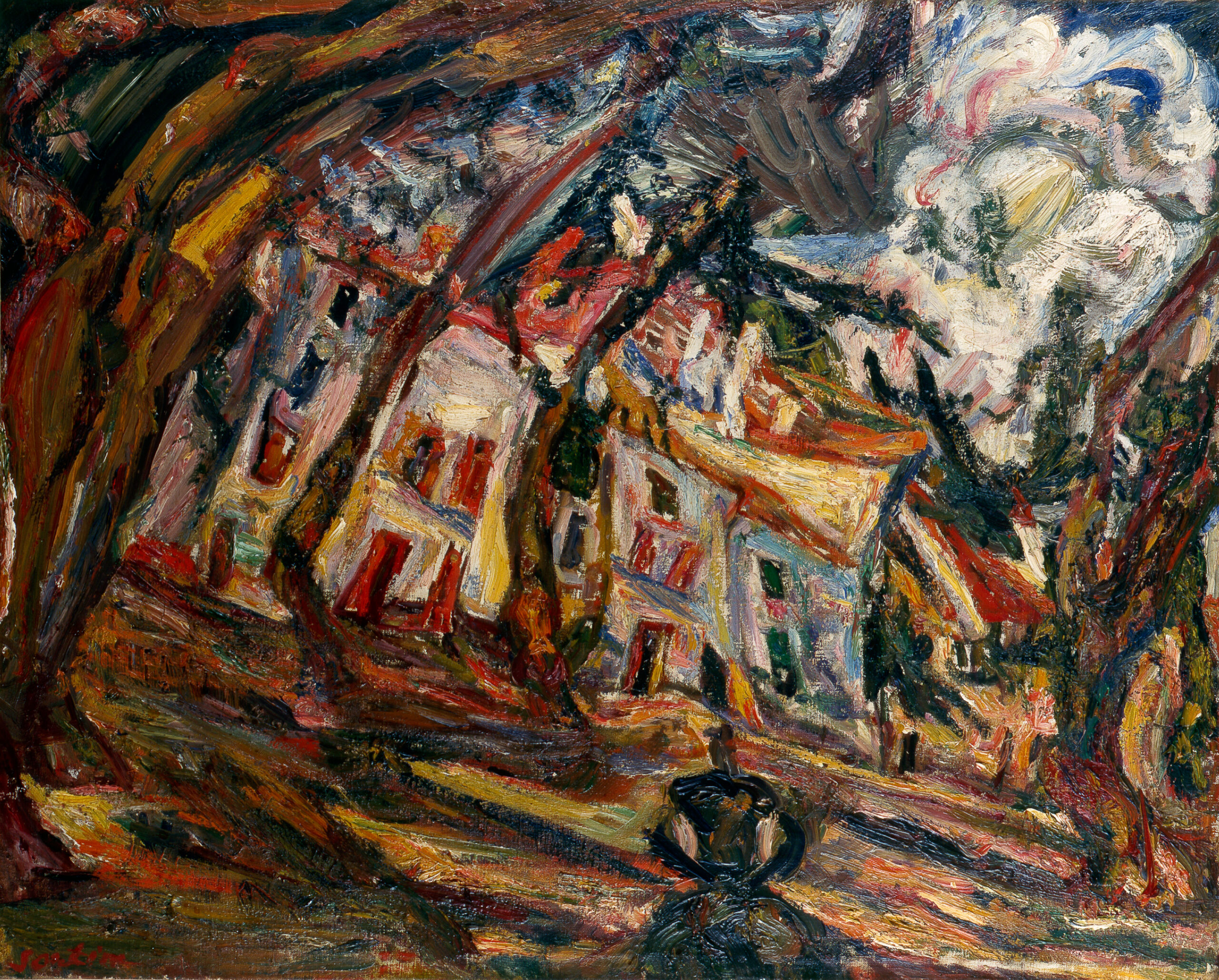
In addition to his handling of color, which sometimes seems to take precedence over the subject matter and sometimes creates abstract moments in the figurative representation, the unusual pictorial architecture of the works is also noticeable during the tour. For example, when Soutine invites the viewer to follow a path in the diagonal direction and a house appears in opposite alignment that seems to support the rest of the small group of buildings, as in "Village Square in Céret" (1920).
The approximately 60 paintings from international collections present a work that surprises and fascinates with its vitality and artistic daring. The fact that the last comprehensive presentation of Soutine in Germany took place more than forty years ago may explain why this artist is so little known here. He is one of the classics of modern art and, what may be even more crucial for his current significance, is considered an essential impetus for painting after 1945 to the present day.
Chaïm Soutine received his first artistic training in Minsk and Vilnius. When he arrived in Paris in 1913, the Fauves had already emerged, ideas of Cubism and Futurism were being developed, Marcel Duchamp constructed his first Readymade and soon after Dada was welcomed with open arms.
The twenty-year-old decides to study at Fernand Cormon’s school of art at the École des Beaux-Arts, where before the turn of the century Émile Bernard and Vincent van Gogh had already studied. At the same time, he begins his studies of the old masters in the halls of the Louvre, some of which would become sources of inspiration over the years. But he also observes contemporary art and considers, for example, what Cubism could offer in its development.
Like many artists and writers who came to Paris at the time, more or less destitute, Soutine found his first accommodation in the artist’s house La Ruche, whose over one hundred studios now house not only two fellow students from Vilnius, but also Marc Chagall and Fernand Léger. Soutine soon moved to the artist’s colony Cité Falguière, where he could share an atelier with the sculptor Oscar Miestchaninoff and meet Jacques Lipchitz and Amadeo Modigliani.
Modigliani becomes a close friend, who in 1916 convinces his art dealer Léopold Zborowski to also commit himself to Soutine. Two years later, Soutine is able to travel to the Côte d'Azur for the first time with the two, and in 1919 Zborowski contracts him on modest terms and enables him to spend three years in the Pyrenean town of Céret. Although Soutine himself questions the results of his work, the works created there cause a sensation.
In the winter of 1922, the American art collector Albert C. Barnes was on a shopping trip in Paris. He discovered Chaïm Souatine’s portrait of a pastry chef from Céret and subsequently bought more than fifty of his paintings. Although the financial success remained modest – the price per piece was about 20 dollars and the dealers also had to contribute – the fabulous story immediately made the artist famous in Paris. Interest in his work grew in France and the United States and soon in Switzerland as well. The Parisian art critic Adolphe Basler, who had been polemizing against him for years, cynically wrote in 1928: "Who hasn’t today had their own little Soutine?"
In early 1923, Chaïm Soutine first traveled to the Côte d'Azur to paint in Cagnes-sur-Mer. If one considers the curved rhythm and the dense colorfulness of his "Landscape in Cagnes" (1923), one might think that he wanted to recapture the experience he had after the Barnes visit.
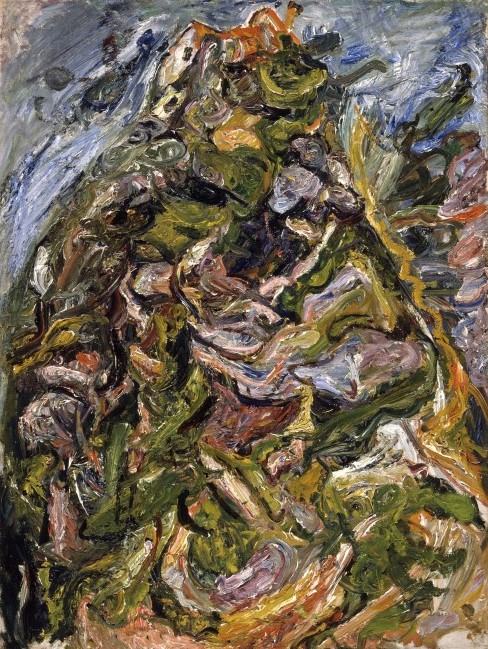
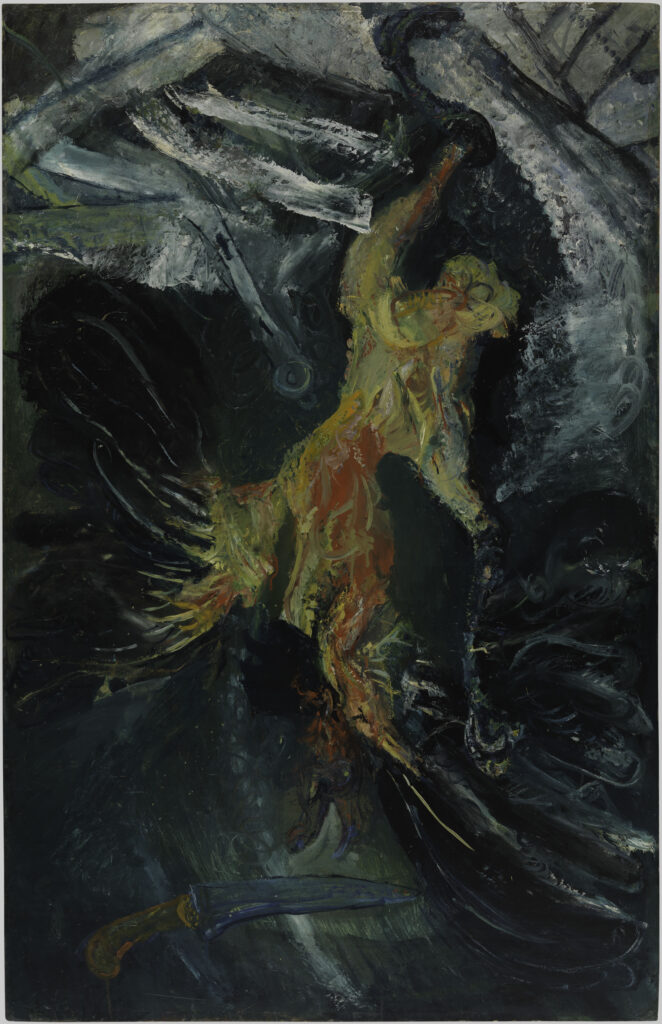
The work on a series of paintings begun the previous year, for which Jean Siméon Chardin's "La raie" (1728) from the Louvre apparently provided the inspiration, leads to the "Still Life with Roaches" (1923), in which the color is once again allowed to become self-actualizing. In the confrontation with Rembrandt van Rijn's "Le Boeuf écorché" (1655), large-format paintings of cow halves emerge in 1925, characterized by a red-blue contrast and the motif's anchoring in the pictorial space. Another series focuses on feathered poultry. It is probably the specific subject matter that led the painter to develop "Hanging Poultry" (1925) in a way that borders on abstraction.
Soutine’s living conditions remain uncertain in the coming years despite the growing recognition and new patrons. In the mid-1930s, health problems also intensify, and the Second World War already shows its effects for the Jewish immigrant, even before the German army arrives in France. In 1943, Chaïm Soutine dies in Paris from a lingering stomach ulcer.
The appreciation of his work by subsequent artists begins with Bernard Buffet, who experienced the first retrospective in 1945 in Paris as "insanely interesting". At the 1950 exhibition opened at the MoMA in New York, the Abstract Expressionists recognized their predecessor in his work, and Willem de Kooning his model for the connection between gestural painting and monumental figurative form for the "Woman" paintings. Francis Bacon was interested in individual motifs and the intensity of color. The art student Georg Baselitz found a symbol in a still life with a cow as a metaphor for his own perception of the world. In the accompanying interview film accompanying the exhibition, Dana Schutz praises the painterly details, such as a small yellow line that in the center of the painting of the roe deer gives a kind of life of its own.
Chaïm Soutine indeed inspired a wide range of painters. Thanks to the Düsseldorf exhibition, the public interested in art is now given the opportunity to get to know an artist whose multifaceted work can still inspire even without psychoanalytic interpretations.
The Kunstmuseen Krefeld are dedicating the first retrospective in Germany to Charlotte Perriand’s multifaceted and astonishingly contemporary work.
 7 min read
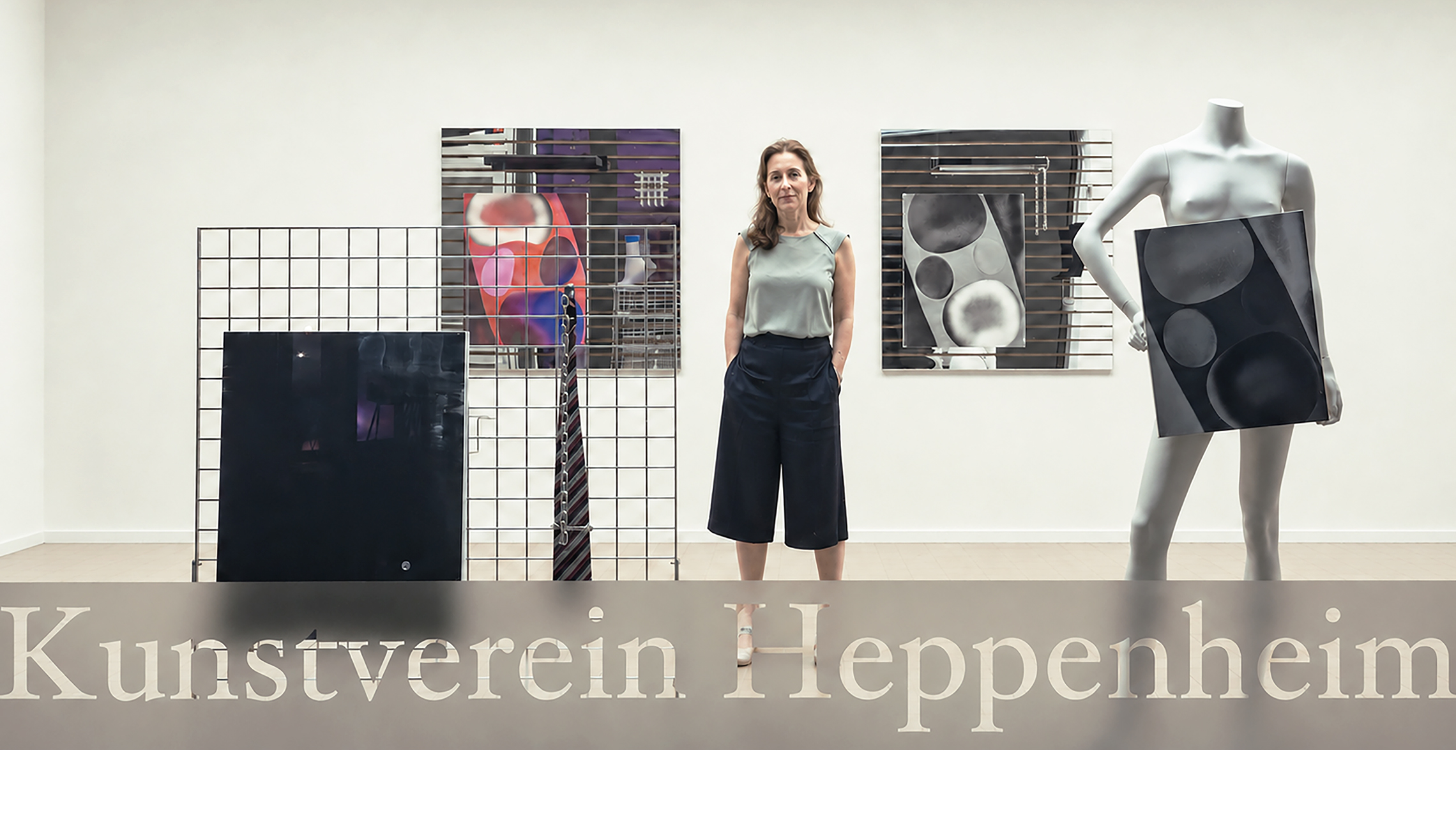
The exhibition "Six Five Four Three Two" featuring works by the New York-based artist Josephine Meckseper at the Heppenheim Art Society.
 9 min read
In the new premises of Plateforme 10 in Lausanne, the Photo Elysée Museum can finally unfold its potential.
 12 min read