
 8 min read
 8 min read
Images from Mongolia rarely find their way into our media. And even if, for example, the Pope comes to visit in early September: what is there to see? A few scenes from the center of Ulanbatar; people; preferably on horseback or in colorful costumes; a yurt must definitely be included in the picture. Two or three stereotypical images are enough to make it clear what kind of country it is.
Anyone who wants to know what life is like in Mongolia beyond the tourist clichés, what moves the people, and what problems exist, can currently get excellent insights at Stadthaus Ulm. Works by ten photographers are on display there, almost all of them local residents: university-educated photographers or newcomers who disseminate their work in various ways, from a photo agency to the internet. What they all have in common is that they take a loving, critical look at their country.
The photographic gaze is not dependent on sights or spectacular events. A small boy is enough; he is dangling his grandfather’s arm under his arm on the bus. Erkhbayar Tsengel’s large-format color photographs are carefully composed and not tied to a single subject. In front of a hilly landscape, a monk holds a ladder. It leads nowhere. Title: Stairway to Heaven.


In a series of black-and-white photographs, Injinaash Bor has taken a look at teenagers: at school, at the prom, with a wild Iroquois cut in a rock concert, on a motorcycle on their way to the countryside. Attempts at escape from a reality shaped by 65 years of communism, between Russia and China, isolated from the Western world. Bor likes to play with reflections in the mirror. Actresss put on makeup. An older couple dances. A color photograph stands out: From the window of a luxury restaurant on the top floor of a high-rise building, the view opens onto the capital Ulanbatar: the world of the elite, detached from the problems of grey everyday life.
The majority of people in Mongolia profess Buddhism. But while there were still 100,000 monks in 1924, at the beginning of the People's Republic, there are only a few hundred today. Taij Taichar shows them in the everyday life of today's world. The tradition of horse racing still exists, for example at Nadaam, the national festival in July, or in freezing cold in the winter. Davaanyam Delgerjargal has seen this firsthand. The spectators drive by in their cars because the races are over distances of up to 30 kilometers. The riders are children between the ages of five and 13. "Many children fall off the horses during the race," says the photographer. But: "When I photograph, I take no sides. I just try to capture the true reality of what is happening."
Schärfer reacts to Agnuush, who also appears as a successful blogger, vlogger, and street art artist. She has posted life-size portraits of convicted cannabis users from prison in an underpass and attached handwritten statements from them. Although hemp has a long tradition in Mongolia, smokers face draconian penalties. "I am the kind of person that their society does not want, the kind they hate," one writes. "Cannabis should never be referred to as a drug. Used for medical purposes, the plant can cure many types of cancer and allergic diseases."
Some see life in the yurt as romantic and idyllic. Ungene Batna paints a different picture. There is an increasing exodus from the countryside. The newcomers in the city live in the Ger districts. Ger is the Mongolian word for yurt: a kind of slum without electricity and running water. Young girls train to escape poverty – as acrobats or gymnasts.
Environmental problems are a major reason for rural exodus. Companies that mine coal pump groundwater because Chinese buyers of washed coal pay more, notes Bat-Orgil Battulga, an economist by training: Water for the herds is becoming scarce. His impressive series of images is also a tribute to water: the Chandmana treasure, as the nomads say, from the depths that sustain life.
With coal, the people of Ulanbaatar have also until recently been heating their homes with it. Due to the devastating air quality, the government banned it a few years ago. An Al-Jazeera film, At the Coalface, in which three of the photographers involved in the exhibition contributed, documents the last days of a small group of miners who, on their own initiative, dug up the coal and sold it directly to the residents of the capital. A photo series by Munkhgerel Purevkhuu, who once studied fashion design and participated in the film as a production assistant and sound technician, has been exhibited.
Nathalie Daoust also addresses the topic of coal in an unusual and entirely unique way. She has printed portraits of nomads using coal powder on a yurt fabric. These appear extremely tangible, as if one could simply slide aside a black-and-white veil to engage with them. At the same time, paradoxically, the spatial and seemingly temporal distance is palpable, as if the images are from the past. Daoust initiated the exhibition. Six years ago she was already involved in a city-house exhibition about North Korea: a similarly remote and unknown country.


With exhibitions like these, the Stadthaus has over time developed into one of the first destinations for photography exhibitions. Not as large as the Biennale for Contemporary Photography in Mannheim, Ludwigshafen and Heidelberg, but more focused. And that’s not just on big names like C/O in Berlin, but rather thematically. Although in Ulm, celebrities such as Jim Rakete, Abbas, Nick Brandt, Timm Rautert, Herlinde Koelbl, Douglas Kirkland or Barbara Klemm were already exhibited. This development was by no means inevitable for the Stadthaus. Thirty years old is the initially fiercely controversial building by Richard Meier. The program includes concerts, dance events, lectures and exhibitions, with photography playing a major role for the first time around 15 years ago.
This may have contributed to the fact that Karla Nieraad, who has worked at Stadthaus since the beginning and has been running the house since 2005, is interested in photography and also curates exhibitions herself. But the local environment also played a role: Since 2007, the Weishaupt Art Gallery has been located there; since 2011, the HfG Archive of the former Ulm University of Design. The topics they dealt with initially were also represented in Stadthaus, which had to reposition itself accordingly. A growing network of independent curators and international cooperation partners also contributes to this. With synergy effects: In parallel with the opening exhibition curated by Okwui Enwezor of the new Ulm Walther Collection on African portrait photography, a large exhibition on South African photography took place at Stadthaus during the 2010 FIFA World Cup. A large exhibition on West African photography in Stadthaus, curated by Stuttgart-based Germanist Bärbel Küster, was supported by the Walther Collection in 2014. Daniela Yvonne Baumann, director of the Neu-Ulm collection from 2015 to 2019, is today one of the most active curators at the Stadthaus. Meanwhile, the Walther Collection is currently showing the South African photographers Santu Mofokeng and David Goldblatt.
The global focus is one of the special features of the Stadthaus program. In recent years, exhibitions have been held on the Sahel zone, the Guantanamo Bay detention camp, or Indonesian domestic workers in Hong Kong. But politicians from Willy Brandt to Angela Merkel have also been the subject of attention, as have scientific fields ranging from microorganisms to the universe. "Explaining the world," the title of the concept on the website reads, but the sentence then goes on to say: "they may not explain it – the photos – but at least some aspects." All of this is certainly meant to be educational and political as well: Unleashing democracy: Justice! The title of a photo competition for young people aged 10 to 25, the results of which are currently also on display in the Stadthaus.
The title motif of the previous exhibition by Johanna-Maria Fritz shows how important it can be to take a different perspective on the world and to show images that would otherwise not appear in the media. Her theme was Circus culture in Islamic countries. The image shows a clown on stilts with juggling hoops in Gaza, looking back at a Jeep with Hamas militants. No, the majority population in the Gaza Strip, which now has to bear the consequences of the Israeli reprisals, is not made up of terrorists. They long for normalcy, peace, and a little joy in the gray everyday life. This is what the photo makes immediately recognizable.
The Stadthaus Ulm is hosting a photography exhibition Mongolia. Contemporary photographs until November 1st.
The results of the competition Trigger democracy They can also be seen at the Stadthaus Ulm until November 1st.
The exhibition Side by side The Walther Collection runs until November 19th.
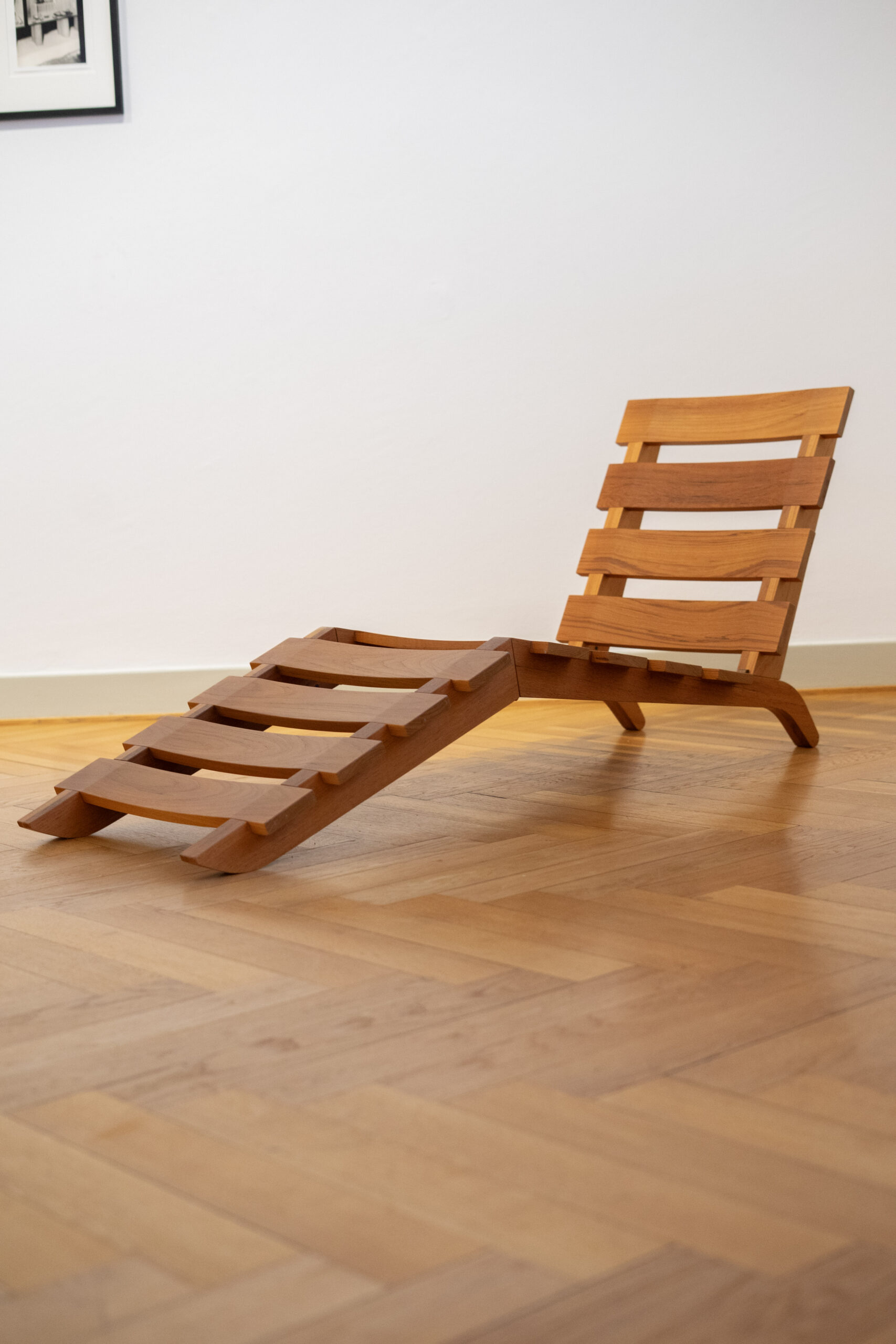
The Kunstmuseen Krefeld are dedicating the first retrospective in Germany to Charlotte Perriand’s multifaceted and astonishingly contemporary work.
 7 min read
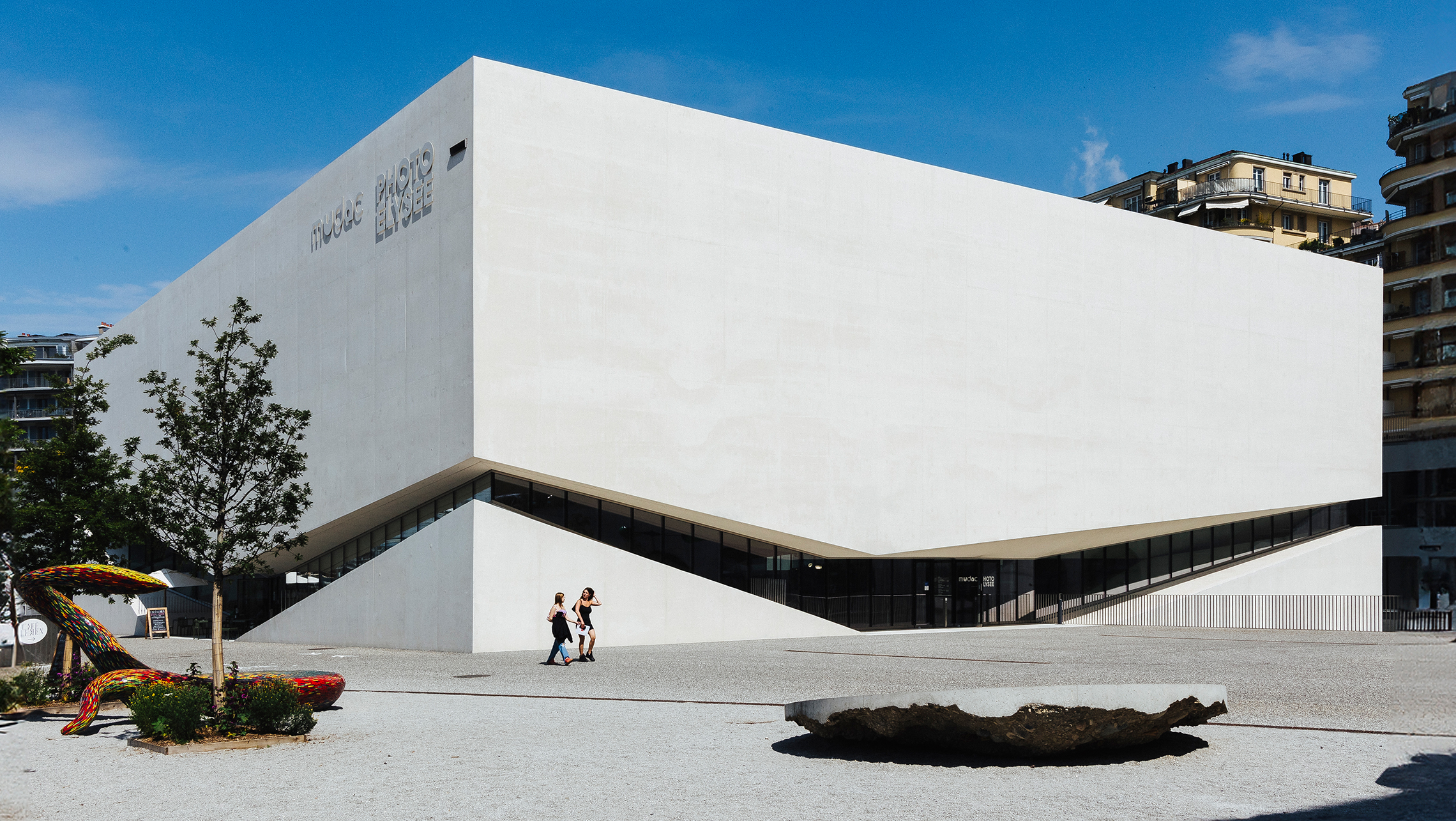
In the new premises of Plateforme 10 in Lausanne, the Photo Elysée Museum can finally unfold its potential.
 12 min read
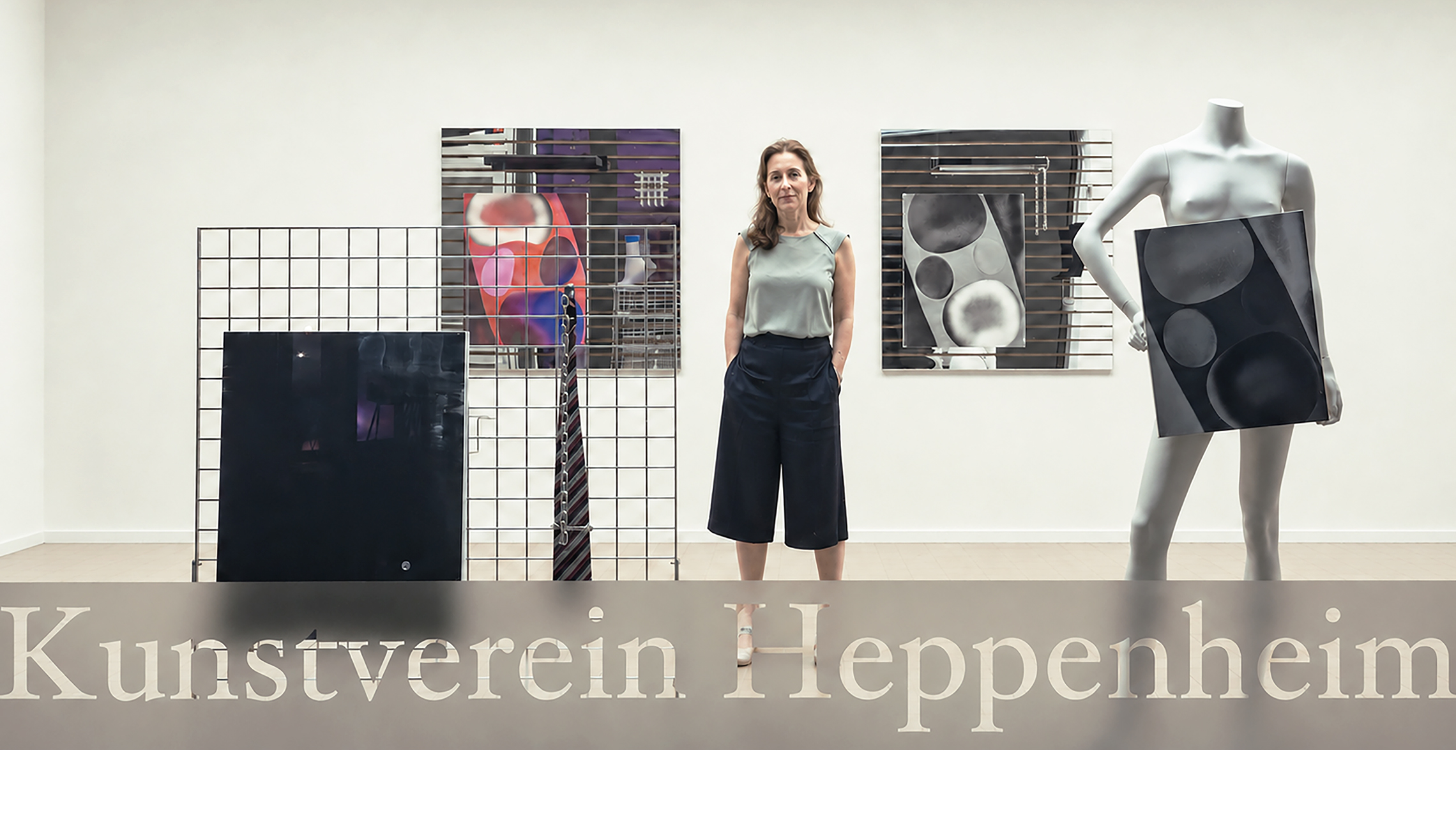
The exhibition "Six Five Four Three Two" featuring works by the New York-based artist Josephine Meckseper at the Heppenheim Art Society.
 9 min read