 10 min read
 10 min read
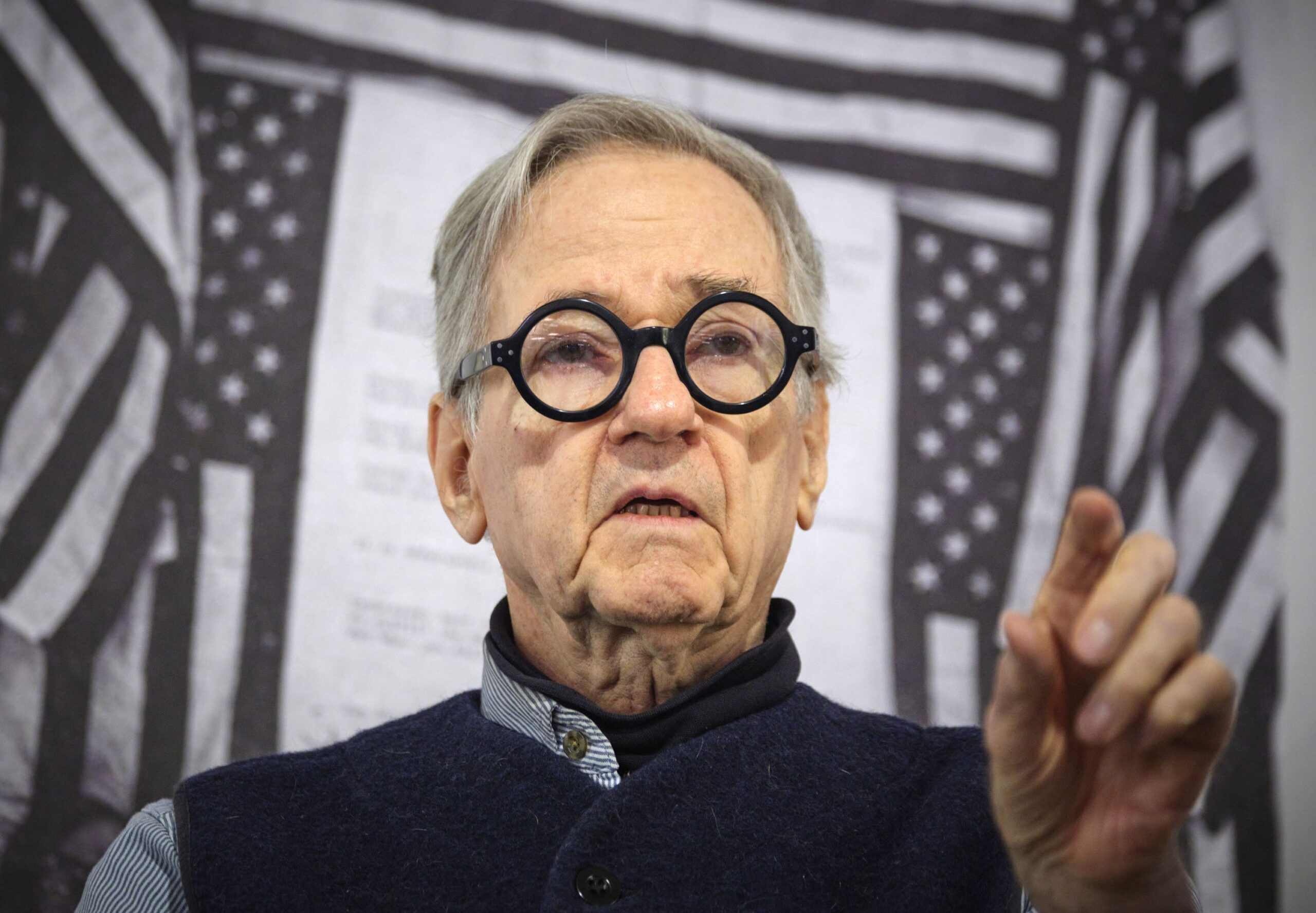
Three men and three women dance through the exhibition space, following a choreography by Yvonne Rainer: Naked, with the American flag tied around their necks like a shawl. And that in a Baptist church. More specifically, in the gallery spaces in the basement of the church. Judson Memorial Church in Greenwich Village, one of the most radical places of art in New York in the 1960s. For the People's Flag Show In November 1970, Jon Hendricks, who had been running the gallery for five years, invited artists, including Faith Ringgold and Jean Toche, to create their own version of the American flag. Because, as Ringgold writes in her call for entries, "a flag that does not belong to the people should be burned and forgotten.".

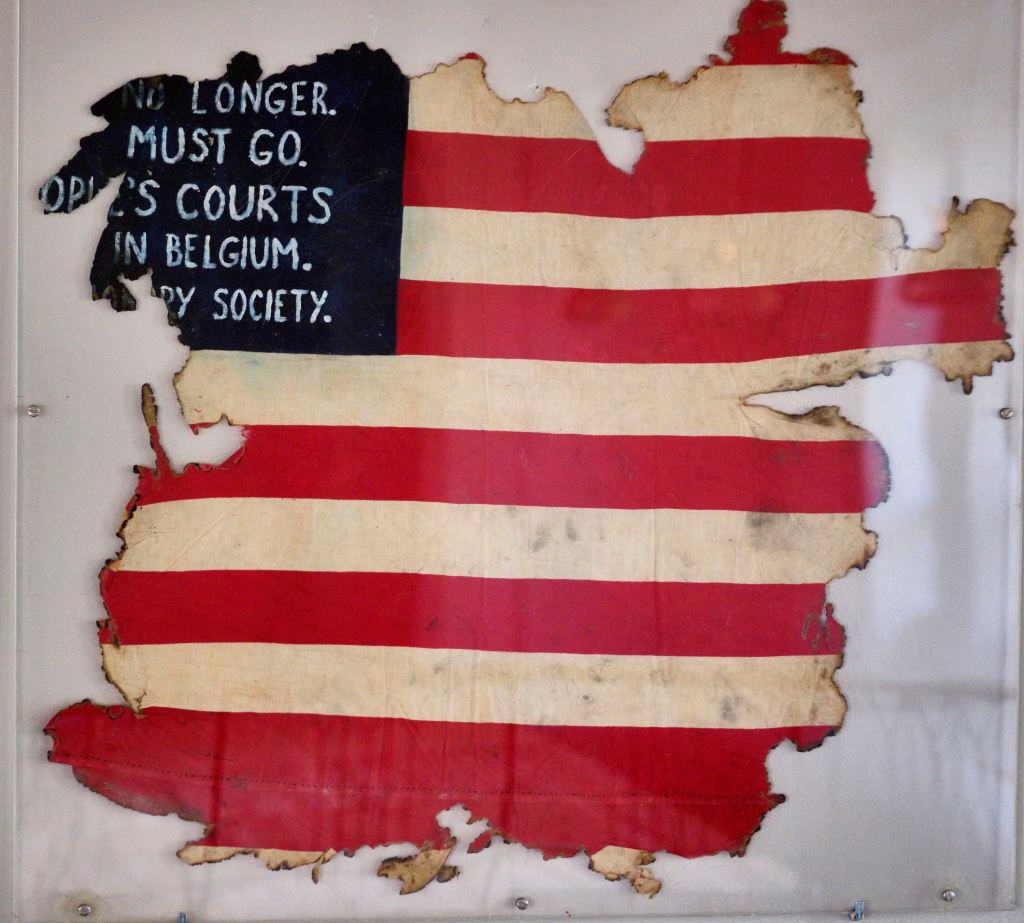
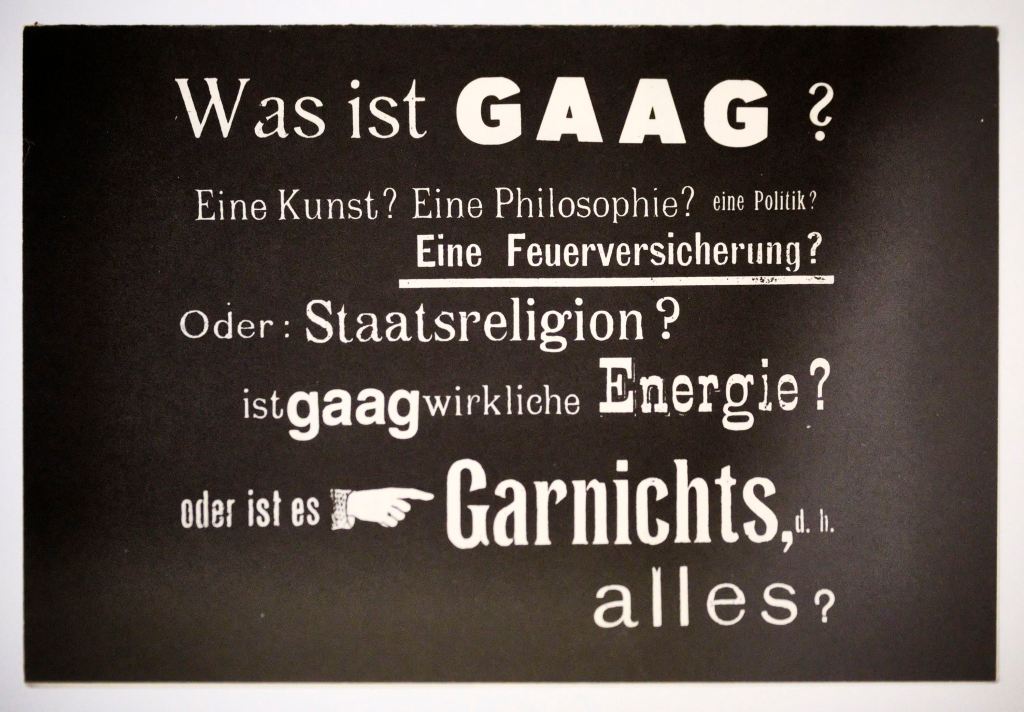
In the exhibition about the Guerilla Art Action Group (GAAG) in the Kunstverein Neuhausen shows the dance scene in a black-and-white film. The art association, outside the city limits of Stuttgart, is also located in a church, more precisely in a former Jesuit church. Neuhausen was a Catholic enclave in Protestant Württemberg. Hendricks arrived a few days before the opening. In 1969 he founded GAAG with Poppy Johnson and Toche, as a particularly radical group within the larger Art Workers Coalition. To mark the opening of People's Flag Show Hendricks and Toche burned a sack filled with bones and innards in protest against the napalm incendiary bombs used in the Vietnam War. After four days, the three initiators, the "Judson 3", were arrested from the exhibition and sentenced to fines of $100 per person. It was not until more than a decade later that the Supreme Court indirectly ruled in their favor.
The GAAG was at the beginning of radical political action art. Hendricks refuses: "It is never something completely new," he says, referring to the Suprematists. In fact, the GAAG first appeared on October 31, 1969, when Hendricks and Toche in Museum of Modern Art (MoMA) the painting White on white They took the painting from Kasimir Malewitsch and placed it on the wall to hand in a manifesto in which they demanded that the museum sell works worth one million dollars and distribute the proceeds to the poor. The action was carefully prepared. Museum staff, witnesses and journalists, as well as an affidavit that the painting would not be damaged, finally resulted in their statement being accepted and sent to the museum management.
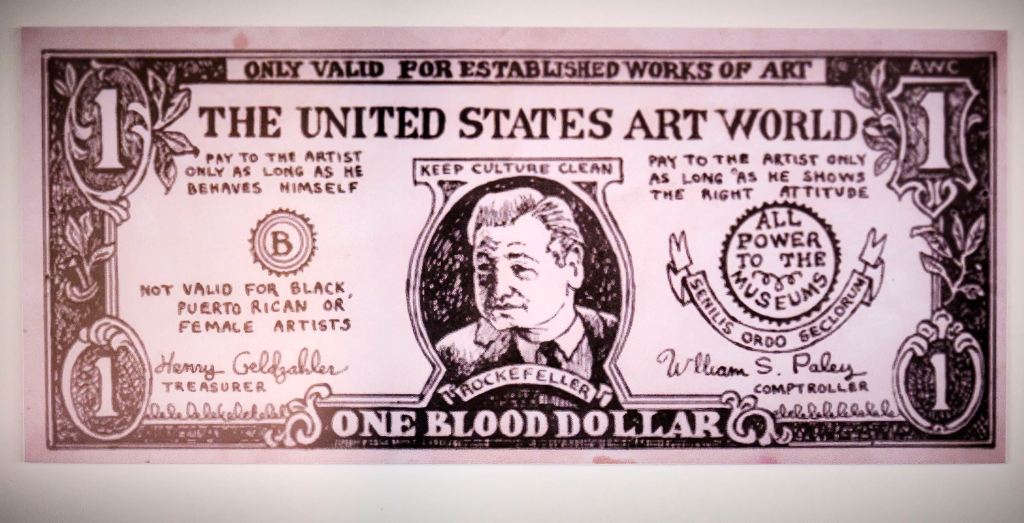
The action follows on from another one, which took place in early 1969 and led to the founding of the Art Workers Coalition (AWC) led. On January 3 of the same year, the sculptor Takis (Panagiótis Vasilákis), a Documenta participant the year before and an eyewitness to the Parisian riots, also had his own kinetic installation at the MoMA. Tele sculpture The AWC directed their protest primarily at the museums; only that the GAAG’s actions were somewhat more radical. On November 19, 1969, just three weeks after their first appearance, Hendricks, Poppy Johnson, Toche, and Silviana (Sylvia Goldsmith) spilled a red liquid in the lobby of the MoMA, tearing themselves apart in a screaming fit and lying on the ground like dead. In a flyer, they accused the Rockefellers and the museum of using art only to conceal their "brutal involvement in all aspects of the war machine." Nelson A. Rockefeller, Governor of the state of New York, sat on the board of directors of the MoMA. Prior to that, a thorough investigation had been conducted into his involvement in defense companies such as the Napalm manufacturer Dow Chemical. A Call for the Immediate Resignation of All the Rockefellers from the Board of Trustees of the Museum of Modern Art GAAG named their action.
Another action on January 3, 1970, focuses on the Kunstverein Neuhausen, because Hendricks was also a member of the Committee of Artists' Posters was another subgroup of the AWC that produced the poster Q: And Babies? Eight artists have lifted this poster up into the air on a black-and-white photo tape stretched across the wall in Neuhausen: in front of Pablo Picasso’s painting. Guernica, Painted in 1937 in protest against German air raids on the Basque city. The poster in turn is based on a color photograph of the My Lai massacre, taken by Ronald L. Haeberle and published in the magazine Newsweek, "That shows the bodies on a country road," Hendricks said. Above it, in red ink, it says "Q: And babies?" and below it, "A: And babies". The question and answer came from a radio interview with a soldier. The GAAG had asked the MoMA for a contribution to funding the poster campaign. "Only over my body," William S. Paley had said, owner of the media conglomerate CBS and like Rockefeller on the board of trustees of the MoMA, Hendricks said with a smile. The poster was nevertheless printed, with the support of Haeberle and the printing company, in an edition of 50,000 copies.
How did Hendricks, a kind, reserved old man who also did not look like a rowdy in pictures from that era, come to this radicalism? "I was a conscientious objector," he explains. In 1964, when he returned from a yearlong stay in France to New York, Lyndon B. Johnson had come to power as the successor to the assassinated John F. Kennedy, and the Vietnam War was escalating. As a Quaker, Hendricks had no difficulty convincing people of his reasons for conscientious objection. But he needed a civilian service position in the Alternative service. So he came to Judson Memorial Church. In the Souterrain Gallery, Jim Dine, Claes Oldenburg and Tom Wesselman had already exhibited there in the 1960s. Allan Kaprow had staged happenings here. Then the gallery went back to sleep, but the church became the center of postmodern dance, with which Judson Dance Theater to Yvonne Rainer and Meredith Monk, who performed here for the first time.
Born in 1939, Hendricks had started as an artist. In Paris, he was close to Stanley William Hayter, who in turn introduced him to Joan Miró, whom he visited in Mallorca. His older brother Geoffrey was part of the Fluxus movement. This was his background when he revived the gallery at the Judson Memorial Church. As early as 1965, he also met Yoko Ono, whose exhibitions he has curated to this day. Did he know, in 1959 in Paris, of Guy Debord and the Situationists, who indeed strongly influenced the French 68 movement? "Only later," Hendricks replies. Didn't a similar politicization of Fluxus take place at GAAG, as in France by the Situationists towards the student revolts? "George Maciunas understood his art from the very beginning as political," he asserts.
The GAAG was not only radical in its action forms borrowed from street theater. More radical than the GAAG was the Art Workers Coalition The group was also in a sense a group of people who accepted the demands of Women's Lib and took the Black Civil Rights Movement seriously. At least as many female artists participated in the actions as male artists; among them were Black artists such as Faith Ringgold, now 93 and highly revered, although not on the same level as white male artists. Art Workers Coalition she was soon disappointed and founded her own splinter group, which Women Students and Artists for Black Artists' Liberation (WSABAL). Susanne Jakob, the head of the Neuhausen Art Society, claims that she is the first person in Germany to exhibit some of her works.
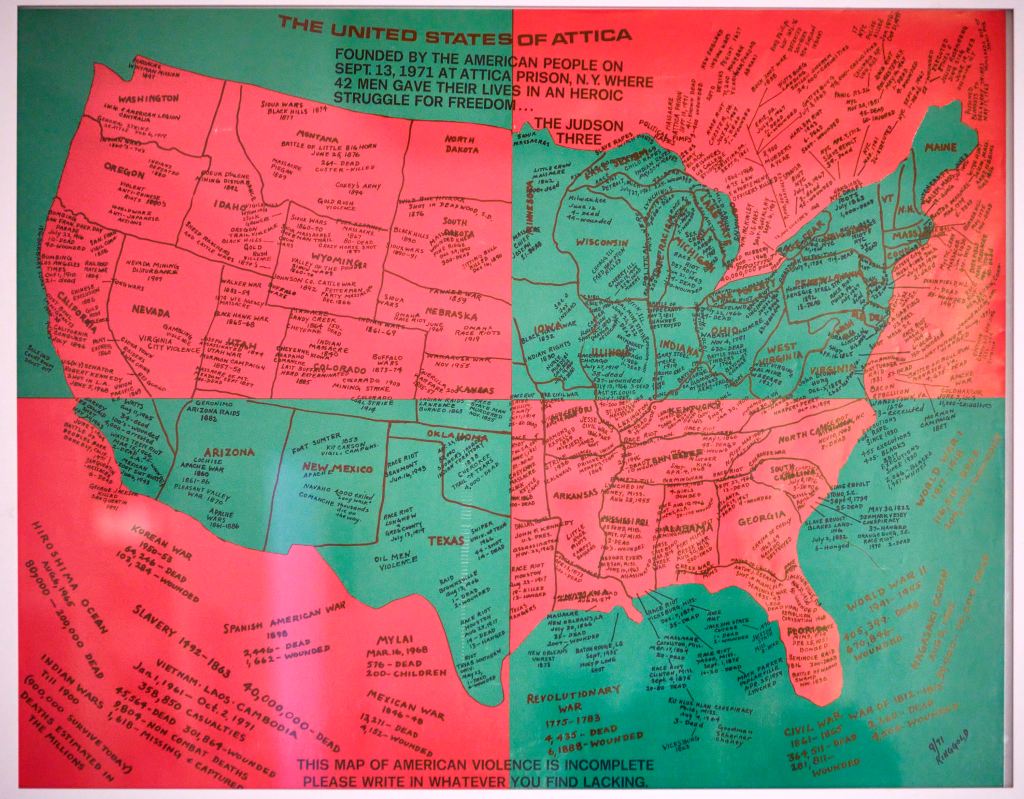
The exhibition documents the solidarity with the demands of the Black Civil Rights Movement through several exhibits that focus on the 1971 prisoner uprising in Attica State Prison The exhibition focuses on the brutal repression of the Black people by the United States government, for which Nelson A. Rockefeller was responsible. American racism was rarely more clearly exposed than at this event. The majority of the inmates in U.S. prisons were and are Black people, partly directly from former slaveholding plantations such as Angola State Prison, the largest high-security prison in the United States in the state of Louisiana. The exhibition includes, among other things, a widely distributed poster from that time, which featured gold rings for the Committee of Artists' Posters made by: a red-green map of the USA with the title United States of Attica, It records all the known rebellions of slaves, indigenous people and immigrants, as well as racist attacks since the end of the 17th century.
As much as the actions of Guerilla Art Action Group The emotions resonated, especially at the time when this type of activism was still new: they were carefully calculated. Attracting attention was one thing, whether through spectacular actions or the high standards of the printed materials. However, this was not an end in itself but aimed at spreading certain messages: for example, making Rockefeller’s involvement in arms deals public, especially given his role at the museum, which is supposed to be a place of beauty, in contrast to such less beautiful businesses. The decisive factor was the contrast between the rhetoric of beauty and the ugly facts. This strategy remained effective only to a limited extent, however, because even a print run of 50,000 pieces is nothing compared to the number of campaign posters of the parties and politicians.
This is also shown by the presidential election campaign in 1972. Hendricks printed a letter to Richard Nixon, designed by a copper engraver in beautiful calligraphy: "During your presidency, the technology of fighting and roasting has been refined," it says, and if anyone did not immediately understand the allusion, Vietnam is also explicitly mentioned. The letter was sold as a work of art to support the presidential campaign of the Democratic candidate George McGovern. A poster points to a sales event of works of art in the Leo Castelli Gallery for the same purpose. But the audience for the art was too small to have an effect in this way. There are still two posters from 1984 in the exhibition from later times: both designed by Claes Oldenburg: against US interventions in Central America and from the presidential election campaign of Ronald Reagan. Before the microphone was turned on, without realizing it, the US president blurted out: "We Begin Bombing in Five Minutes". An absurdity in the face of the danger of an atomic overkill. Reagan's statement became the title and subject of the poster.
Today, things may have changed, but the US is still waging or supporting wars with vigor. The military-industrial complex is recording record revenues; those who profit from this must remain anonymous. Little has changed regarding the racism in American society and that of other so-called Western countries, despite language regulations and anti-discrimination commissioners. Isn’t it frustrating to see how little has improved despite all the efforts? Hendricks sighs. "It’s important to take a stand," he says.
The exhibition at the Kunstverein Neuhausen runs until November 19th: TThe Guerrilla Art Action Group – Revisited; In February, a major exhibition on Yoko Ono's 91st birthday is planned at the Tate Gallery in London, in which Jon Hendricks will participate.
The Kunstmuseen Krefeld are dedicating the first retrospective in Germany to Charlotte Perriand’s multifaceted and astonishingly contemporary work.
 7 min read
In the new premises of Plateforme 10 in Lausanne, the Photo Elysée Museum can finally unfold its potential.
 12 min read
Alex Katz at the Tübingen Art Gallery
 8 min read