 6 min read
 6 min read
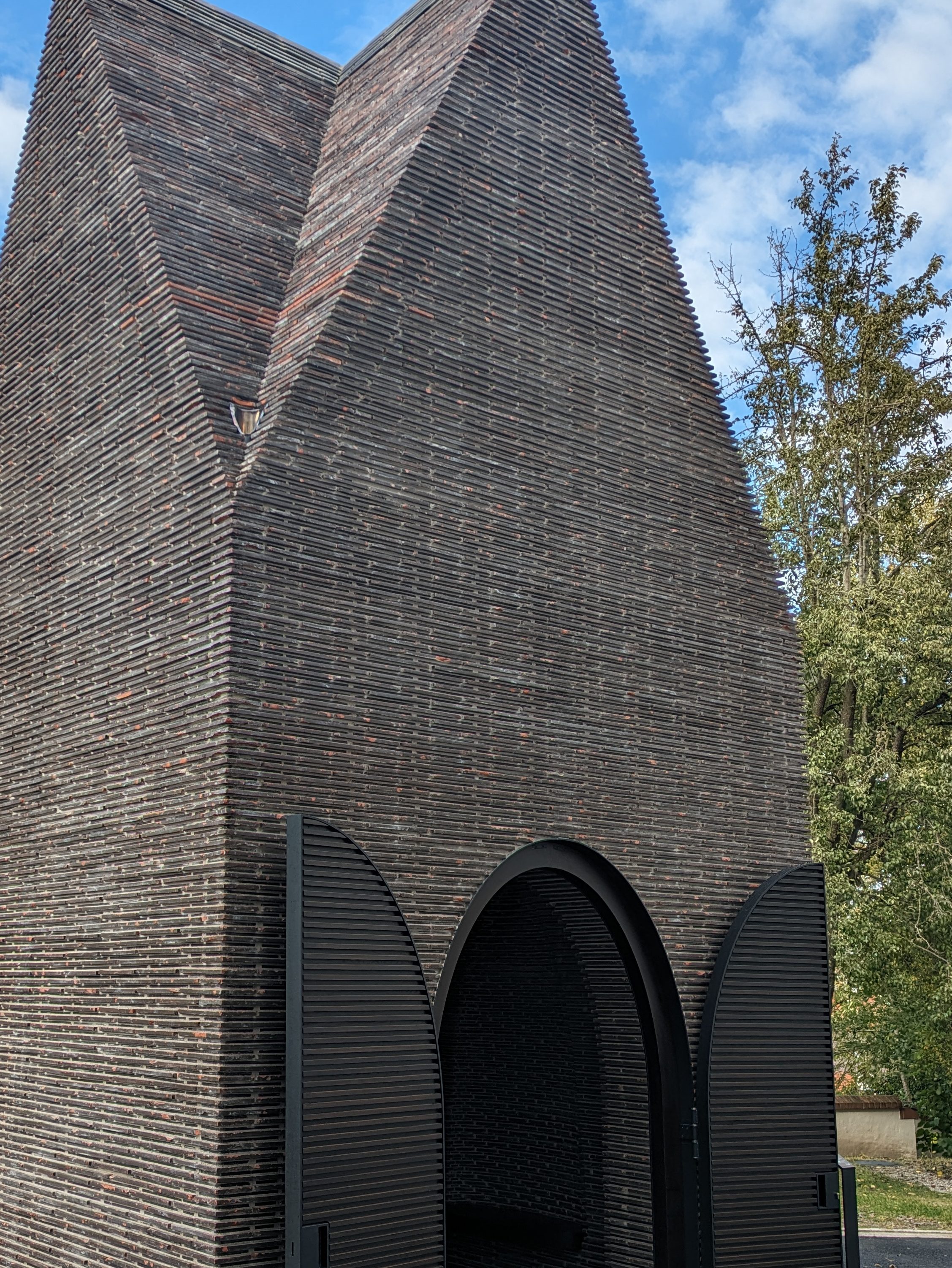
The Domberg of Freising has a new attraction. Those who enter through the inconspicuous lattice gate in the enclosure wall, climb the steep steps and then resist the temptation to settle down on the restaurant terrace of the diocesan museum, see the new landmark on their left hand, initially hidden from view by the museum. A chapel on a square plan, taller than it is wide and long, with crossed, pointed saddle roofs, built from old roof tiles of the Baroque parish church of St. George in Ruhpolding: St. Mary's Chapel by Kiki Smith.
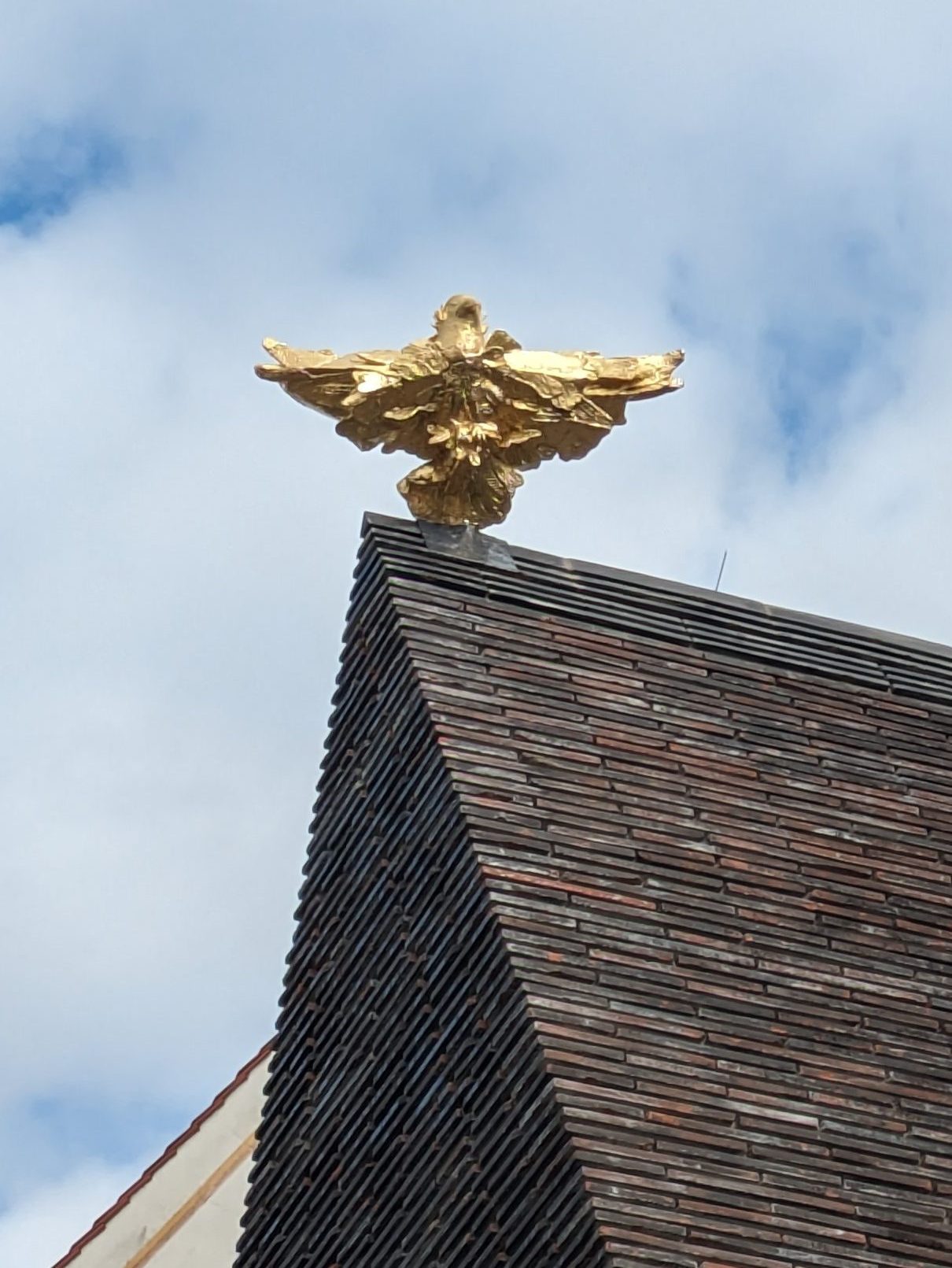
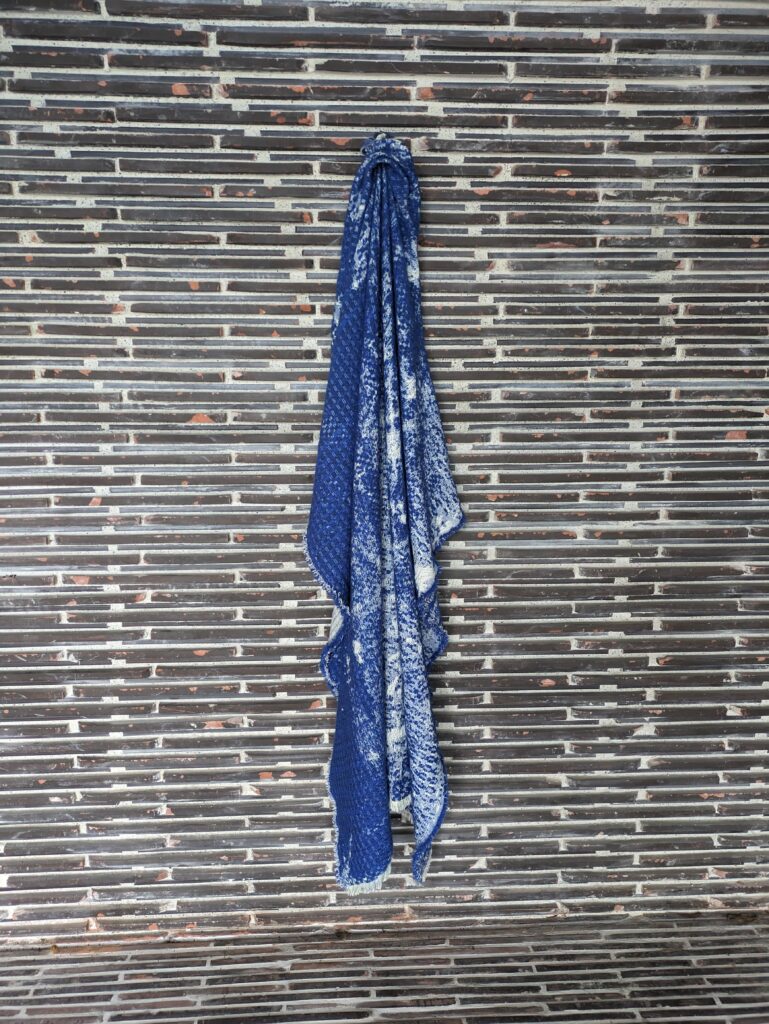
On the roof top sits a gilded dove. The doors are open and invitingly wide. In a niche shaped like a papal tiara, metal stars are attached that are meant to reflect the light from candles placed in front of it. Next to it hangs a blue cloth that represents the mantle of the protective mantle Madonna, after whom the chapel is named. Another dove, white in front of a golden halo, floats in the room, an ancient symbol of the Holy Spirit. Opposite it, a large silver moon disc hangs in a window.
Is this a chapel or a work of art? A service of worship does not take place here; the space is much too small for that. But it can already be described as a place of prayer. Whatever that might mean: the New York native born in Nuremberg is returning to her Catholic roots. Or: an offering for people who long for spirituality but no longer feel addressed by the traditional ritual of the Catholic Church. Or, conversely, from the Church’s perspective: as a first step, bringing the sheep she has alienated back to the Christian doctrine of salvation.
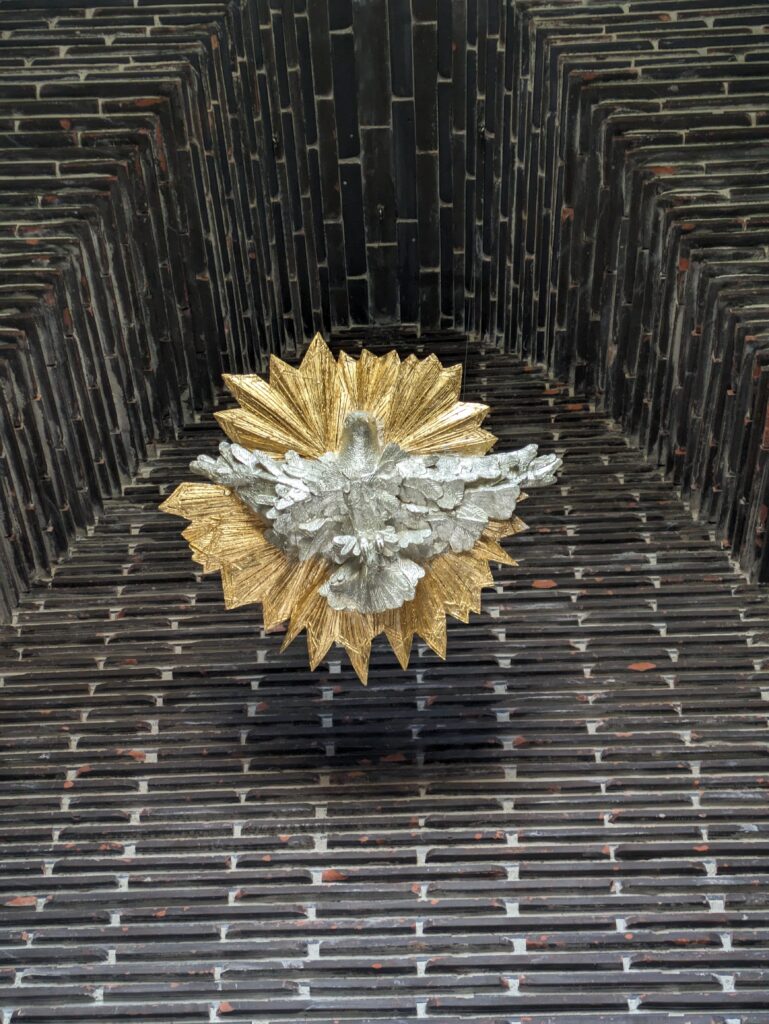
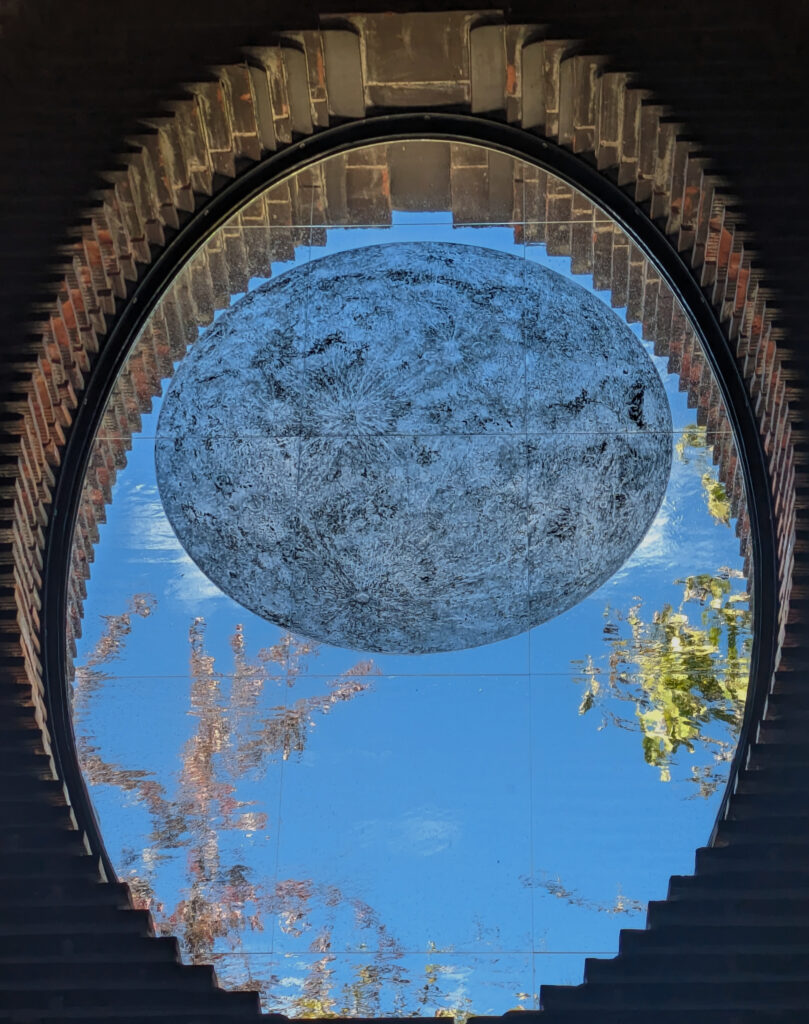
Kiki Smith does not rule out any of these interpretations. "The Moon is like the Virgin Mary," she says in a video from the Louisiana Museum of Modern Art in Humlebaek, Denmark, which is by no means far removed from the theological speculations of the Middle Ages. Without a doubt, her work on the Freisinger Domberg is intended to signal that it will once again attract more people to the diocesan museum that reopened after nine years of renovation in 2022, while at the same time showing that the museum is also open to contemporary art. Perhaps one could say this: The artist recycles elements of Christian iconography as well as the roof tiles, which, separated by deep joints, contribute little to the impressive overall picture.
Half of her last solo exhibition at the Munich Pinakothek der Moderne was also dedicated to the traditions in Kiki Smith’s work. The artist donated her entire oeuvre to the Museum’s Graphic Collection a few years ago. She comes to Munich from time to time, among other things because she works with the Mayer’schen Hofkunstanstalt, in which she had the Mondscheibe made for the chapel in Freising. Likewise, three blown glass plates with hearts and fish made of sheet gold were included in the Munich exhibition. After that, some of her works were juxtaposed with works from the collection, ranging from a medieval woodcut to Joseph Beuys.
Ave One lithograph reads: "There she is again, the dove." She is wearing a ribbon that reads "Ave Gracia plena …". This is the "English greeting," the proclamation, represented here by a copper engraving by Martin Schongauer, only without the name of Mary: a beautiful example of the repurposing of theology into spirituality. At Donald Judd, the reference is different: a black-and-white square grid by the minimalist artist confronted the exhibition with its work. What Girls Know About Grids: a pack of eight square engravings on Japanese paper that look like crochet covers, as well as four old, square photo prints like those from a family album, dedicated to the singers Lesley Gore (It's My Party), Laura Nyro, Ma Cass from the Mamas and Papas, and Velvet Underground drummer Mo (Maureen) Tucker.
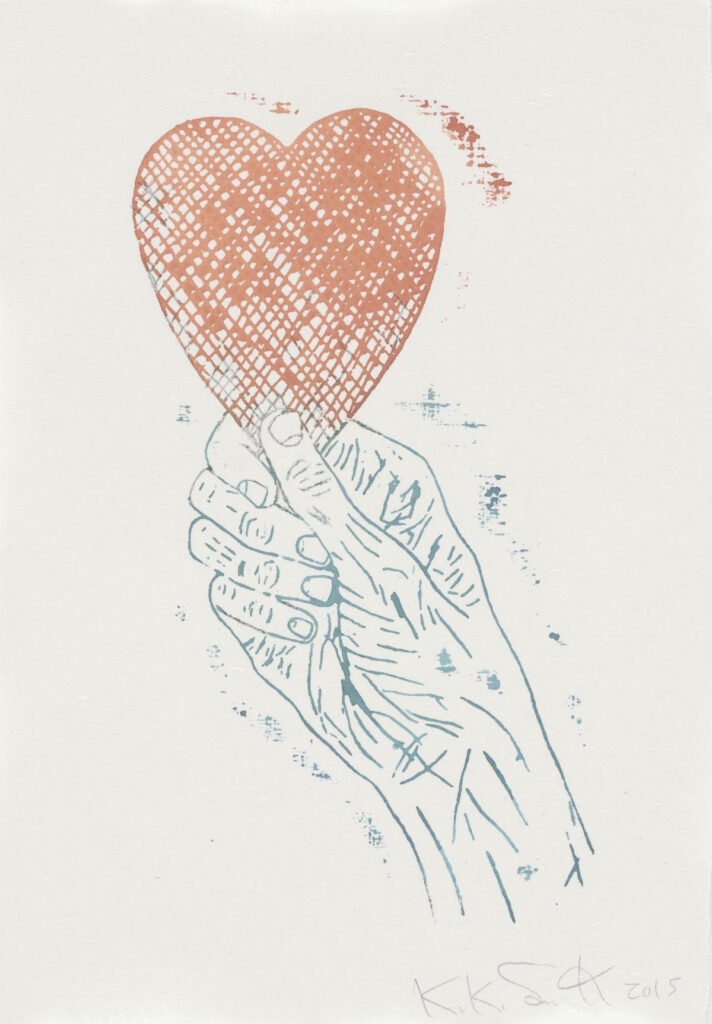
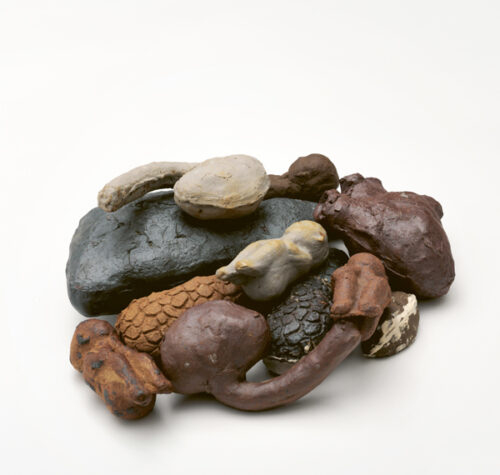
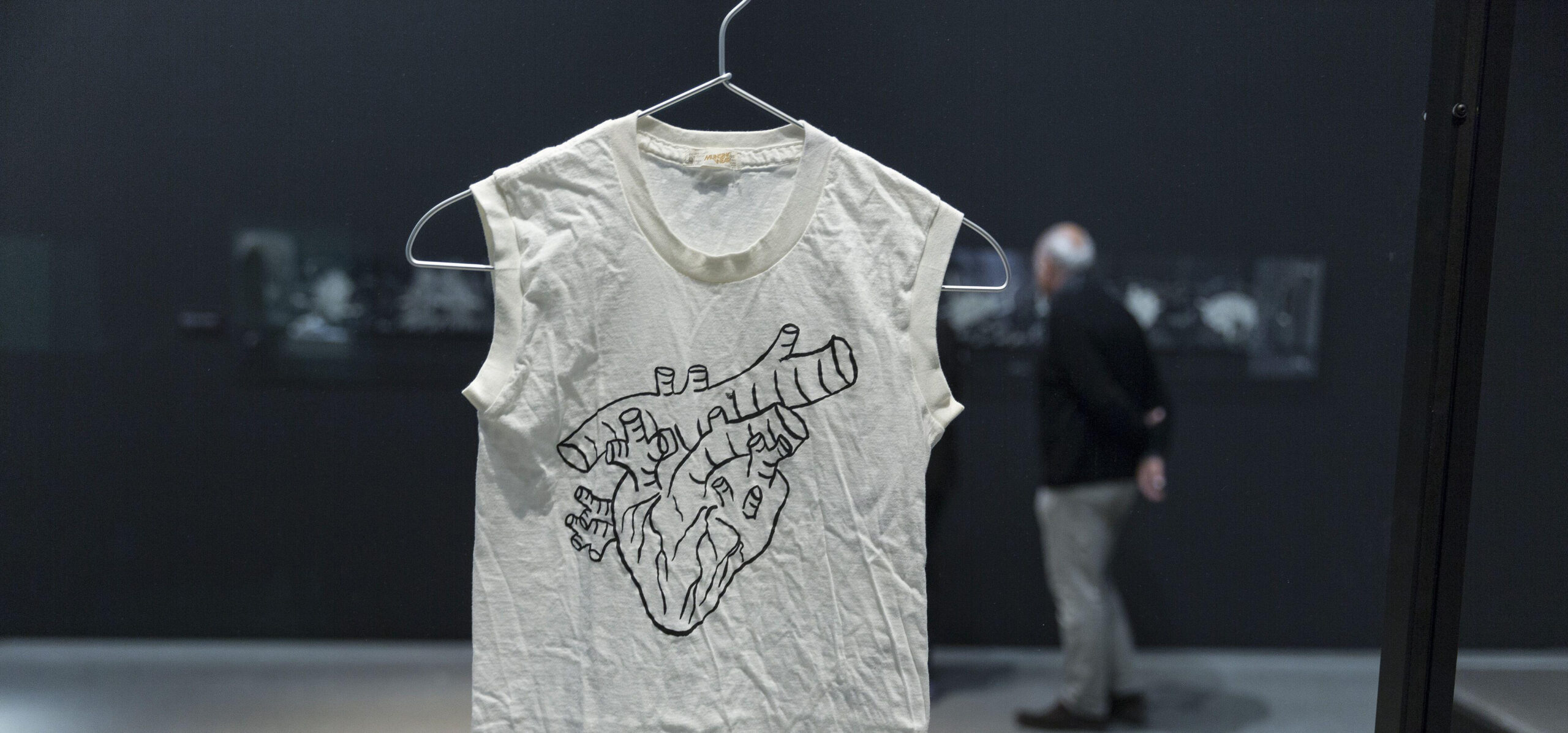
The title of the exhibition From My Heart, presumably intended as a birthday greeting for her 70th, refers to the second part, which is entirely dedicated to the heart. Kiki Smith has always been interested in the anatomy of the human body and, for this reason alone, once began training to become a rescue paramedic. Here, anatomy does not mean, as is customary in art history, the external forms, but rather the internal organs. Perhaps the oldest work in the exhibition shows an anatomically correct heart, printed on a T-shirt. In the 4.50-meter-long linocut frieze How I Know I'm Here The kidneys, liver, ovaries and other organs are also shown.
At some point, however, the artist also began to use the heart as a symbol, the heart shape. For example, in prints and plywood objects that, as the title suggests, Heart in Hand It says to show a hand holding a heart. This is of course a play on the phrase "take your heart in your hand", which in German means "to gather courage". At the same time, such actions, like Saskia Trebing in monopoly writes, "a little bit kitschy". "Do falling in love automatically lead to the suspicion of kitsch?" asks Hannes Hintermeier in the FAZ and continues: "The heart always goes on, despite its artistic overload".
"News in simple language" is Hintermeier's criticism, and that is exactly right. In fact, the great success of the New York artist is likely due to the fact that her works are easily understandable even without extensive historical knowledge of art, and, since she no longer provokes bodily fluids such as blood, semen, or urine, they are also beautiful in a very consensual sense. "Noble" materials such as sheet gold and mouth-blown glass contribute to this: her Heart in Hand-The objects are not cut from ordinary plywood with a hand saw, but with a laser from Shin plywood.
As a counterpart to the hearts, the exhibition Heiltumstäschchen from the Bavarian National Museum showed: precious decorated heart-shaped amulets that contained religious depictions on a folded paper, also called Breverl. The artist apparently has no objection to being associated with religious folk art.
The Kunstmuseen Krefeld are dedicating the first retrospective in Germany to Charlotte Perriand’s multifaceted and astonishingly contemporary work.
 7 min read
In the new premises of Plateforme 10 in Lausanne, the Photo Elysée Museum can finally unfold its potential.
 12 min read
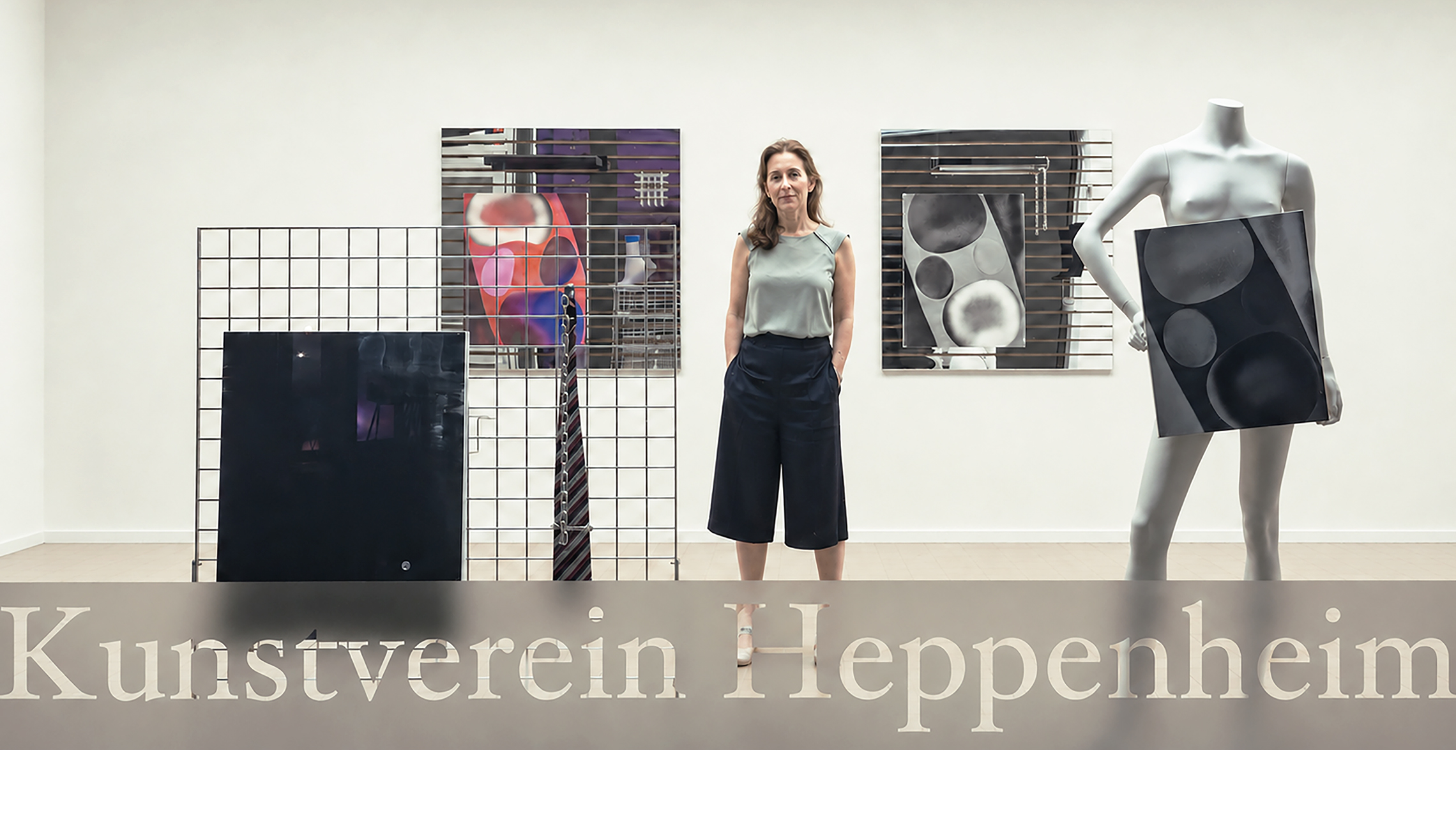
The exhibition "Six Five Four Three Two" featuring works by the New York-based artist Josephine Meckseper at the Heppenheim Art Society.
 9 min read