 7 min read
 7 min read
If he had still been alive, he would have celebrated his hundredth birthday on October 27, 2023. However, Roy Lichtenstein, of whom we are talking here, died in 1997 at the age of 74 in a New York hospital from the consequences of pneumonia.
The fact that the birthday party is not taking place in the USA but in the Albertina in Vienna is also justified for the management of the house by an earlier exhibition that took place thirteen years earlier (2011) and exclusively featured the black-and-white works of the artist under the title "Black & White 1961 – 1968". And the director of the Albertina was also Klaus Albrecht Schröder at that time. It is therefore quite rightly possible to speak of continuity and a particularly close connection between the house and Lichtenstein's legacy, which also found expression in the generous donation of approximately 100 works by the Lichtenstein Foundation.
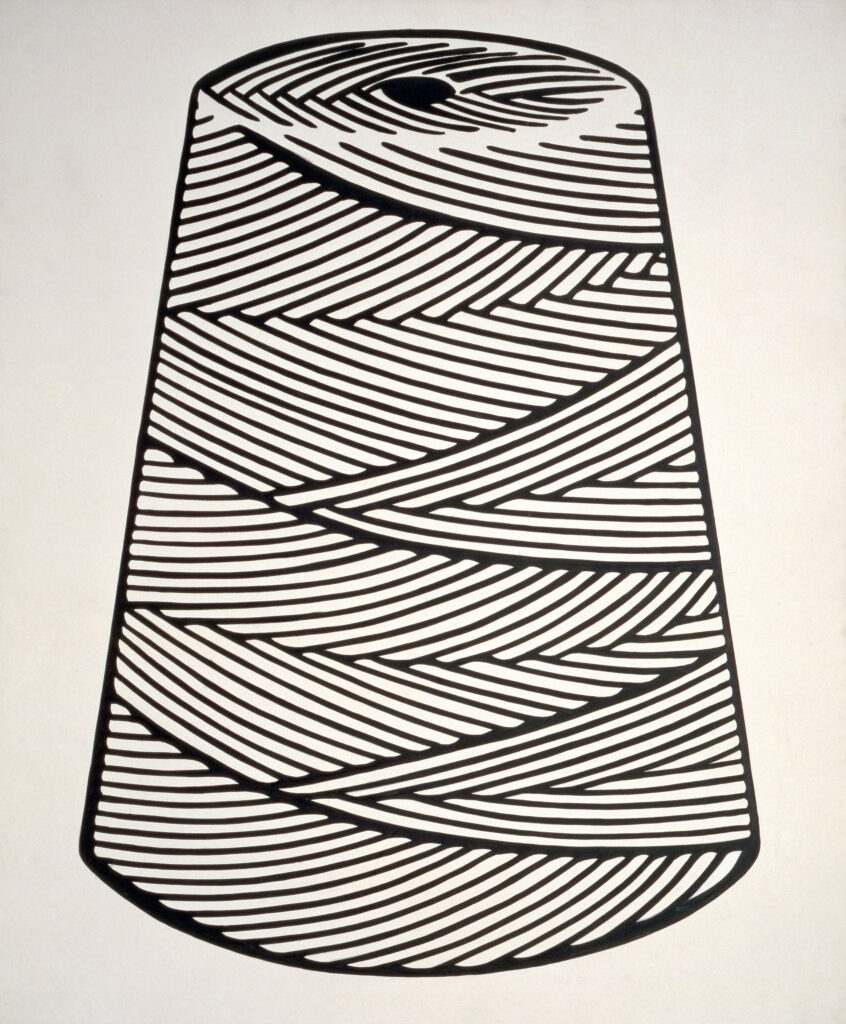
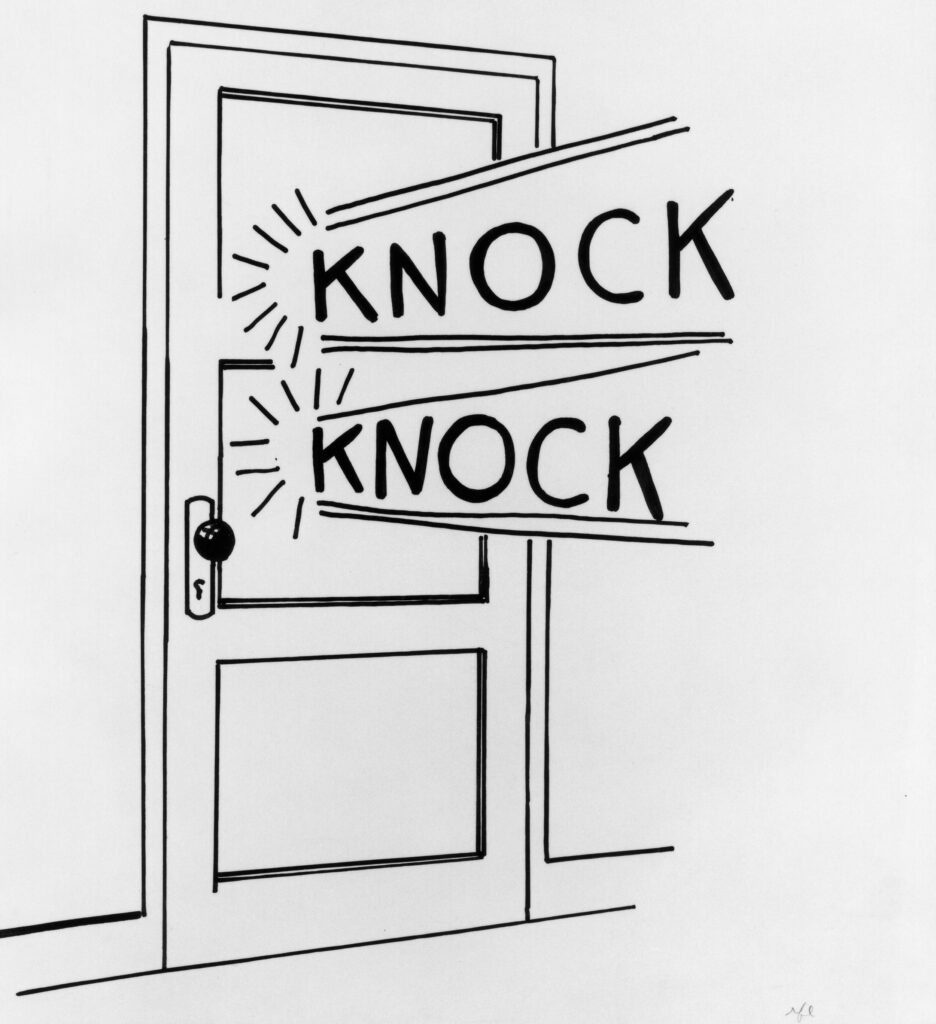
The catalogue of the exhibition now lists around ninety works; alongside the paintings and drawings, several sculptures by the artist are also shown. This raises the question of what this legacy actually represents today, almost thirty years after the artist’s death.
In the case of Roy Lichtenstein, it is striking that he always strove to not only reflect on his work but also to explain it to the audience. One reason for this could have been the art world, as he presented himself at the beginning of his career: it was the time of abstract expressionism, whose primacy had already entered a declining phase. Nevertheless, for the audience and the critics it was still crucial to what extent a work of art showcased the individual artistic expression.
Lichtenstein’s refusal to acknowledge this power as the ultimate standard therefore raised questions. For him, the explanation still remained necessary. The accusation levelled against him was serious. It was that he lacked artistic originality. Worse still: he had not only been caught in the act of copying; the wrong role models were also involved. Those came undoubtedly not from the established canons of art, but from the vast array of trivial mass media, as presented in newspaper advertisements and comic books or on the billboards in the streets of New York.
From today's perspective, it is difficult to imagine how radical the aesthetic break was that is at issue here. Hardly anyone has described this phenomenon better than Tom Wolfe, who, among other things, describes it using the example of Las Vegas:
"This fantastic skyline. Las Vegas' neon sculpture, its fantastic, fifteen-story advertising signs, parabolas, boomerang, rhomboid, trapezoid, and everything else are already the essential feature of the American landscape outside the oldest neighborhoods of the oldest cities. You see them in every suburb, in every new suburb, at every coffee shop, on every highway, at the new intersections—the spirals of the gas station signs. They are America's new landmarks, the new wayfinding, the new way in which Americans orient themselves. And yet: what do we know about these signs, these incredible neon sculptures, and what influence do they have on people? No one seems to have a clue, not even the men who design them. I tracked down some of the great signmakers from Las Vegas, men who design the signs for the Young Electric Sign Co. and the Federal Sign and Signal Corporation, and – by a miracle! – I found out that they stand completely outside the tradition of the designer schools of the eastern universities."
The then young Lichtenstein gave the correct answers to the accusations of his critics. One of his wisest is shown in the catalogue of the exhibition, at the front, in the text section: In 1963, an acrylic painting is created on a 60 x 50 cm canvas, which is titled "Image Duplicator". It is a self-portrait that shows only a small part of his face, the pair of eyes under the drawn-together eyebrows and the tip of the nose. It is still barely visible that the rest of his face is covered by a red mask. In the speech bubble that almost takes up the entire upper half of the image, we read: "What? Why did you ask that? What do you know about my image duplicator?".
The Roy Lichtenstein Foundation's Catalogue Raisonné lists Jack Kirby and Paul Reinmann's 1963 Marvel comic "X-Men" as the "reference material". By transforming this work, Lichtenstein presents his work as that of a superhero (or, depending on the viewer's discretion, as the negative equivalent, a supervillain). At the same time, he proves to his critics that he is quite capable of creatively varying the schemata of the superhero genre, ironically playing with them if he considers it necessary. In essence, this is therefore a very personal response to the criticism of his work. In a certain sense, it stands in contrast to the artist's stated intentions.
Because in fact, his goal is to work in such a way that everything personal disappears and the impression is created that it is machine-made works: "My work … has a pseudo-mechanical appearance – as if it were machine-made." In essence, in his early years, what he is up against is precisely what is being accused of him: an apparently mechanically produced, quasi-mechanically reproduced image of his models. He justifies this by stating that for him they belong to the things "that we reject, but which are nevertheless so overwhelming.".
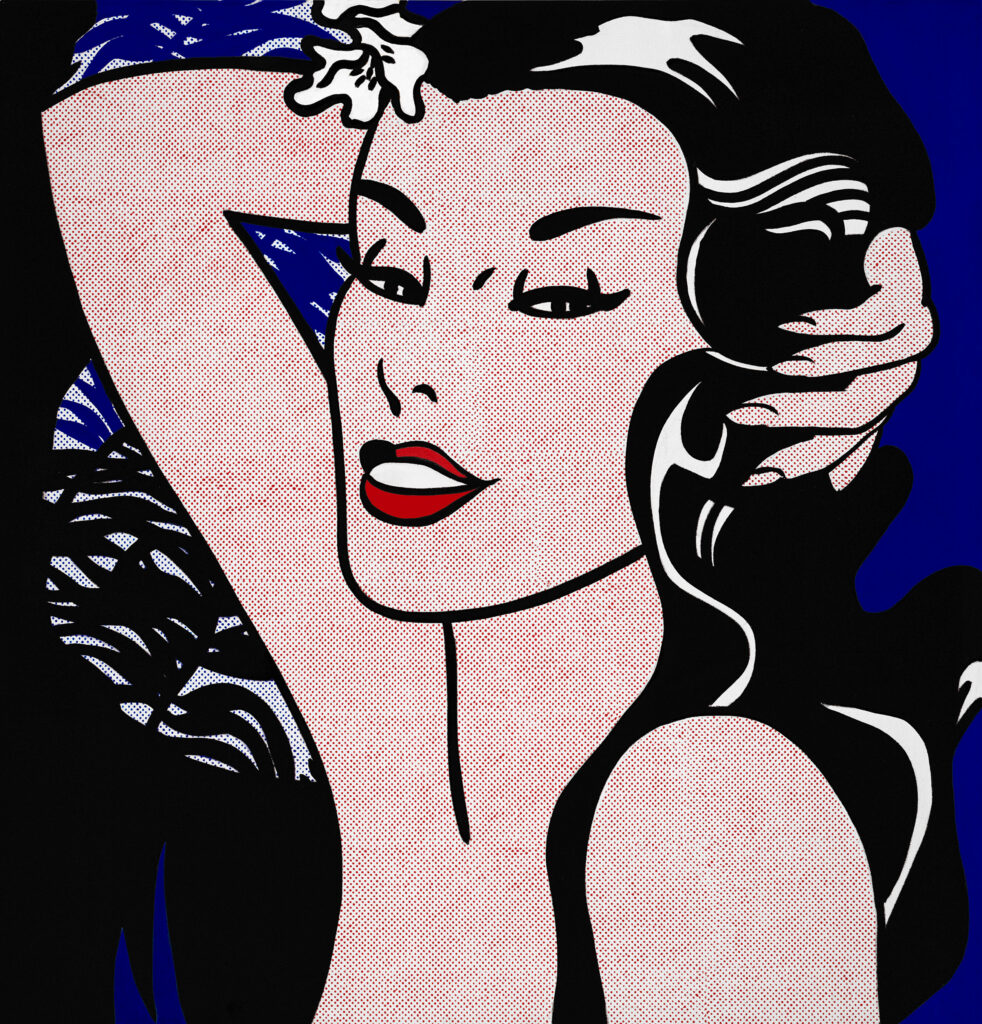
His critics initially overlook the fact that Lichtenstein does not pretend to be the creative act, but refuses to engage in it, insofar as he seeks to avoid individual expression. In this sense, he is completely a child of his time. For while suppressing traces of personal expression can indeed distance one from Abstract Expressionism, this attitude is a characteristic that Lichtenstein intellectually associates with representatives of Hard Edge and Colorfield painting. This is all the more so because it is questionable whether Lichtenstein was concerned with any form of figurative, narrative subject matter or the dissemination of a message, which of course did not apply to the comic artists, illustrators, and advertising designers whose work he used.
However, as vocal as the criticism was, so was the approval that the new art met with. This was not just true for Lichtenstein. Lucy R. Lippard wrote about it:
"Pop Art has created a veritable cult that has almost overshadowed its artistic value. Because it is easy to watch and often entertaining, because it is understandable and therefore relaxing, Pop has become popular and praised on a very superficial level."
Thus, misunderstandings were created in two ways, of which Lichtenstein was also affected.
A simple circumstance that determined Lichtenstein's work especially in the early 1960s was initially overlooked despite the loud, sometimes very critical accompanying music. Of course, one could point out that he was not even afraid to use projectors to duplicate his models, because in that he found confirmation of the accusation of copying. An essential change that affected the models in the projection was overlooked: they were enlarged and isolated. The mere increase in format to monumental proportions is a powerful change. It is further amplified by the removal of the models from their original context, whereby their true function is destroyed and the viewer's glance that precedes and focuses is captured and focused. On what? At first, it is only the form that now vaguely refers to the original context and now presents itself unencumbered to the eye of the beholder.
And because this process is repeated in Lichtenstein’s earlier works in particular, we can safely assume that it is part of the artistic concept. Apart from his minimalist disegno, which reduces to lines and grid points, this concept also includes a pronounced interest in forms of dramatic intensification that, like in a comic strip, are not limited to the drawing but extend to the text and the sonically recorded sound renderings.
Dörte Eißfeldts experimentelle Fotografie und ihre Ausstellung Archipelago bei C/O Berlin.
 10 min read
The Kunstmuseen Krefeld are dedicating the first retrospective in Germany to Charlotte Perriand’s multifaceted and astonishingly contemporary work.
 7 min read
The exhibition "Six Five Four Three Two" featuring works by the New York-based artist Josephine Meckseper at the Heppenheim Art Society.
 9 min read