 6 min read
 6 min read
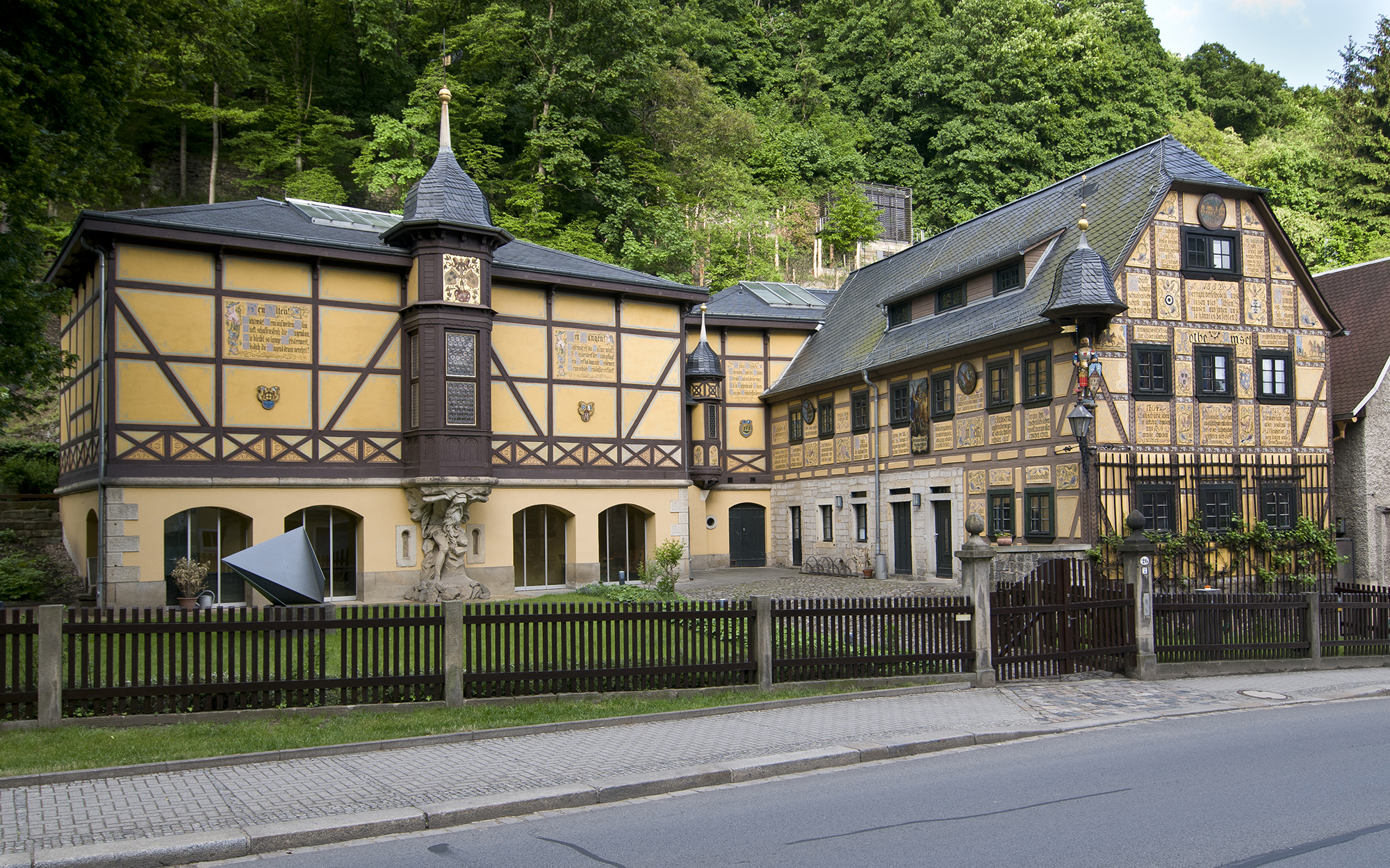
Often it is the inconspicuous places where history is written. In post-war Dresden, such a place was the small Leonhardi Museum on the outskirts. Since the 1960s, the museum has been displaying contemporary art in the walls of an old mill. It became famous during the GDR era, when behind the somewhat kitschy yellow half-timbered facade one could repeatedly defy the Stasi and its windy methods, which were intended to prevent the display of unpleasant art: once, for example, the key to the museum rooms disappeared shortly before an exhibition opening and could not be found anywhere. Another time, a new director was appointed, and it quickly became clear that her task was not the promotion of free art but the spying on the artistic community. In the Leonhardi Museum, artists from the "Leonhardi Arbeitsgemeinschaft" organized exhibitions on their own initiative. Most of them were critical and nonconformist. Thus, the museum in East Germany became an indispensable meeting place for modern art and for the exchange among artists.
The Leonhardi Museum in Dresden is a magical place. You have to close your eyes to avoid hitting the beams of the sloping door frames and climbing the narrow, creaky wooden staircase to the exhibition rooms. On the upper floor and in the annex of the old mill, the spacious exhibition rooms with glossy parquet floors and a large skylight surprise you.
Today, this historic house has a proper director and is part of the municipal museums. The Mill Ensemble beyond the Elbe still exhibits contemporary art, mainly from Dresden and Saxony. This is not unusual for a municipal museum; many of these museums consciously support regional artists. However, the Leonhardi Museum now explicitly promotes East German art. Although the days are over when nonconformist art in the GDR could only be exhibited under adverse conditions, the chapter "East German Art" is not yet complete. Bernd Heise, who has been running the Leonhardi Museum since 2002, speaks of a historical injustice: "Many East German works are now forgotten, yet they are so important and a piece of art history." For him, it is clear: It is an injustice that must be tried to be offset – at least approximately.
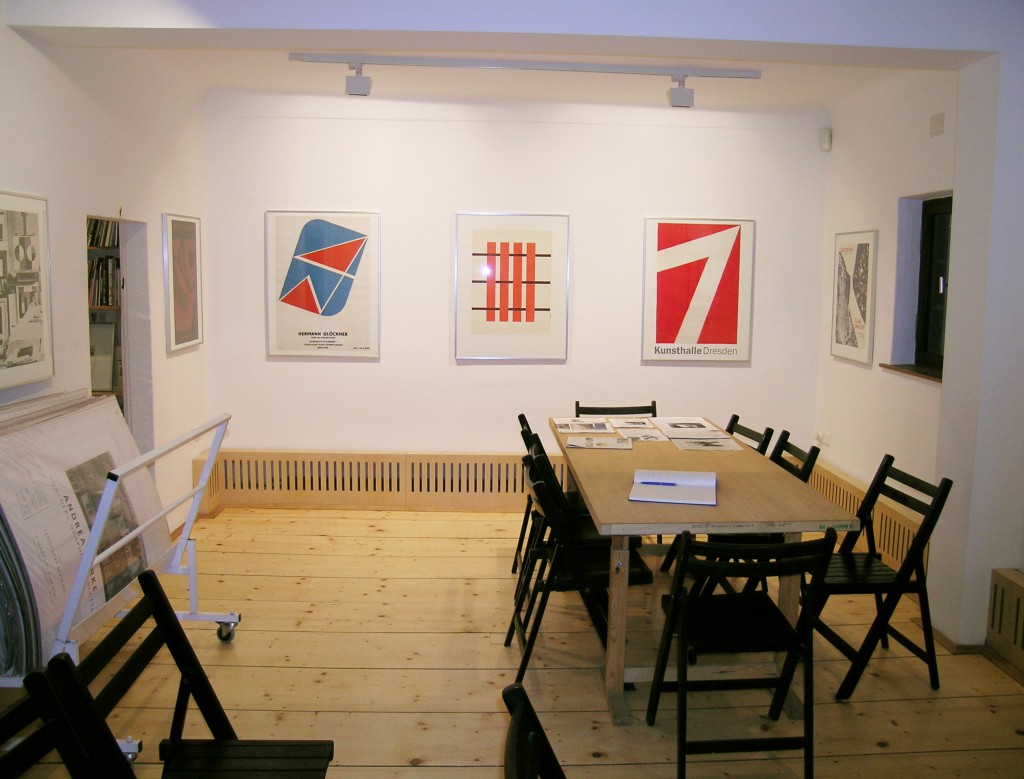
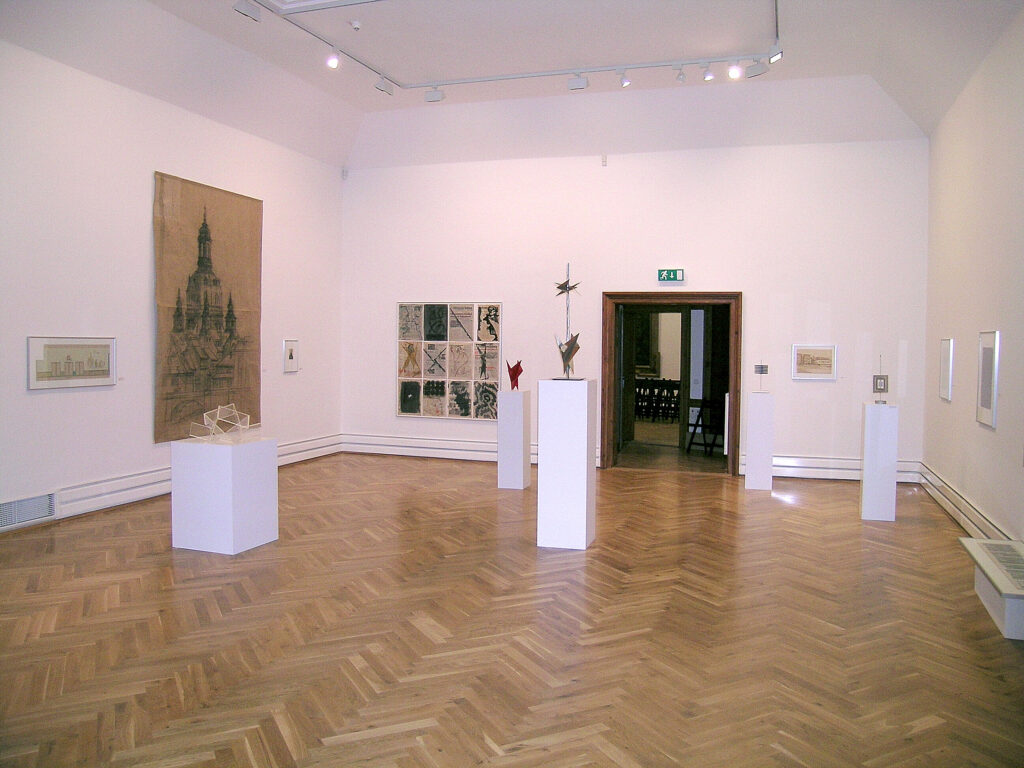
One could say: East German art is struggling, just like many Germans who grew up in the former GDR and feel overlooked by the abrupt integration into the Western system. However, art probably has the advantage that today, with increasing interest, it is perceived by the still predominantly Western art world and becomes a part of it. sexy The outsider is declared.
"East German Art" – that is now an exciting and exotic term. The old snobbishness and conformism that was attributed to East German artists has disappeared – fortunately. Instead, a veritable hype has developed. Collectors are interested in art from the former GDR, more and more East German artists are appearing on university curricula – and journalists are discovering what was already known in the East but went unnoticed in the West.
"We would have wished for this interest in art from the East back in the 90s," says Heise. However, it is important to him not to insist on identity issues between the West and the East forever: "I am interested in East German art not because it is East German, but because it is good art." His goal as head of the Leonhardi Museum is therefore to make East German art history visible. Similarly, as exhibitions are now made of female artists who have been pushed aside by the male-canonized art history, Heise wants to show artists who, in his opinion, should already be part of the canon.
A genealogy of important East German artists who have already been exhibited at the Leonhardi Museum presents the large catalog wall in the museum’s cozy wooden lounge. In addition to major names – such as Hermann Glöckner, Helga Paris and Lothar Böhme – one also finds some West Germans, such as Barbara Klemm or the Cologne artist couple Anna and Bernhard Blume.
But there are also lesser-known artists whose carefully designed catalogs appear there. For some of them, this is their first exhibition in a museum – they have just returned from the Dresden Academy of Fine Arts. Others are older; Bernd Heise has been watching them for a long time. For example, Andreas Bräunsdorf, who is currently showing his quirky and beautiful paintings in the museum’s bright light rooms, featuring snow-covered train stations and stairwells with bald-headed boxers.
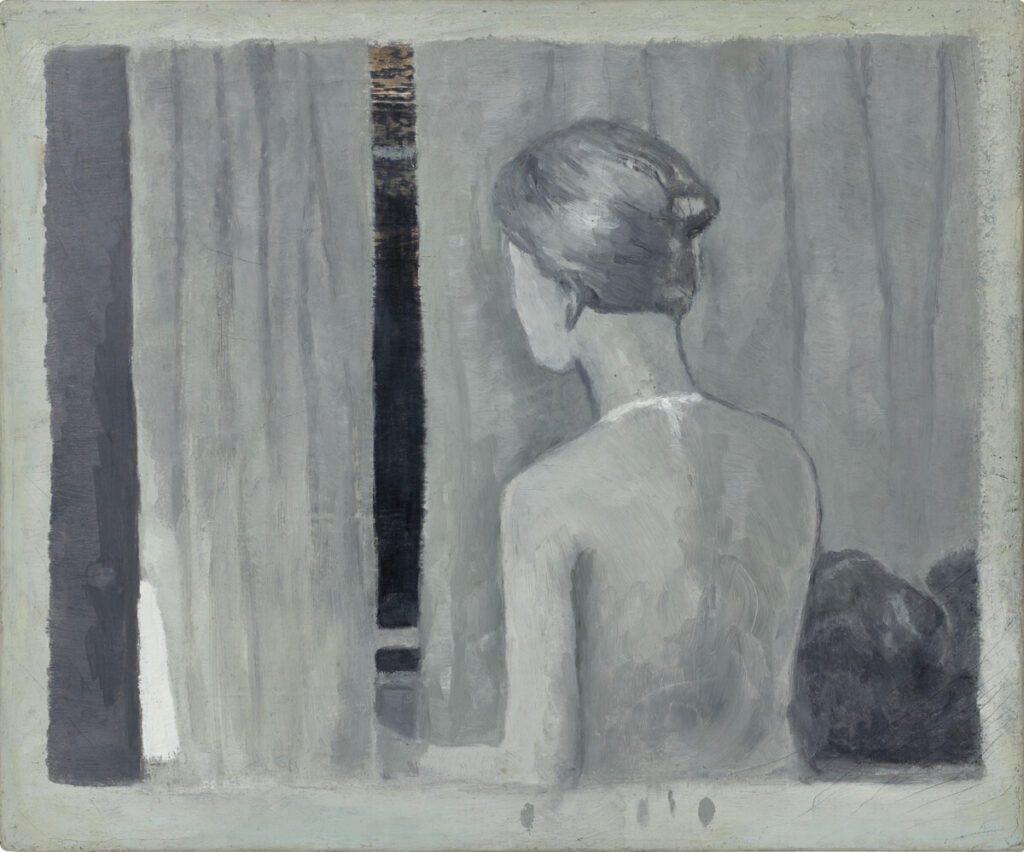
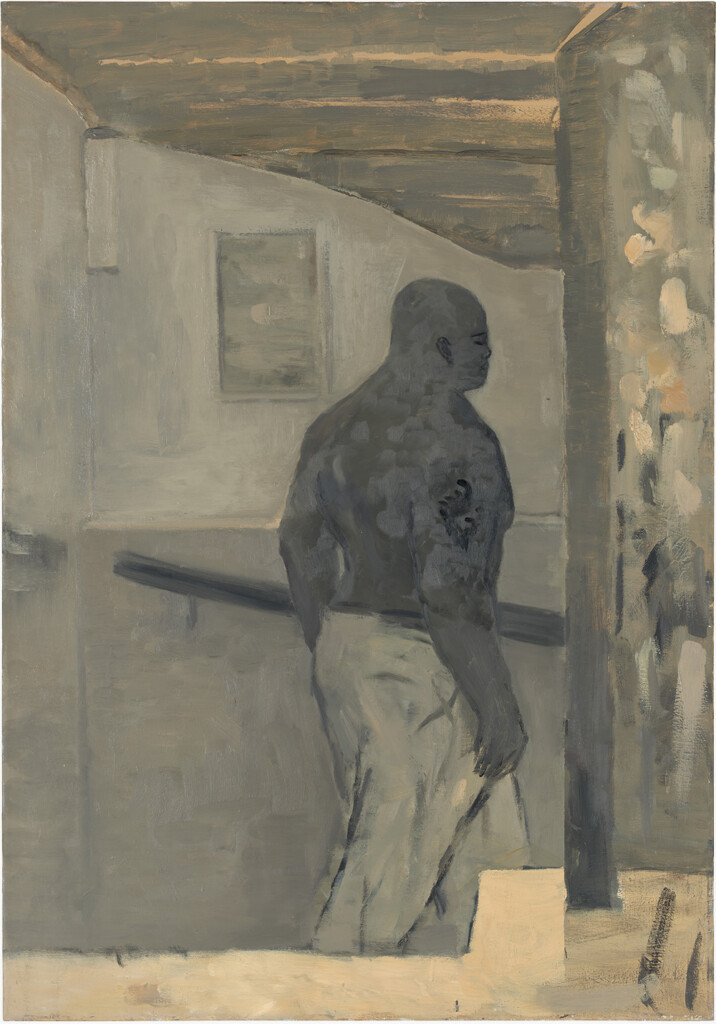
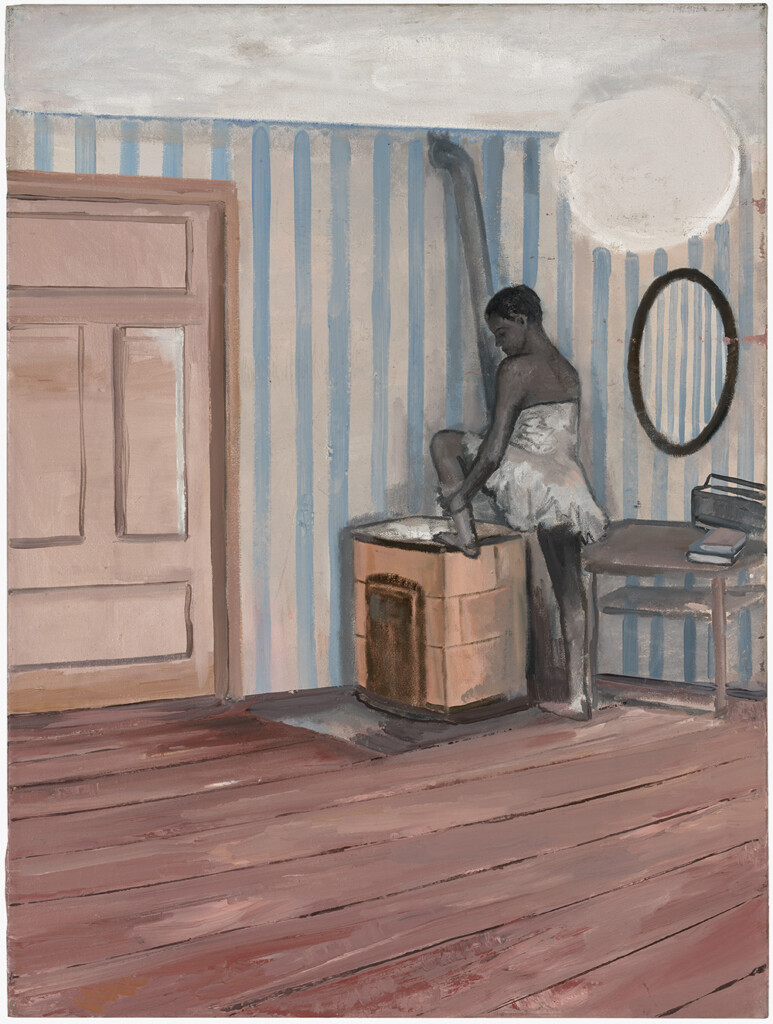
Previously, the painter and namesake of the house, Eduard Leonhardi, used the exhibition rooms to present his romantic forest paintings. Today, a smaller room, the so-called watercolor room, is dedicated to Leonhardi’s works from the period. The museum frequently invites artists to explore the Heimat painting of his patron and to connect it with contemporary positions. This leads to reflections on Germany, the forest, and also on the old-fashioned farmhouse architecture of the house.
The once revolutionary artist’s village in the Elbe Valley has long since been institutionalized. Today, the Leonhardi Museum is a place that offers possibilities for a different art history and finally returns artists who made Germany invisible to the art world. A perhaps inconspicuous but important place for art history and for the unity of a country that is still so fascinating and at the same time terrorized by its former division.
Further articles from our series "West-East Encounters" can be found here:
Part 1: Jens Peter Koever: The East in the West in the East – A Dutch exhibition on the art of East Germany before and after 1989
Part 2: Christoph Tannert: There was plenty of time planned – The Lippok brothers and the subculture of the 1980s in the GDR
Part 3: Wolfgang Ullrich: Surprising connections – The German-German image dispute in retrospect
Part 5: Luise Wolf: "I refuse to look back positively on the GDR." Andrea Pichl will be showing a solo exhibition at the Hamburger Bahnhof in Berlin starting this autumn – as the first female artist from the former GDR.
Part 6: Ingeborg Ruthe: Final disposal or treasure trove. The art archive Beeskow in the Museum for Utopia and Everyday Life preserves art from the former GDR
The Kunstmuseen Krefeld are dedicating the first retrospective in Germany to Charlotte Perriand’s multifaceted and astonishingly contemporary work.
 7 min read
The exhibition "Six Five Four Three Two" featuring works by the New York-based artist Josephine Meckseper at the Heppenheim Art Society.
 9 min read
In the new premises of Plateforme 10 in Lausanne, the Photo Elysée Museum can finally unfold its potential.
 12 min read