 8 min read
 8 min read
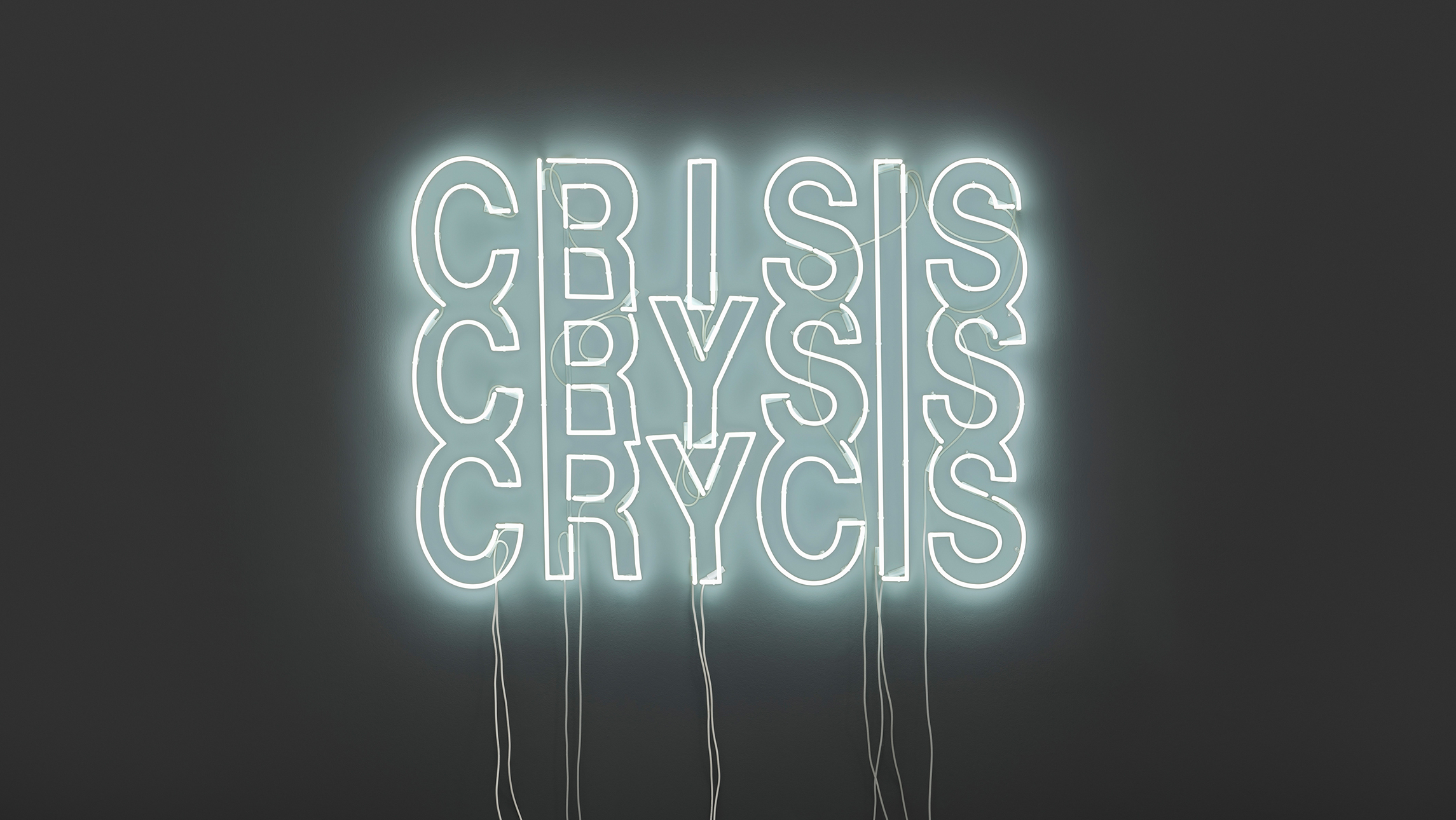
The first image could not be more concise: the doors of the elevator that leads to the upper floor of the old Bremer Speicherhaus Weserburg Museum of Modern Art open up, and the eyes are dazzled by the white neon lights from the darkness of the room: CRISIS–CRYSIS–CRYCIS, These words flicker in luminous fragments of Yael Bartana’s 2020 text work, creating a vibrating echo that first resonates in the exhibition space, then as an optical effect and internally through Bartana’s wordplay. CRISIS, ISIS, CRY, CIS – the possibility of the thoughtful combination and redistribution of letters and syllables brings the variable reading of these words to mind, their meaning and shift in meaning. Yet it is clear that Yael Bartana is aware of the multitude of global crises and the hope for a change of perspective and a new beginning at the very beginning of her solo exhibition. Utopia Now! in Weserburg, four spatial installations and three neon works are accompanied by the question of how, in the face of (be-)burdening history and present, we could create a future of respectful interaction with one another.
As early as 2006, the films, installations, and photographs of Yael Bartana, born in Israel in 1970 and now living in Amsterdam and Berlin, met me in an impressive way: as part of her solo exhibition Amateur Anthropologist In the Fridericianum Art Gallery in Kassel, the artist showed a critical and observant way in which she directed her gaze towards the Middle East conflict between Israel and Palestine. For example, in the video work Kings of the Hill (2003) the dynamics between the individual and society, and indeed the political implications of social action, exemplified by aggressive auto racing practiced by Israeli men on the coast of Tel Aviv. In other contexts, she contextualized her observations of the everyday rituals of the Israeli population by integrating different camera perspectives, thereby thematizing staged media images as well as emphasizing pluralistic perspectives. Often, her images revealed the potential for mutual acceptance. It is not opposing forces that need to be tested, but rather the ability to coexist. This approach continues to characterize her work. In Yael Bartana’s more recent works, the consideration of German history and the history of Jewish life in National Socialist Germany flows together, as in her current staging of the German Pavilion at the Venice Biennale in collaboration with the theater director Ersan Mondtag.
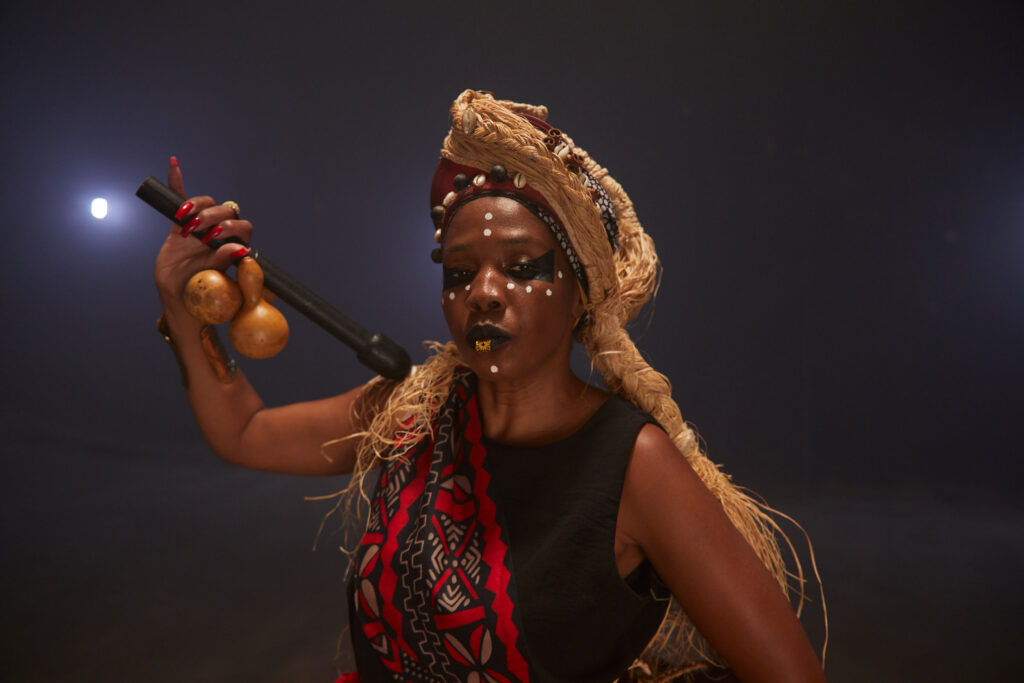
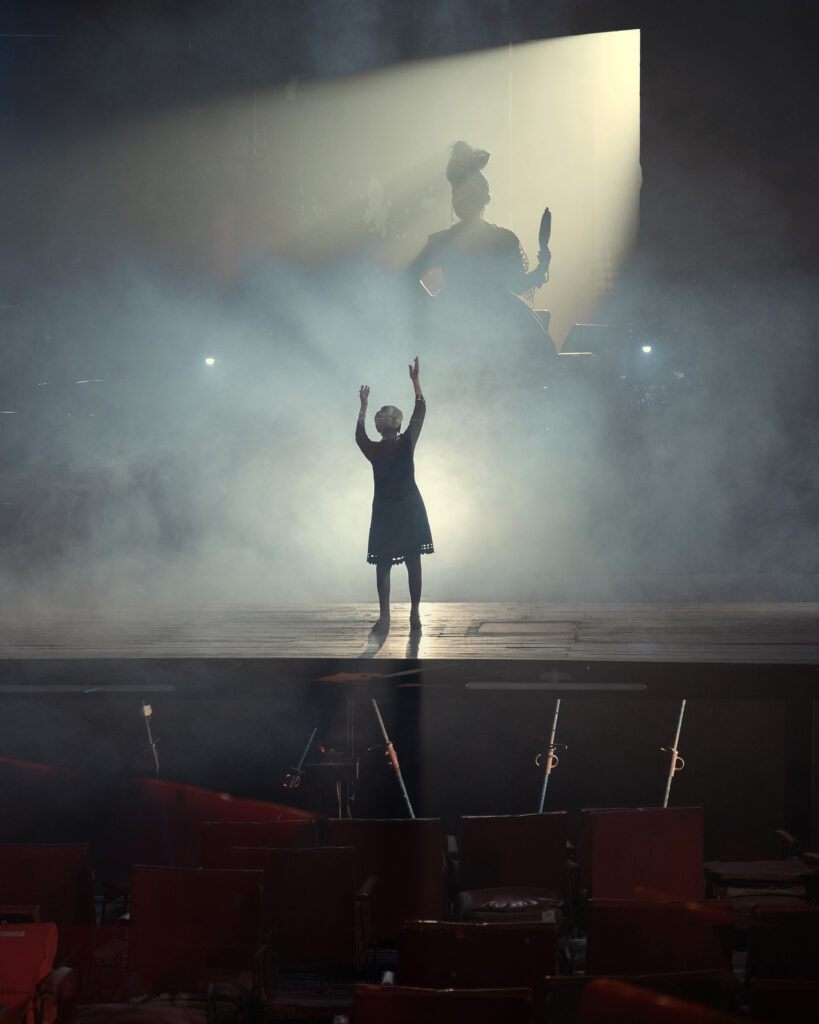
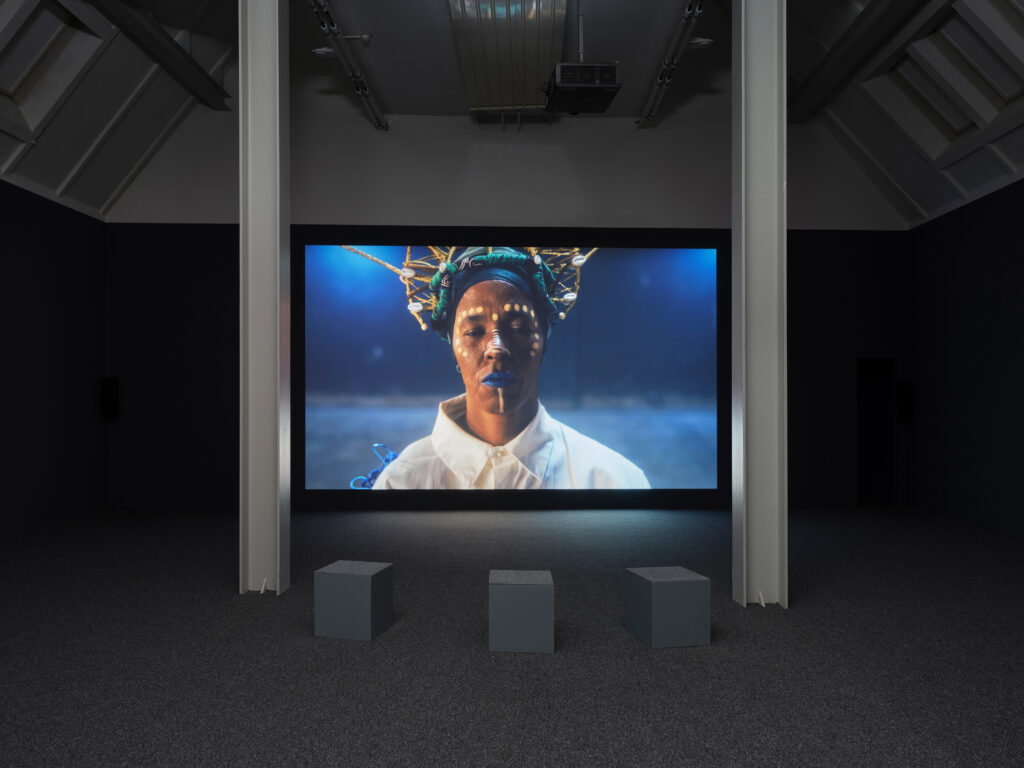
Bartana's latest film is now the world premiere at the Bremer exhibition To me Zaynen Do! (We Are Here!) (2024) to be seen, for which the artist has brought together two groups in the Casa de Povo ("House of the People") in São Paulo, both of which look back on a history of oppression and the experience of the diaspora: the Coral Tradição, founded in Brazil by Jewish immigrants to remember and preserve Jewish songs, and Ilú Obá De Min, an Afro-Brazilian street music ensemble in the tradition of the Maroons, the community that was able to free itself from colonial slavery. The Casa de Povo was founded by Jewish Holocaust survivors as a place of remembrance and gathering for survivors. This idea was taken up by Yael Bartana and forms the essence of her film, through which the first encounter between some members of both groups took place. To me Zaynen Do! They embody their life stories through their specific cultural practices in a shared performative act: the seventy-nine-year-old choir leader of the group Coral Tradição directs emotional songs, while Ilú Obá De Min in colorful costumes enacts her dances. The Teatro de Arte Israelita Brasileiro, an important venue of São Paulo’s art scene of the 1960s and 1970s, which is now characterized by decay, is now once again transformed into a place of imagining friendly, collective possibilities through Bartana’s staging.
Yael Bartana describes her action between historically real events and events in the future as a "pre-enactment": as a foretaste of the future based on the past. Against the backdrop of this methodological approach, her three-channel video installation Malka Germania (Hebrew for "Queen Germania") to be seen in 2021 as part of her first comprehensive solo exhibition Redemption Now which he was able to realize at the Jewish Museum Berlin. Malka Germania takes a central role in the Weserburg exhibition, curated by Janneke de Vries and a goal of the director for several years, and forms a bridge to Bartana’s work through the imagery and the theme of (self-)disengagement from existing world orders. Light to the Nations (2022–2024) at the Venice Biennale.
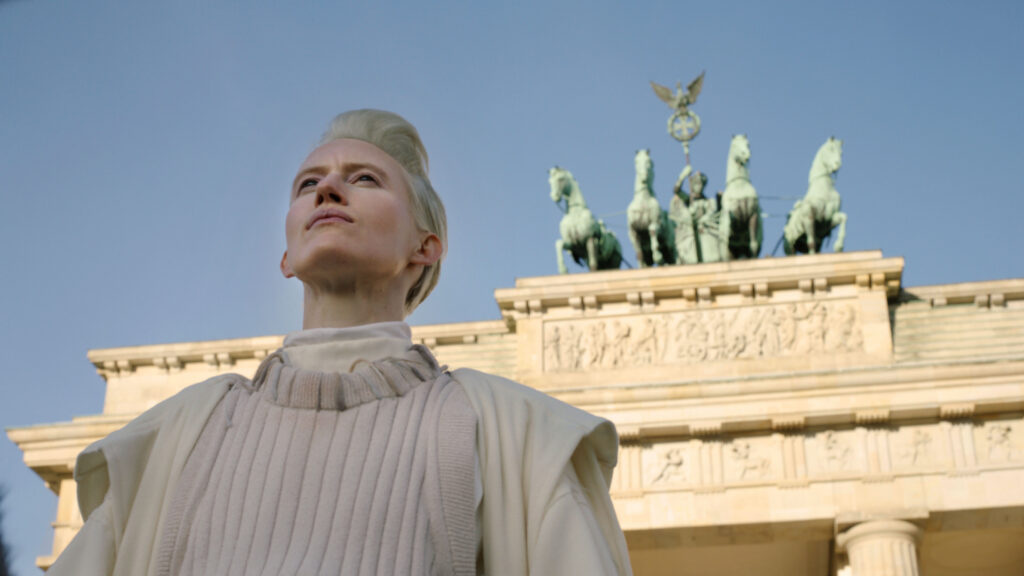
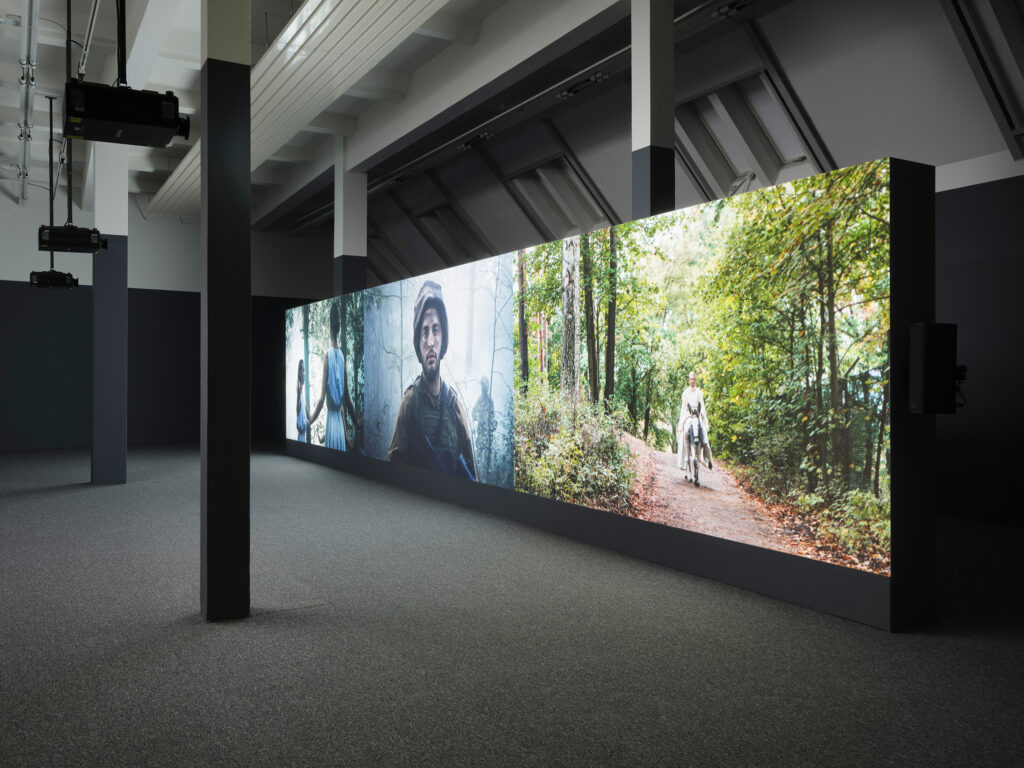
With three film images running side by side, connecting different situations, it appears to Malka Germania as a cinematic collage, in which the androgynous Malka Germania rides on a donkey through Berlin as a savior figure and observes the transformation taking place in the city and its population. Aural juxtapositions emerge between the silent protagonists in the diagonal reading of the three film images and narrative threads, in which Bartana quotes and permeates the aestheticisms promoted by the National Socialist era: stereotypes of body images from the NS era merge with contemporary leisure scenes on the Wannsee, while Albert Speer’s failed urban planning designs for the idyllic world capital Germania rise from the water of the lake. Israeli soldiers pass the Berlin Reichstag with German Shepherd dogs; plates fly out of the upper floor of a residential building, and their motifs of Goethe, Cranach’s Luther or the Meissen onion pattern shatter on the asphalt; while two men dismantle the Berlin street signs and replace them with ones with Hebrew lettering and street names. On the street itself, photo albums with black-and-white photographs, German passports, potatoes and debris gather. A silent watch. The film ends with images of people standing in a train station with bags and suitcases, waiting, one foot in front of the other along the tracks – each step carries a weight into the densely wooded landscape, into the unknown.
These are just a few impressions from Malka Germania And yet Yael Bartana’s merging of time planes along collectively remembered inscriptions is clear. The perception of her filmic images raises questions: can images, symbols, and aesthetics of ideologies or the history that has inscribed them be freed? Is removing them from their context possible without losing a sense of memory culture, or is it precisely necessary to understand historical developments and deconstruct media-mediated aesthetics? With her films, Yael Bartana develops a critical reading of such images that are linked to the propagandistic imagery of National Socialist ideology. Her staged images and visual quotes appear provocative, sometimes oppressive, yet they also bring with them a critical perspective on the media representation of the current world.
Once again, this is clearly demonstrated by the video installation. Future-oriented management (2023), which shows three apocalyptic female dancers wearing animal masks of horse, lamb, and donkey and billowing robes under the moonlight in a narrow widescreen format. The scene draws its inspiration from the choreographies of Rudolf von Laban, who opened his Institute for Life Reform in the Grunewald district of Berlin at the end of the 1920s. The aesthetics of the video, however, recall the format of the image and the slow-motion effect of the movements, suggesting a clip from a single-second Instagram story. Which visual narratives shape our world view today and which toxic narratives of the past are taking hold in the present?
In an almost inconspicuous cabinet, which was located very close to the neon work at the very beginning of the exhibition CRISIS–CRYSIS–CRYCIS Located in the center of Amsterdam, Janneke de Vries presents Yael Bartana’s work realized in 2010. Degenerate art lives: a 16mm film in which Bartana appears in the picture War cripple (1920) animated by Otto Dix, the artist addressed the consequences of the First World War and the destruction of physical and mental existence. Dix's image was classified as "degenerate" and destroyed in the context of the National Socialist art policy. Bartana, based on a reproduction as it appears in the catalogue for the Munich exhibition Degenerate Art Viewed in 1937, Dix's figures of wounded veterans are set in motion and accompanied by a soundtrack: The shuffling steps of the wounded, supported by wooden prostheses and walking aids, coalesce into a noise that resembles the shots of a machine gun.
The sound of guns is not unusual for Yael Bartana, who after completing school in the late 1980s was drafted into the Israel Defense Forces, a mandatory military service for both sexes in Israel. One of her first works, Profiles (2000), with which she had already become widely known as an artist during her studies at the Rijksakademie in Amsterdam, is a film about young Israeli female soldiers during their rifle training, with Bartana showing the profile of a female soldier and placing it in relation to the viewers through closeness. Bartana already encompassed the problem that is rooted in contexts of ritualized compulsory exercise between the individual and ideology.
With the animated short film Degenerate art lives In Weserburg, a connecting line leads back to the beginnings of Yael Bartana’s artistic practice. At the same time, the work makes it clear that a situation of defamation, as it occurred in Germany at the beginning of the 20th century, can return and has returned globally. Yael Bartana says that she tries to live in as many places as possible in order to observe the society around her. Her works are a reaction to the constantly politically determined social orders, combined with her visions as an artist – with ideas about how to live together in the pursuit of peace. also It could be possible.
The Kunstmuseen Krefeld are dedicating the first retrospective in Germany to Charlotte Perriand’s multifaceted and astonishingly contemporary work.
 7 min read
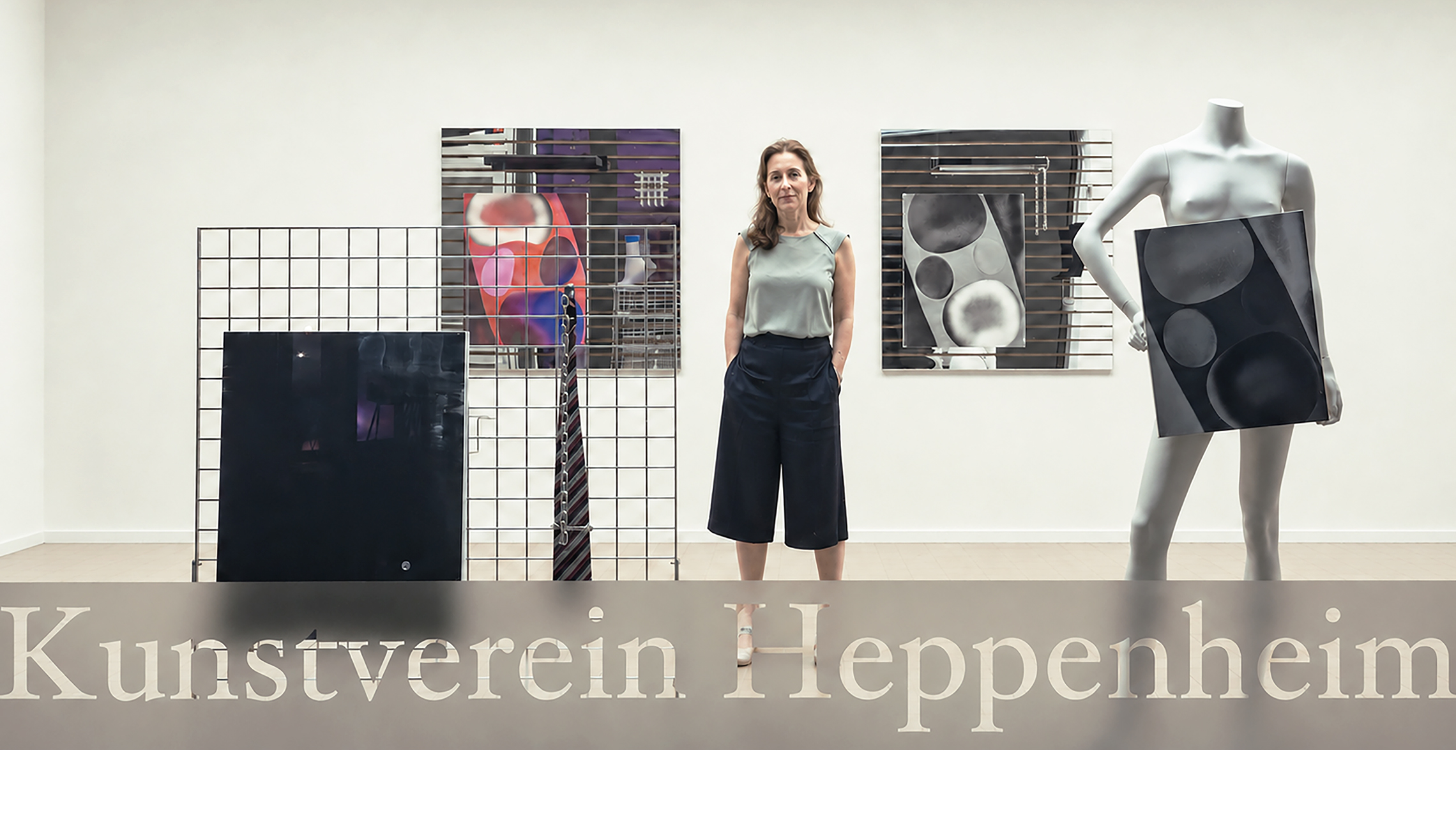
The exhibition "Six Five Four Three Two" featuring works by the New York-based artist Josephine Meckseper at the Heppenheim Art Society.
 9 min read
In the new premises of Plateforme 10 in Lausanne, the Photo Elysée Museum can finally unfold its potential.
 12 min read