 11 min read
 11 min read
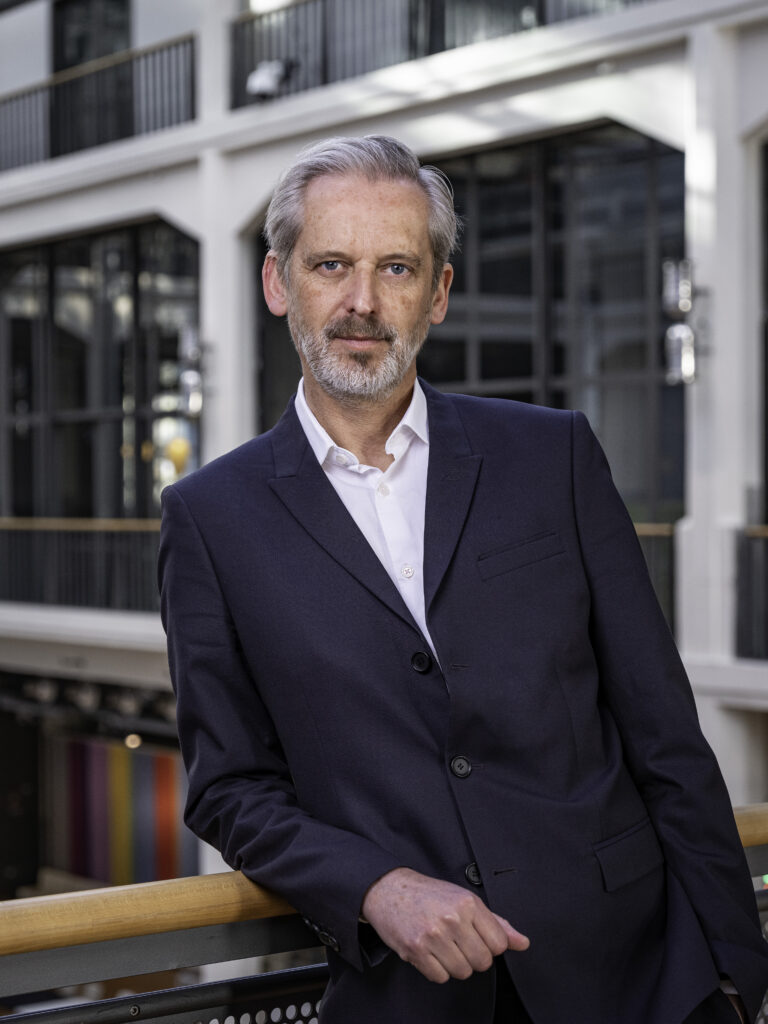
For the past year and a half, Alistair Hudson has been director of the ZKM. After his predecessor’s program was completed and he opened his first exhibition on the topic of artificial intelligence in May, which runs until November 24, he is giving the following statement: Fellow Travellers Now, let’s take a look at his approach. The title recalls the McCarthy era, when left-wing intellectuals were derided as Moscow’s lackeys, to which Hudson himself points out with a smile. In fact, what is meant is to embark on a shared journey. That is what he wants to do with the visitors of the ZKM.
At the heart of the Arte Útil, a term coined by the Cuban artist Tania Bruguera. Charles Esche, the director of the Van Abbemuseum in Eindhoven, told Hudson that he had invited him in 2013 to make his home with Bruguera into a Museum of Arte Útil to transform. The resulting Association of Useful Art, The platform he runs with Bruguera is essentially an internet platform that collects projects that adhere to the eight principles of the Arte Útil corresponding to what they are defined on the website. In a section of the exhibition, a handful of the nearly 300 projects are briefly presented as examples: for example, a Guarana soft drink developed by the Danish group Superflex with Brazilian farmers as an alternative to global capitalist exploitation; or the Zapatista Tactical Floodnet of Electronic Disturbance Theatre from San Diego, a software to spread protest. Hudson explains more in a video interview with Bruguera.
The projects can all be found on the website. "Arte Útil is more than 'useful art'," it says there, "it is about art as a tool for social change, using creativity to tackle real-world problems." The exhibition's subtitle therefore reads: Art as a tool to change the world.
"I have always been interested in useful art", explains Hudson and points to John Ruskin. This opens up a broad historical perspective. Ruskin was the leading theoretician of Arts and Crafts-A movement that wanted to move away from elitist, then classicist art towards craftsmanship, which also influenced the Deutscher Werkbund and the Bauhaus. With Ruskin, Hudson achieved this through his ten years as deputy director of the Bauhaus. Grizedale Arts Connected. Adam Sutherland, who still runs the artists’ residence in the Lake District National Park, in the north of England on the border with Scotland, has set it up since the turn of the millennium: on Lawson Farm, which once belonged to Ruskin, who spent his last 35 years of his life very close by. Grizedale Arts It has not only collaborated with the Ruskin Museum in nearby Coniston, but also acts according to Ruskin’s principles. Artists are not supposed to realize their own ideas, but to do something that benefits the people in the local area. Liam Gillick, for example, with whom Hudson had already collaborated, opened a lending library in Coniston.
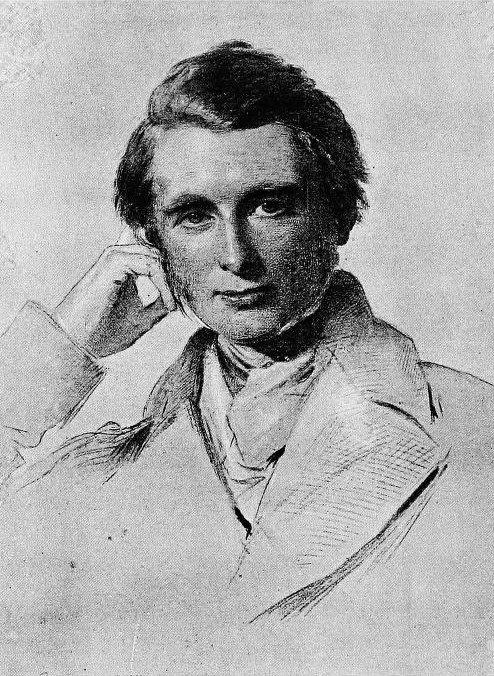
In the exhibition at the ZKM, the director welcomes the visitors with a video presentation about Ruskin. He refers to his essay published in 1860. Unto This Last, German To the latter: a fundamental criticism of the concepts of political economy as presented by Adam Smith and John Stuart Mill, but also of Karl Marx. The title refers to the parable of the workers in the vineyard from the Gospel of Matthew. Jesus says: "But I will give this last one the same as you." In Manchester, where Hudson headed the Whitworth and the Manchester Art Gallery from 2018 onwards, he curated an exhibition to mark Ruskin's 200th birthday. The title, Joy for ever: How to use art to change the world (and its price beyond the market)," answers to a lecture that Ruskin gave there in 1857: A joy for ever (and its price in the market). Six weeks before the great financial crisis, which Karl Marx instigated, The Capital In writing these words, Ruskin first formulated his ideas of an economy that should be based not on the accumulation of capital, but on the principles of art, with the aim of bringing joy.
Mahatma Gandhi has Ruskin Unto This Last Translated into Gujarati. He promoted handmade textiles against British imports. A carpet from Varanasi, made according to a design by Tim Otto Roth, is reminiscent of this in the entrance area of the exhibition. A video recounts the process: The weavers/makers switch between two colors according to a numerical rule determined by the artist. The carpet is digitally manufactured in the double sense of the English word. digit: Finger and Number. He is then compared to an earlier Zuse computer, which leads to a room where Catalina Ossa Holmgren and Enrique Rivera reconstruct the attempt of the Chilean president Salvador Allende to centralize the country’s economy through computers.
These closely intertwined connections, from Ruskin to Gandhi and Allende to the present day. Arte Útil, However, they only constitute an introduction, the Framing, Within which the new director positions his work. Five "artistic key positions" take up more space. The fact that they come from four continents can be understood as a statement.
The Brazilian architect Paulo Tavares follows the footsteps of anthropologist William Balée, who in the 1980s studied the living environment of the Ka'apor people in the Amazon region. In countless slides he has captured the plant world and has come to the conclusion, according to his informants, that this is not an untouched primeval forest but a landscape shaped by humans. Only here, nature and the built environment do not stand in contrast to each other; instead, the landscape bears witness to a lasting balance between man and nature. Tavares, who also traces the traces of destroyed settlements in the Xavantes area, wants to decolonize the concept of architecture and strives to have this other type of spatial production included in the UNESCO World Heritage List as a cultural landscape.
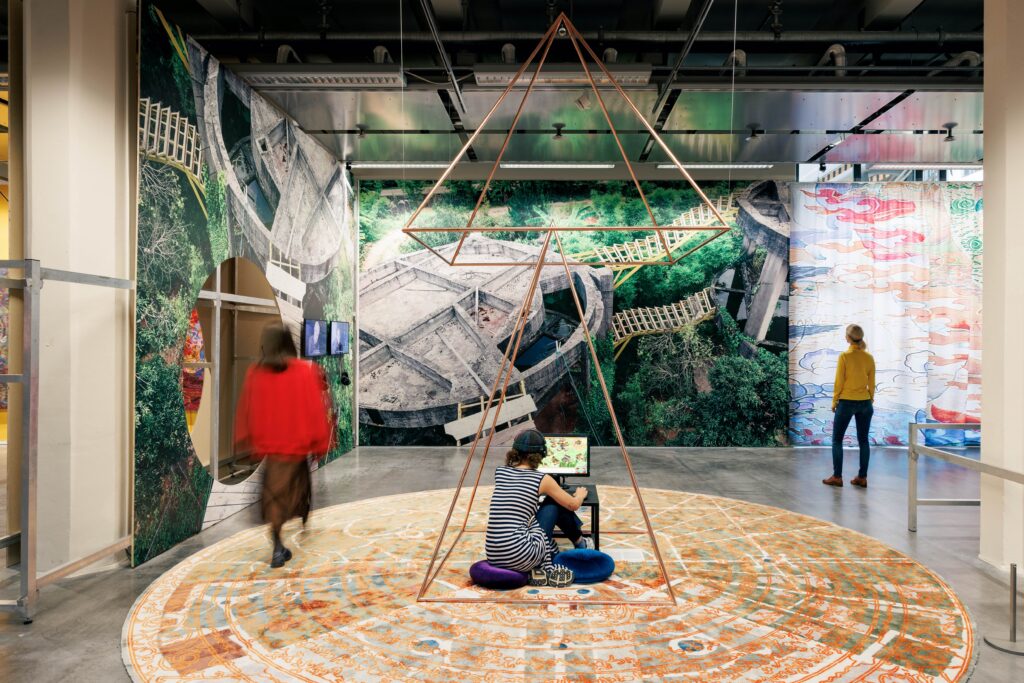
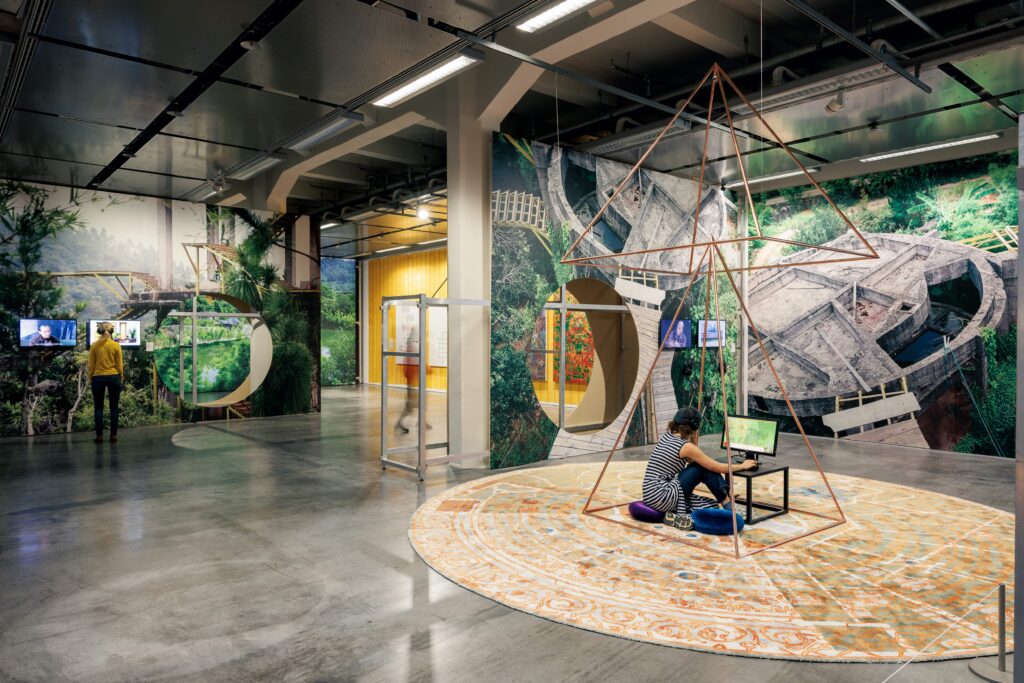
The artist Zheng Guogu, born in 1970, as the wall texts explain, enjoyed playing video games after China opened up in the 1990s. At some point, that no longer sufficed for him, and he now began to play the game following the example of the game Age of Empires a real one Liao Garden To be displayed, the photo, which is mounted on the wall in the exhibition room. He became very famous through a photo from 1993, in which he is smiling and crouching on the street with a disabled man who is homeless. Title: My Teacher. One Dharma bum, To quote the title of Jack Kerouac’s novel: one who achieves perfection without having to worry about possessions or housing. Zheng builds a joyful, colorful cosmos based on traditional Chinese medicine and wisdom teachings, with copper pyramids hanging from the ceiling that are meant to accumulate energy. He explains his views in the video interview with Alistair Hudson.
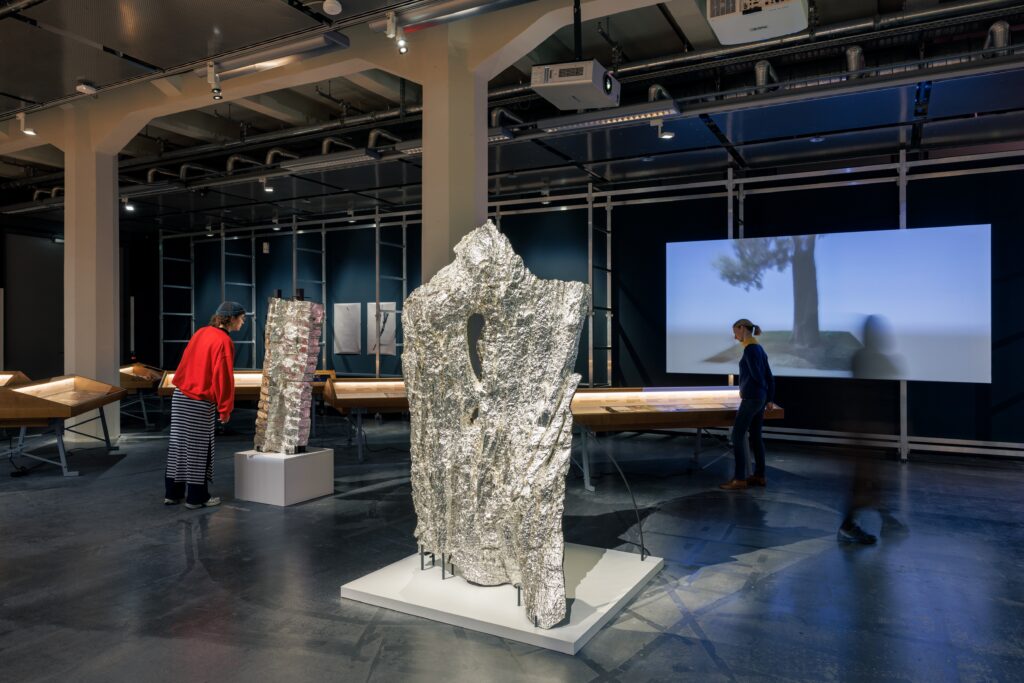
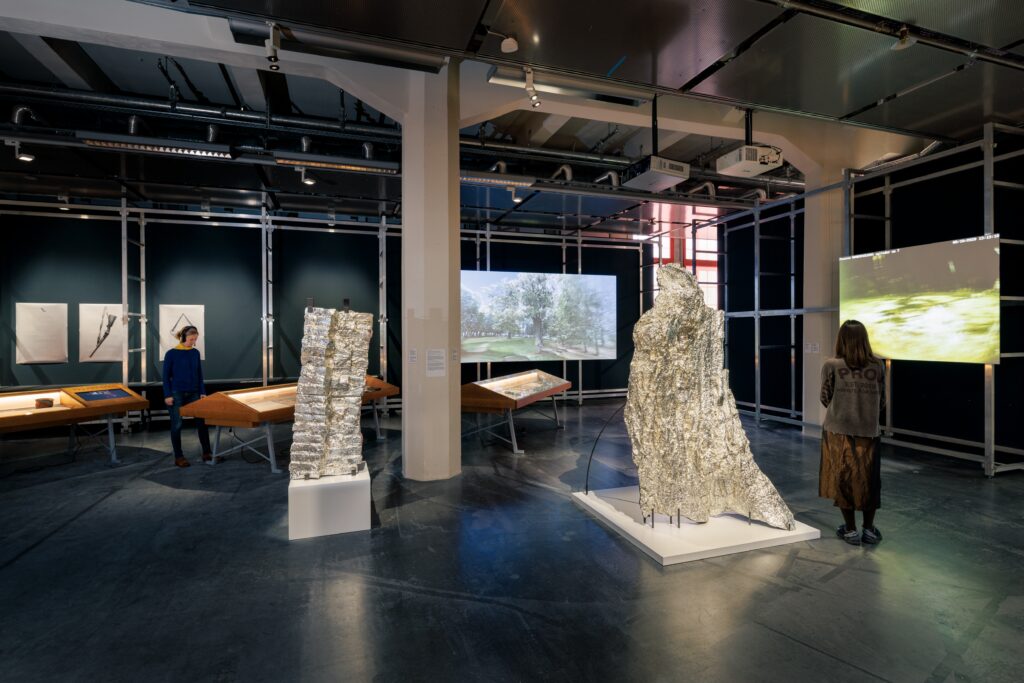
The department Issues of Evidence emerged from a conference in June, at which the Polish artist Natalia Romik and the curator Kuba Szreder invited other artists to the ZKM. The focus is on Romik’s own work on the hiding places of persecuted Jews during the Nazi era, especially the interior of an old oak tree that has been brought up to the status of the European Tree of the Year 2017 and featured on a 100-złoty banknote. This incredible story, which could only work because people from the surrounding area provided shelter to the hidden brothers, is described in all media, including a cast of the interior of the oak tree and a 3D animation. What is more interesting are the evidence Issues of Evidence, The photos and documents of these and other works, collected in beautiful wooden showcases, are like those that were once used for coin collections or botanical exhibitions.
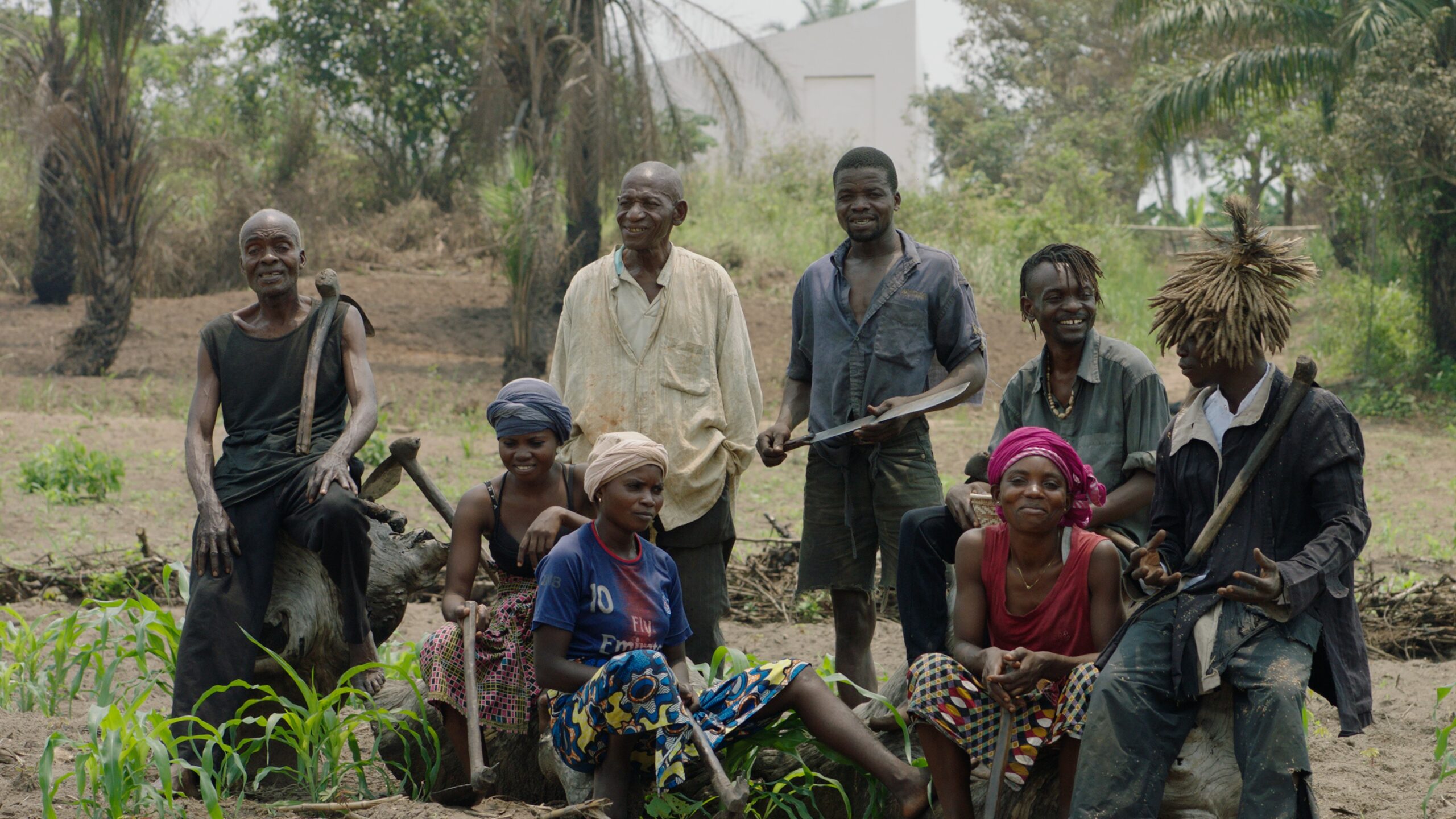
A trigger warning warns of three life-size plastic figures of the Cercle d'Art des Travailleurs de Planations Congolaise (CATPC), which shows the rapes. Irene Kanga wants to commemorate the colonial era with this work. Her grandmother told her about the Pende rebellion in 1931, which was triggered by a rape. A small wooden sculpture of the murdered colonial official Maximilien Balot stands in the center of the contribution. It is located in the Virginia Museum of Fine Arts, and the artists want to return it. A group of Congolese plantation workers? The film White Cube Renzo Martens explains the connections in the back corner of the room.
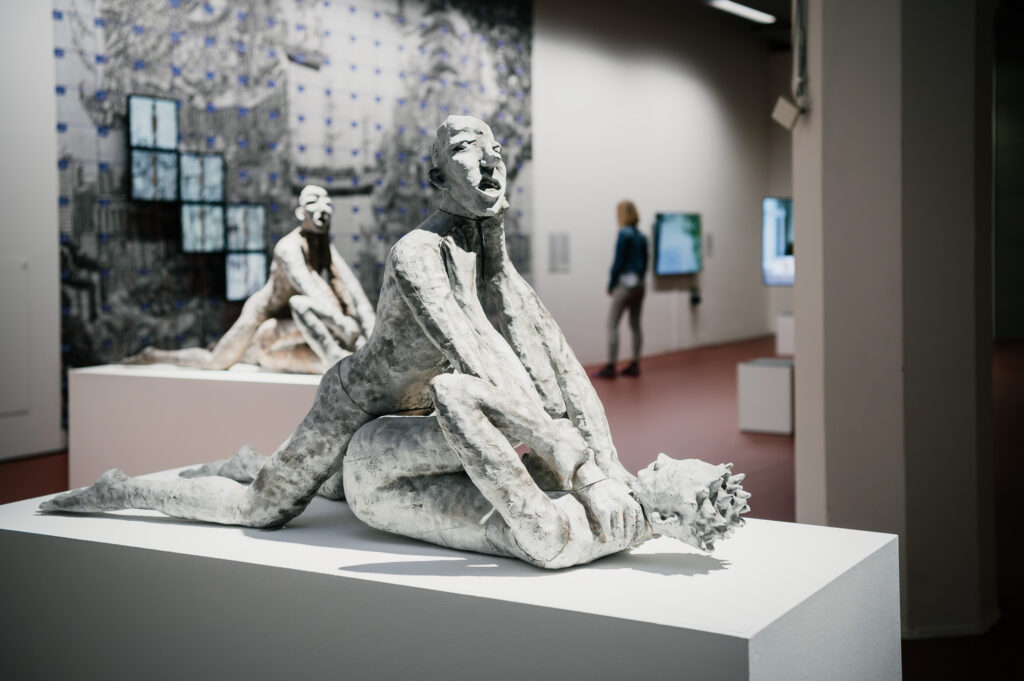
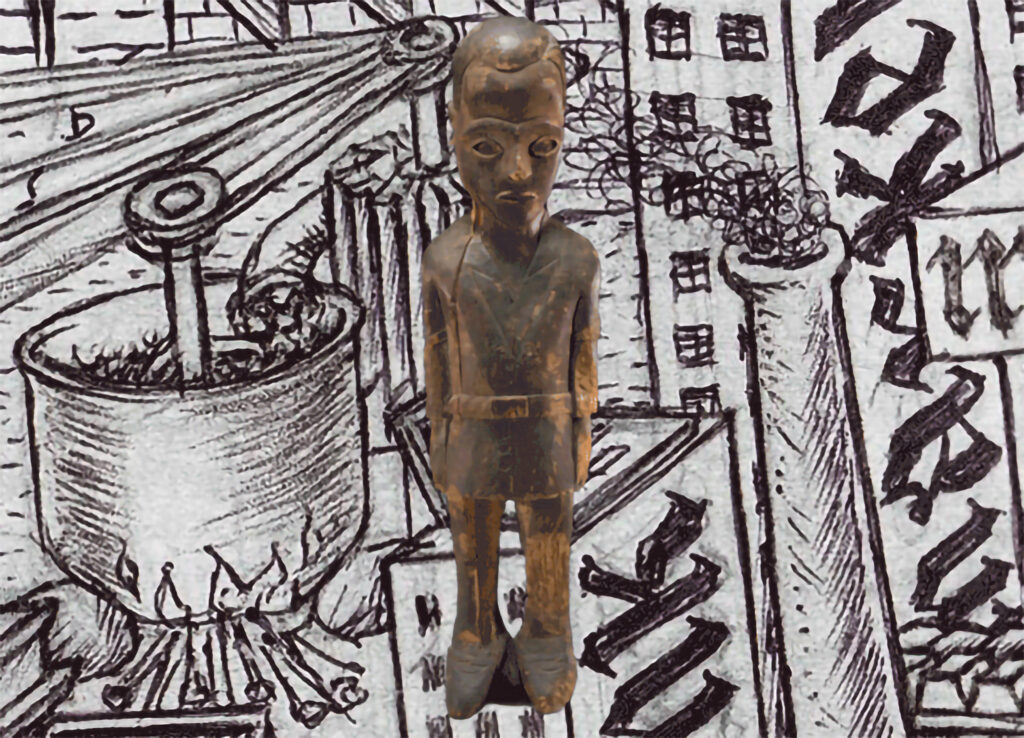
The plantation in Lusanga, formerly Leverville, is what this is about. It belonged to the Unilever Group, founded by William Lever. Lever was an art collector; Unilever uses the profits from the plantations to support the arts. Martens wanted to turn things around and empower the workers to acquire land through the sale of art. What failed on one plantation run by Unilever still succeeded on another, which the company has since abandoned. Kanga and colleagues modeled clay works that were scanned, transferred to London and New York, and 3D printed out of chocolate. Art collectors were delighted; the proceeds went back to the collective. NFTs continued. Finally, in the context of the Venice Biennale, it was possible to Balot temporarily returned to him. He was returned to him in White Cube exhibited at the plant that the Rotterdam architecture office OMA, founded by Rem Koolhaas, had designed. The opening was transferred to the Dutch pavilion. Martens' film, which has sparked controversial discussions, vividly shows the contradictions of the postcolonial world and the globalized art world.
None of these five "key positions" has emerged from nothing. Tavares' work was shown at the last year's Venice Architecture Biennale, created by Romik and Szreder for the Jewish Museum in Frankfurt, while the CATPC, among other things, presented it in 2016, at the Middlesbrough Institute of Modern Art (MiMA) was exhibited; the director at the time was Alistair Hudson. Zheng is very popular with private collectors. My Teacher For example, it comes from the Mercedes Benz Art Collection.
The fifth area, however, consists of two Karlsruhe-based projects and fits the statement: "The Useum is created when we actually use it." In Bio Design Lab The Design Academy is testing new materials with the participants: bioleather made from animal dung, small bowls made from mussel shell granules and alginate, tiles made from sewage sludge, and lampshades made from bee hives. Since 2019, the ZKM has again taken over one of the last remaining fruit trees in Karlsruhe; the Katzenwedelwiese has been replanted by Stéphane V. Bottero as a community project. The artist plans to create a branch in a light pavilion at the ZKM. Next, BAM-Area: Be a maker! wants to say the abbreviation. Every Friday there are workshops, every month an activation day: On a Chindōgu DIY workshop titled The Art of the (Non-)Useful Further workshops will follow on kimchi, bioplastics and so on.
Hudson wants to, to summarize, understand art with John Ruskin as a tool to change the world, from a global perspective, but with local resources. This includes everything that is already present at the ZKM, such as the Katzenwedelwiese project, which was created in conjunction with the exhibition Critical Zones or a film about diatoms made in 1974 by Jean Painlevé and Geneviève Hamon, accompanied by Song of the Sea Pirate Jenny from the Three Little Monkeys, That sounds out of the cinema box into the exhibition space. The ZKM is a large tank where various things are constantly running in parallel: Just barely enough time for Christina Kubisch's Soundwalks, Now, with Ukrainian partners, he is organizing an exhibition. Hudson’s next own project is an solo exhibition by the Korean artist Sung Hwan Kim. In April, he plans to present his own collection, which contains many unique media artworks but has never before been the subject of an exhibition.
Peter Weibel has already chosen his successor. Hudson had been pressured into resigning in Manchester because he had developed a work of the group at the ZKM. Forensic Architecture Hudson had shown that she had just been awarded the Right Livelihood Award, the so-called alternative Nobel Prize. Jewish lawyers had protested against critical statements about Israeli policy. The founder, architect Eyal Weizman, is himself Israeli. Hudson is not addressing this topic at the ZKM now. Instead, Tania Bruguera is presenting a small exhibition on censorship at the Münchner Ausweichquartier Villa Stuck. In a series of talks from January to March 2025, there will also be an explicit discussion of "censorship, bans, and boycotts" in Germany. The Cuban woman explains that she has experienced things here that she knows from previous experiences of surveillance and intolerance.
https://zkm.de/de/ausstellung/2024/09/fellow-travellers
https://arte-util.org
https://www.villastuck.de/programm/detail/tania-bruguera-the-condition-of-no
The Kunstmuseen Krefeld are dedicating the first retrospective in Germany to Charlotte Perriand’s multifaceted and astonishingly contemporary work.
 7 min read
In the new premises of Plateforme 10 in Lausanne, the Photo Elysée Museum can finally unfold its potential.
 12 min read
The exhibition "Six Five Four Three Two" featuring works by the New York-based artist Josephine Meckseper at the Heppenheim Art Society.
 9 min read