 14 min read
 14 min read
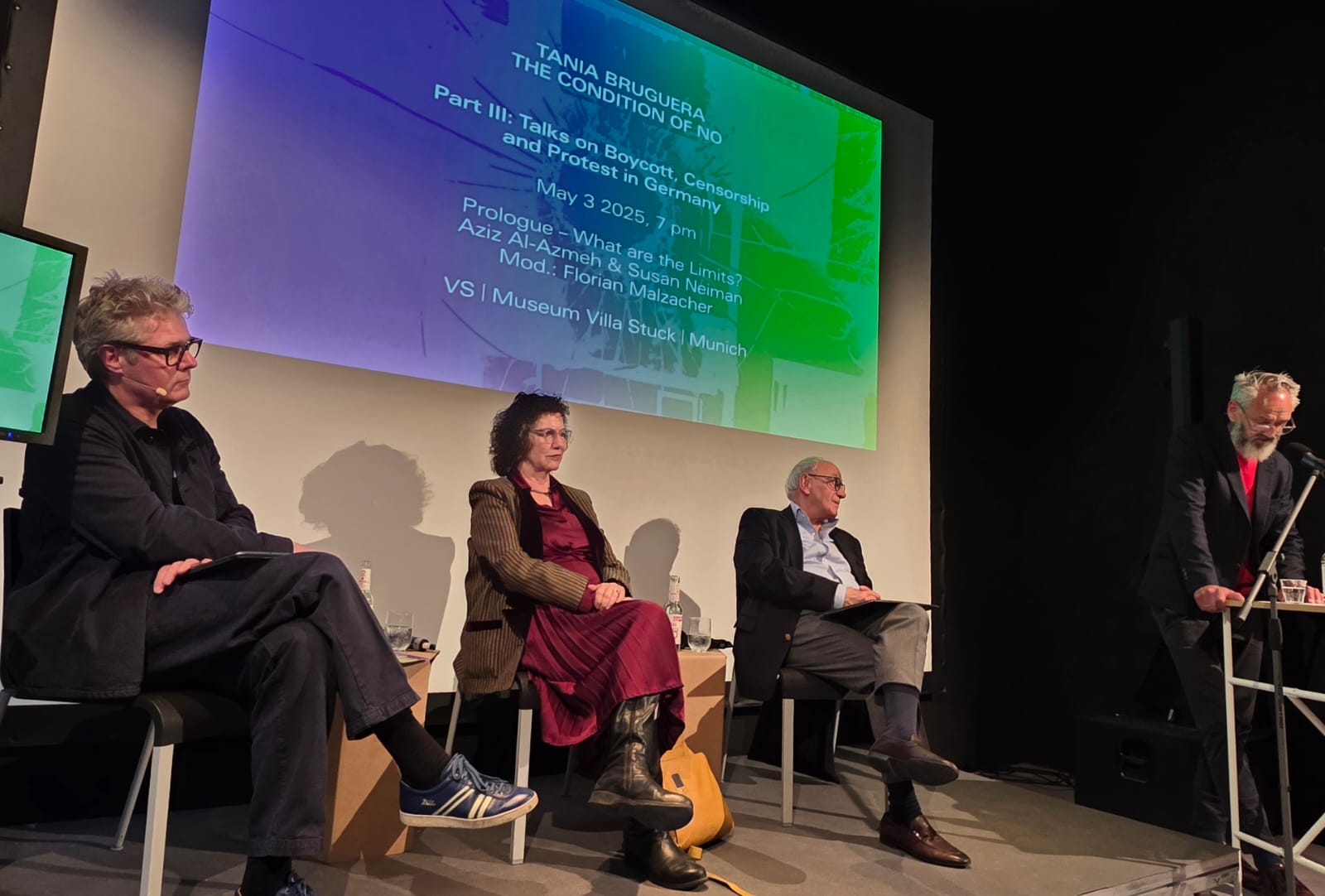
It was like an addition to the Kafka Year, a year after the great exhibition at Villa Stuck on the 100th anniversary of the author's death: on March 5, the first session of a series of talks on the subject took place in the interim quarters of the Munich museum. Cancellation, censorship and boycott in Germany The events that were originally planned for January are now taking place. "The limits of freedom of speech and art are currently under scrutiny," the announcement said. "Cancels, boycotts, censorship, behavioral clauses and protests have massive impacts on the cultural sector, yet talking about it is difficult." Planned as the third part of a project by the Cuban artist Tania Bruguera titled The Condition of No, However, following an exhibition by the artist and a film festival about China, the Villa Stuck announced the following evening, just before the scheduled date: "After the city of Munich intervened against the speaker list, the museum and the curators did not want to accept this intervention and therefore cancelled the entire series."
Censorship in Cuba and China: that is not surprising. But in Germany? Apparently, the city administration complained that one of the participants had posted an appeal as part of the campaign. Boycott, Divestment and Sanctions (BDS) signed. Apparently, it was the historian Aziz al-Asmeh, emeritus professor of Central European University Vienna, He had actually signed a call from 400 philosophy professors for an academic and cultural boycott of Israel on October 31, 2023. However, upon enquiry from Deutschlandfunk (dlf), the cultural department had no comment: "We are very surprised that the Villa Stuck homepage refers to the city of Munich and the so-called BDS resolution," the written response stated, "especially since this resolution no longer has any legal effect." Munich had already passed a BDS resolution in 2017, two years before the Bundestag, but the Federal Administrative Court had declared it invalid in 2022. Upon enquiry from dlf, Michael Buhrs, the director of the Villa Stuck, clarified that it was not necessarily about BDS, but that the city had "actively intervened" against one of the participants.
After talks between the city and the museum, censorship and cancellation were nevertheless avoided. The first three discussion rounds – with al-Asmeh right at the beginning – have now taken place, and two more are scheduled for early July.
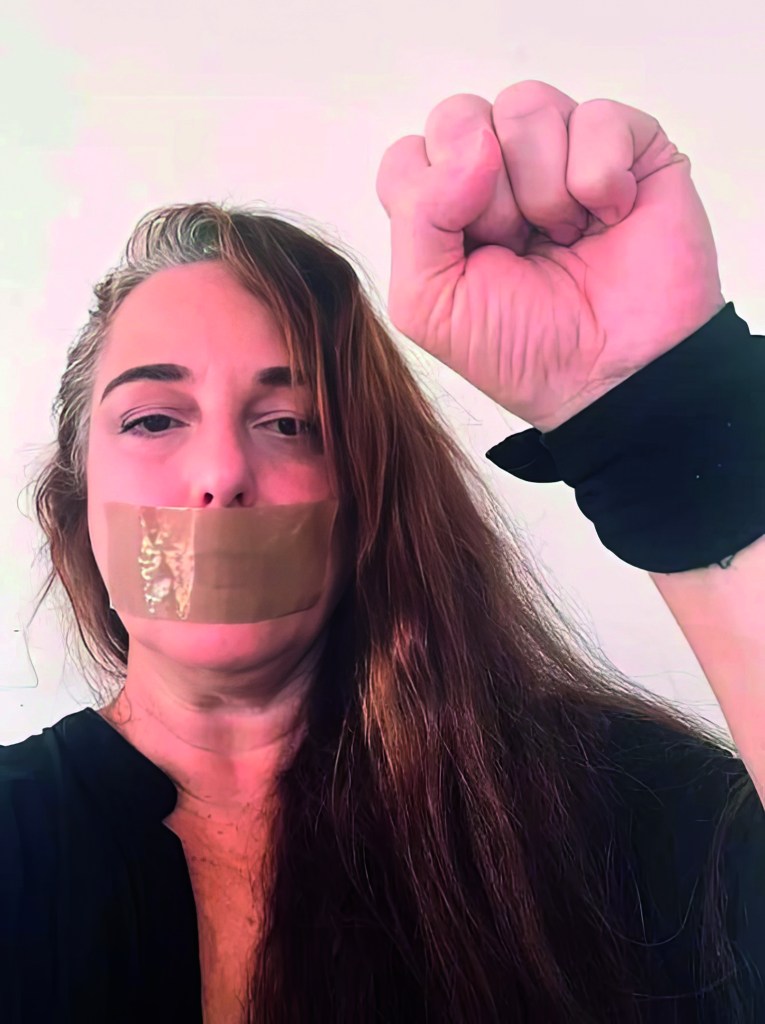


The starting point of the project, according to Bruguera, was Documenta 15, to which she and her collective had contributed with their exhibition. Instar was invited. Instar is an acronym for Institute of Artivism Hannah Arendt, But it also means pressuring. Bruguera is pushing for change. The collective was founded in 2015 after she spent 100 hours in Havana with other Hannah Arendt scholars. Elements and origins of total domination She had read this and broadcast it via loudspeakers in the street while under house arrest. The authorities tried to drown it out with compressed air hammers. She was briefly arrested. Bruguera now explained that she had first-hand experience with censorship. Certain elements of the Documenta debate reminded her of the conditions in Cuba, as well as the events in Hamburger Bahnhof, Berlin, where she had repeated the reading in 2024, until Palestinian activists disrupted it and the museum cancelled the performance.
In both cases, the controversial issue of anti-Semitism was at stake. In 2017, the Bundestag adopted a working definition of antisemitism. International Holocaust Remembrance Alliance (IHRA) has established this, but has added the phrase: "Furthermore, the State of Israel, understood as a Jewish collective, can also be the target of such attacks." This means in practice that any criticism of Israel can be interpreted as antisemitism. In a similar way, the BDS resolution adopted by the Bundestag in 2019 equates any call for withdrawal from business with goods from the West Bank, for boycotting arms deliveries to Israel or from academic and cultural institutions with the boycott of Jewish businesses from the Nazi era. The Berlin Culture Senator Joe Chialo also wanted to tie the allocation of funding through a so-called anti-discrimination clause to a commitment to Israel in the sense of the Bundestag a year ago; however, he then withdrew it. At the end of 2024, the resolution Never again is now: Protecting, preserving and strengthening Jewish life in Germany, In the short term, an anti-Semitism resolution to condemn and sanction only anti-Israel attacks, citing among other things the debate surrounding the Documenta 15, given the asymmetrical situation in the Gaza Strip – where the Palestinian side’s death toll is at least 50 times higher than that of the Israeli side.
She would never have been able to carry out the project alone, Bruguera admitted that she did not know the German situation well enough. This is where Florian Malzacher comes in, a dramaturg and curator who has been working with her for a long time. He has already contributed to the 2020 Ruhrtriennale, which was postponed after accusations of anti-Semitism against the Cameroonian historian Achille Mbembe; he is therefore familiar with the subject matter. Malzacher has worked on the title The Art of Assembly a lecture and discussion series has been launched that aims to explore the potential of assemblies in the "search for alternative forms of gathering, arguing and decision-making, negotiating community and society," with Roland Wenninger from Villa Stuck designing the series and moderating the first round on May 3.
"Freedom of speech is always limited, among other things by manners and courtesy rules," al-Asmeh opened the first round of discussions, which was titled: Where are the boundaries? Now, however, it is the state that limits freedom of speech. "Very strange, surreal things are happening in Germany," said the historian, who cited Claudia Roth's reaction at the Berlinale awards ceremony for the film No Other Land He called on those who only wanted to pay tribute to the Israeli, not the Palestinian filmmaker. The way Germans of Arab descent were treated was "at the limit of humanity". There had never been a "Jewish-Christian civilization", as it is now being presented against Islam. Antisemitism in the Christian West had actually arisen in the first place. The way political interest groups and the press expressed prejudicial judgments reminded him of Iran, "not a free Germany".
Al-Asmeh explains this with Jürgen Habermas. Since a pure constitutional patriotism does not offer enough potential for identification, the essential element for defining a new, federal German identity after the war was the demarcation from the GDR, which however fell apart after the end of the Cold War. Thus, only the Holocaust remained, a "singular event" as Habermas had emphasized in the historian debate of the 1980s. To equate anti-Semitism with anti-Zionism and criticism of Israel is, however, a "childish framing." Germany is undermining international standards within the Union with the USA and silencing the voices of the Palestinians. "Germany is on the wrong side of a genocide for the third time in history," the historian exclaimed: after the genocide against the Herero and Nama and the Holocaust now in the case of the Israeli attacks on Gaza.
The philosopher Susan Neiman, director of the Einstein Forum Potsdam, largely agreed with al-Asmeh. When she came to Berlin in 1982, the American Jew said, there was still little to be felt of a culture of remembrance. Her book was published in 2019. Learning from the Germans about the exemplary way in which the crimes of the Nazi era have been investigated, and how the German population of perpetrators now identifies with the victim population, which is in turn equated with Israel. However, she considers this to be "really bizarre". Neiman is one of the founders of the Initiative GG 5.3 Openness to the world, which speaks out against the political misuse of the antisemitism accusation and the BDS resolution of the Bundestag – which was introduced by the AfD into the Bundestag, as Neiman pointed out. Subsequently, the other parties rushed to follow suit: not to appear more antisemitic than the right-wing radicals. She continued by explaining that she had hesitated for a long time regarding the use of the term "genocide" in relation to Gaza. But the Israeli newspaper Ha'aretz, Al Jazeera, Even the New York Times They provided sufficient evidence: "Real children are killed by real weapons," Neiman said, "or by the deprivation of food." However, to convince oneself that the term apartheid is appropriate, it is sufficient to spend five minutes in the West Bank.
The German debate on anti-Semitism, according to al-Asmeh, follows a logic of bullying. In the second round of discussions on cultural institutions, Margarita Tsomou and, joined from London, Eyal Weizman shed more light on what this means. The scandalization – Tsomou, dramaturg at the theater Swing on the shore (HAU) in Berlin spoke of an Moral Panic – following a clear script. It would be a threat to the "moral righteous people", the decent people, staged by anti-Germans like the Ruhr barons or the Kassel Alliance against Antisemitism: a person's blog where one has to wonder if it is a paid full-time job. Parts of Jewish society see any criticism of Israel as a threat to the Jewish community. But: "These people are neither Jews nor Israelis. But very loud." This Moral Panic, Thus, Tsomou argues, amplified by the various echo chambers, it then escalates into a demonization campaign in the media. Universities and cultural institutions are under general suspicion: a symptom of an authoritarian turn.
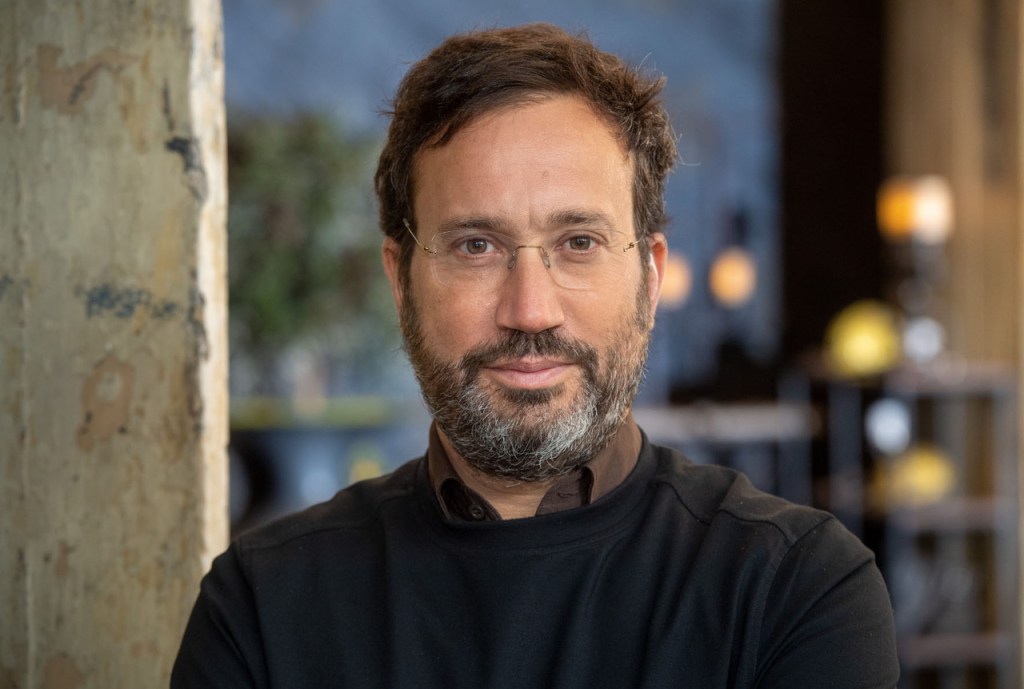
Eyal Weizman, founder of the research agency Forensic Architecture, In the past year, with the Right Lievelihood Award, Awarded the so-called Alternative Nobel Prize, he brought this logic of bullying to bear on his own work. "Germany was important to me," emphasizes the Israeli architect, who works in the exhibition house Artworks in Berlin in 2003 presented his contribution to the settlements in the West Bank, which he had designed for the World Architecture Congress the previous year but which was then again cancelled by the Israeli Architects Association. In 2021, Claudia Roth presented her first day in office as Minister of Culture in the exhibition entitled Forensic Architecture The NSU complex was shown and photographed at the Maxim Gorki Theater. That same year, Weizman founded the Berlin branch. Forensics, Named after the exhibition of the same name held in 2014 at the Haus der Kulturen der Welt.
But now Forensis no longer receives public funding – which primarily concerns cases of police violence, the German colonial history in present-day Namibia, and work on migration, as Weizman noted. Only two employees remain. What happened? An author of the Daily newspaper (taz) questioned the research into an Israeli attack on a hospital in Gaza in January 2024. Without evidence, Weizman said. The group's work consists of gathering evidence on behalf of the victims of human rights violations. These could be challenged at any time, as before the court. "But for that, you need evidence," insisted Weizman. She had the Taz Not delivered. With fatal consequences: "This ruins our work in Germany."
In this situation, Tsomou stated, cultural institutions would have an ambivalent dual role: threatened by budget cuts themselves, they would also have a responsibility towards the artists. They would face the choice: either to enforce the German state’s rationale of unwavering loyalty to Israel and thus restrict freedom of expression; or to openly resist; or else to make strategic compromises in order to continue supporting the work of the artists.
"First the punishment, then the judgment," al-Asmeh quoted the Heart Queen from Lewis Carroll's novel. Alice in Wonderland. According to Neiman, any attempt to suppress a statement brought before the court was declared invalid. Tsomou explained that the resolution to protect Jewish life was a "preliminary instrument" and not binding. The Bundestag's BDS resolution described it as "outlawed," as it violated the principle of equal treatment. Similarly, Joe Chialo's anti-discrimination clause: "We challenged it and won."
"Germany is violating international law if it does not prevent the genocide," Tsomou continued. Weizman, who also advises the International Court of Justice, made it clear that genocide is a legally defined term. Adopted by the General Assembly of the United Nations in 1948, when some of the signatories were still colonial countries, the Convention on the Prevention and Punishment of the Crime of Genocide, As the UN itself, the General Declaration of Human Rights And the International Court of Justice came into being in response to the Shoah. Weizman pointed out that South Africa, "a state that was colonized and experienced apartheid," had referred to the occupation in Israel as apartheid in the trial against Israel: a crime against humanity that is also clearly defined under international law. Israel could present counterarguments at any time. An expertise in the field of the Shoah, as Germany sought to present on the second day of the negotiations in The Hague, was, however, irrelevant: "The term "Shoah' is not being discussed there."
Starting from the 75th anniversary of the Basic Law in May 2024, Tsomou has launched a discourse and podcast series on the digital platform of Hebbel am Ufer (HAU4) titled On Justice Created. In four episodes so far, highly qualified legal professionals as well as experts from other disciplines have discussed current challenges for democracy and the arts. The goal is to enable cultural institutions to better understand and exercise their rights. "We need to organize," she said, in order to counter the threat of an authoritarian turn. She generally advises those affected by dismissals and layoffs to file a complaint.
With the third round of discussions about universities and academies, the language switched from English to German, and the debate narrowed down to the controversial topics in Germany. There is nothing to say against the contributions of Meron Mendel, director of the Anne Frank Educational Center in Frankfurt, and Geraldine Rauch, president of the Technical University (TU) Berlin, nor against the moderation of Elke Buhr, editor-in-chief of the art magazine monopoly. However, immediately smoke was confronted with the occupation of a lecture hall at the Free University (FU), which was of course also due to the hard line of the university administration; whereas at the TU, where Rauch shows understanding for students from Palestine, some of whom had also lost relatives, something like this had not yet occurred.
In Germany, to put it briefly, 50,000 deaths and a completely destroyed Gaza Strip are not a scandal. However, it is certainly scandalous that the president of the TU once posted a call for a ceasefire on social media with a "like," accompanied by a picture of a demonstration in Turkey, on which a poster showing Benjamin Netanyahu with a swastika was displayed – which Mendel had overlooked when she saw the smoke on her smartphone screen. She had no choice but to take the Canossagang on. As she learned from the media, she was subsequently excluded from the Future Council of Federal Chancellor Olaf Scholz. However, as president of the TU, she did not resign, which Mendel finds correct: "Showing backbone is always good," said the director of the Frankfurt educational institution.
Mendel, however, believes that functionaries should generally refrain from engaging in any activity on social media. However, if this was a well-intentioned advice that could get them into trouble, there is nothing to complain about. However, it is often complained that opinions are now formed and amplified in the echo chambers of media platforms. If this is true, why should people who have something to say refrain from speaking out precisely here? Ultimately, the debate surrounding smoking followed exactly the script described by Tsomou for the scandal: immediately after becoming known, the media outlets that covered the story published articles that were full of sensationalism and misinformation. Jewish Allgemeine and the Image-The newspaper has serious accusations. Josef Schuster, the president of the Central Council of Jews, was not satisfied with Rauchs apology, which Mendel did not mention. However, given this debate, the reason why not only Palestinians are protesting and occupying auditoriums is not mentioned at all: the Israeli attack on the Gaza Strip with the devastating consequences for the people living there.
The series of talks is thus not yet over. On July 4, Candice Breitz, the South African Jewish artist whose exhibition the Saarland Museum cancelled last year because of her comments on Gaza, will discuss the issue with the law professor Christoph Möllers from Humboldt University, moderated by Bernd Scherer, the former director of the House of World Cultures. Two days later, Tania Bruguera, Roland Wenninger and Florian Malzacher will take stock of the situation.
For the time being, it can be concluded that no participants have been found for a round of discussions on the Documenta case that was originally also on the agenda. While Eyal Weizman said at the end of the second round that instead of just talking, it would be time to get active and, for example, like some young German activists, to travel to Malta to provide help, Michael Buhrs repeated his mantra before each round of discussions: "We must never stop talking to each other." That the discussions, which were first cancelled, are now taking place nevertheless confirms his point of view. A precedent, Tsomou believes. Such a thing has never happened before.
About the series of talks on the website of Villa Stuck
The Kunstmuseen Krefeld are dedicating the first retrospective in Germany to Charlotte Perriand’s multifaceted and astonishingly contemporary work.
 7 min read
In the new premises of Plateforme 10 in Lausanne, the Photo Elysée Museum can finally unfold its potential.
 12 min read
The exhibition "Six Five Four Three Two" featuring works by the New York-based artist Josephine Meckseper at the Heppenheim Art Society.
 9 min read