 9 min read
 9 min read
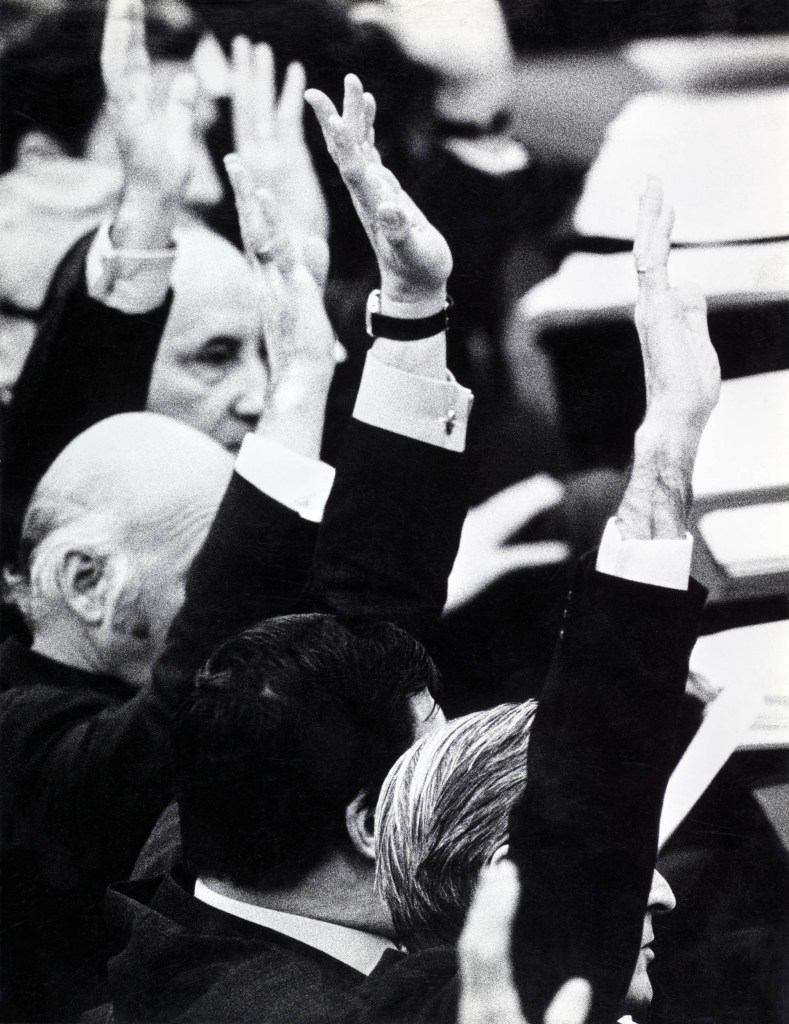
In the Bundestag, Bonn 1973: Armies of men stretch out in a row. White cuffs protrude from the sleeves, and rings on the fingers. The faces of the men dressed in dark cloth are obscured by the arm of the respective front man. Here and there, from this side view, the tip of a slightly open mouth is visible; the neatly combed hair on the back of the head stands out; wrinkles are visible on a forehead. The CDU members during the vote on the reform of the sexual crime law, which aims to protect sexual self-determination, remain unrecognizable in the photograph by Jupp Darchinger – however, their "against" still defines the image today in stark black-and-white contrasts.
The photography of photojournalist Josef Heinrich Darchinger (1925-2013) is part of the exhibition "Jupp Darchinger: The Eye of the Republic", which the LVR Landesmuseum Bonn is organizing together with the Archive of the Social Democratic Party (AdSD) of the Friedrich-Ebert-Stiftung: The exhibition, curated by Adelheid Komenda, Klara Niemann and Thorsten Valk, is a reminder of the Bonn-based photographer, who would have turned 100 this summer and who visually accompanied the political and social developments of the Federal Republic of Germany from the economic miracle to reunification. Most recently honored in 1997 at the LVR Landesmuseum with a retrospective exhibition, the current exhibition, based on the Darchinger archive, which he handed over to the Friedrich-Ebert-Stiftung in 2008, opens entirely new perspectives on the photographer legend and his family business, which, with Darchinger’s analog photography, was able to chronicle German history over five decades in all the major media of the Federal Republic of Germany.
Josef "Jupp" Heinrich Darchinger's photographic career began in 1952 with his membership in the SPD, for whose party newspaper New progress He took on his first commissions, created election campaign portraits and implemented color photography that – at the time, unusual – particularly well showed the economic breakthrough of the Federal Republic. To this day, the photographer is still seen in connection with the Social Democratic Party. That Darchinger, who as a young man completed an agricultural apprenticeship, performed military service in the 1st SS Panzer Division Leibstandarte SS Adolf Hitler from 1943 until the end of the war, has not yet been addressed. The current Bonn exhibition changes this and, at the very beginning, points in an illustrated biographical display to Darchinger’s early career and his role in National Socialism and the Second World War, which has not yet been fully researched.
After his return from captivity, Darchinger trained as a photo lab technician at the Tempo GmbH conversion facility in Bonn in 1948, which emerged from the company Agfa. There he met Ruth Hofedank, who, as a trained photo lab technician, headed the large format photography department and supported him with her expertise after their marriage.

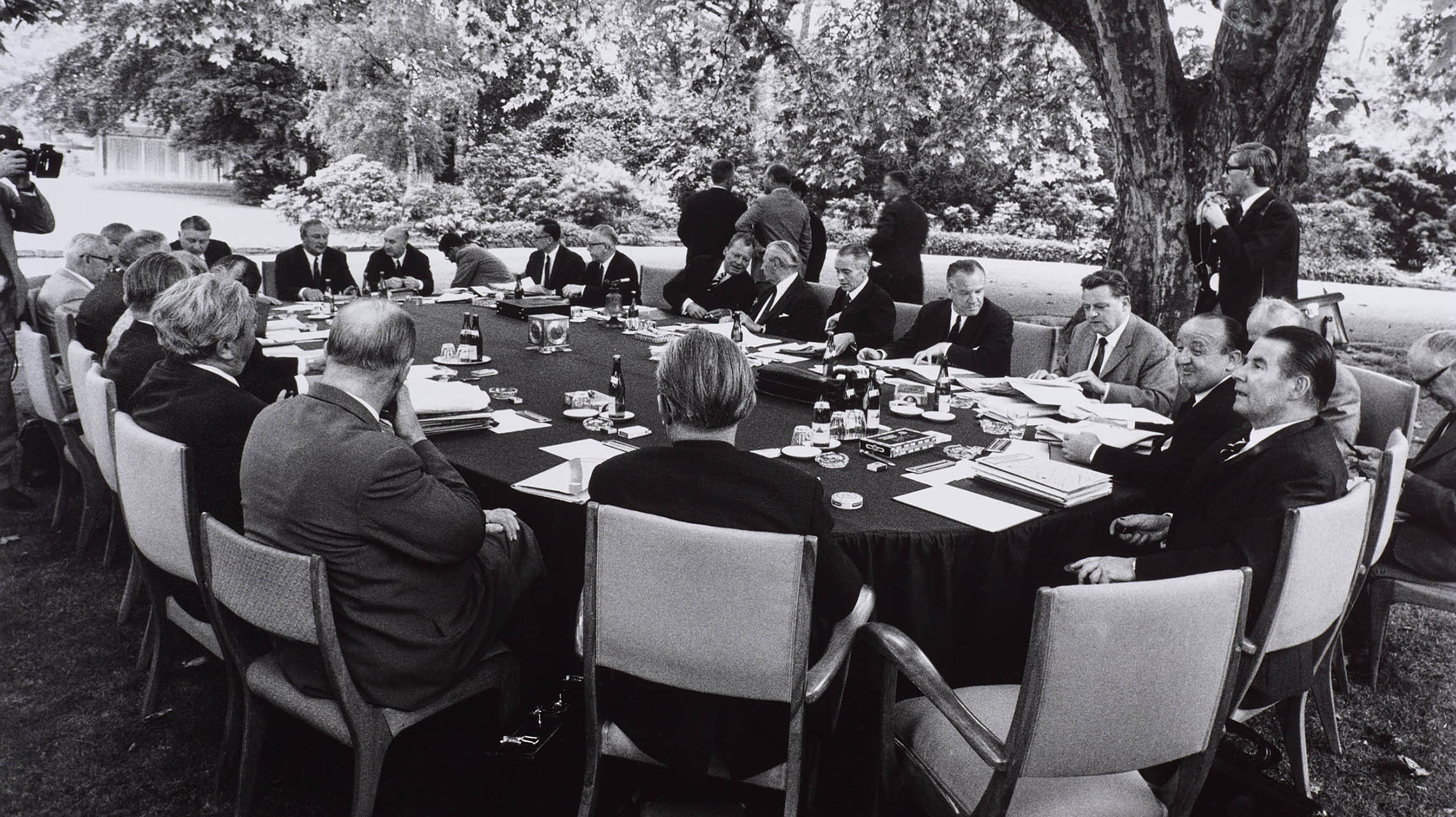
Bonn, which became the provisional seat of government in 1949, is now the central location for Darchinger's photojournalistic work in the federal political context. From here, he has been photographing for the weekly newspapers since 1964. Der Spiegel and The Time, He moved between the Federal Chancellery, state delegations, party headquarters and press conferences. His interview portraits, such as the "Spiegel Gespräche", for which he obtained exclusive rights to broadcast them, were highly popular. Spiegel With whom he collaborated for over four decades and accompanied more than a thousand Spiegel interviews with his camera during that time, Darchinger gave his photography its own distinctive character. Often, Darchinger's images seem to be him sitting directly at a table with the politicians he photographed: Willy Brandt, who looks over his shoulder or sideways at the wrinkled face of Darchinger; Helmut Schmidt, who opens a letter at a SPD meeting; Richard von Weizsäcker, who has breakfast with a Turkish "guest worker family" in the Berlin Tiergarten; or Oskar Lafontaine, who gestures during a conversation. This also applies to larger political events such as the cabinet meeting in the park of the Palais Schaumburg on July 6, 1967. Darchinger deliberately chooses a perspective from a chair that is not occupied at the meeting table to suggest a closeness between the people being photographed and those viewing the image. Although he also photographed female politicians – the political seats are almost exclusively occupied by men.
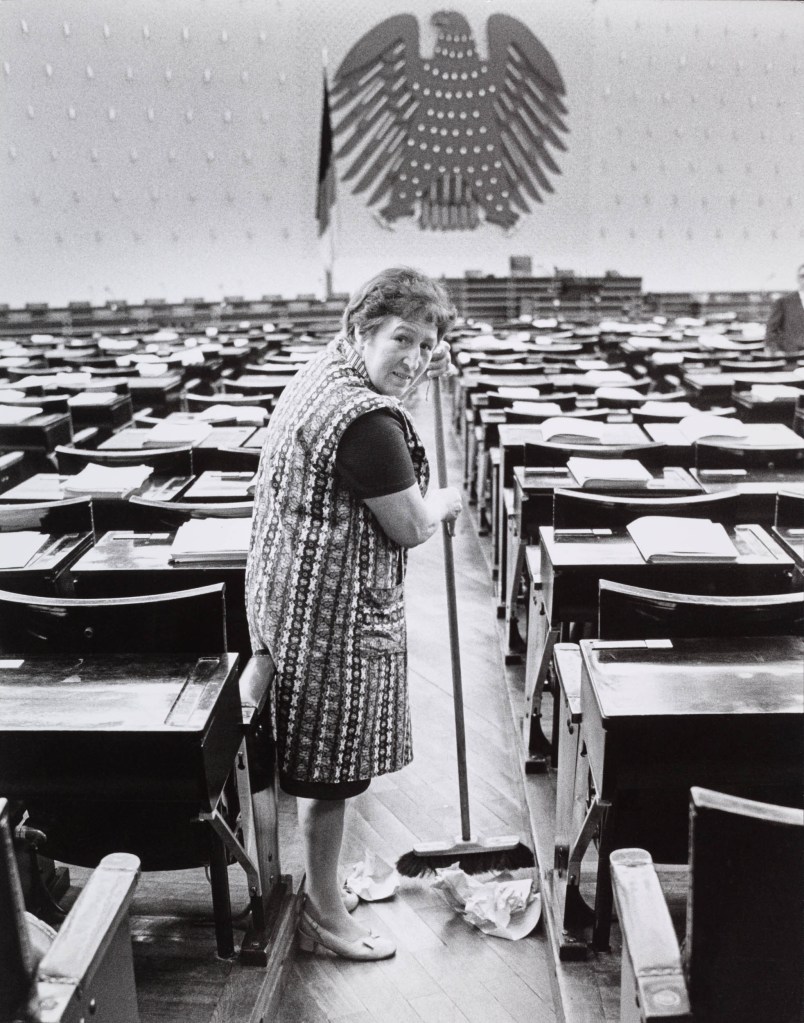
Whether in the open air, in crowded indoor spaces, at public gatherings on the street, or in a small room where the members of parliament sat together smoking: Jupp Darchinger always photographed without the use of light. The fact that his images were created only in daylight or with the available light sources makes them appear both authentic and magical at the same time. This effect is further enhanced by Darchinger’s eye for the situational: his images show the people he photographed amidst the events – in conversations and exchanges of thoughts, while thinking, while scribbling on meters-long sheets of paper, while cleaning the plenary hall, while rolling out a red carpet in preparation for a state visit, while gesturing during a speech, during a funeral procession, while laughing together.
The fact that the company J. H. Darchinger was a family business from the very beginning makes "Jupp Darchinger: The Eye of the Republic" evident through a dedicated exhibition area that illustrates the processes of division of labor in the Darchinger household through photographic documentation and working materials. While Jupp Darchinger photographed with three Nikon cameras with different focal lengths at a meeting to achieve differentiated references to the events, Ruth Darchinger handled retouching work, labeling, and archiving of the photographs in the office. Starting in 1977, son Frank supported the work as a photographer, and starting in 1984, son Marc also joined the team. This is how the Darchingers worked in a collaborative manner, as Frank Darchinger reported in an interview film produced for the Bonn exhibition with Frank and Marc Darchinger: After the photo shoots, for which the Darchingers also traveled long distances by car, the films were developed in the family house with a studio in Bonn-Endenich; first, selected image sections from the negative were enlarged in the darkroom, then labeled, then stamped with the company's logo with account details and then ready for shipment the same night to the post office at the Bonn railway station or to the express courier to ensure that the images would arrive on time at the editorial offices in Hamburg, Munich or the USA. Their timeliness and reliability were a success and brought an advantage over the competition: In addition to the aforementioned publications, the Darchingers supplied, for example, World, Stern, Wirtschaftswoche, Handelsblatt, Colorful or Quick.
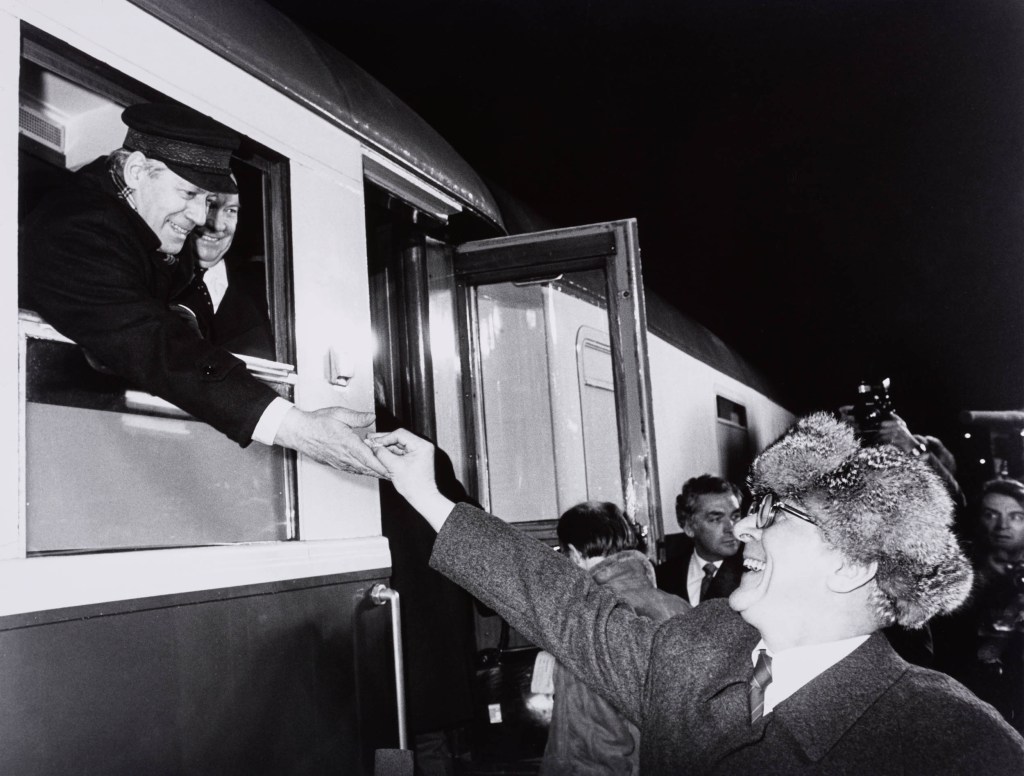
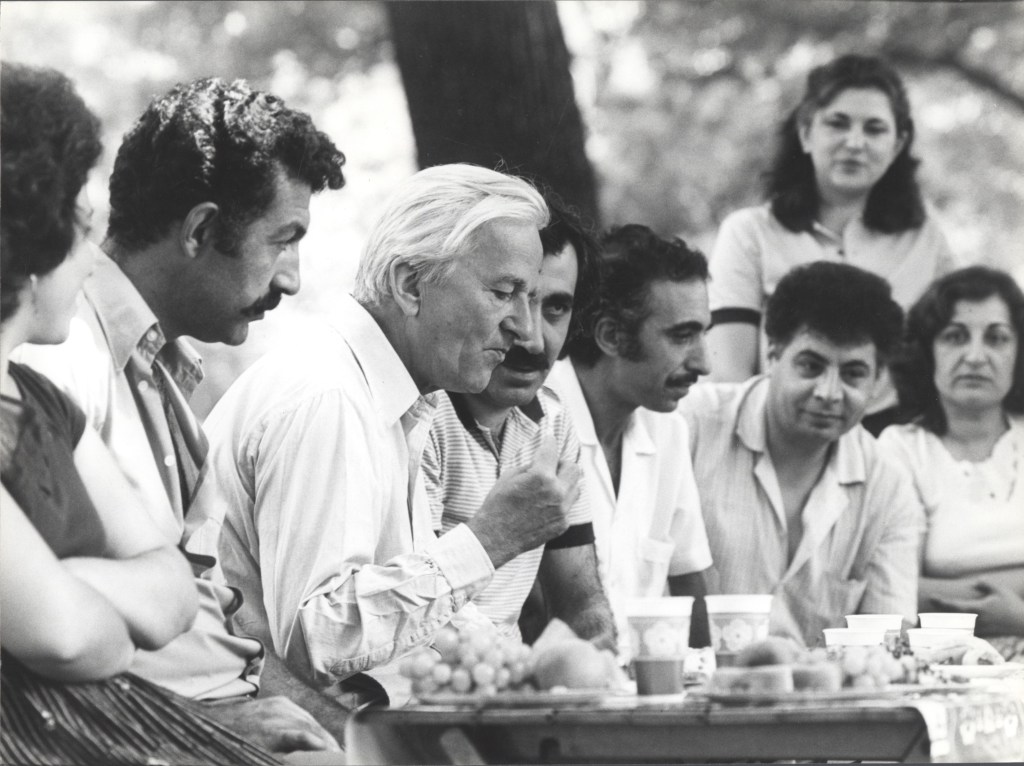
Josef Darchinger published photo albums about the then Federal Chancellor Helmut Schmidt, whom he photographed in private moments in 1974, for example during a summer sailing trip, and who he accompanied in the winter of 1981 during the German-German summit in Güstrow, where Erich Honecker handed Schmidt a cough drop as a farewell gift at the train station. Darchinger's wait in the cold was worth it; the scene at the politicians' hands connected by a candy – as an expression of hope for normalcy? – became legendary. But not only to the German Democratic Republic did Darchinger travel with the politicians he photographed. His travels took him to the People's Republic of China, where in 1979 he accompanied the then Federal Minister for Research and Technology, Volker Hauff, as one of eight press representatives.
Jupp Darchinger received awards and honors for his work, including the Dr. Erich Salomon Prize of the German Society for Photography in 1987, named after the photojournalist murdered in Auschwitz, or the Federal Cross of Merit 1st Class in 1989, as Josef Heinrich Darchinger was now considered a significant and influential chronicler of contemporary history. With the move of the Bundestag from Bonn to Berlin in the summer of 1999, Josef Darchinger retired from political life as a photographer.
The Josef Darchingers Archive, kept in the archive of social democracy as the "Photo Archive Jupp Darchinger", is of crucial importance for this exhibition – and for further photographic and political research – alongside the collection holdings of the LVR Landesmuseum and the loan items of the Darchingers' sons. This is clearly demonstrated by the curatorial concept that dedicates an exhibition architecture to the topic of archives with archive boxes and archival materials.
The Darchingers" photo archive comprises approximately 1.6 million negatives, 60,000 prints, 30,000 slides and numerous series of images. The exhibition "Jupp Darchinger: The Eye of the Republic" makes some of these collections available for the first time, supplemented by additional items from Darchingers" personal archive. These include the handwritten findbooks kept by the family business, in which data, events and people are assigned to the negative numbers for the period from 1953 to 1998; or an alphabetical catalog. The exhibition organizers have taken this opportunity to dedicate an entire room to Darchingers" "Thematic Image" section. After all, the company J. H. Darchinger also sorted its photographs according to keywords in addition to a personal card catalog to provide the editorial staff with image material independent of political events of the day. The Bonn exhibition presents examples of selected thematic images to illustrate this, such as "Alternative Energies", "Dealing with the Environment", "Gastworkers", "Security and Control", "Hospital Costs" or "Women's Employment", and contextualizes his photographs – also those made visible on the back – with books or posters from the respective time period, which are presented in showcases. The exhibition highlights Darchinger's vigilant eye for the signs of the times, grouping them in his collection of images into aspects that still hold great relevance today, such as the search for new energy sources, ensuring the drinking water supply for the population, migration, or the gender pay gap.
In full accordance with Jupp Darchinger's observation in the documentary film "Jupp Darchinger: The Eye of the Nation" (1996), which was shown in the exhibition, "Democracy needs confessors," the exhibition stimulates further work on the archive, which is made possible by the digitization of the collections through the archive of the Friedrich-Ebert-Stiftung Social Democracy. For example, a QR code printed in the visitor brochure refers to the possibility of searching in the online collections. However, this option should not replace a visit to the exhibition. Because Darchinger's recordings are almost always shown as silver gelatin prints: this is hardly replaced by viewing them on a monitor or in old print media.
Extremely carefully curated, the exhibition "Jupp Darchinger: The Eye of the Republic" provides a comprehensive insight into the spectrum of his oeuvre, which serves as a visual memory of the Bonn Republic and offers many perspectives from political and everyday life to help us better understand the time we live in.
The exhibition is still on display until September 14, 2025. LVR Landesmuseum Bonn To see, open Tuesday to Sunday, 11 am to 6 pm.
Further online research in Archive of the Friedrich-Ebert-Stiftung.
The Kunstmuseen Krefeld are dedicating the first retrospective in Germany to Charlotte Perriand’s multifaceted and astonishingly contemporary work.
 7 min read
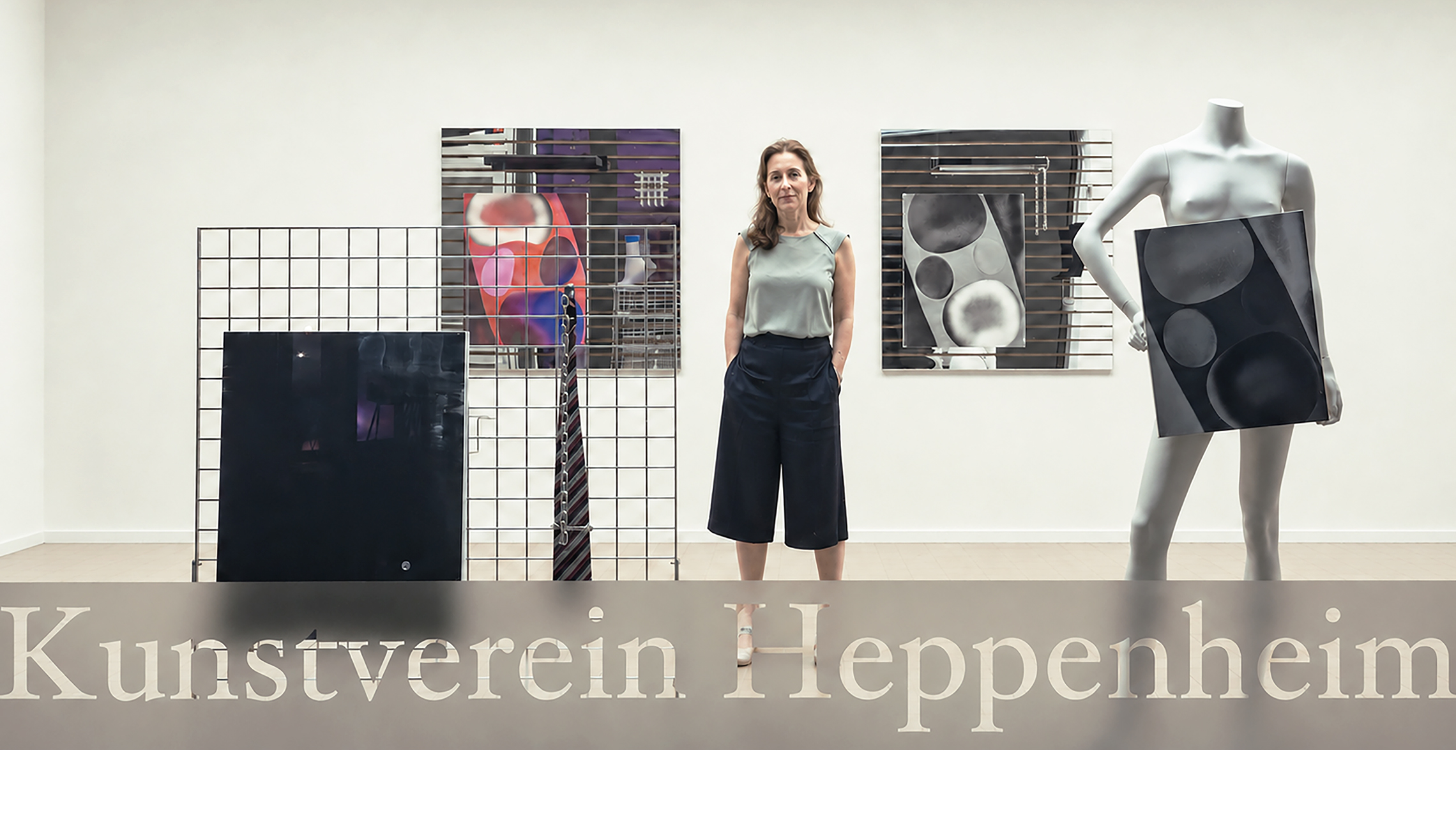
The exhibition "Six Five Four Three Two" featuring works by the New York-based artist Josephine Meckseper at the Heppenheim Art Society.
 9 min read
In the new premises of Plateforme 10 in Lausanne, the Photo Elysée Museum can finally unfold its potential.
 12 min read