 7 min read
 7 min read
The postmodern museum building, which was built in Bielefeld in 1968 according to plans by Philip Johnson, appears massive, like a cave, with its cubic shape made of red sandstone. In the interior, the Kunsthalle Bielefeld – Johnson’s only museum building in Europe – then unfolds through an open plan layout that invites visitors to stroll through the building and sometimes allows the view of the adjacent sculpture park through windows. A bit disappointing is that the exhibition "Nearness in Distance – Albrecht Fuchs: Portraits" was placed on the lower floor of the building. Because there, around the foyer, where the works of the photographer are displayed on the walls and in showcases, functional areas of the building are grouped together, which of course are also used. This creates a certain restlessness in the exhibition. In the film and lecture room of the house, leading off the foyer, the silence of the space then allows for a concentrated immersion in further works by the artist, which are shown here as a video loop.
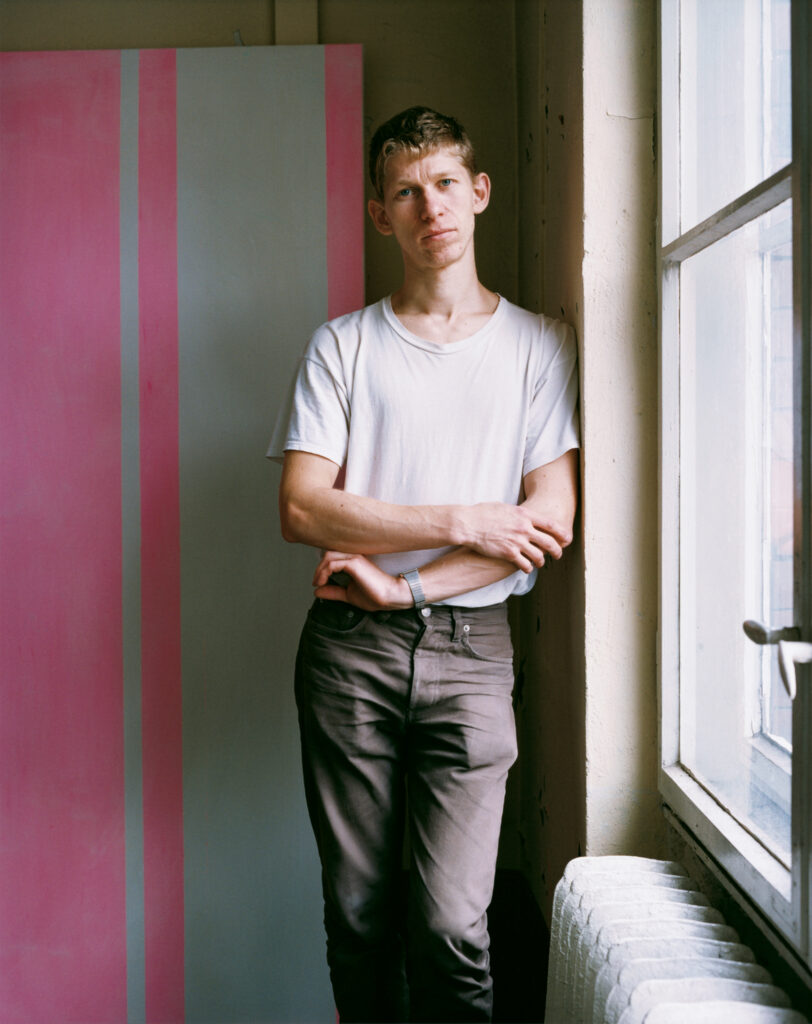
Albrecht Fuchs, born in Bielefeld in 1964, is valid as one of the most interesting and significant portrait photographers in the history of younger art criticism: since the late 1980s, Fuchs has been photographing artists and actors from the international art and cultural scene, such as curators, collectors or publishers, musicians and actors. Sometimes his portraits stem from commissioned work for newspapers and magazines, such as the Frankfurter Allgemeine, Monopol, Süddeutsche Zeitung, New York Times or Zeit. What makes his portraits so appealing is the given lighting conditions, with the people he works with and the closeness he gains with them. For Albrecht Fuchs does not photograph them in a studio he has set up in Cologne, where he lives and works, but rather seeks out the people he photographs in a place that is of importance to them themselves: in their studios or apartments, in a temporary environment such as a hotel or while traveling, during walks in urban or rural settings. Here, the mere self-portrait of the people he photographs expands into a genre image: in what spatial setting do the people portrayed appear, what poses and gestures do they adopt, what furniture surrounds them, amidst which work materials or accessories do they appear, and what role do clothing and fashion play? What do these images ultimately say – viewed with a temporal distance – about the socio-cultural structures of their time, about networks and the rapidly changing hype in the art market? This will be particularly interesting when Albrecht Fuchs rephotographs artists with a gap of several years: What continuities and breaks within a biography can then be read from his images?
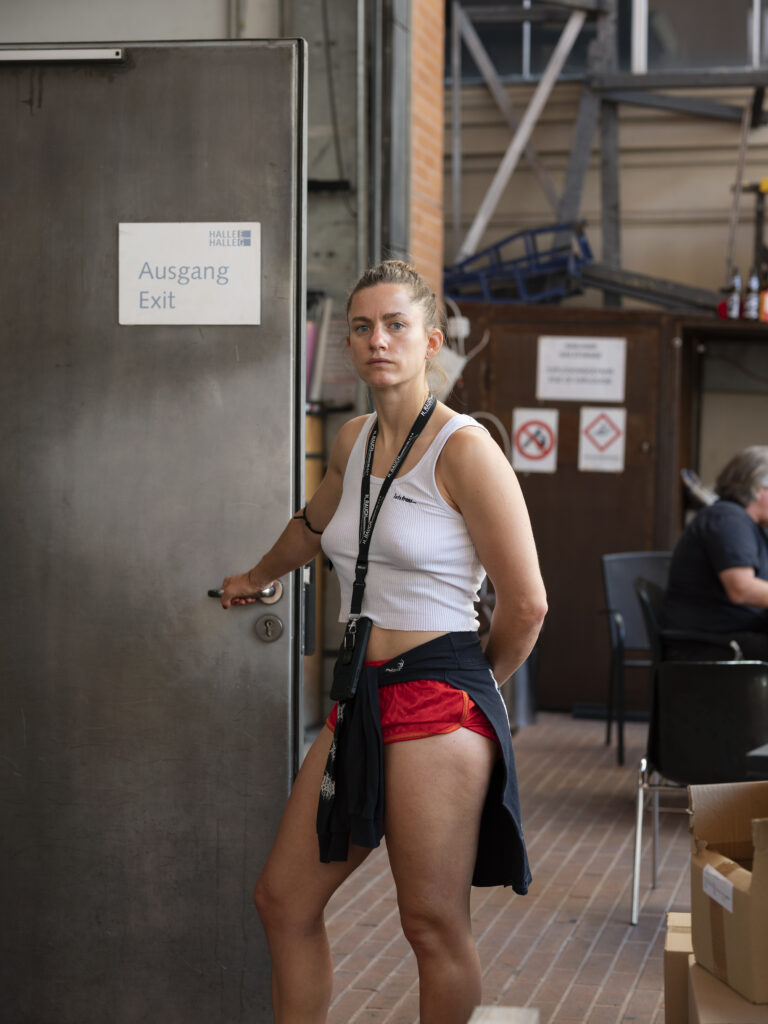
The Bielefeld exhibition initially invites visitors to embark on a journey through a "Who is Who" of artists in various image formats by displaying 33 framed prints on the walls.s Art practice has existed since the mid-1990s. Michel Majerus modestly displays a painting on the wall in Cologne in 1996; Sarah Lucas stands with oversized sunglasses in front of a shed in Suffolk, England, in 2003; John Baldessari lies on a sofa in Los Angeles in 2004 next to a ficus elastica and beneath a bookcase whose boards are creaking under the weight of the Books bending. Taryn Simon stands sternly posing in front of a picture on a work desk in the middle of a studio space in New York in 2007; Jeff Wall leans in 2010 in a side street in Vancouver at a dilapidated cottage with the house number "666"; Thomas Ruff looks past the camera in 2014 in a sorted studio space in Düsseldorf; Nicole Eisenman leans on a brick pillar in front of a row of houses in New York in 2019; and Florentina Holzinger opens the door of a rehearsal hall in Vienna in 2021. Albrecht Fuchs' photographs seem as if they were always taken in the "decisive moment" in the sense of Henri Cartier-Bresson. But a showcase with contact pins from Portraits the artist Cosima von Bonin, who can be seen with her dog in a strictly arranged backyard garden in Cologne in 2006, or a screenshot of an image editing program showing views of the curator Bice Curiger, who also has a dog in a park in Zurich posing, These show that the recordings by Albrecht Fuchs also emerge from a longer process of work. Based on a Contact removal of The photos described earlier by John Baldessari yourself for example, to understand how Baldessari once sat on the sofa and looked into the camera, or lying on the sofa, looking in the direction of the bookcase or slightly turning the gaze towards the photographer. Situations where the photographer needs to find an image also shows the publication Album, Portraits 1989–2020 Clearly, the 2020 publication, which was published in connection with Albrecht Fuchs' comprehensive exhibition at the Braunschweig Museum of Photography, is presented in double pages in the Bielefeld exhibition. Various photos taken by Mike Kelley in 2004 in Los Angeles showing the fox, They also show how the artist his images are archived: for example in archive boxes or as attached Contact forms.
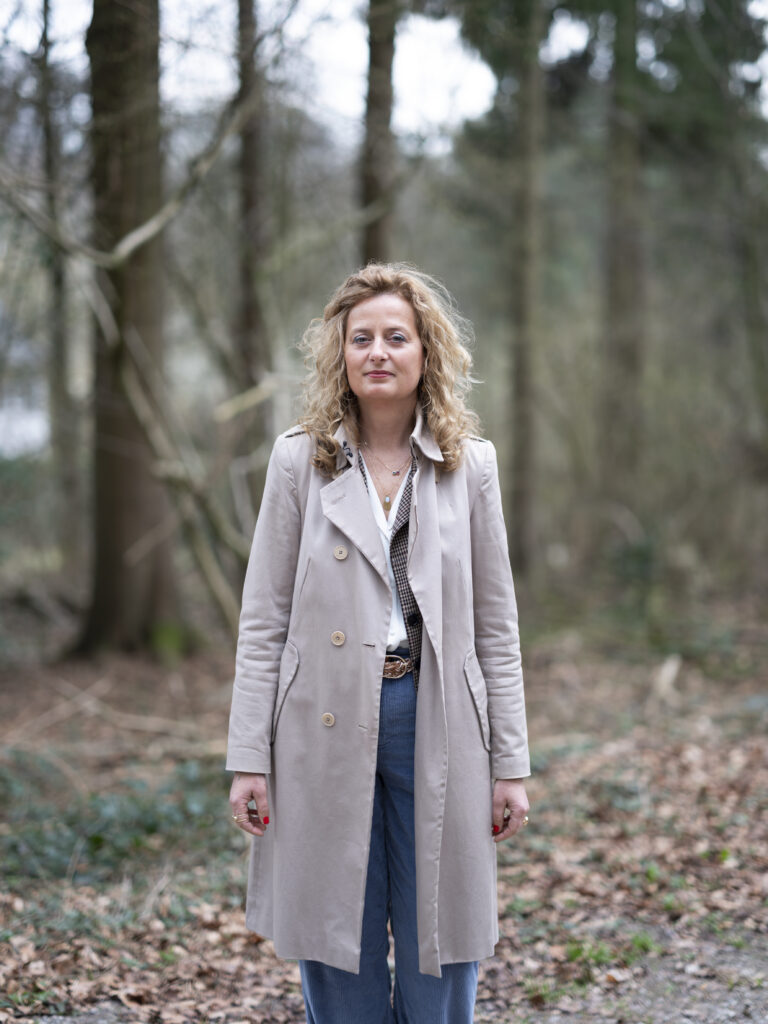
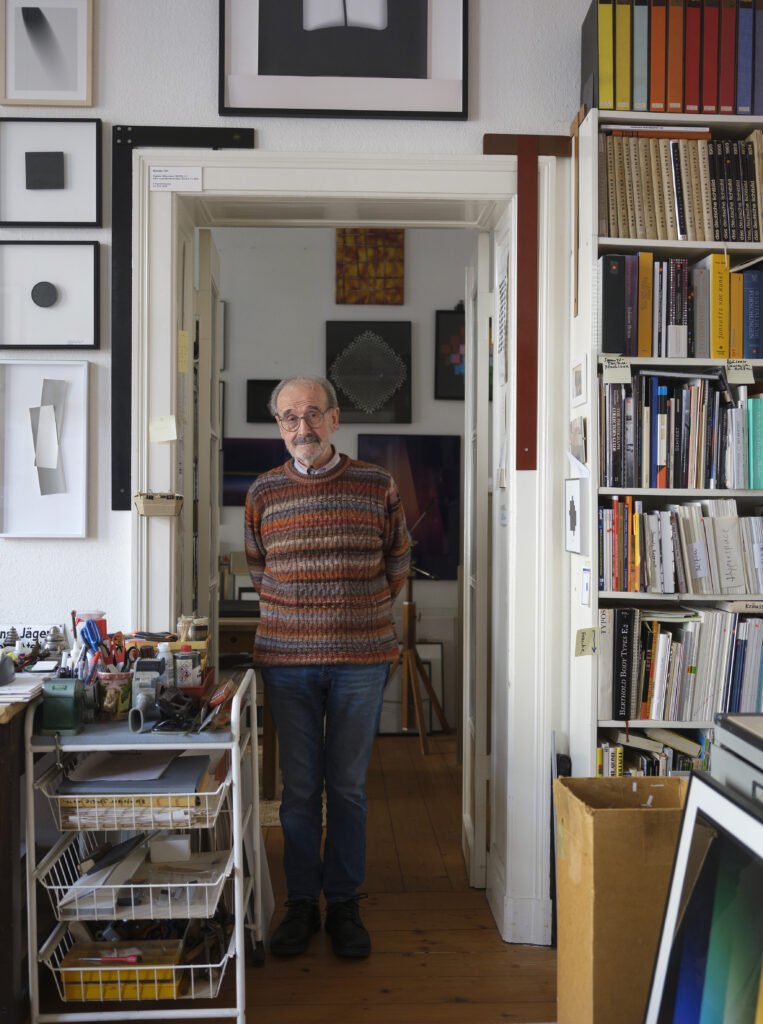
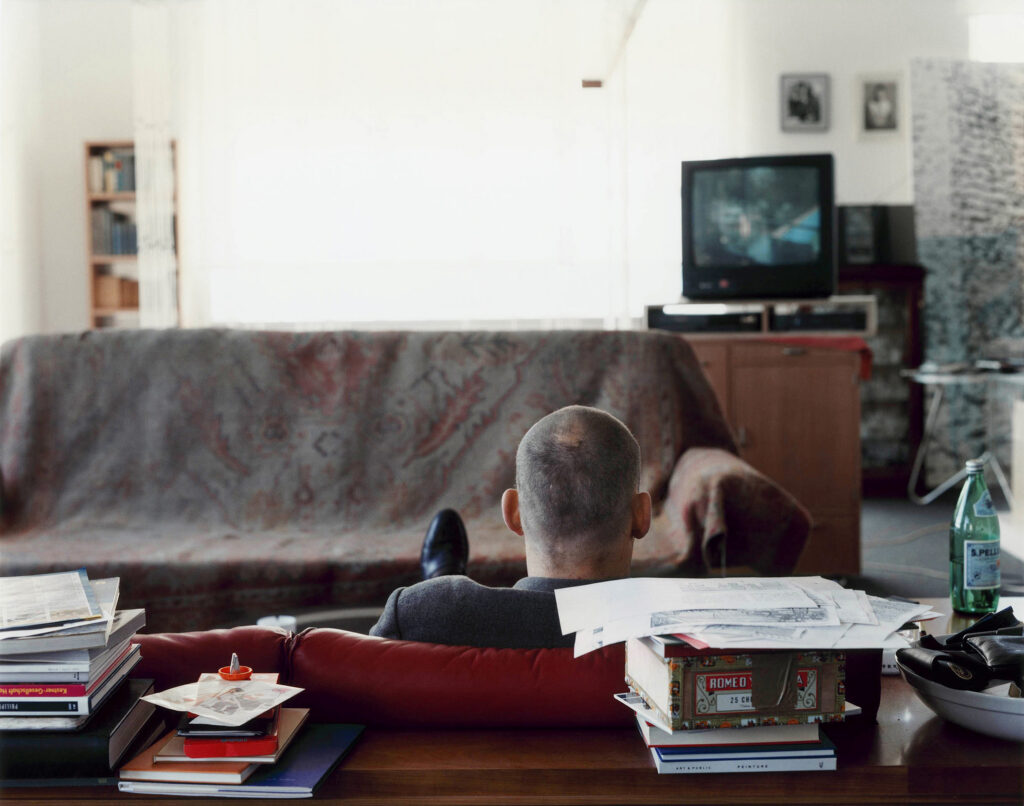
To focus on the development of Albrecht Fuchs' work, the video loop presented in the lecture hall follows: here, for a half-hour period, numerous photographs of the artist since 1989 are projected in a digital slideshow. In particular, the genesis of his photographic gaze is evident in the collection of selected images: While early portraits by, for example, Jitka Hanzlová, who in 1991 sat smoking on a mattress lying on the floor in Essen and makes the image seem like a photo from the student dormitory (both photographers, Hanzlová and Fuchs, studied photography at the Gesamthochschule Essen), Fuchs’ perspective and concept increasingly became more professionalized. Thus, in 1993 he photographed Düsseldorf frame builder Frank Terhard in his workshop, in 1994 he photographed product designer Jasper Morrison in a shop window in London, and in the same year he photographed Ennio Morricone in his private living room in Rome. In 1995, he photographed him lying on a bed in a Cologne hotel (a wine glass is standing filled on the bedside table), in St. Georgen he photographed his head from behind while watching TV, and in Dawson City, Canada He showed it to him in a saloon, where he introduced Kippenberger to his fictional subway project Metro-Net accompanied had. In 2001, Fuchs visited Dieter Rams at his home in Kronberg, Mark Leckey and Wolfgang Tillmans in London the same year. The list of people Albrecht Fuchs has photographed to date is long. This is one of the reasons why he is considered a chronicler of the art world. On the occasion of his exhibition in Bielefeld, he photographed the photographer and photo theorist Gottfried Jäger who lives in Bielefeld as well as – alongside other new productions – the director of the Kunsthalle Bielefeld Christina Végh. Only Albrecht Fuchs himself is not featured in the exhibition: the captions in the video loop mention the name of the person being portrayed, the place and the year; the projection ends with a white image field. only with the signature "Albrecht Fuchs Bielefeld 2025" – the artist's self-portrait remains absent.
A visit to the exhibition is worthwhile, because in the abundance of Fuchssche portraits and through decades of insight into the art world shows itself, How specific this network is, how fast-paced it is, and how it constantly evolves despite everything.
The exhibition can be viewed at the Kunsthalle Bielefeld until October 26, 2025; it is open from Tuesday to Saturday from 11:00 to 18:00, and on Thursdays from 11:00 to 21:00. On September 24, at 7:00 p.m., there will be a discussion between Albrecht Fuchs and Christina Végh.
The Kunstmuseen Krefeld are dedicating the first retrospective in Germany to Charlotte Perriand’s multifaceted and astonishingly contemporary work.
 7 min read
Alex Katz at the Tübingen Art Gallery
 8 min read
The exhibition "Seeing the Unseen" at the ERES Foundation in Munich shows how contemporary art attempts to approach the invisible worlds of quantum physics.
 6 min read