
 6 min read
 6 min read
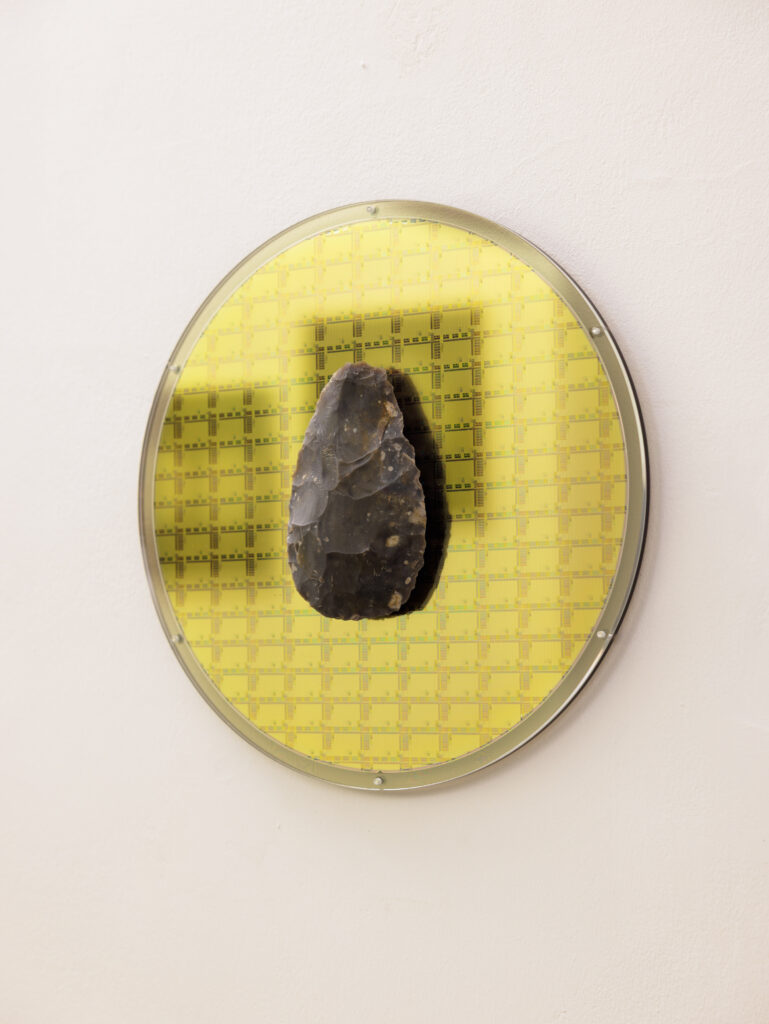
Man uses science, as well as art, to understand his world, to find his place in it, and also to find ways to shape this world. To this end, as one of the few species of living beings, the artist group Troika develops tools that have become increasingly complex over time. Two such tools are combined in the work "Evolutionary Composite" by the artist group Troika, which can be seen in the exhibition "Seeing the Unseen" at the ERES Foundation. A black flint pick appears to float in front of a golden-shimmering microchip plate, as used in modern computer systems. The prehistoric tool and the highly precise industrial object appear externally as coming from incompatible worlds, yet both are fundamentally made of the same material: both consist of silicon-containing crystals. Throughout his technological evolution, man has learned to use these crystals more and more complexly. The work of the artist group showcases the intrinsic ingenuity of humans and spans a precise spectrum from the earliest cultural artifacts of humanity to those technologies that currently have the potential to radically change our present and future.
The entire exhibition "Seeing the Unseen" is dedicated to such a science that is both highly current and highly complex. In quantum physics, the behavior of matter and energy is studied at the atomic and subatomic level. The fundamental concepts of quantum physics defy the rules of classical physics: dualisms are possible, probabilities are used to operate with certain quantities, and often counterintuitive realities only manifest through determination itself. But building on these abstract foundations, useful new things are created: "Quantum science is one of the most promising future sciences, and the technologies resulting from it will significantly shape our society." In addition to artificial intelligence, quantum technology will also fundamentally change our everyday world," confirms Dr. Sabine Adler, who, in addition to her role as board member of the ERES Foundation, is also the curator of the current exhibition. Quantum physics is a hermetic science that cannot be precisely described in words or images. The language of quantum physics is mathematics, which is why the selected objects and images are not intended to merely illustrate quantum physics. The curator has therefore selected artistic works that address quantum physics in various ways, such as superposition, entanglement, or observer dependence. The range of works on display extends from drawing and painting to sculpture, video, animation, and immersive mixed-reality installations: "The compilation of the various artistic positions is intended to represent the multifaceted aspects of quantum science in a free context. It is not about a direct artistic implementation of quantum physics phenomena, but about engaging with and expanding a complex mental framework. Quantum physics impressively shows us that we must be able to think about different things simultaneously," Adler clarifies.
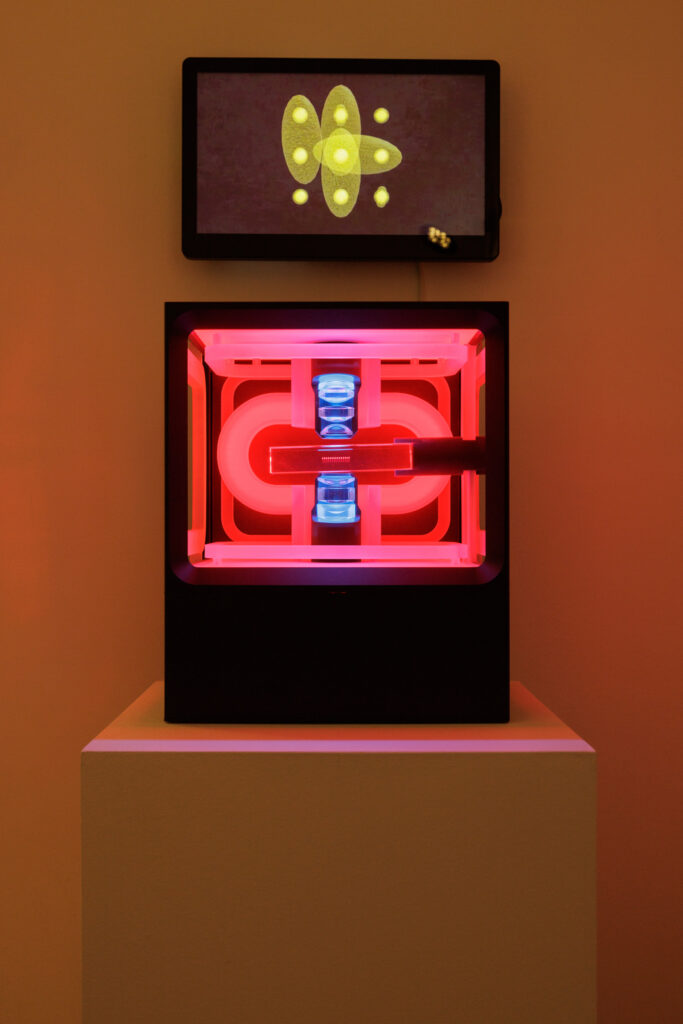
So multifaceted, complex, and yet accessible is the spatial-based work of Tamiko Thiel. The media artist, who also studied engineering sciences at several elite American universities, chooses an explicitly participatory approach with her augmented reality work. Visitors enter a room where they can move around like parts of a diffuse cloud on a projection. Sulfur yellow particles float, overlap, and react to the position and movement of the observers. Thiel makes an atom of strontium the protagonist – the element with which researchers at the Max Planck Institute for Quantum Optics have developed a special neutral atom quantum computer. The work is based on intensive scientific research and complex programming. It conveys key concepts in a playful way, without simplifying them. Instead of offering explanations, Thiel creates a situation in which the logic of quantum physics can be perceived sensually.
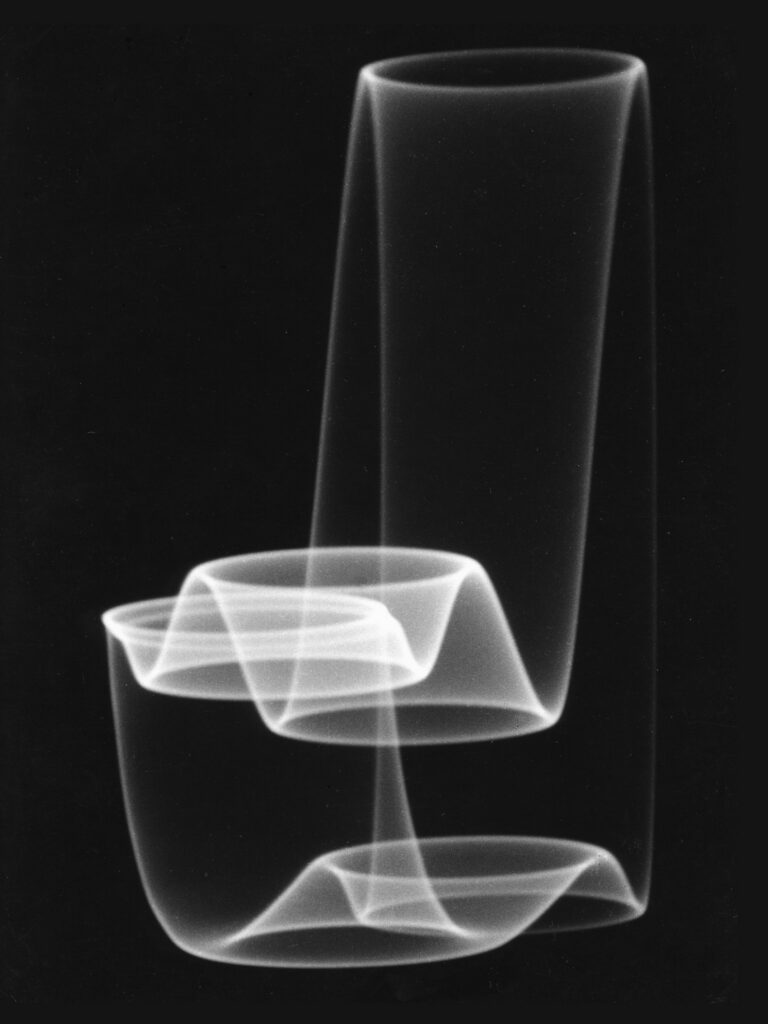
The images in the series "Dance of the Electrons" by Herbert W. Franke are also sensual and downright ethereal. The universalist scholar born in Vienna in 1927 is one of the pioneers of computer art and mathematical art. As a physicist, cyberneticist, artist, and author, he was involved early on at the intersection of science, technology, and aesthetics. As early as the 1950s, Franke experimented with generative processes. Together with the physicist Franz Raimann, he developed an analog computer in 1954 with which the series shown here was created. Vibration patterns were made visible on an oscilloscope and subsequently photographed. These ghostly formations are now considered early attempts to capture quantum physics processes in a visual way. In the exhibition, Franke's works appear astonishingly contemporary: they show that the artistic attempt to make the invisible visible has accompanied quantum physics since its inception.
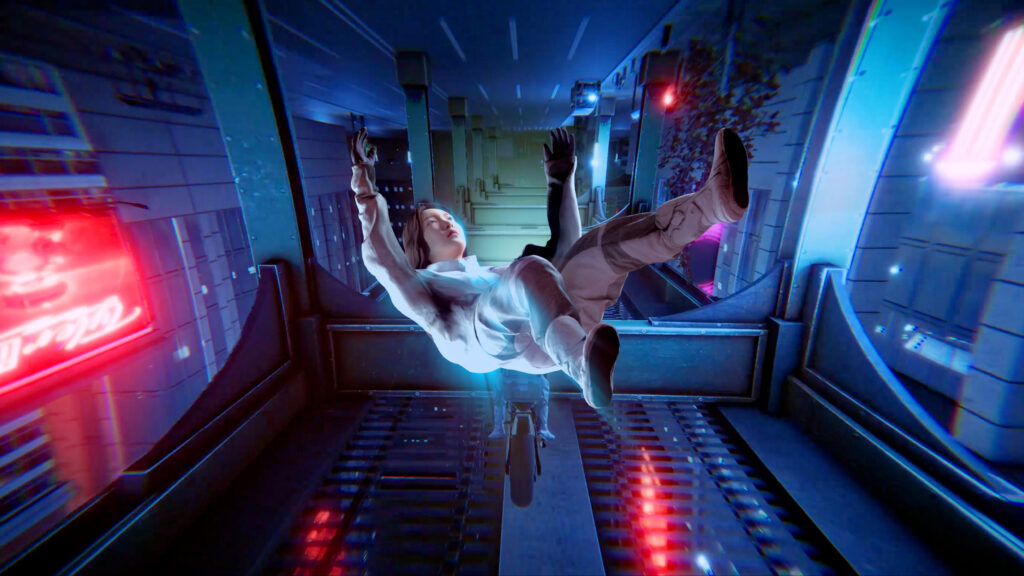
A speculative quantum reality is envisioned by Ayoung Kim in her immersive video installation "Delivery Dancer's Sphere". In fast cuts and alternating perspectives, one follows a motorcycle courier who moves rapidly through futuristic urban landscapes. The protagonist herself comes face to face with herself, is reflected in her, and her unique position dissolves. Narrative threads overlap, time and place become no longer comprehensible. Kim does not use linear narrative structures to make concepts such as simultaneity and parallelism tangible. AI-driven algorithms constantly give the character new instructions, thus pointing to a world in which individual scope for action is increasingly determined by data-based systems. Between science fiction, computer game aesthetics and a critique of social reality, the work unfolds the power of a poetic allegory in which the boundaries between physical bodies and virtual entities are finally dissolved.
The exhibition "Seeing the Unseen" combines strategies of contemporary art with current quantum physics and attempts to highlight structural parallels between the disciplines. In fact, the observer in both fields is not neutral but a constitutive part of the system. Just as the state of a quantum system is determined only by the measurement act, the significance of many contemporary artworks also arises only in a combination of presentation, context, and reception. Both worlds are open systems in which there are ambivalences, ambiguities, overlaps, and uncertainties. The art shown in the exhibition reflects the multidimensionality of quantum physics in its complexity and thus becomes a resonance chamber for a science that largely deprives itself of intuitive imagination.
A high-quality scientific program in cooperation with the Munich Center for Quantum Science and Technology The exhibition is accompanied by lectures and guided tours with young scientists. These complement the exhibition with a further dimension. In addition, the accompanying program is being expanded, as Dr. Sabine Adler explains: "Throughout the exhibition, there will be a lecture cycle that will focus increasingly on the artistic aspects. For example, symposiums will be held where scientists and artists will discuss the parallels between quantum physics and current strategies in contemporary art together."
The exhibition runs until September 26th, more information here: https://eres-stiftung.de/
The Kunstmuseen Krefeld are dedicating the first retrospective in Germany to Charlotte Perriand’s multifaceted and astonishingly contemporary work.
 7 min read
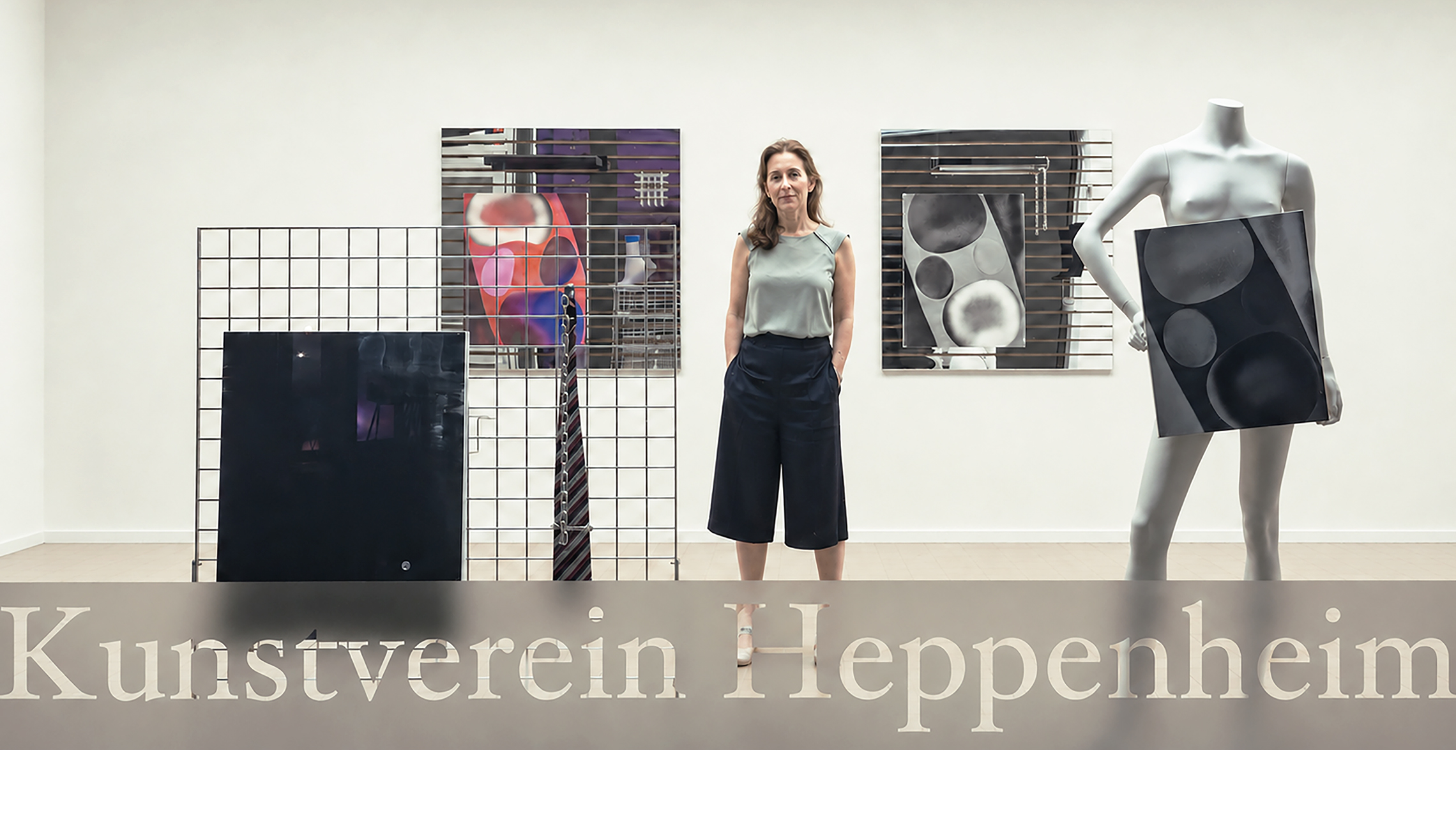
The exhibition "Six Five Four Three Two" featuring works by the New York-based artist Josephine Meckseper at the Heppenheim Art Society.
 9 min read
In the new premises of Plateforme 10 in Lausanne, the Photo Elysée Museum can finally unfold its potential.
 12 min read