
 9 min read
 9 min read
There are several churches in the Oldenburg region where one can still admire the works of the North German sculptor and engraver Ludwig Münstermann (circa 1575–1637/38). However, one does not encounter his works in the city’s own religious buildings.
A visit to Oldenburg is definitely worthwhile at the moment. Fragments of wall mosaics that once adorned its waiting rooms already testify to the elegance with which the Grand Duchy of Oldenburg welcomed travelers in earlier times. In 1867, before the construction of the representative station, Oldenburg was connected to rail traffic. The same year, the railway station was built on the edge of the castle park with the Augusteum a first museum building that – in the style of a Renaissance palace – served as the Grand Ducal Picture Gallery. The house is one of the oldest museums in northern Germany and has been part of the State Museum of Art & Culture Oldenburg, Founded in the 1920s in the Oldenburg castle, the museum complex includes the Prinzipal Palace today. The building ensemble has a special location: Surrounded by numerous waterways, it forms an impressive island in the middle of the inner harbor city of Oldenburg, which is crisscrossed by busy arterial roads around the old town. Here, in the Augusteum, an exhibition is currently showing the works of the almost forgotten Ludwig Münstermann; the collection of the Landesmuseum includes the artist’s most extensive oeuvre to date. It has never before been presented on this scale.
Ludwig Münstermann, probably born in Bremen around 1575, is still present with his altars, canopies and baptisms, which are still in use in the churches of the Oldenburg region. However, only a few documents about the artist’s life have survived, and thus a detailed examination of his works in art history has been postponed for a long time. The art historian Dietmar J. Ponert and the theologian Rolf Schäfer presented a work catalog of Münstermann for the first time in 2016, which the Oldenburg exhibition Münstermann The exhibition, curated by the acting director of the Landesmuseum, Anna Heinze, and the scientific assistant Hannes Eckstein, builds on around 35 works by the sculptor, most of which originate from the collections of the Landesmuseum and are supplemented by loans from the Bode Museum in Berlin and the Focke Museum in Bremen (the only three institutions that have collected his works). The exhibition presents a panorama that highlights Münstermann’s artistic expression and explains the significance of his theological pictorial programs.
Since Münstermann's main works and other of his works are located in a total of twenty churches from Oldenburg to the North Sea, the exhibition primarily presents sculptural fragments that were once part of profane architecture or church furnishings. The expressive gestures, facial expressions, and poses of his figures, typical of the style of Mannerism as figura serpentinata winding up in a spiral, they can be found in all of his works. The objects made of oak and linden wood, sometimes also made of ivory and sandstone, such as console heads, pulpit supports or baptismal font covers are complemented by engravings by contemporaries such as the Dutch painters Hendrick Goltzius, Bartholomäus Spranger and Hans Vredeman de Vries or the architectural theorist Wendel Dietterlin with their architectural design. This makes, for example, Münstermann’s wooden epitaph frames, part of an entablature (German: Prieche), or freestanding figures that were at the time colored by fresco painters and that still show traces of paint today, tangible for an understanding of their spatial embedding and function. But why do the putti, fools, and the four evangelists on the four columns look with distorted eyes and mouths from the walls?
As an employee of a Bremen master, Ludwig Münstermann took up his profession as a stonecutter. In 1599 Münstermann was listed as master of the stonemasonry office in Hamburg, where he ran his own workshop with his sons. However, none of his works have survived in Hamburg. Münstermann’s most important clients were initially Duke Philipp Sigismund of Brunswick-Wolfenbüttel, simultaneously bishop of Osnabrück and Verden, and Count Anton II of Oldenburg-Delmenhorst and his wife Sibylla Elisabeth, for whom he realized both religious and profane works in the county of Oldenburg, for example in the castles of Delmenhorst and Oldenburg. Pastors and parish communities joined as clients. The specifications regarding the theological program were presumably dictated by the clients. However, the virtuoso execution of the pictorial programs designed by the artist with reference to the church spaces, and the aesthetics of his figures, which Hannes Eckstein describes as "transgressive", can be attributed to Münstermann and his workshop.


Münstermann's oldest surviving secular work Hercules (circa 1610), which was once part of a fireplace in the castle of Delmenhorst as a supporting figure in sandstone, forms the opening of the exhibition. It is one of the few works from the subject area of Greek mythology that Münstermann has realized. Likewise, the carved wooden oak sculpture Apollo (1615/16), which emerged as an element of an organ prospectus for the parish of Varel and which concludes the exhibition – accompanied by drawings by Markus Lüpertz, to which he was inspired by the Apollo figure and which are intended to illustrate Münstermann’s influence to the present day. In between, the much more interesting consideration of Münstermann’s sacred pictorial themes unfolds over the majority of the exhibition: these are represented by a wall-filling photographic reproduction of the altar of St. Matthew’s Church in Rodenkirchen, which was completed in 1629: in this six-meter-high altar, which is considered one of the highlights of Münstermann’s work, Münstermann’s intermedial composition is clearly evident. The overwhelming presence of the viewer in the altar is in the foreground. For example, by considering the altar in relation to the apse behind it in the nave of the church and incorporating the architectural lighting into the altar with several levels. Oil paintings complement semi- and full-plastical figures. Glossy surfaces are created by the technique of glazing, in which a thin layer of paint is applied to a metal foil and thus allows individual wood-carved ornaments such as precious stones to shine. On a coat of arms held by two putts, Ludwig Münstermann’s initials are inscribed as a reference to his sculptural work.
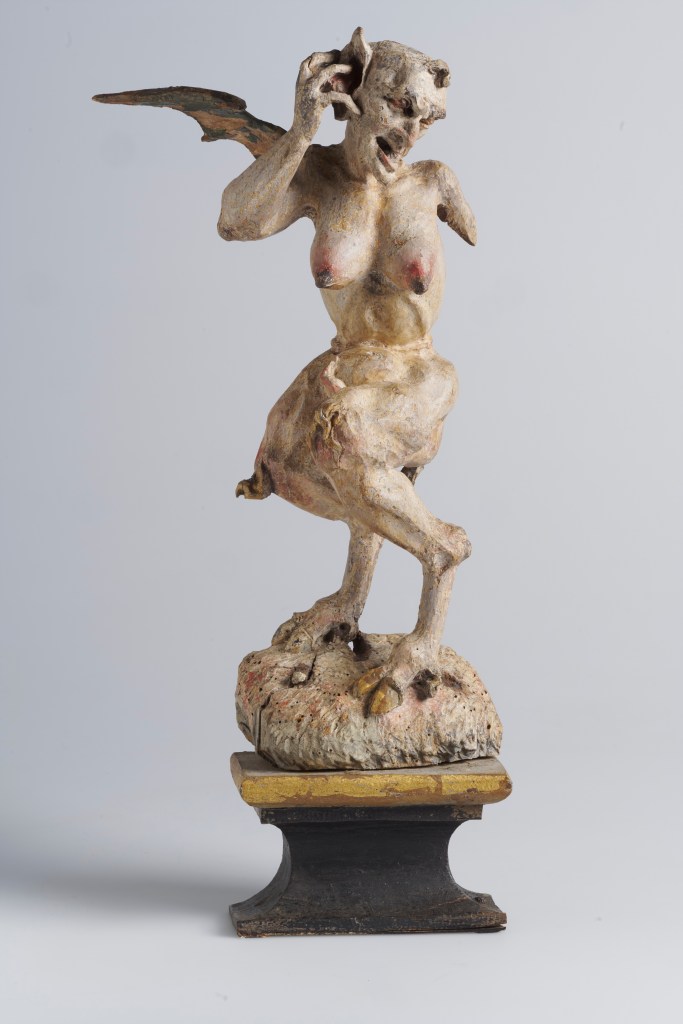
Several times Münstermann's altars are adorned with portraits of the two Wittenberg Reformers Martin Luther and Philipp Melanchthon, either in the form of alabaster reliefs in the Schlosskirche St. Petri in Varel, where the altar with the largest surviving altar by Münstermann stands (1614), or as paintings on the altar screen in the St. Sixtus and Sinicus Church in Hohenkirchen (1620). The two portraits refer to the Protestant Reformation and Luther's doctrine of sin and redemption, according to which God's grace is obtained through faith in Jesus Christ, not solely through the laws handed down by God through the commandments. The Lutheran concept of "law and grace" became the subject of the altar in Varel for the first time in Münstermann's commissions; this theme and baptism characterize the pictorial program of many of his subsequent works. As a striking example, four fragments of a baptismal font from the St. Nikolai Church in Stollhamm are on display: carved in 1628 as half-size sculptures from Lindenwood: Arranged on wall pedestals, they depict episodes from the life of Christ that are associated with the baptism of infants and are here illustrated by the grace of God given by Luther. Another fragment of a baptismal font from the same church depicts death and the devil, and here it becomes clear that Münstermann's Protestant pictorial programs are also accompanied by unexpected artistic constraints. Two small wooden figures representing Adam and Eve were once embedded in a baptismal font made of sandstone and oak wood for the St. Dionysius Church in Holle (1622–1626) and can be seen in the exhibition in its entirety. Apostles and grotesque masks with exaggerated forms adorn it. Particularly noticeable are the figures on display in a showcase. Adam and Eve, That the shame of the two was not hidden, but rather meticulously worked out by Münstermann. And here again the sculptor surprises: Fledged Devils (1631) presented at the altar of St. Bartholomew's Church in Tossens with goat legs, pointed ears, breasts and a still preserved bat's wing. Although Münstermann left the image of a master of carving throughout his life, by inscribing his signature on his most representative works such as the church principalials, and in doing so also referring to his assistants, the figure of the devil, which was created a few years before Münstermann's death in 1637/38, shows, by the abstraction of the form-finding process alone, the self-representation of his artistic skill.
A map attached to the exhibition as a wall mural lists all the places, churches and castles where Ludwig Münstermann's works can still be discovered today. It becomes clear that the exhibition Münstermann In the Augusteum, it marks the beginning of an intensive discussion about Ludwig Münstermann's work. This has so far been accompanied by a symposium with representatives from religion and art, as well as concerts and services in the churches that house Münstermann's sacred figurative sculptures. In 2022, Dietmar J. Ponert presented a book about Münstermann's historical sites, which leads along the "Ludwig Münstermann Street" and allows visitors to explore Münstermann's works in situ. In conjunction with the exhibition, an extensive publication has also been published that provides a detailed look at individual works by Münstermann and their iconography. There are still no answers to many questions that arise when viewing the exhibition in the presence of Münstermann's sculptures, which laugh humorously, laugh with a smile, or twist their eyes. Many of these questions remain undefined in their meaning. Nevertheless, through various details such as precisely placed folds of the cheeks, frowns, or the position of the hands and fingertips, they invite the viewer to encounter the figures of the North German sculptor and woodcarver in their original dramatic contexts: in the sacred spaces for which he created them.
The exhibition "Münstermann"It is still on view at the Landesmuseum Kunst & Kultur Oldenburg at the Augusteum until November 30, 2025. Open Tuesday – Sunday 10 am – 6 pm. The closing ceremony on the last day of the exhibition will be accompanied by a discussion between Markus Lüpertz and Stefan Trinks at 11:30 am in the castle hall at the Schloss Oldenburg.
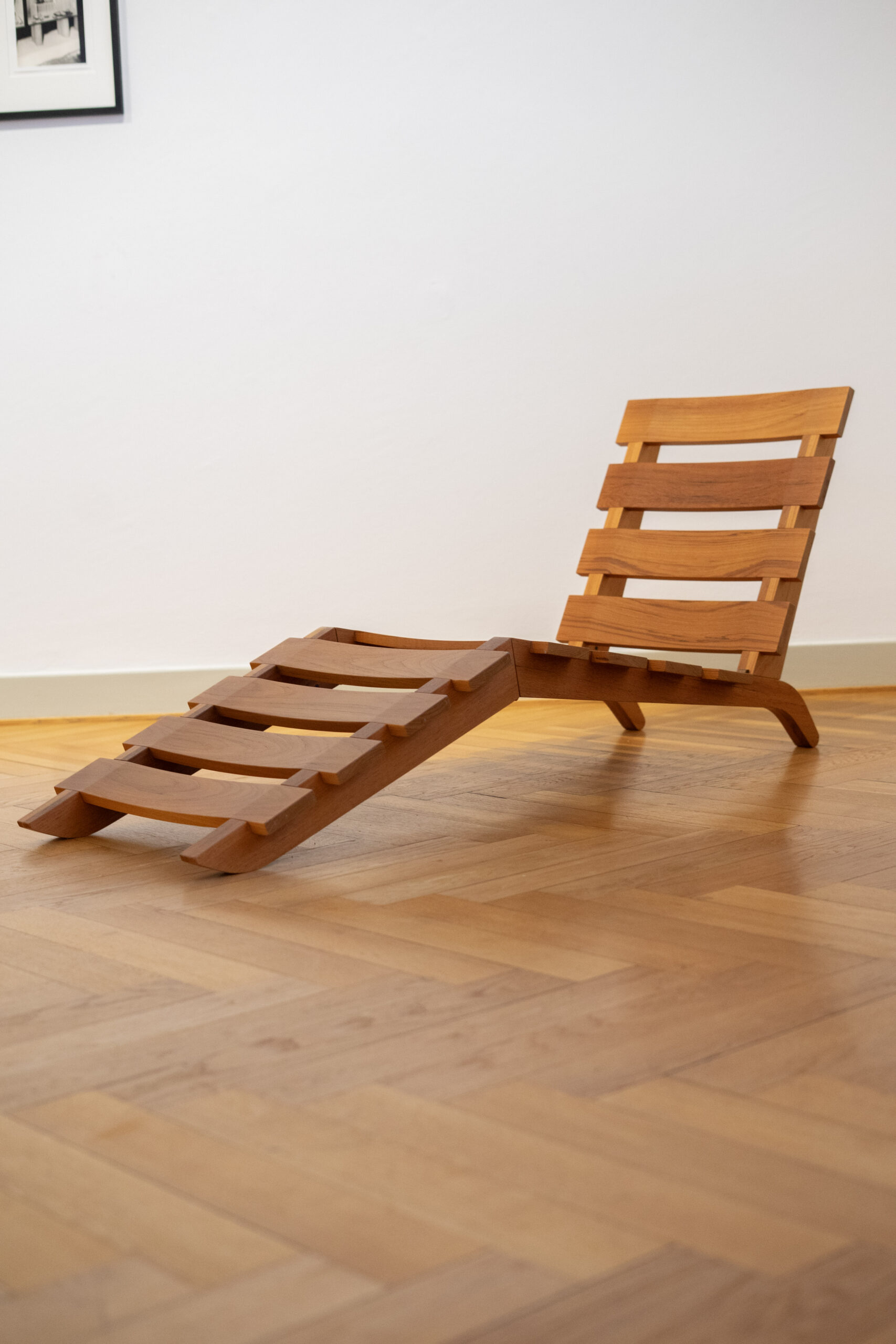
The Kunstmuseen Krefeld are dedicating the first retrospective in Germany to Charlotte Perriand’s multifaceted and astonishingly contemporary work.
 7 min read
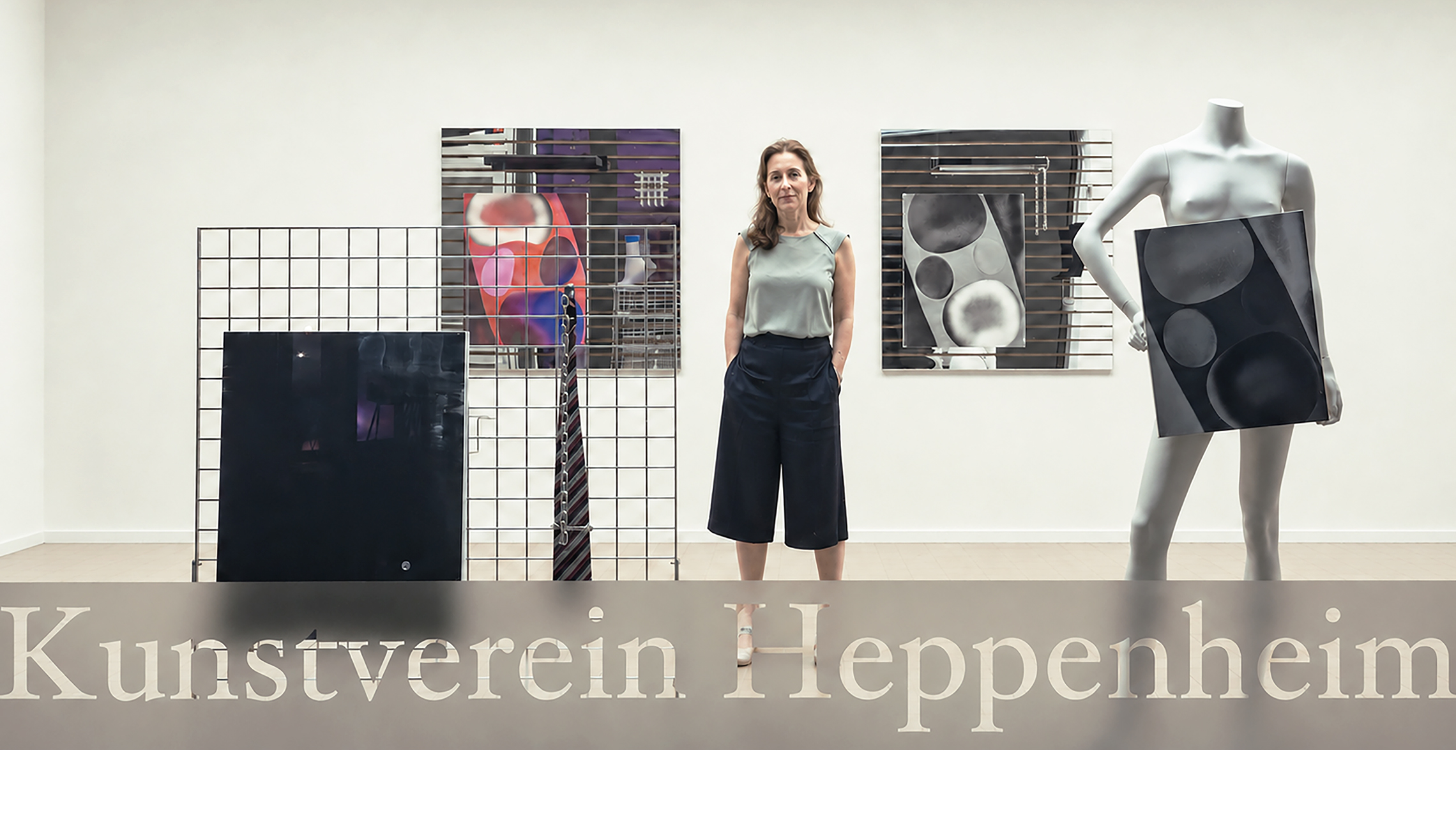
The exhibition "Six Five Four Three Two" featuring works by the New York-based artist Josephine Meckseper at the Heppenheim Art Society.
 9 min read
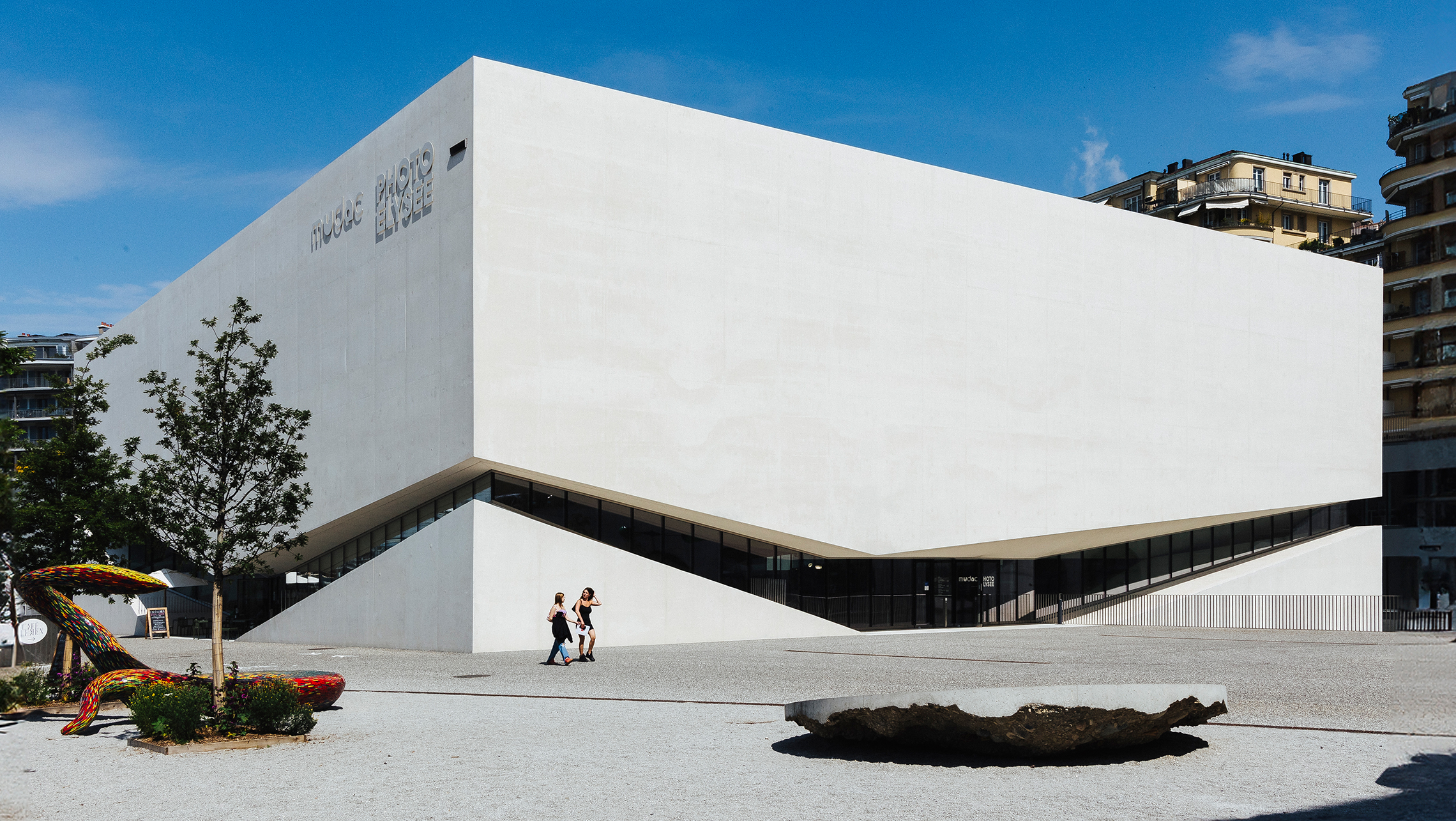
In the new premises of Plateforme 10 in Lausanne, the Photo Elysée Museum can finally unfold its potential.
 12 min read