
 9 min read
 9 min read
In 1957, Hal Busse began producing photographic works: at the same time as Günther Uecker. The following year she participated in the seventh evening exhibition at the studio of Heinz Mack and Otto Piene in Düsseldorf, with which the group, using the eponymous magazine, presented their work. Zero 45 artists had invited Piene and Mack to submit a single red work each. Shortly thereafter, Busse had an individual exhibition in the gallery at the Behr house, which Anton Stankowski, who designed the logos of IBM and the Deutsche Bank, had set up the year before at the furniture store opposite Stuttgart Main Station. She had already participated in the opening exhibition. Did she know Uecker's work? Uecker, four years younger than her, also participated in the seventh evening exhibition in Düsseldorf, but only became a member of the group in 1961, after her first individual exhibition at the Schmela gallery the previous year.
The question of who invented the nail paintings is pointless. Already the painter Rolf Nesch, who emigrated to Norway, made one with nails and wire mesh in 1942, which is currently on display at the Kunstmuseum Stuttgart. Flute player Interestingly, the differences are more striking. Ueckers works are usually white. Nails take the place of the paint. They became his trademark. Busse, on the other hand, almost always works with color. Sometimes everything is red, including the nails; sometimes only the tips of the nails are painted in different colors. When everything is red, the color dominates. Red spots also seem to float in front of the red ground on some of the canvases in the current exhibition at the Vogelmann Art Gallery, which is dedicated to the 100th birthday of the artist.


"Women in the Zero Group? There weren't any." This is how Barbara Könches, director of the Zero Foundation, headlines an article in Zero ABC under W How Women,"just to continue: "a widespread and persistent misconception'." Three female artists participated in the seventh evening exhibition in 1958, including Hal Busse. How did they come to this? The avant-garde did not introduce them to art; rather, it was painting that did. Her father, Hermann Busse, who came from a village in Brandenburg, fulfilled his dream of studying art after completing an apprenticeship as a painter, but then moved to Jagstfeld near Heilbronn during the inflationary period, where her wife's family ran a guesthouse. It was there that Hal Busse grew up. With her father, who taught her the techniques of painting, she went out into nature and traveled with him to Berlin. When she began her studies at the Stuttgart Art Academy in the first postwar graduating class in 1946, she could no longer learn from him.
In Stuttgart she absorbed everything she encountered regarding current trends. From her teachers Fritz Steisslinger and Manfred Henninger she adopted a late impressionist style of painting. However, Henninger, who had emigrated in 1933, was aware that this was not the latest trend and went to have his class corrected with Willi Baumeister. Gradually, his style of painting became simpler, with large-scale forms in a few colors, like a Fruit harvest The drawing shown in the exhibition probably served as a preliminary for a mural in the Max-Kade-Haus, a newly built student dormitory. In 1951 she traveled to Paris with two fellow students, where she got to know the art of the time, including Fernand Léger, whom she greatly admired, and the Informel movement. The Düsseldorf exhibition featured a square red nail relief similar to the one now on display in Heilbronn and an abstract canvas of red dots. Piene and Mack did not meet in Düsseldorf personally. Zero only came to Stuttgart in 1959: with an individual exhibition of Mack at the Behr Gallery.
From 1952, Hal Busse also attended the lectures of Max Bense. As an introduction in the first issue of his magazine Moment She made a drawing in ink to accompany a text by Francis Ponge. A supplement to the third edition included Ponges's Introduction to the pebble stone, Translated by Elisabeth Walther, with additional drawings by Busse. Bense also taught at the Hochschule für Gestaltung (HfG) Ulm, founded in 1953, where Almir Mavignier studied: the Brazilian artist, who exhibited for the first time in his gallery at Gänsheide, established directly above Baumeister’s studio in 1957; he had died two years earlier. It is hardly conceivable that Busse did not see this exhibition. Mavignier’s flickering grid of luminous dots – he soon became one of the pioneers of the group New trends and Op Art – they are very close to his work. The difference: His works are geometrically precise, faithful to the principle of the scientificization of the arts, as advocated by Tomás Maldonado at the Ulm University. His works, on the other hand, are freehand: a kind of abstract pointillism that summarizes his experiences from his studies to Informel and the Bense Circle.
About 15 commissions for art in construction, her first solo exhibition in 1952 in Paris, two art awards the same year, that is, while still studying, participation in exhibitions as far as Montreal in Canada: Hal Busse seemed to have all the doors open in the 1950s. After finishing her studies, she moved into the new studio house Gedok in Stuttgart, built by Grit Bauer-Revellio, a prime example of exhibition design. Mrs. Architect In 2018 at the German Architecture Museum. In 1956 she married Klaus Bendixen, a master student of an architect who in 1961 got a professorship in Hamburg. There they lived in a stately villa on Elbchaussee: the same one in which Wim Wenders later filmed some scenes of his film The American friend She was now a mother; her daughters were born in 1959 and 1962, and she was a professor's wife. But she never stopped painting herself either. Not even when she returned to Heilbronn in the early 1980s to care for her mother. Two things were always equally important to her: art; and family.


In Hamburg, however, she lacked the connections. Her husband was the focus of attention. Gradually, the number of commissions and exhibitions decreased. Today, there are two galleries in Berlin and Düsseldorf that represent her work. However, the focus is always on the Zero Period. In it, she herself considered the abstract works as an experiment and never stopped thinking figuratively and in terms of subject matter. The occasion for her first nail painting, according to Jana Noritsch, who has been compiling the catalogue of her works on behalf of her daughter Johanna Bendixen since 2020, was a vineyard in winter sunlight. Another depicts a crowd of people in the Markusplatz in Venice. The exhibition shows how she approached the theme of Bathers, a favorite subject of her teacher Henninger, has evolved through a gradual reduction to clusters of points.
For Marc Gundel, director of the Heilbronn City Museums, Hal Busse is not only one of the most important artists from Heilbronn, but also from the post-war period in general. The exhibition focuses on her beginnings on the lower floor, including some works by her father, her husband Klaus Bendixen, and an impressively expressive black bronze bust that she made from him in the late 1970s. While the informal works and the nail reliefs on the upper floor are on display, there is space in the center for later works, ranging from the abstract raster image to the summer terrace of her Heilbronn home. Didn’t she find her own style? One can also see it another way: she knew what she was capable of and was self-confident enough not to enter into a competition with the men. "It was ambitious, a bit intense," she describes the correction sessions at Baumeister. "Students were ostracized." She felt free to do whatever she wanted, up to a soldier between country flags in the style of Pop Art, with a red X crossed out. This was how she reacted to the student protests she experienced in Paris in 1968 – right on the time.


The Kunsthalle Vogelmann can accommodate Kosmos Buses – as the title of the exhibition suggests – does not aim to cover every aspect. It leaves out the art of construction as well as the time in Hamburg and focuses on her early and later Heilbronn period. And yet, some remarkable works show that she was always capable of surprising. Before studying, she presents herself in a sharply cropped self-portrait at the same time in profile and frontally in the mirror: a remarkable feat for a twenty-year-old. A mobile, flickering cube of red aluminum plates on nylon threads represents her abstract three-dimensional works, not far from Op Art and kinetic art. A small Springer, The painting, which cuts through the three blue rings, is on display in the stairwell. Some Heilbronn residents might recognize it: it is a bust of a man by Bozzetto for a work in a public swimming pool in the Kirchhausen district.
One of the final works of the exhibition consists of 180 square meters with suggested scenes in black and white. Memories – unpainted pictures The title is "Hal Busse could have painted much more if she had had more time." In Hamburg, when she had to take care of children and the household, she made daily plans to be able to paint every day, says Jana Noritsch – and then she fell asleep exhausted. Her biography shows what female artists could achieve at best in the post-war era and where they encountered limits. The name Hal Busse – instead of the bourgeois name Hannelore Bendixen-Busse – is also a strategy to avoid being immediately labeled as a woman or even as a subordinate of her husband. Hal Busse made a name for herself. And she was a versatile artist – which is worth rediscovering.
The exhibition runs until March 29th; opening hours and more information here: https://museen.heilbronn.de/kunsthalle-vogelmann.html
Biography and Exhibitions: https://hannelore-bendixen-busse.jimdosite.com
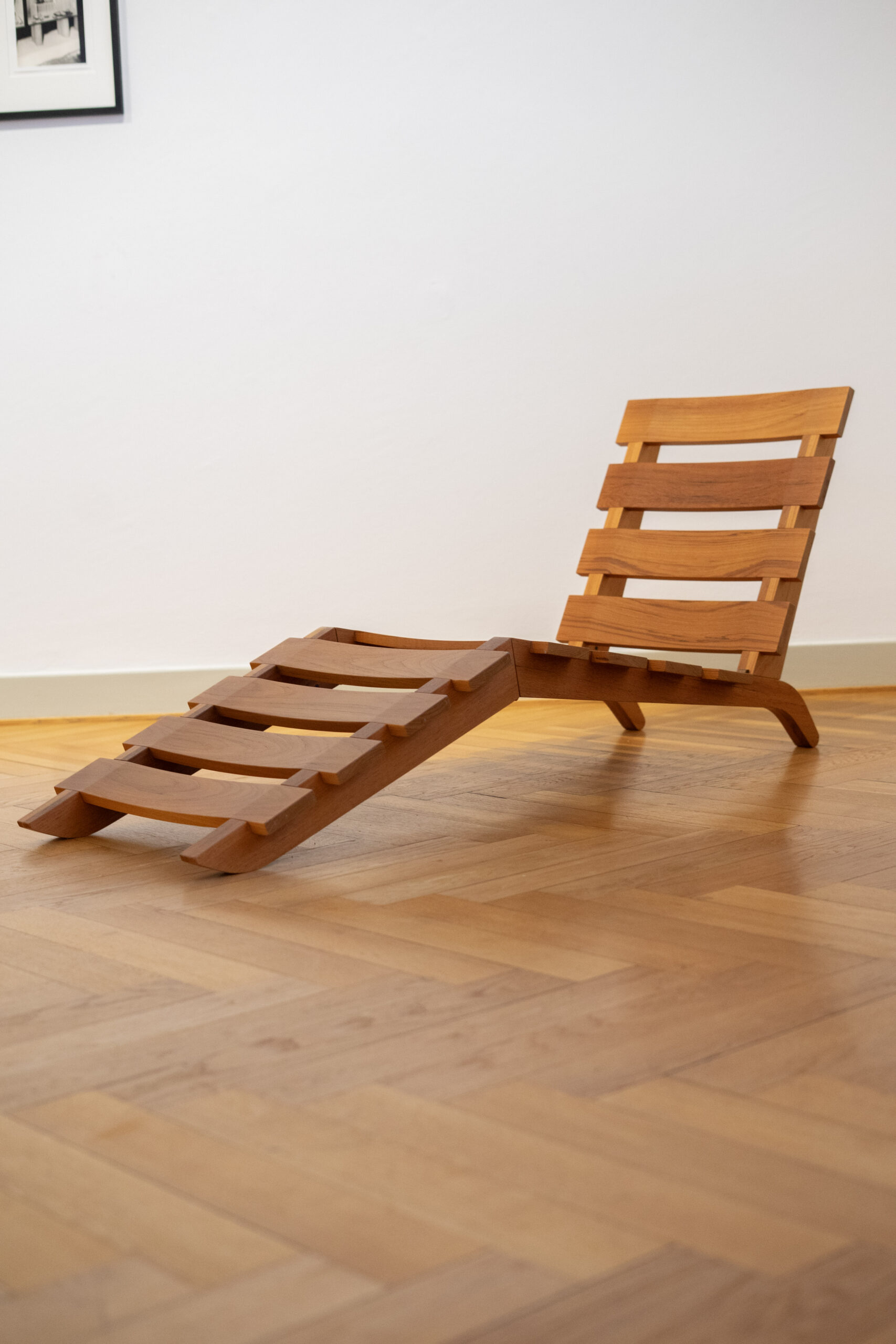
The Kunstmuseen Krefeld are dedicating the first retrospective in Germany to Charlotte Perriand’s multifaceted and astonishingly contemporary work.
 7 min read
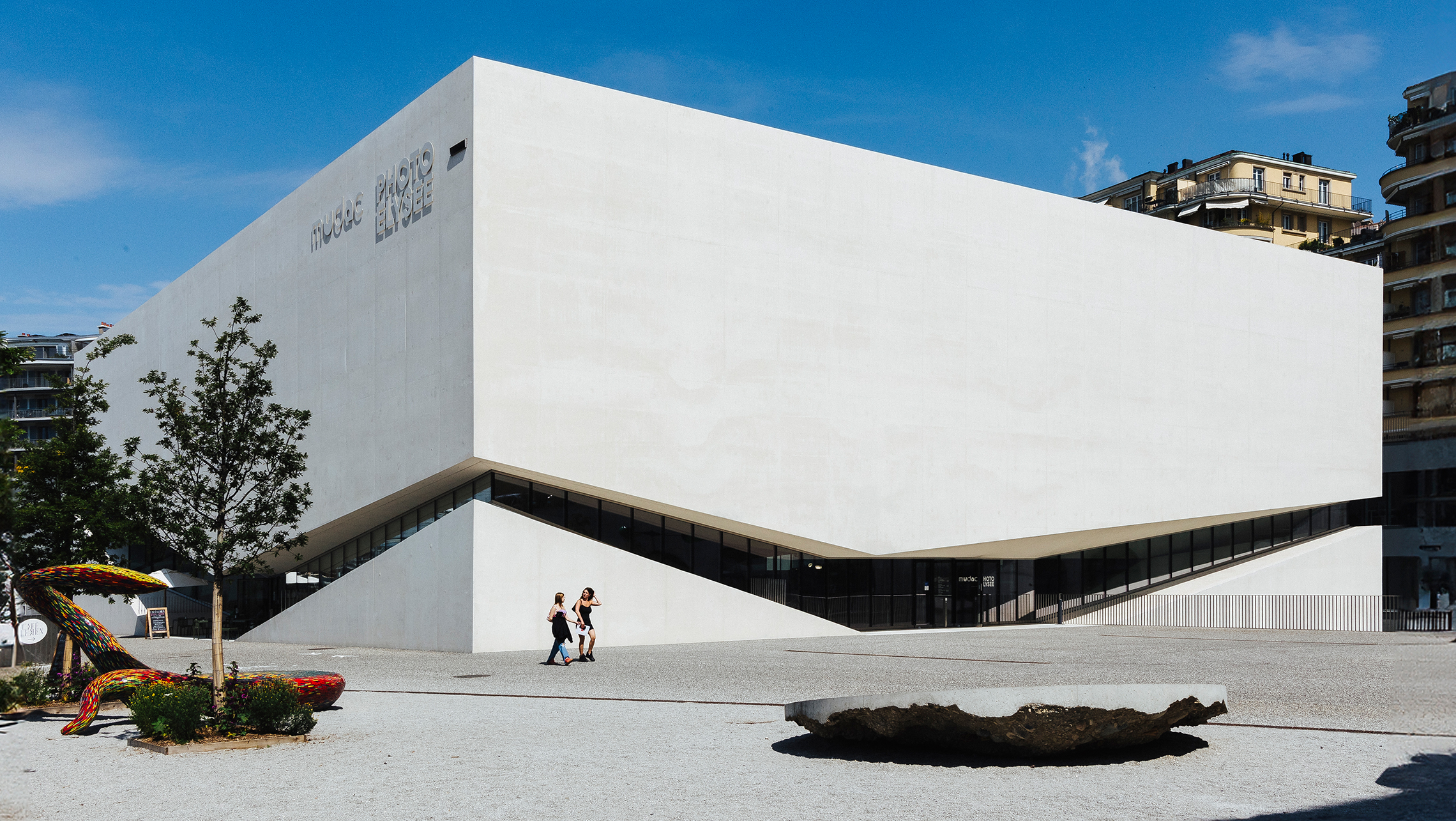
In the new premises of Plateforme 10 in Lausanne, the Photo Elysée Museum can finally unfold its potential.
 12 min read
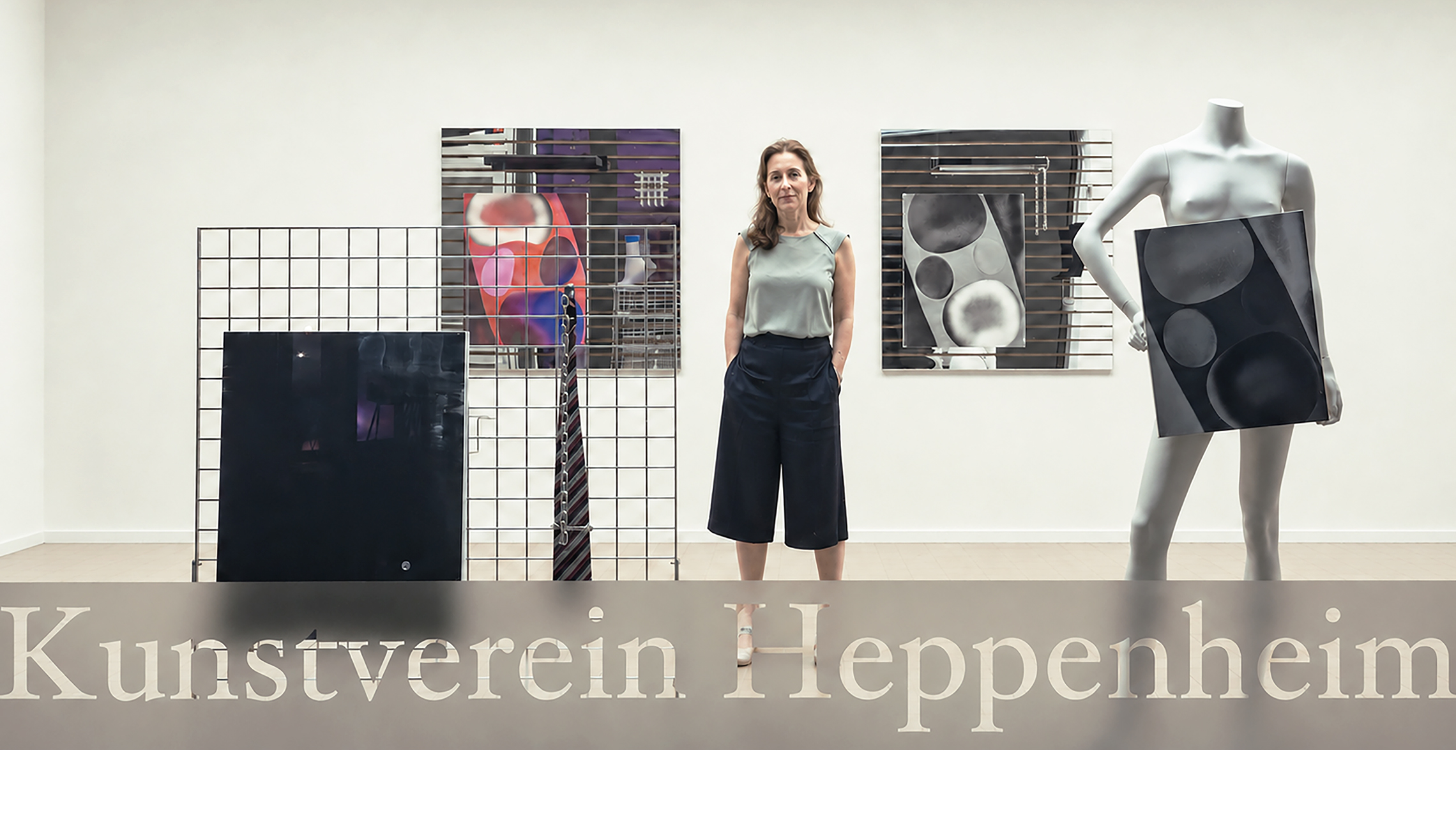
The exhibition "Six Five Four Three Two" featuring works by the New York-based artist Josephine Meckseper at the Heppenheim Art Society.
 9 min read