 11 min read
 11 min read
A few small, round Plexiglas pieces at the ends are attached to the glass door of the Stuttgart Culture Department with colored wax. A sealing ring hangs over one of them. KiöR – Art in Public Space Julia Wenz-Delaminsky calls her work, as does the department of the office at whose door she now is hanging: a building entrance, hardly to be outdone by its austerity. The subtitle Small pleasures This seems to indicate that even a minimal intervention is enough to help someone. Or is there an allusion to the funding policy of the city of Stuttgart hidden in this? The municipal council has trimmed the department’s budget to a quarter. Only one of the five positions remains.
It all started promisingly four years ago. More than 450 works of art – depending on how you count them – populate the public space of the city. At the time of their creation, they were sometimes fiercely controversial. Today, however, most people pass them by nonchalantly. Not so Marcel Mendler, who has always been fascinated by these works of art. Mendler wrote his thesis on this subject at the Academy of Fine Arts, in the field of communication design. The resulting book, edited and designed by the office Matter Of, The book, which he founded with three fellow students in 2018, sold out in no time. Perhaps also because it was published during the Corona period when museums were closed.
The success of the book is likely to have encouraged the Cultural Department to launch a funding program that the municipal council initially approved for four years, while the coffers were still full. In any case, it has Matter Of The office also designed the associated website. At the same time, however, two festivals already existed that were also supported by KiöR; however, they understood art in public space quite differently: not as permanent, static works, but as temporary events, performances, interventions, or the appropriation of the urban space. Night vision-The festival combines a queer-feminist perspective with an interdisciplinary approach, while Current, initiated by Laura Bernhardt, the daughter of the artist house founder Ulrich Bernhardt, which focuses on the urban space and urban development. Thirdly, the PFFFestival named after the noise of the spray can. The organizer is Studio Vierkant, an office for young designers from the street art scene. Twenty large-format murals by international artists have been created as part of the festival since 2022.
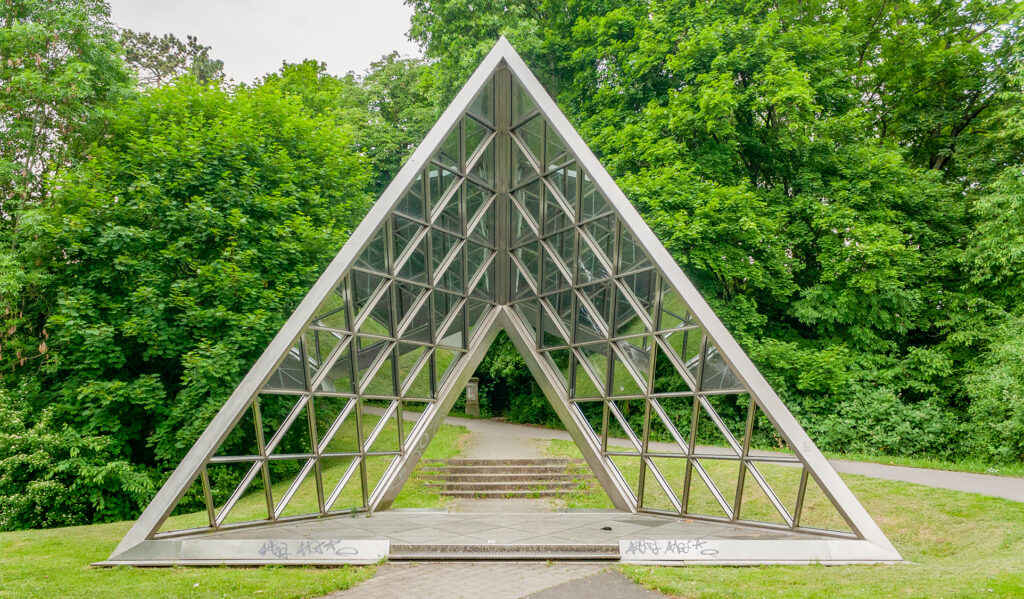
In recent years, public art has increasingly come to the fore for a very different reason. The fixed, permanent works are usually several decades old. Although they are intended to be permanent, damage cannot be ruled out. This begins with physical attacks. In 1970, an unknown citizen who had previously staged a protest in front of the state parliament nine years earlier attempted to vandalize a statue of the German national hero Wilhelm von Humboldt. Lying down Henry Moore had his head cut off. The one who was actually very popular Think Partners by Hans-Jörg Limbach, a huge bronze head supported by two arms that stands today as a symbol of the Swabian penny-for-penny trading on the stock exchange square; at its first location it received a heavy blow to the skull. Mendler's book bears the cover of Dan Graham on the second edition. Gate of Hope, Created for the International Garden Show 1993 (IGA 93): a triangular pyramid made of triangular, reflective, semi-transparent glass that was so often sprayed with graffiti or even smashed that the relevant garden and cemetery office declared the case hopeless. Yet experience teaches that visible damage only leads to more vandalism.
Meanwhile, another book has been published: the dissertation of the restorer Denise Madsack, Art in Construction. Conditions, Preservation and Communication, Designed again by Mendler. Art in Construction is not the same as Art in public space, However, there are significant overlaps. Works that have arisen in the course of construction projects, according to the recommendation that one percent of the construction budget, more or less, be spent on art, are often located, although not always, in public space. But where does it begin and end? In a strict sense, the foyer of a university is not a public space, yet it is largely accessible to the public. The steel sculpture Movement II (Ikarus) Wander Bertoni, who has stood in the castle garden since 1961 like a three-dimensional, large violin key, came as Art in Construction It could have been created in connection with the Small House of the State Theatre, but it could also have been created in the course of the Federal Horticultural Exhibition that took place in the same year.
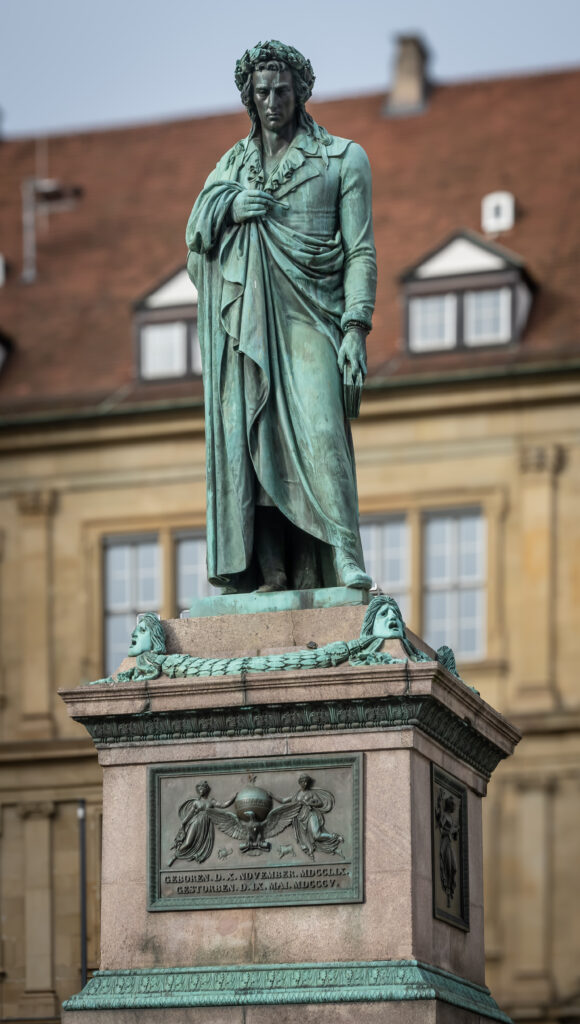
Both terms emerged in the 1920s. They enjoyed their heyday in the decades after 1945, until the 1990s when the number of orders decreased. Artworks in public spaces or in connection with buildings had of course been around for much longer. Only the Schiller Monument by Bertel Thorwaldsen, for example, primarily commemorates the poet and is only a work of art in a second line. Artistic design has been around since Vitruvius as Decorum to every building. It was only with Gottfried Semper that this decor became the dress that then abandoned Modernism. The pure, sober purpose-built building emerged: perhaps some architects already had enough art, but many felt that something was missing. Art in construction filled this void.
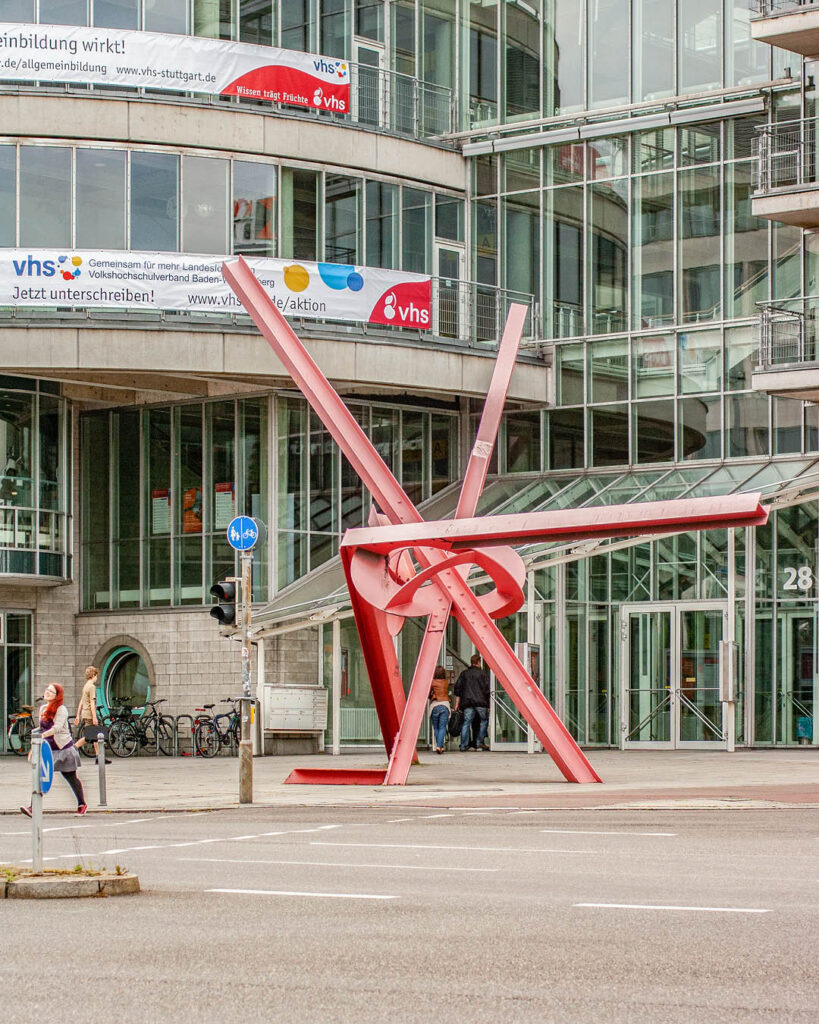
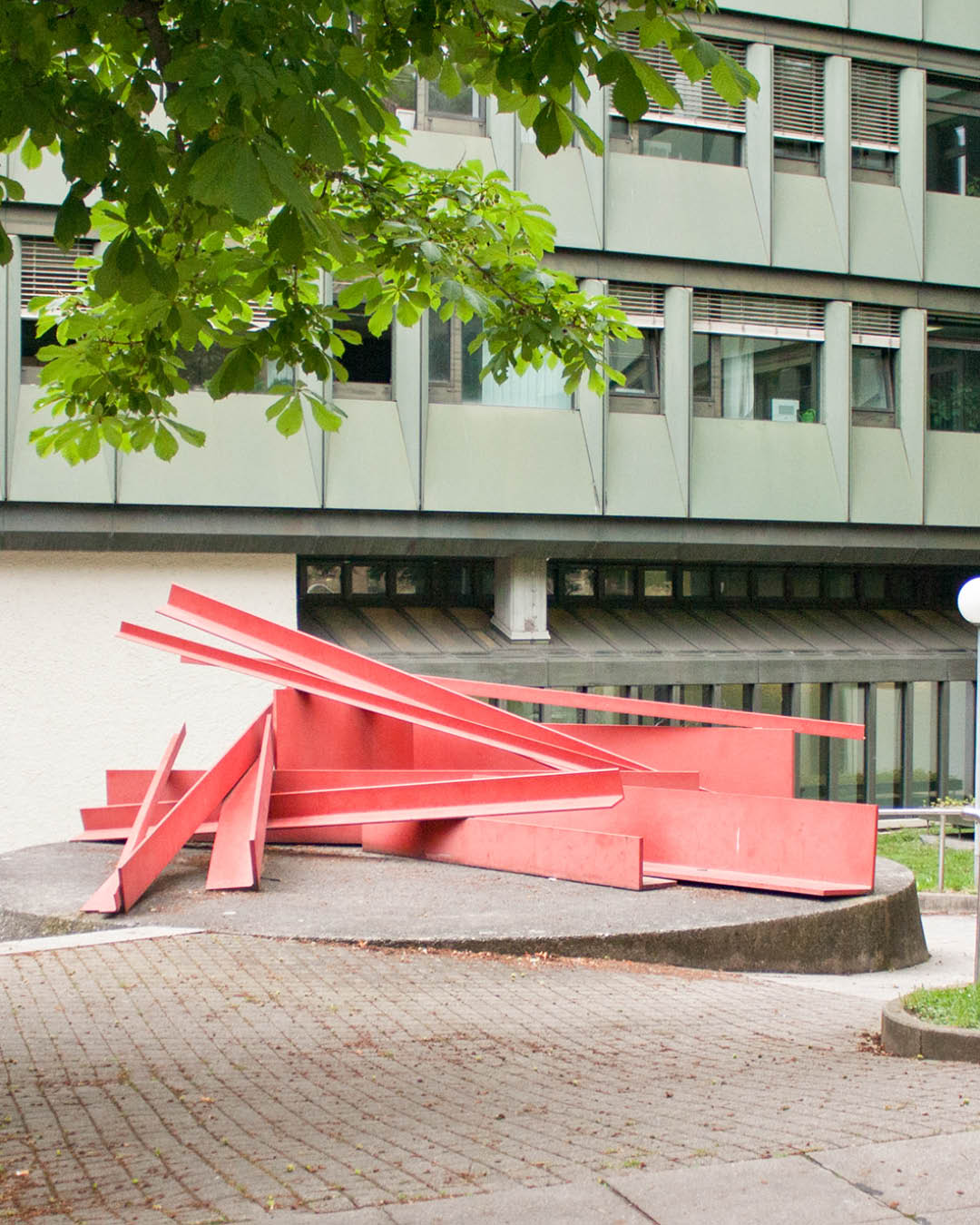
Artworks in public space are subjected to very different requirements than those in the museum’s protected, air-conditioned space. Madsack bases her work on the approximately 4,500 works in state ownership. The impetus for her work came from a workshop at which the state-run agency Wealth and Construction The Kunstakademie had invited restoration specialists to train its staff, because the range of materials and techniques is wide: In addition to bronze and stone, painting and sgraffito, more recently concrete, plastics, water, light, plants, as well as video and other new technologies are also used, along with very different conservation challenges, as Madsack elaborates in twelve case studies from across the entire federal state.
The roof over the foyer of the University of Konstanz, designed by Otto Piene in 1972 in the form of colored plexiglass tetrahedrons, was damaged somewhat by light and mechanical influences; however, it no longer met the stricter fire safety regulations. In collaboration with the artist, the acrylic glass components were replaced with corresponding composite glass pyramids. Things are quite different with Nam June Paik's Two-way communication, The work, a wall made of 90 tubular video screens created in 1996 in the foyer of the new building 2 of the Stuttgart Academy of Fine Arts, was originally intended to be played by the students with their own videos. Today, the work has deteriorated to such an extent that, as Madsack writes, it "requires a conservator's full-scale care." In other words, it could better be seen as a training tool for aspiring media art restorers: as an interactive video playback surface, as originally intended.
However, the most common problem is a lack of awareness. When the city of Esslingen decided in 2016 to move its university to the Flandernhöhe in the western part of the city in order to free up the attractive location for a residential area, no one thought that the demolition of the buildings would also destroy works of art. Rudolf Hoflehner and Horst Kuhnert's sculptures can be displayed elsewhere; Eckard Hauser's wall works cannot. Thanks to the efforts of the International Building Exhibition IBA'27, the focus has now shifted more towards preservation and renovation, so that Hauser's works still have a chance. Demolition is commonplace in times of turbo-real estate speculation. Many works of art disappear. Claude Horstmann had to recently look for a new location because the fire wall behind a demolished building, where he was working, had collapsed. about architecture had wanted to install, which had meanwhile been rented out for advertising purposes.
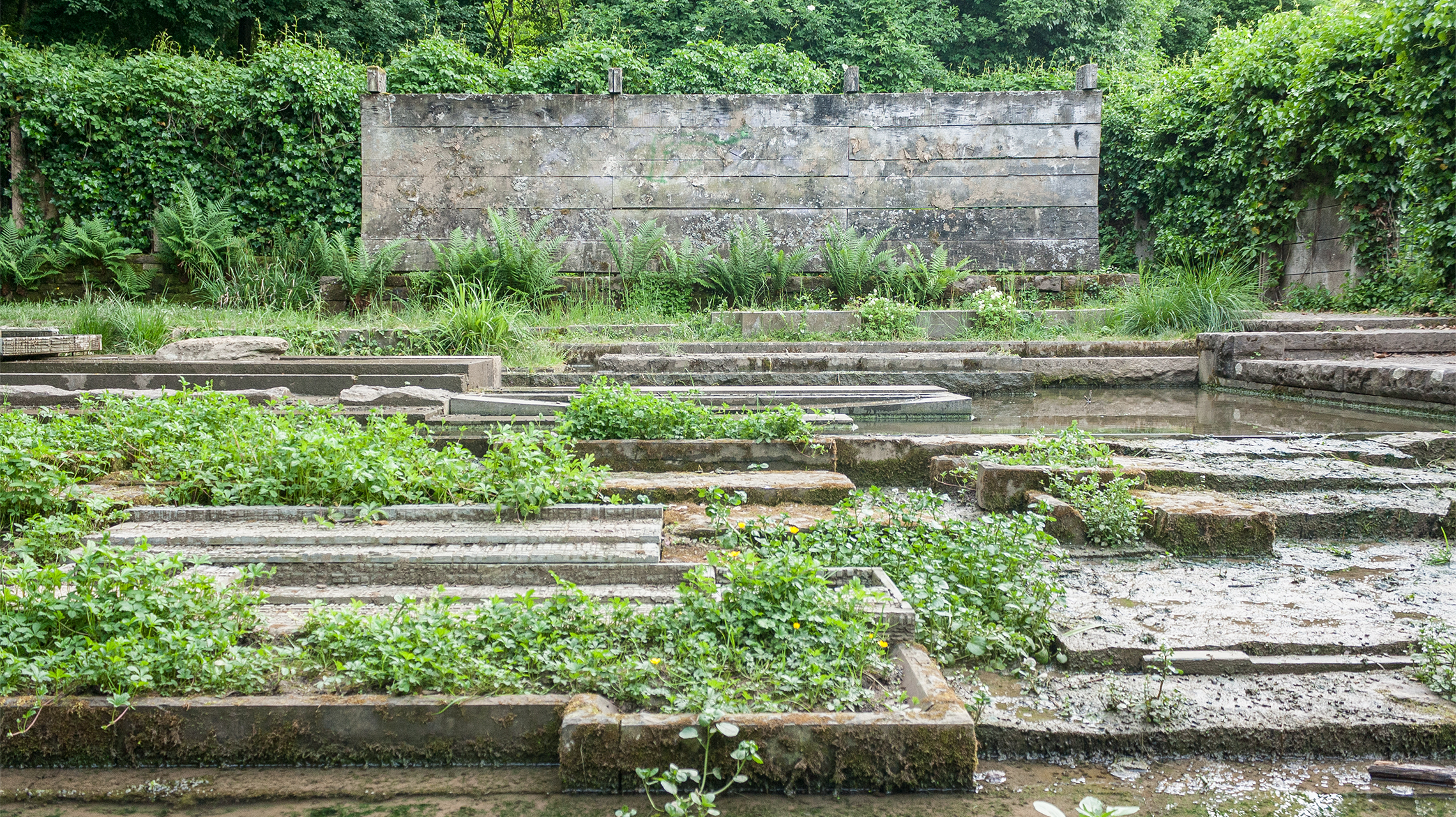
But even in renovations, many works have disappeared. Wall decorations from the post-war era were often removed or painted over without any hesitation. Madsack has repeatedly witnessed that even the building’s users did not even realize the art was there. In addition to Dan Graham Gate of Hope 25 years after IGA'93, many more works were in a desolate state when the garden and cemetery office also acquired Herman de Vries' works.; Sanctuarium He allowed things to take their course. Just what the artist had wanted to prevent with his work, which consists of a circular picket fence intended to protect the vegetation inside from such "caretaking measures". Disinterest and ignorance, even among many of those in charge, are something Madsack has repeatedly encountered in her work. Wealth and Construction In contrast, it has, which is quite unique, since 2012, made all construction-related works owned by the state available in a database.
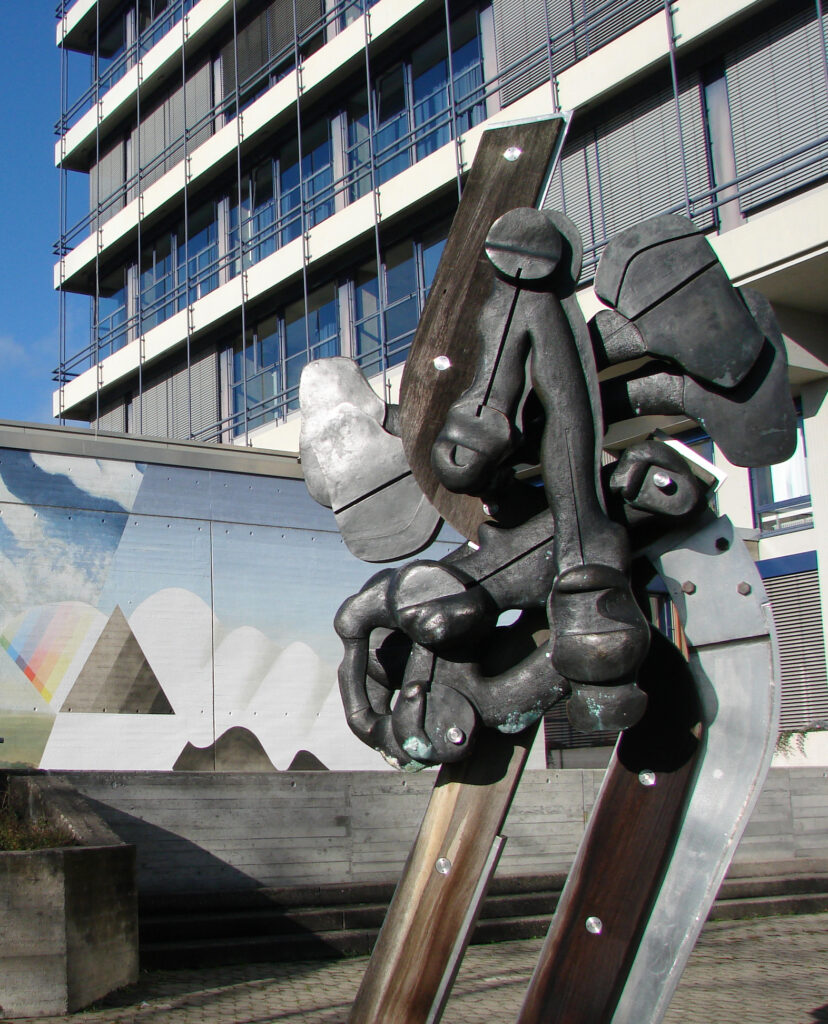
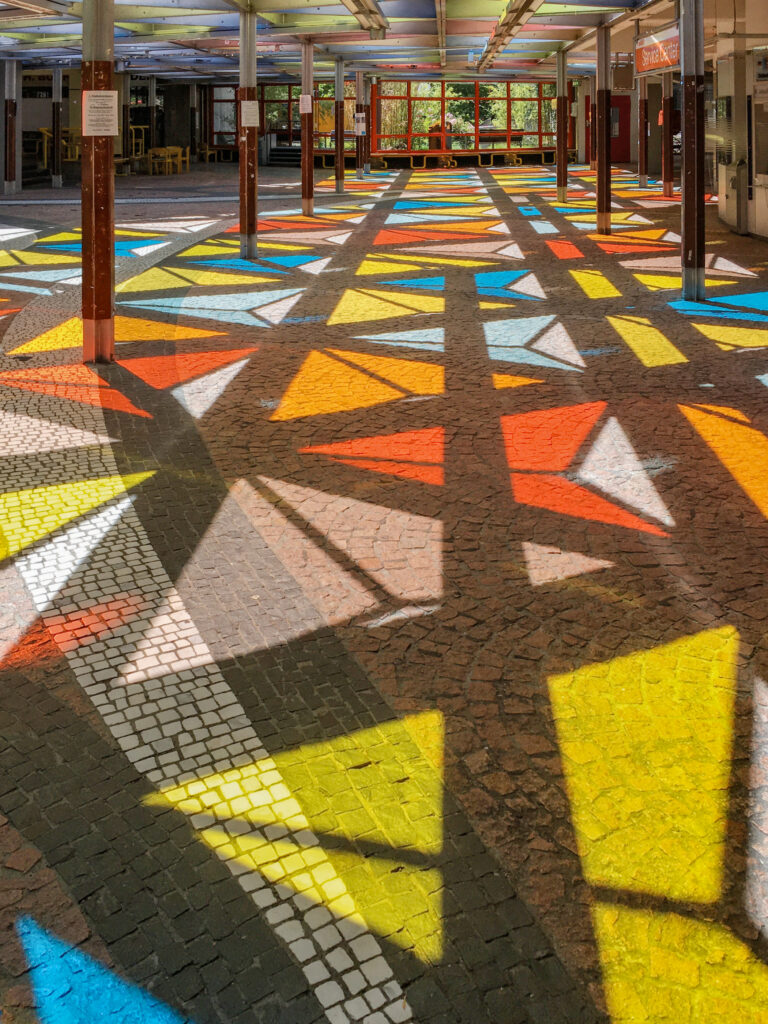
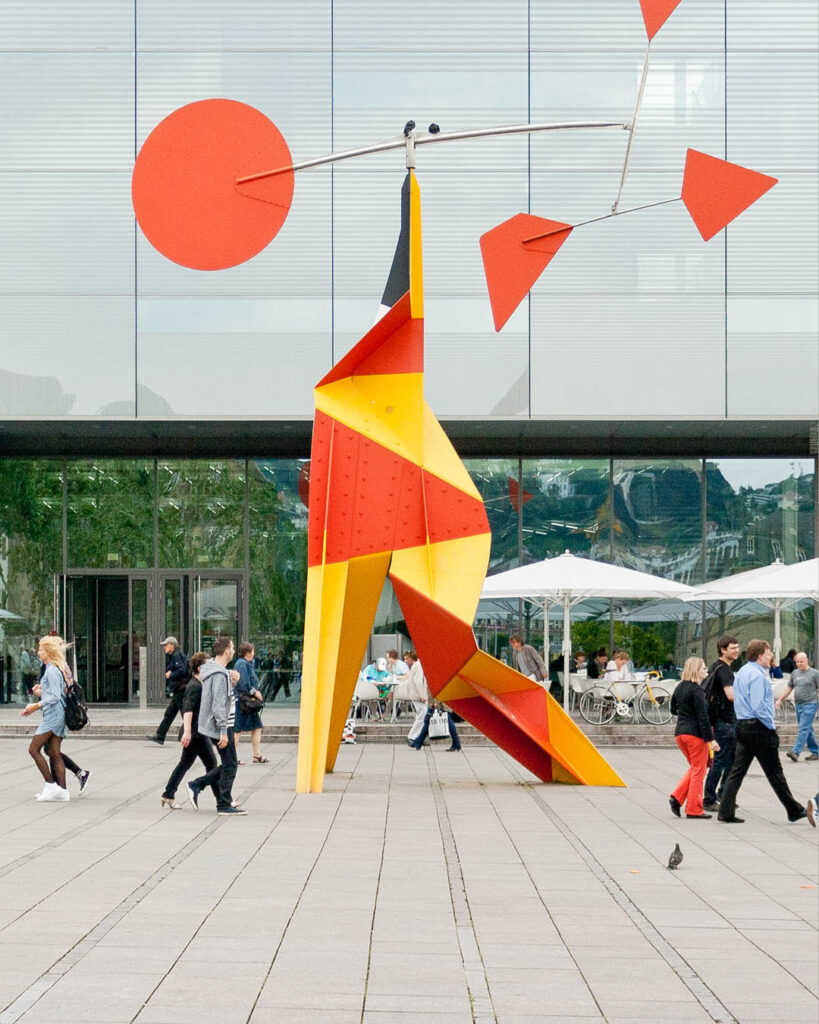
"Communication and preservation cannot take place without the other," is Madsack's credo, which could also be applied to the efforts of the Stuttgart Cultural Department. The KiöR department not only supports the three festivals and over 100 individual projects so far, such as that of Julia Wenz-Delaminsky, but also provides various communication services and has so far commissioned the restoration of twenty works. For this reason, the municipal council recently approved an additional 50,000 euros – while funding has otherwise been severely cut. Restoration can be indispensable when, for example, traffic safety is at risk, as in the case of Alexander Calder's eight-meter-high mobile sculpture. Crinkly with red disc right in front of the Art Museum.
"Art can seem elitist or incomprehensible," it says on the KiöR website. "We are changing that! Our goal: All people in Stuttgart should be able to experience, understand, and contribute to art in public spaces." A brochure proposes three tours that can also be booked as guided tours: one for children with accompanying adults, an inclusive tour, and one about works by women, supplemented with descriptions of eight additional works. Additional tours and an audio file complement the offering.
In order to reach all people, the Cultural Department focuses on the widest possible range not only of artistic genres and artistic approaches, but also of target groups and forms of dissemination. The very first event of the department was a networking meeting, which has since taken place again and again at irregular intervals. It also involves connections in areas such as memory culture and urban history. Thus, the program stated: Hidden Places highlights the traces of colonial history, especially among young people whose families come from other continents. In a guided bike tour titled The noise of the exotic women For example, the theater group La Fuchsia Collective to introduce the Colombian Magda Agudelo into the role of the yellow-headed Amazon, an unmistakable parrot species from the Bad Cannstatt district. The stops included a bedspring and chocolate factory, the Wilhelma Zoo, and finally the city archives, which are housed in a former office of the colonial merchants.
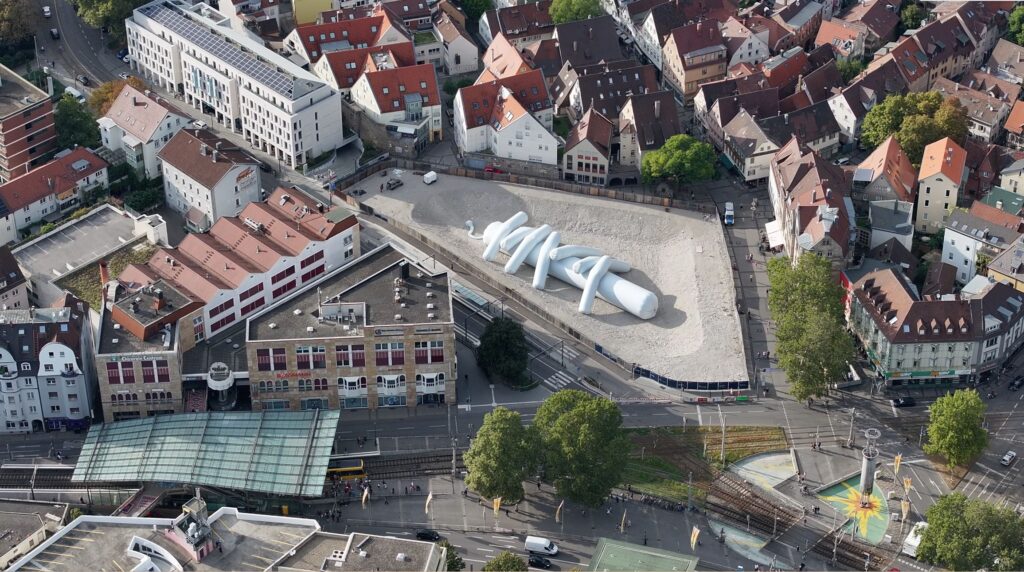
Beneath Wiener Platz in the Feuerbach district, directly in front of the train station, is the largest surviving World War II bunker in Stuttgart. Since this is not very noticeable, the cultural department launched a competition to redesign it. The artist couple Sylvia Winkler and Stephan Köperl discovered that the square had been named after Hitler during his visit after Austria's "annexation". They proposed renaming it – without changing the name. For a temporary period, the square was named after six people who all bore the surname Wiener, from Renée Wiener, who went into the French Resistance from Vienna, to Fernsehköchin Sarah Wiener, daughter of the poet-artist Oswald Wiener, who was also represented.
As the very lively Stuttgart scene of remembrance culture has been focusing on the project of the Stolpersteine for the past few years. Stumbling art Having added to this, which deals with controversial monuments among other things, Malika Ali has also expanded on this in her project. Motion Portals Static art in public space with a performative component. Dancers translate the forms of sculptures into physical movement. QR codes on the works lead to video recordings of a unique live event.
The variety of combinations of artistic disciplines and target groups is virtually limitless. However, the cuts mean drastic reductions. Kirsten Bayer, who remains the only member of the five-person team of the KiöR department, nevertheless does not give up hope. She relies on the networks that have emerged over the past four years and trusts that new impulses will emerge from them.
Matter Of: Art in public spaces in Stuttgart, updated reprint, Bielefeld; Berlin 2024.
Denise Madsack: Art in Construction. Conditions, Preservation and Communication, Stuttgart 2026.
https://kunst-im-oeffentlichen-raum-stuttgart.de/
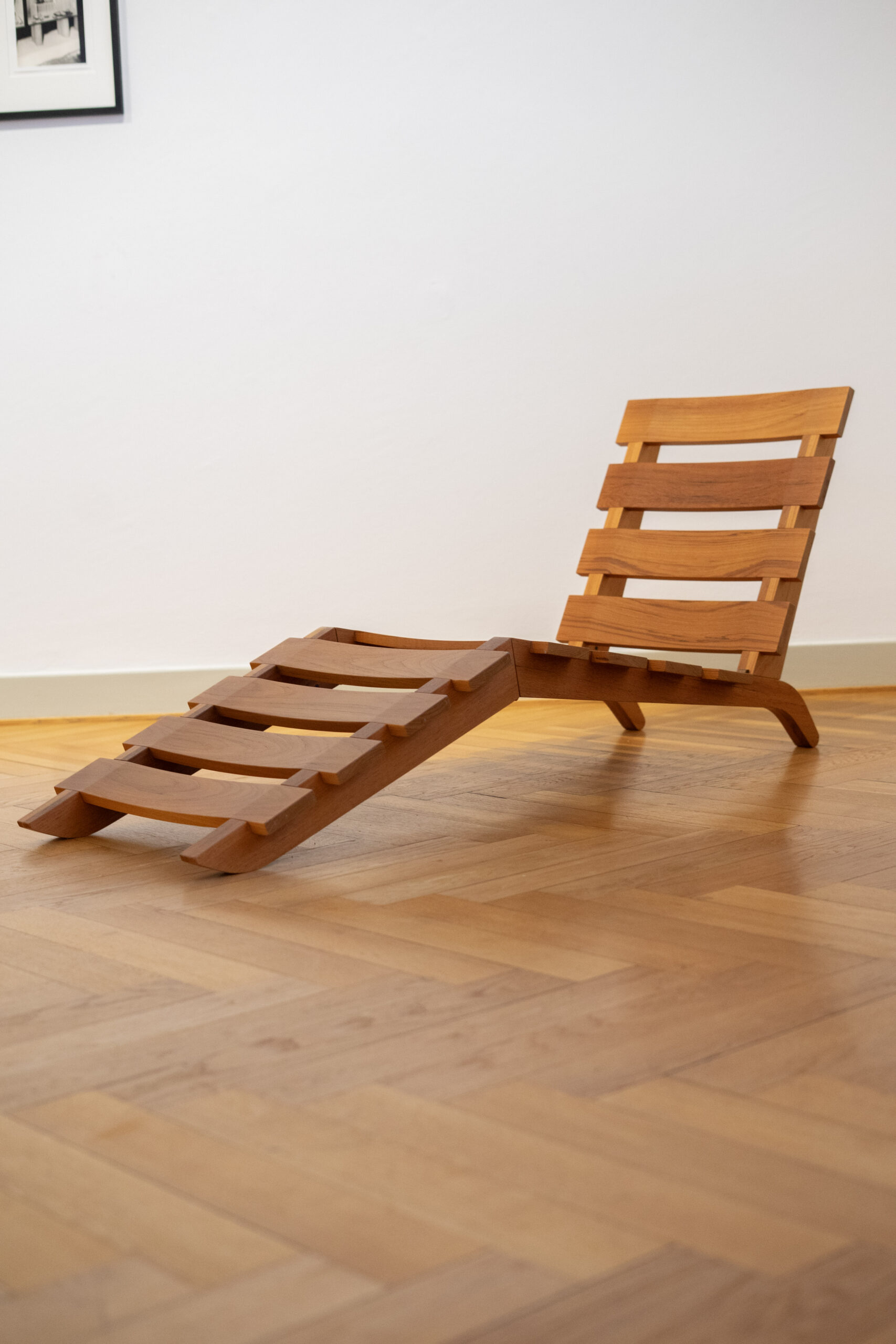
The Kunstmuseen Krefeld are dedicating the first retrospective in Germany to Charlotte Perriand’s multifaceted and astonishingly contemporary work.
 7 min read
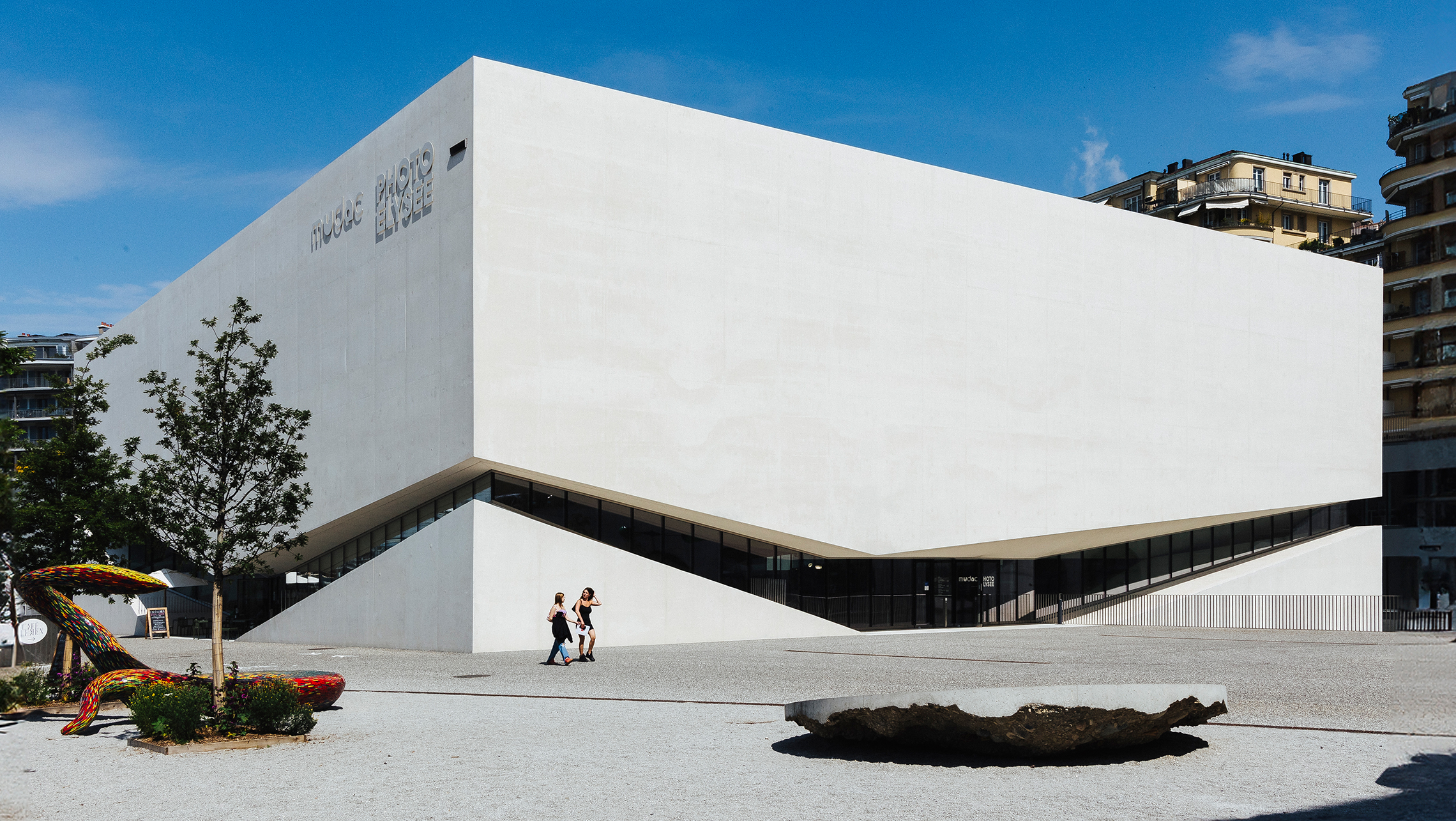
In the new premises of Plateforme 10 in Lausanne, the Photo Elysée Museum can finally unfold its potential.
 12 min read
Alex Katz at the Tübingen Art Gallery
 8 min read