 10 min read
 10 min read
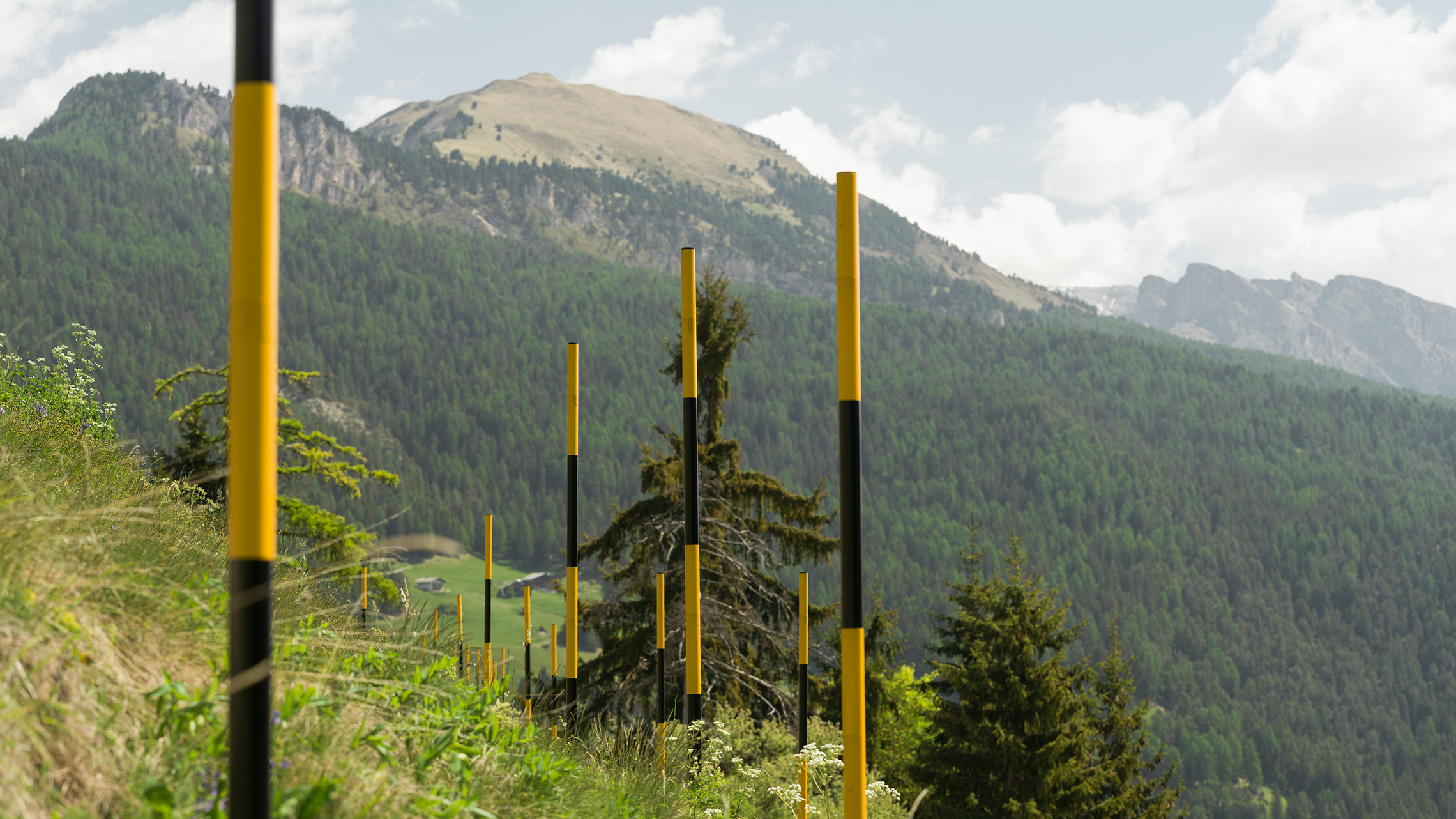
Part of the Gherdëina Biennale has to be literally searched for; but you are definitely rewarded for your efforts. From the village of St. Ulrich in the valley, it is a good half hour’s walk through steep paths through a dense, cool forest before reaching the bright meadows of the mountain farm Maso Pilat at the tree line. Like oversized stick figures from a Mikado cartoon, yellow-black markers are installed in these lush mountain meadows, which rhythmically blend into the landscape. What at first might seem like a technical survey of the landscape or like summer ski slopes is a silent archive of climatic shifts. The positions of the markers trace the changing snowfall boundary, which is shifting further and further up due to climate change. With "Degrees of Elevation", Bas Smets and Eliane Le Roux present a work in which abstract climatic changes become poetically perceptible; the mountain itself becomes a diagram of its own change. The sticks were borrowed by the two artists from the local municipality; in the winter they are usually used to mark the edges of roads. According to scientists, it is possible that by the next century no natural snow will remain in the Dolomites at all. Then these sticks will become useless artifacts from a long-gone era. The apparent invulnerability of the imposing Dolomites in the background stands in stark contrast to the harsh realities of climate change.
This work sets the tone for the already tenth edition of the Gherdëina Biennale, the regional and international contemporary art biennial in the Dolomites, which is to explore ecology, community and imagination under the title "(Future) Paradise Gardens". This summer, numerous sites throughout the valley are once again part of the exhibition, featuring 24 projects by 28 local and international artists. The Biennale extends over three central exhibition sites: the town centers of St. Ulrich and St. Christina and the Hof Pilat. The landscape of the Dolomites is not merely a spectacular backdrop for contemporary art; it is actively integrated into the works. Many projects sensitively respond to local stories, materials and social structures of the valley.
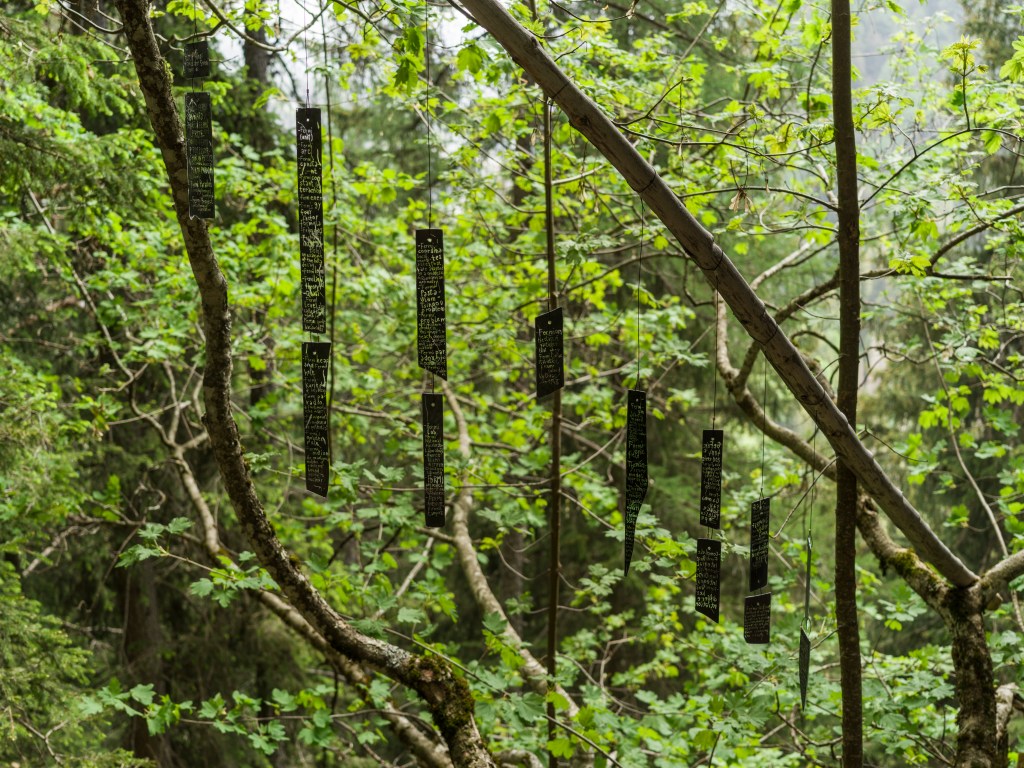
Just a few minutes" walk from the Climate Markers of Bas Smets and Eliane Le Roux in Pilat, the journey continues in a poetic, ambivalent and minimally invasive way. Along a forest path, fixed to trees and shrubs, fragile glass elements can be found. Text fragments are discernible on these plates, and gradually a network of fragmented narratives, historical references and political allusions is revealed in the work "Mushroom Clouds over our Garden" by Judith Neunhäuserer. The starting point is a historically documented stay by Laura and Enrico Fermi in the Grödnertal, a scientist who was instrumental in the development of nuclear energy and the atomic bomb. In her work, Neunhäuserer connects scientific archives with subjective memory, thereby creating a landscape in which the global effects of science and personal experiences are intertwined. Due to the Chernobyl nuclear disaster, also a product of Fermi’s research, locally collected mushrooms and wild game meat in South Tyrol can still exhibit elevated levels of radioactivity, although usually tolerable ones. Everything is connected to everything else. As you leave the forest, the glass panels still rattle gently in the peaceful wind.

The tenth edition of the Gherdëina Biennale uses the concept of the garden as a central motif, beyond idyllic natural images or purely illustrative criticism. The garden stands here in a tension between the wild power of nature and the culture shaped by humans. In the Biennale curated by Samuel Leuenberger, the garden serves as a contested space, as a projection surface for cultural order and as a mirror of the political and ecological crises that are increasingly materializing in the Anthropocene. Although the Alps, especially in the UNESCO World Heritage Site of the Dolomites, are still considered a place of longing for an allegedly pristine nature, it is here that it becomes clear how deeply the landscape has already been shaped by climate change, tourist overdevelopment, and economic dynamics.
Like small, artificial gardens, the "homescapes" by Leonardo Bürgi Tenorios, which can be seen in the museum space Sala Trenker in St. Ulrich, create an impression of a small, artificial world. He has created a series of microenvironments from adapted terrariums that are at the same time intimate and artificial. The enclosed systems act like hybrids of scientific experimental devices and decorative living objects. By integrating found objects, photographs, and plant elements, the artist creates fragile parallel worlds between natural imagery and illusion. These terrariums refer to a world in which nature becomes only accessible in controlled, technologically regulated spaces, framed and preserved. Next to this, the impressive and shocking video installation "Green Grey Black Brown" by Yuyan Wang can be seen. It uses an aggressive visual language and combines found footage from industrial production processes in agriculture into a dystopian, associative sequence. Liquids, surfaces, and synthetic textures merge into an endless stream of visual stimuli. The artificial turf on which the audience sits only illustrates the idea of simulated nature. The slowed-down soundtrack of the song "Owner of a Lonely Heart", sluggish and exhausting in its monotonous repetition, reinforces the impression of overwhelmed melancholy. One leaves the exhibition room with the fear that our gardens could already be irreparably contaminated.
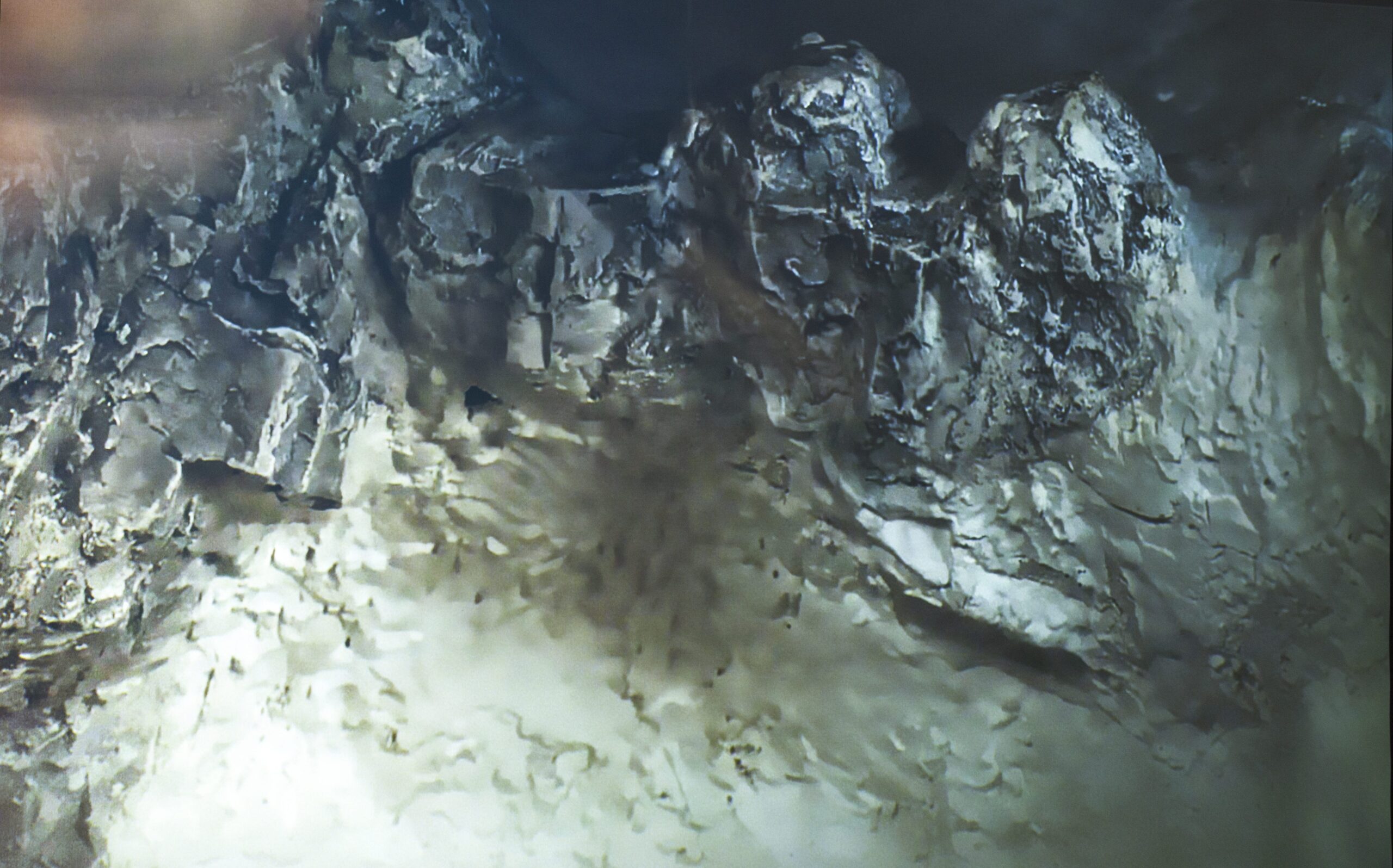
Alice Bucknell's film "Ground Truthing" also shows the dichotomy between nature and technology as a complex web of mutual dependencies. Her digital film combines virtual landscapes, satellite data, and ecological forecasts to create a speculative, dense cinematic journey. Divided into different chapters, the tension between digital modeling and evidence-based knowledge is shown. The term "Ground Truthing" originally refers to the verification of satellite data through physical experience on the ground. The highly technological film is shown in an intermediate use in St. Ulrich, where the viewers sit in the dark room on seating objects made from local tree trunks that refer to the organic world of nature.
During the Corona pandemic, when many parts of public life came to a standstill and nature had time to regenerate, a window opened in which the urgency of climate change suddenly seemed to have arrived at the center of public consciousness. Just a few years later, little of that urgency is left to be felt. People are once again living as before; more flights are taking place and the hype surrounding vegan food seems to have subsided. Only the climate reports remain consistent: researchers fear massive temperature changes and warn that further escalations are imminent. Leuenberger’s curatorial approach responds to this tension with an open structure. The Biennale does not develop a linear argument, but organizes itself along thematic fields such as "Commoning", "Violent Garden", "Queer Ecology" or "Gardens as Spaces for Reflection and Poetry". These chapters are not rigid; rather, they loosely connect different artistic positions together. The guiding idea of the garden is to be used less as a romantic retreat under these conditions than as a model of how life can be organized under new and unstable conditions and what role art can play in this context.
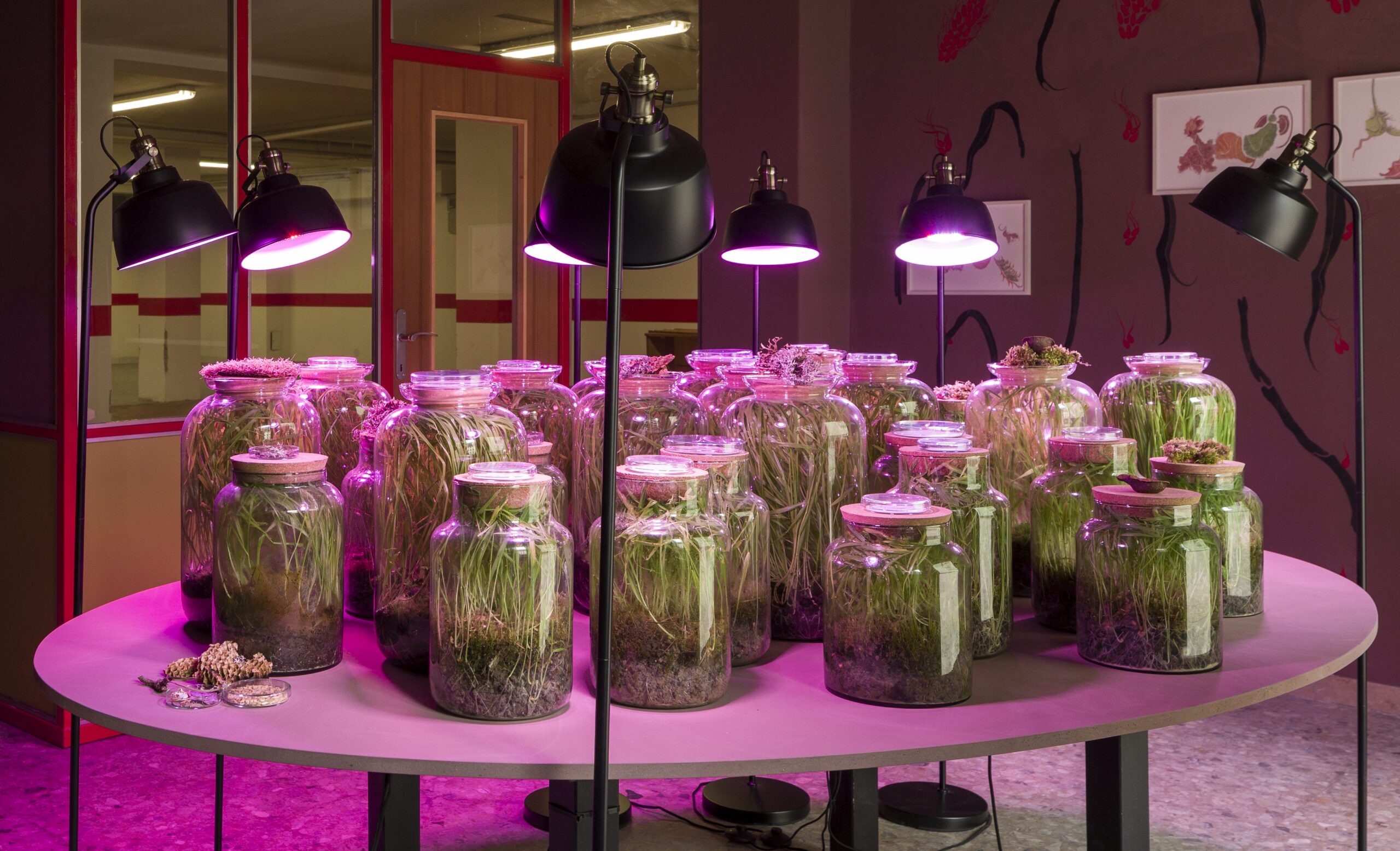
The installation by the South Tyrolean artist Gabriela Oberkofler oscillates between a post-apocalyptic greenhouse, a laboratory and a memory space. She has staged an impressive installation of her work in "Der letzte Acker", also in an empty shop premises near the pedestrian zone of St. Ulrich, which directly relates to the local history. She shows a provisional archive of disappearing landscapes. For this purpose, she has preserved plants from the last agricultural-useable areas of the valley under artificial light in glass containers and has also spread filigree drawings of plants and fruits over walls and ceilings. For some time now, there are no classic agricultural fields in the Grödnertal, which is characterized by tourism and livestock farming. The plants that no longer have a place in the economic and ecological system of the valley are artificially kept alive in this work; although they remain preserved, they are under constant technical control.
In his work, Jacopo Belloni also conserves elements of nature, but transforms them into a different state of aggregation. An intense aroma, fresh, minty and sweet, entices the visitors into the attic of an old school building in the village of St. Christina. Here Belloni presents two groups of works. The first, "The Sleepers", consists of milky glass forms in which seeds from the Grödnertal region are encased, collected in collaboration with local communities. The aesthetic and fragile vessels resemble everyday containers such as bags, backpacks or wallets, which have thus been transformed into time capsules where the genetic information of the seeds is preserved for an uncertain future. This is once again an archive of threatened nature. However, the attic is dominated by historically-inspired copper machines connected with hoses. These are distillation devices that extract slowly soothing essences from various Alpine plants and thus release fragrant droplets into the air. Still and slowly, they compress the essence of nature into a consumable extract.


The exhibition "(Future) Paradise Gardens" shows how complex the questions of nature, technology, and political responsibility are intertwined and embedded in the context of global climate change. Between abstract rock sculptures and tourist-overdeveloped Alpine landscapes, "(Future) Paradise Gardens" does not develop a vision of a harmonious return to a nature that no longer exists. In the Anthropocene, new questions arise that extend far beyond mere control of nature. It is about the question of what forms of coexistence are possible in conditions of increasing ecological instability in the long term and in a sustainable way. Ecology should not be understood as a moral or political category, but as a relational system that is equally characterized by fragility, conflict, and cooperation. The presented positions cannot be reduced to didactic illustrations of political propositions; rather, they create moments of contemplation and irritation. Art cannot solve the growing ecological problems, but it can highlight moments of melancholy and failure and perhaps suggest possible scenarios for living together in a state of permanent transformation.
Ana Prvački dedicates a monument to one of the most important processes of nature and the protagonists of that process in the central square of St. Christina. The artist, herself raised in a family of beekeepers, has positioned four marble sculptures on the square that replicate the beehives on a scale of 1:1 and resemble tombstones in shape. These "Bee Memorials", inspired by the classic Langstroth beehive, seem like silent monuments to the honey bee, an essential species for nature that is threatened with extinction. They are positioned near the village cemetery, creating a subtle tension between remembrance, humor, and an increasing awareness of the fragility of all ecological systems. Perhaps contaminated gardens can also be restored to their natural state.
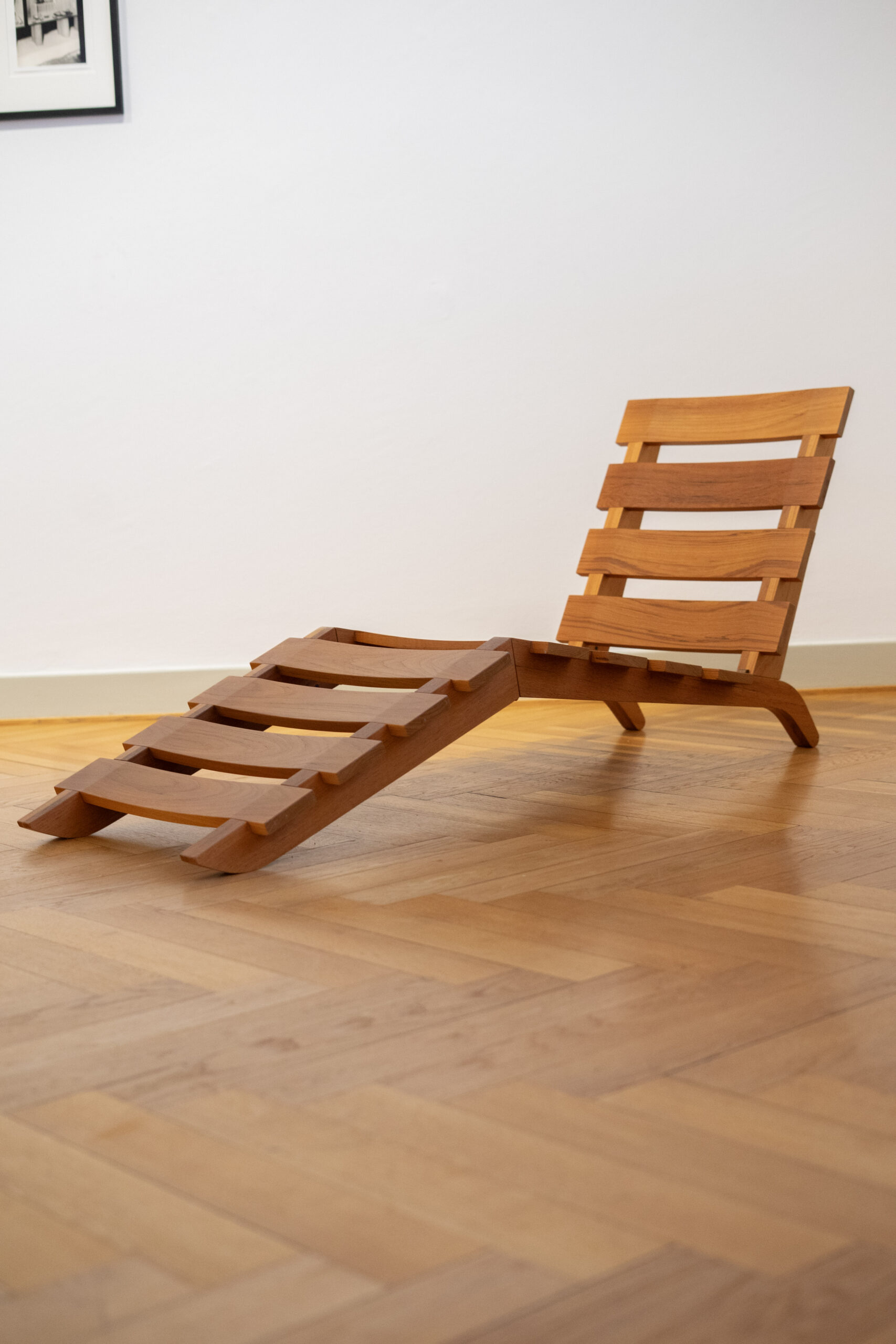
The Kunstmuseen Krefeld are dedicating the first retrospective in Germany to Charlotte Perriand’s multifaceted and astonishingly contemporary work.
 7 min read
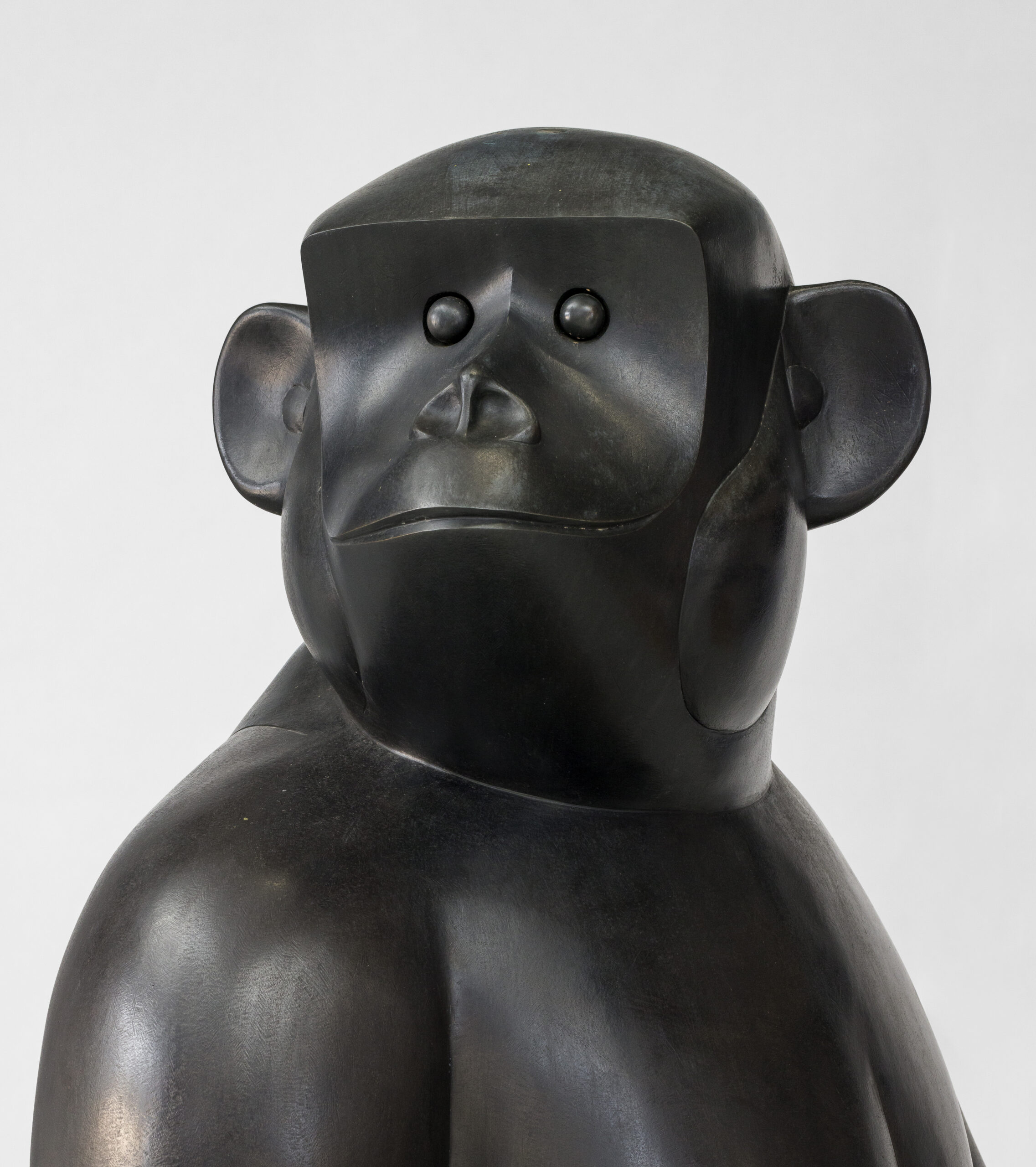
Tierdarstellungen in der Kunst. Heidi Horten Collection, 27. März - 30. August 2026.
 6 min read
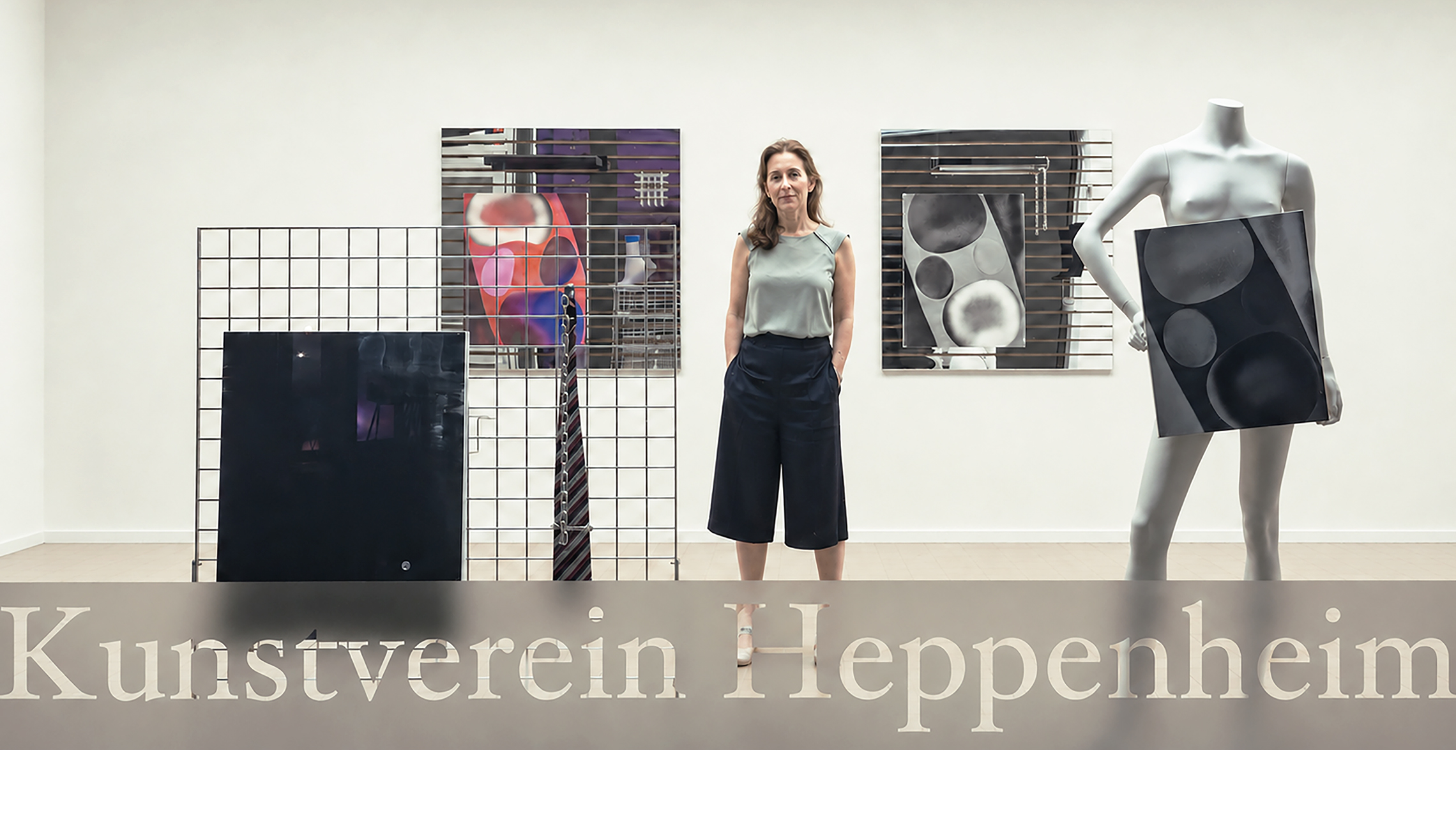
The exhibition "Six Five Four Three Two" featuring works by the New York-based artist Josephine Meckseper at the Heppenheim Art Society.
 9 min read