 11 min read
 11 min read
"I don't need a garden; I share a park," in German for example: "I don't need a garden; I share a park." Under this motto, the 13th edition of the Sonsbeek open-air art exhibition is now taking place in Arnheim, the Netherlands. The traditionally established art format, founded in 1949, is being curated for the first time by a purely female duo: the French-Egyptian curator Amira Gad, who works as a curator of modern and contemporary art at the Rotterdamer Museum Boijmans Van Beuningen, and Christina Li, an independent curator with residencies in Hong Kong and the Netherlands. Although the two have known each other for some time, this is their first professional collaboration.
Why should an urban, cultured person retreat into the seclusion of a private garden when they can be with a wide variety of people in a public park and discover works of art at every step? This sympathetic idea forms the basic premise of an exhibition project that now brings together 18 Dutch and international artists, twelve of whom have created entirely new works. The exhibition’s already cited motto is, by the way, from Loesje, the fictional protagonist of a legendary writing collective founded in 1983 that once originated from the squat scene in Arnhem but has now grown into an internationally active foundation and has since infiltrated the urban space with hundreds of concise text messages on small-format posters. The inscription, dating back to 2010, can be found not only on printed materials and jute bags, but also on the facade of the former rentmeister house on the edge of the park.
"Sharing a park with others also means moving in a space that does not belong to anyone and everyone," says Amira Gad and adds: "Public space is created by the interaction of passersby, children, municipal employees, demonstrators, neighbors, in short, everyone who is present in it." Starting from this premise, the two curators therefore do not view the park only as the venue for the exhibition, but rather as a subject of investigation for the participating artists.
The second central concept of the curators is memory, or rather the production of memory as a never-ending process. The present park is filled with the most diverse traces of previous historical uses, changes brought about by various owner changes, interventions in the landscape, and even remnants of the Second World War. Thus, in the trees that are currently being trimmed, there are still bullets and projectiles from the losing battle of Arnheim in September 1944, which was a costly one for both sides.
Therefore, here is a brief historical overview. Five years after the war, the city authorities of Arnheim wanted to convey a vision for the future to their community and to let the citizens forget the distressing events of the war for a while.
The first edition of Sonsbeek in 1949 included just under 200 works distributed across the entire area of the 67-hectare park, including works by such famous artists as Henry Moore, Pablo Picasso and Auguste Rodin. It attracted 125,000 visitors to Arnheim. In later editions, works by Claes Oldenburg, Jenny Holzer or Lucio Fontana were shown, for example. In 1971, the exhibition for the first time left the boundaries of the park and expanded both into the city center of Arnheim and occasionally to the area of the Kröller-Müller Museum in the nearby Hoge Veluwe National Park. Until 2026, the event took place at irregular intervals. However, a three-year rhythm is planned for the future. However, one principle remains unchanged: whether individual curators, duos or teams: the artistic direction changes with each edition.
The two curators this year have also made the current issue themed with memory. They define the term as follows: "For us, memory is not a question of preservation but of transformation: a regenerative, continuous practice that shapes worldviews, designs futures, and resists the erasure of the past. We understand our artistic engagement as a conscious struggle against natural and societal processes of forgetting."
Even upon viewing the first works on the kilometer-long tour of the grounds designed in the style of an English landscape park, one gets the impression that the participating artists willingly embraced the curatorial framework and have developed predominantly new works that address the formulated questions in various ways. However, this has nothing to do with the diligent execution of a predetermined canon. Instead, they have created works that are partly very personal, partly political, and also imaginative and loaded with metaphors that transport the viewers to the most diverse world regions and artistic and intellectual environments.
The Amsterdam-based artist Femke Herregraven, born in 1982, presents a complex four-part work titled "The Evacuated (Memory Machines of Sonsbeek)" that, using sensors, captures real-time data from the park's ecosystem and feeds them into an LED video projection installed on an idyllic water surface. For example, she has controlled the deadening of a dead tree using the ancient Japanese Yakisugi technique, resulting in a matte black shimmering surface. The decorative tree stump now serves as a carrier for light and wind measuring devices. Inspired to create this work, Herregraven was inspired by the storage containers at the National Genebank of the Netherlands, where all forest plants represented in the country are stored. From images filmed there and other data, the artist has created a simulation of a synthetic forest, whose appearance is permanently overwritten and altered by live information from the park. In the form of dynamically animated images of plants, weather events, and changing times of day, the viewers experience memory as a permanent process of erasure and renewal.
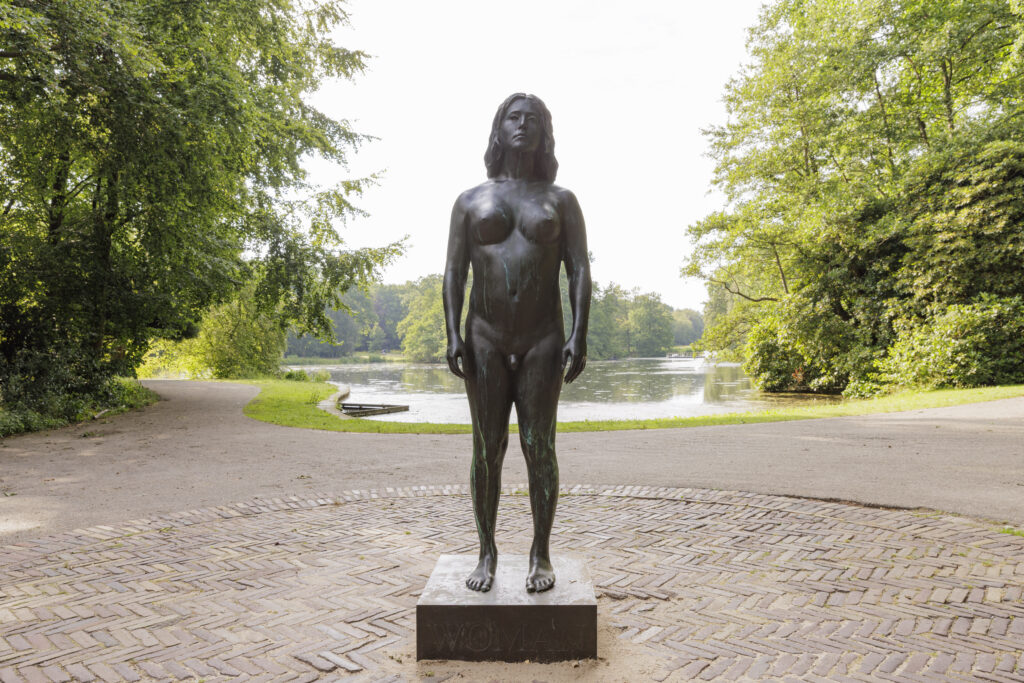
That the body itself is also a highly malleable container of memory is impressively demonstrated by the artist Puppies Puppies (born name: Jade Guanaro Kuriki-Olivo), who operates under the pseudonym. As a trans woman of Puerto Rican and Japanese descent and with indigenous roots, the New York-based artist explores the variability of the body beyond genetic constraints. A life-size bronze cast of her naked body, based on a 3D scan that was performed following a mastectomy—an operation to adapt the breasts to one’s own perception of the body—is on display in the Sonsbeek Park. With her "Sculpture for Trans Women…" Puppies Puppies, born in 1989 in Dallas, presented the world’s first publicly accessible sculpture of a naked trans woman at the 2024 Venice Biennale. With the new work, whose title is as poetic as it is activist and is so long that it would exceed the length of this text, the artist now dares to venture from the art world into the largely unprotected public space. Puppies Puppies wants to go where she herself cannot go with the sculpture. It remains to be hoped that the work will not be damaged by vandalism.
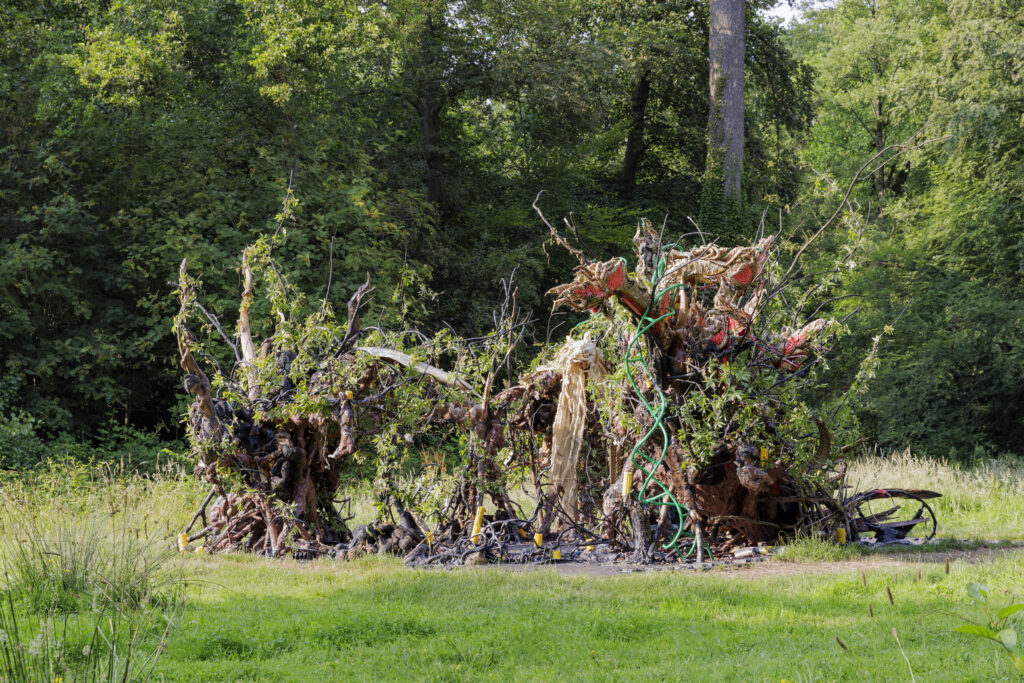
The Thai artist Korakrit Arunanondchai, born in 1986, who lives in New York and Bangkok, apparently also has a penchant for excessively long titles. His installation work, "Will you find beauty in this sea of data? We left it behind just for you. A cloud that will rain down on your skin. And absorb into your body," consists of a wild mix of materials. He amalgamates plant components such as coconuts and dried banana leaves with the shells and legs of crabs and crayfish, replicas of human extremities, electrical wires and applications, old motors, LED lights and demonic dragon depictions to create a posthuman miniature landscape in which the rats have taken over our planet. At the center of the installation is an accessible pulsating area that simulates the heartbeat of his late grandmother who died of dementia. Not for the faint of heart. Anyone who stands here might get the impression that they have been transported straight down into the earth.
The mythology of his Indian homeland, in turn, inspired the artist Sahej Rahal, born in Mumbai in 1988, to create three over-sized hybrid beings made of fiberglass, epoxy resin, silicone and various other synthetic materials. Their deep-black powder coating creates moments of irritation on the edge of a forest path, resembling the return of primordial creatures, as the title "The Return" suggests. Or are they bold visions of future post-human life forms?
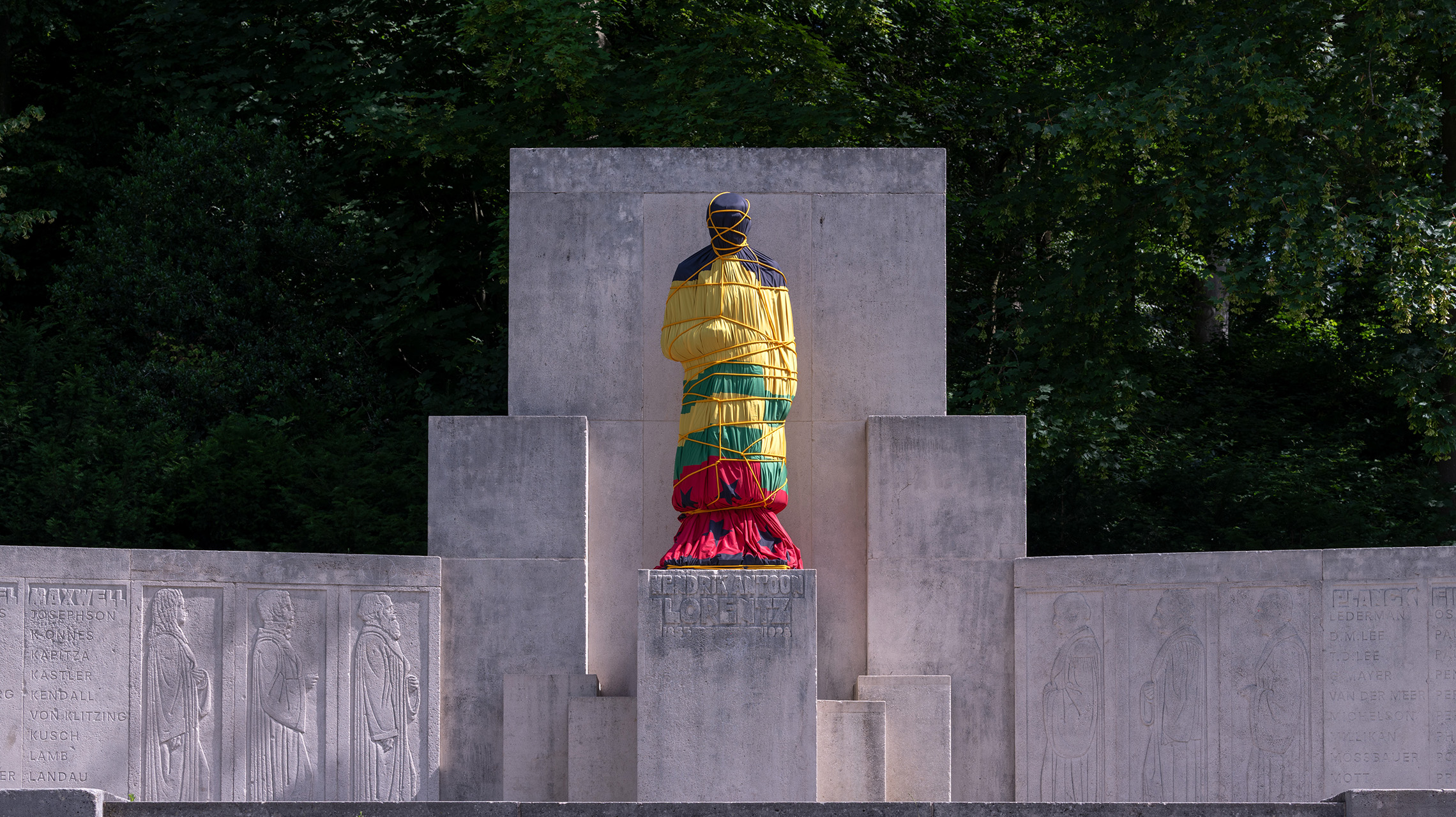
The works of the 1984 London-born artist Larry Achiampong are clearly politically charged. Achiampong, of Ghanaian descent, has cloaked older sculptures in Christo-like fashion both in the park and in front of the police station in the city center by wrapping them in a colorful pan-African flag he has designed himself. With his video work "A Letter (Side B)", which he is showing at the Dutch Military and Veteran Museum Museum Bronbeek, Achiampong additionally points the finger at the still open wounds of Dutch colonial times.
Large, colorful, spectacular, and at first glance especially beautiful, is the "Mystic Hexagram" by the Belgian artist Anne-Mie Van Kerckhoven, born in 1951. From exactly 32,940 flowers, vegetables, and herbs in small pots, the artist has created a kind of carpet of living organisms that she positions directly in front of the modern town hall building. But she would not live up to her reputation as a "Feminist Futurist", as the American art magazine "Artforum" once described her, if she did not also incorporate a subversively anti-patriarchal commentary into her bas-relief sculpture. The excessive masculinity of the playfully grinning satyr at the neighboring "Duivelshuis" (Demon House) from the 16th century is countered by her placing a symbol of the harmony between the sexes in the form of a planted hexagram.
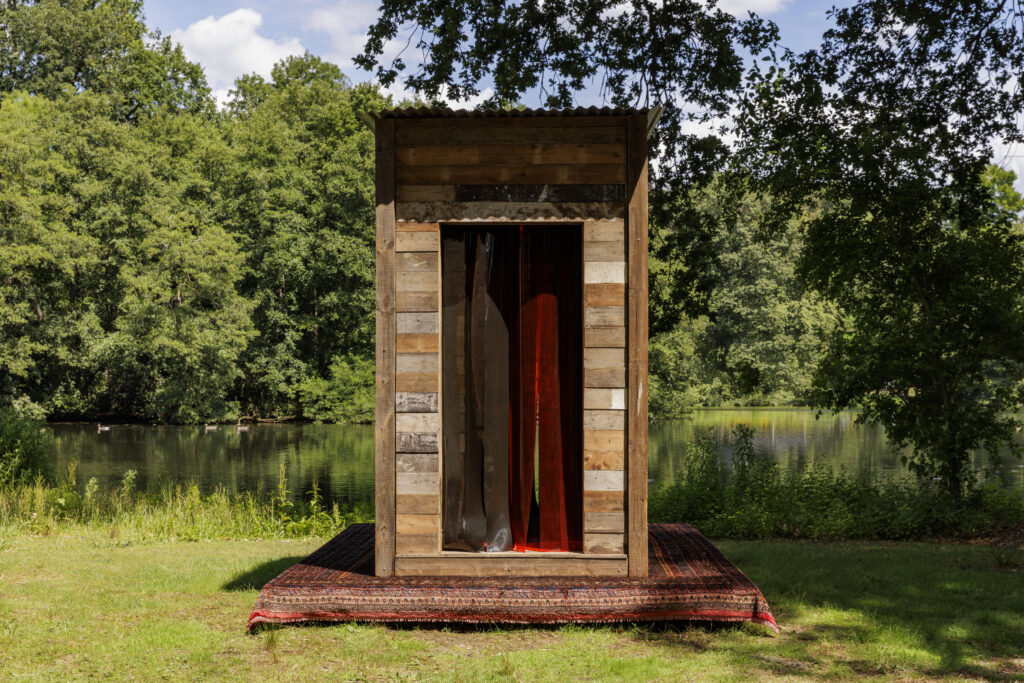
So that no false impression is created: Sonsbeek 2026 is by no means an exhibition that only invites contemplation on war and destruction, climate change, body politics, anti-discrimination, species extinction, (post-)colonialism and other pressing issues of our time. It also offers plenty of opportunities for those who are more inclined towards contemplative moments. For example, a visit to the sculpture "To Be Heard" by the artist Alvaro Barrington, born in Caracas in 1985 and now living in New York, is recommended. It is an intimate little hut made of recycled boards, colorful PVC curtains and an old oriental carpet, which invites you to retreat for a moment and listen to the sounds of the park. Perhaps the rustling of the nearby stream, the birds, the passersby, or perhaps your own inner voice.
In conclusion: Those who may not manage to make it to the Venice Biennale this year or who no longer can wait another year for the Documenta Kassel and the Sculpture Projects Münster, are strongly advised to make a detour to Arnheim this summer. With Sonsbeek 2026, a newly curated edition of one of the oldest recurring exhibition formats in Europe has emerged, firmly anchored at the forefront of the international discourse. The journey by train from Düsseldorf to Arnheim takes just 75 minutes.
Sonsbeek 2026 is open until October 11, 2026. The opening hours of the park are: Mon-Sat 10 am to 6 pm.
www.sonsbeek.org
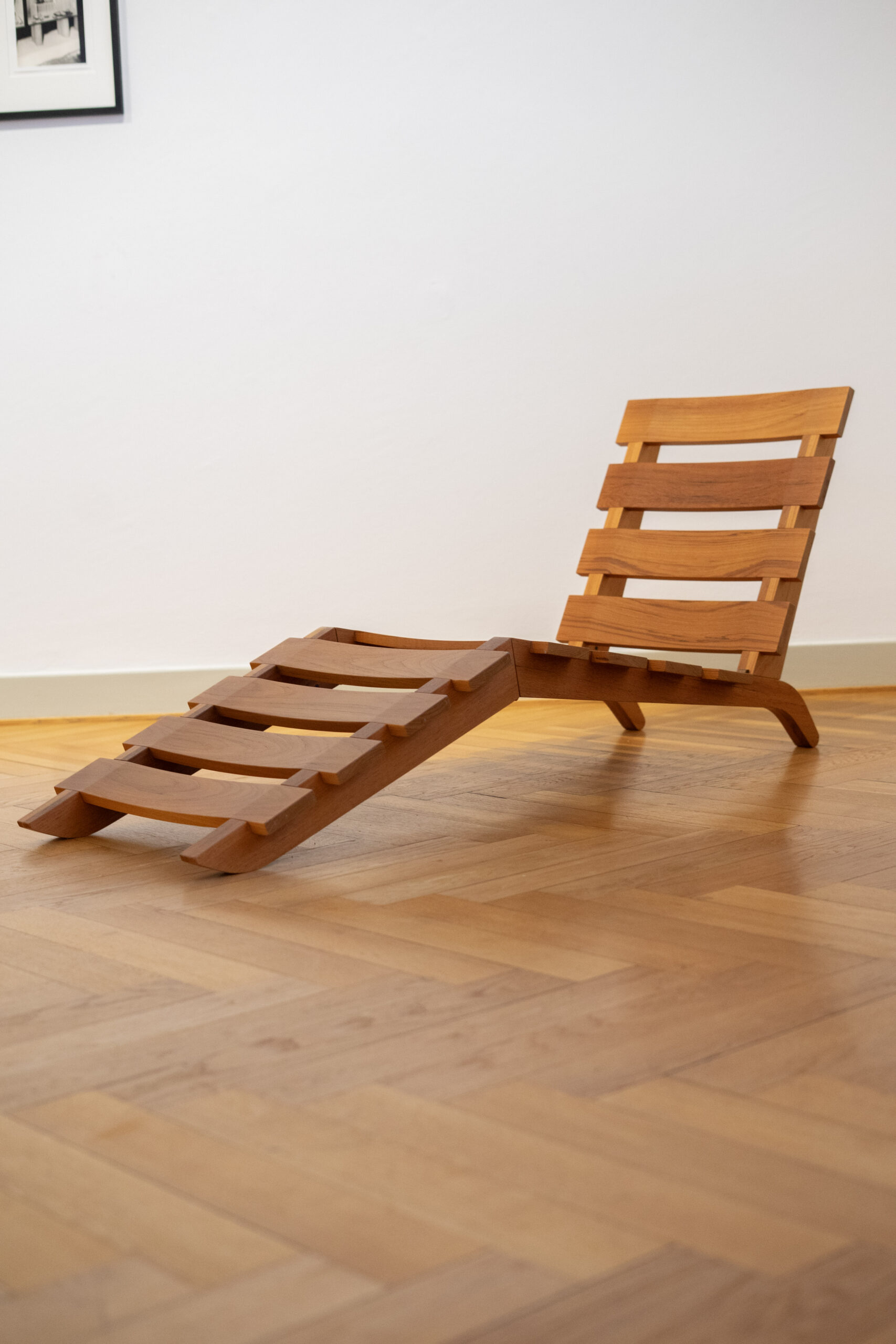
The Kunstmuseen Krefeld are dedicating the first retrospective in Germany to Charlotte Perriand’s multifaceted and astonishingly contemporary work.
 7 min read
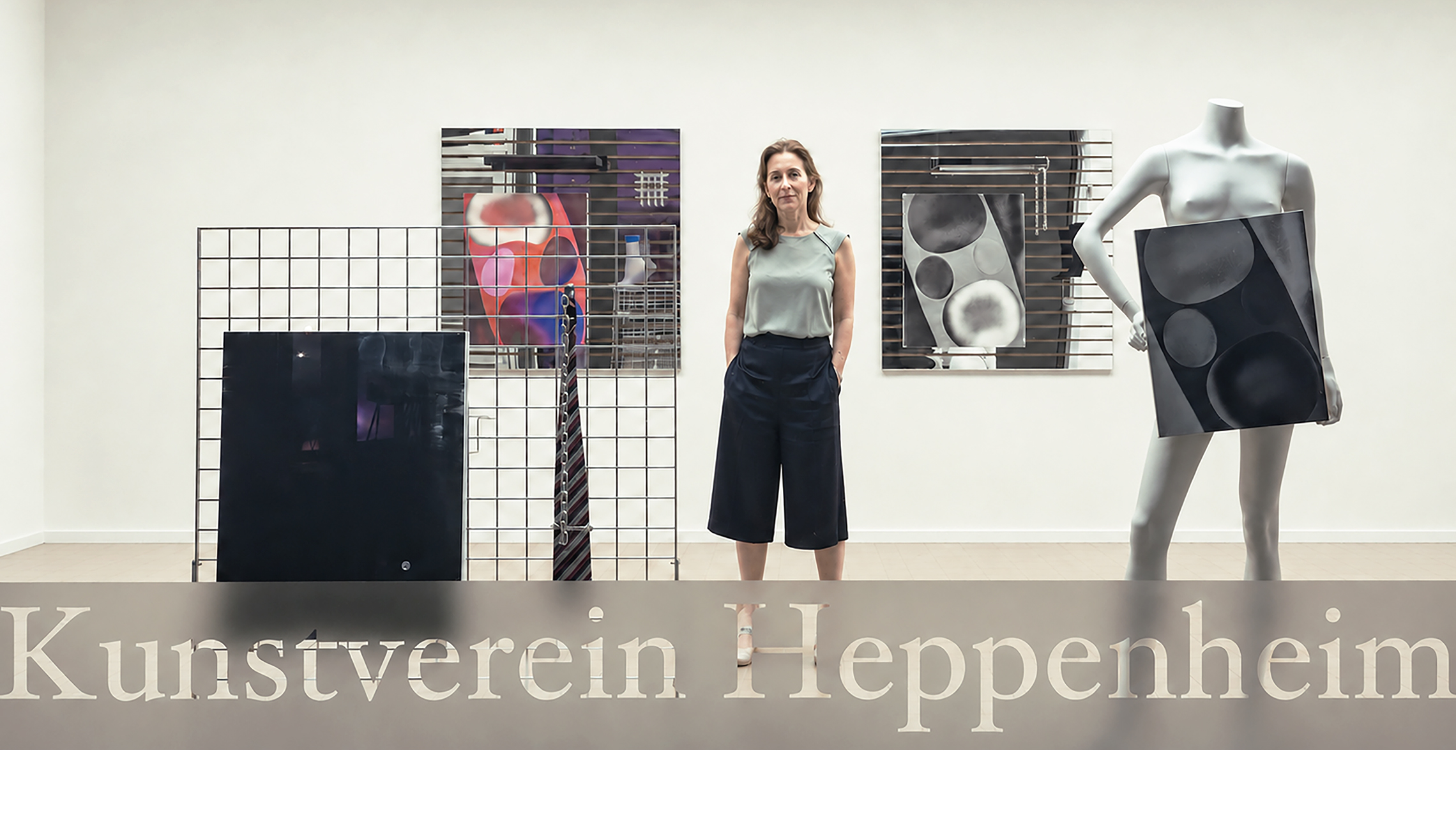
The exhibition "Six Five Four Three Two" featuring works by the New York-based artist Josephine Meckseper at the Heppenheim Art Society.
 9 min read
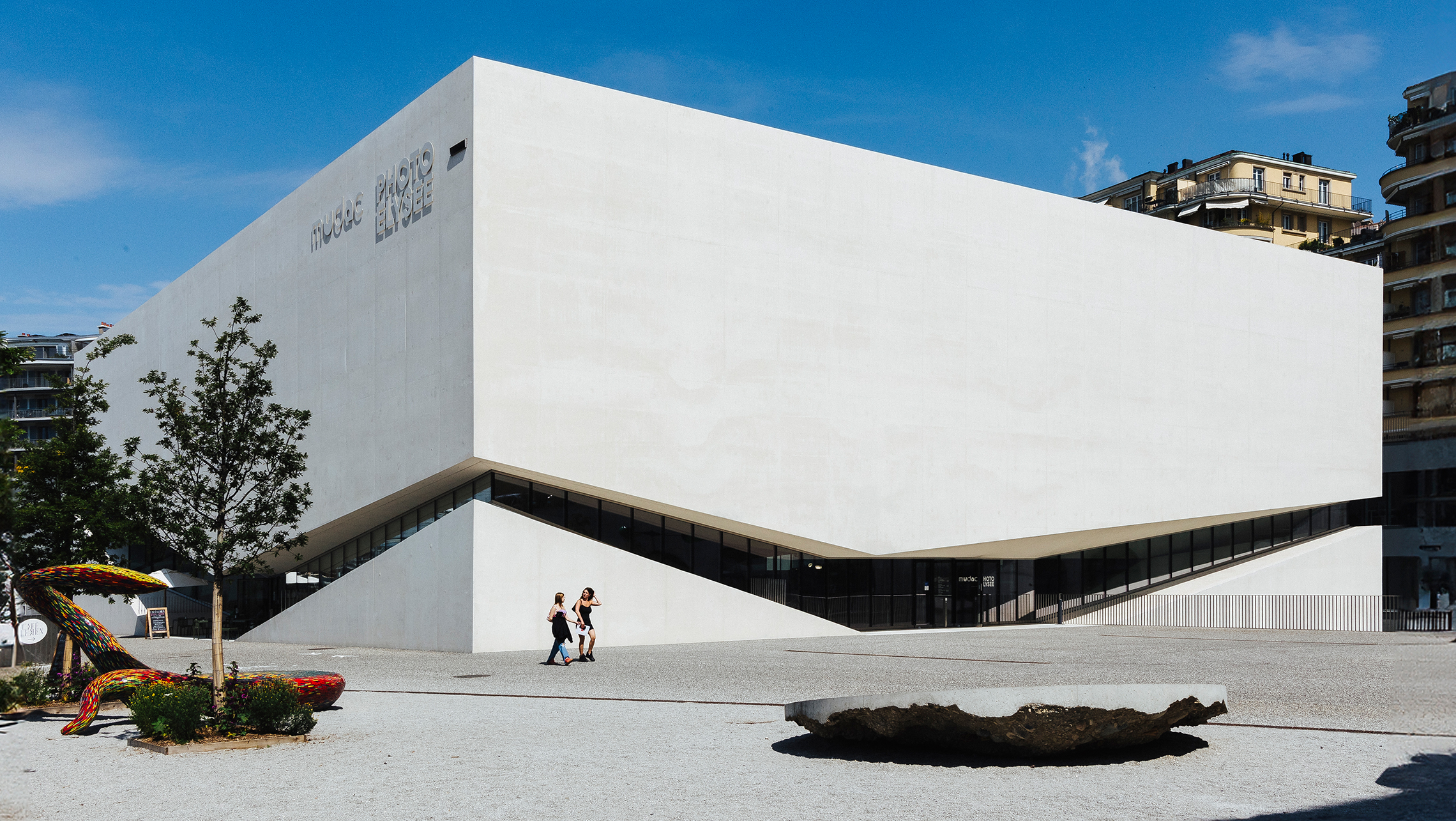
In the new premises of Plateforme 10 in Lausanne, the Photo Elysée Museum can finally unfold its potential.
 12 min read