 8 min read
 8 min read
In the stylishly renovated former workshop in the Cologne district of Ehrenfeld, there is an atmosphere that is almost homey. Daylight enters through the glass front, white curtains shield the street side, and on a colorful seating area one can sit down with one of the art books from the impressive library.
Originally, the Braunsfelder Family Collection The exhibition includes works by established artists such as Andreas Schulze, Elizabeth Peyton, Thomas Scheibitz, and the brothers Gert and Uwe Tobias, as well as works by many other talented artists, such as Behrang Karimi, David Ostrowski, and Kemang Wa Lehulere.
But it soon became clear that a public exhibition space could become an even more exciting and, above all, more communicative project. It was created at the end of 2017 Braunsfelder, As this undertaking itself is named after the family history. Since then, Georg Jacobi has presented current art from the Rhineland and the international art world in over thirty experimental exhibitions with the curators he has invited. Sometimes, some of this also ends up in the private collection, but in the program it rarely plays a role.
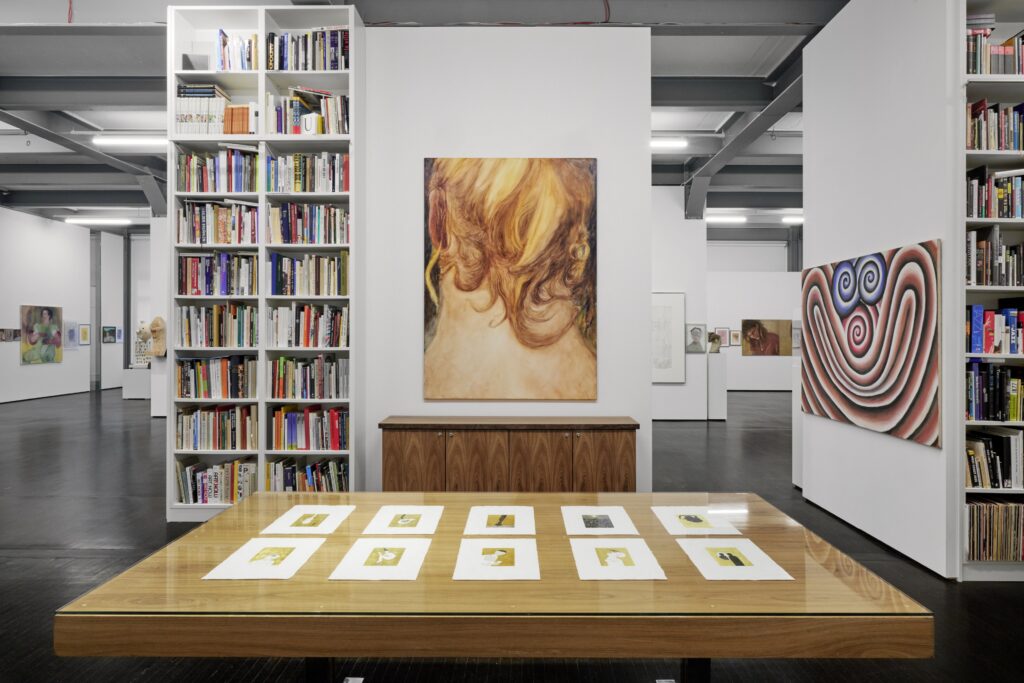
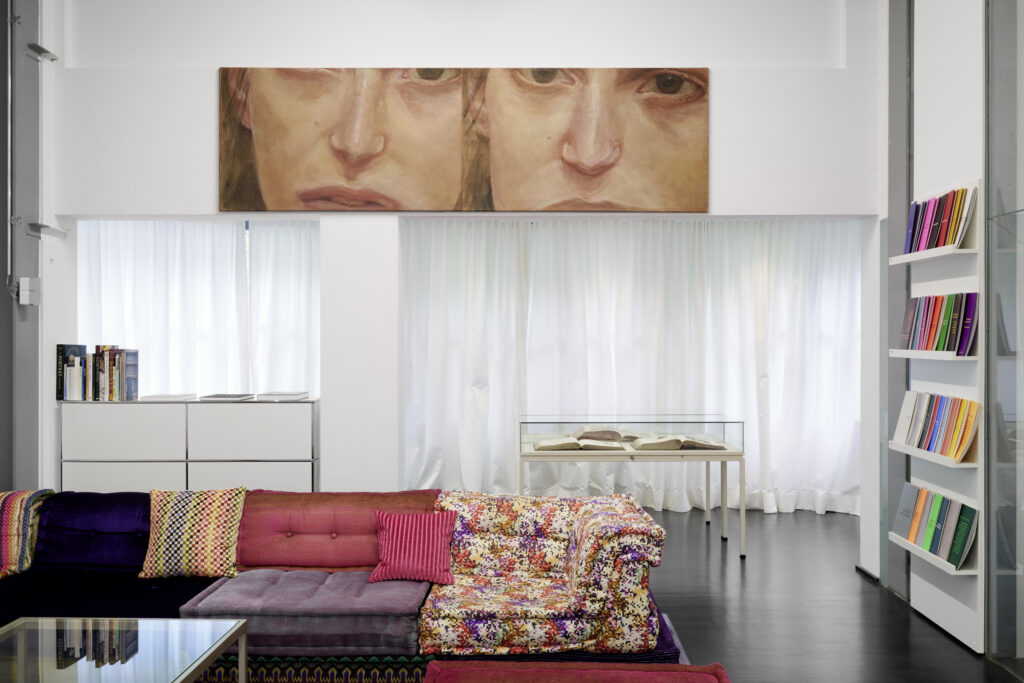
Braunsfelder An exhibition space, emphasizes Jacobi, is a platform for artists who are still mostly young. The artists are also confronted with positions that already belong to the canon of art history in group exhibitions. The works that the artists and galleries provide for the exhibitions are usually for sale. The economist with a doctorate calls this an economic mix of calculations that enables him, among other things, to avoid the pressure of exhibition catalogs that the artists very much appreciate. He himself appreciates the intensive engagement with art, the conversations with the creative artists, the curators and the other professionals and art lovers. Those who visit the exhibition space are personally greeted by him.
In the current group exhibition "Portraits. The noble essence of humanity," the audience can not only encounter the works, but, if you will, the artists themselves as well. It is not least their perspective on the human being that becomes visible in the portraits. Georg Jacobi, who acted as curator exceptionally himself, has selected almost fifty artists for the topic, ranging from Annabelle Agbo Godeau (*1995) to Alberto Giacometti (1901-1966), Anne Imhof (*1978), Else Lasker-Schüler (1869-1945), Mimmo Paladino (*1948) and Thomas Schütte (*1954) to the Renaissance artist Michael Wolgemut (1434-1519).
This is how you experience it at Braunsfelder This time, an unusual abundance: In a single row, guided closely along all the corners, there are close to one hundred works of art hanging on the walls. In addition, there are some sculptures and books placed throughout the space. Georg Jacobi compares the linear hanging with a string of pearls. He thus demands something from the visitors: they must take time to look at it. This exhibition cannot be consumed in a single glance. But one can walk along the walls and approach all these figures and faces.
For example, those of Michele Cesaratto. He obviously focused on portraits of the Italian early Renaissance, painting them in tempera on cherry wood or walnut wood, and developed sophisticated statements about the present from them.
Between the colored canvas works "Zwiebel-Look" by Max Mucha, "Milostki (Crashs)" by Agata Slowak and "An evening far II" by Cécile Lempert, Georg Jacobi has hung a well-known motif from Hugo Steiner-Prags (1880-1945) s-w illustration of the 1915 novel "Der Golem" by Gustav Meyrink and one of the "dream images" drawn in 1986 by Anna Blume (1936-2020) with white chalk on black paper: despite the differences in intention and execution of the young painters' works, they share an underlying expression of uncertainty and overwhelm that the two older works concretize in interesting ways.
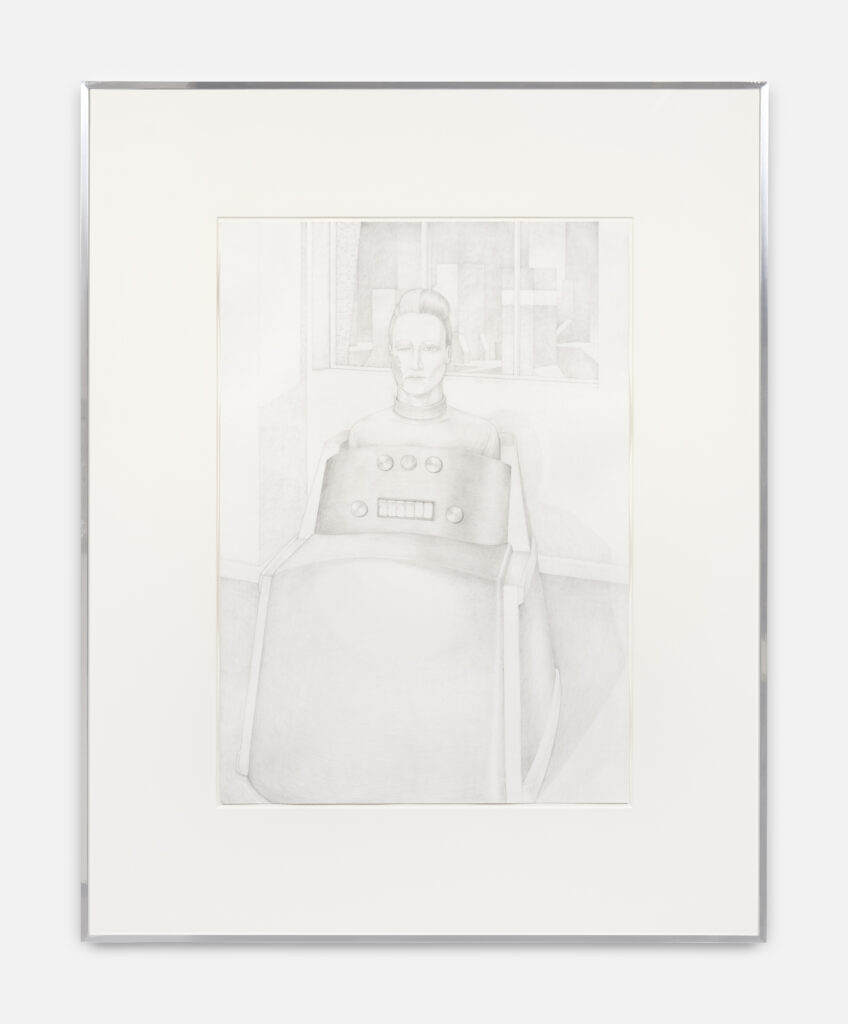

Among the historical works that accompany the exhibition as a cornerstone are two volumes by the theologian Johann Caspar Lavater, for whom the great masters were, so to speak, a conceptual source of inspiration. The studies for his encyclopaedia "Physiognomic Fragments, for the Promotion of Human Knowledge and Human Love" (1775–1978), in which he interpreted the physiognomy of a person as a reflection of their character, were not conducted on living beings, but on drawings and graphic copies of works of art. Those interested can verify the results available.
Lavater’s work, which was at the time extremely popular, also had Johann Wolfgang von Goethe contributing text contributions before he became a scientist and a classic of Weimar. Like him, he believed that God could be recognized in the beauty of nature and in the rational actions of humans themselves. The first line from his poem "Das Göttliche" gives the exhibition its resounding title. It can be read at the exhibition in a publication published in 1785 by the philosopher Friedrich Heinrich Jacobi, in which it was first published. Yes, he is a predecessor of the owner of the house.
The "Hour Zero" of the self-portrait presents itself to the visitor in a way in the so-called "Schedelschen Weltchronik" of 1493, illustrated by Michael Wolgemut, which begins with the biblical narrative of the creation of the world. The unfolded double-page describes how God, in his own image, formed the first two humans – and then, after their sin, drove them into the misery of this world. Thanks to the forbidden fruit from the Tree of Knowledge, they were, by the way, already able to distinguish between good and evil.
A contemporary "Autoportrait à la chemniée" by Cédric Rivrain, on the other hand, seems strangely contradictory. The artist greets us on the narrow widescreen as a semi-act in a framed mirror hanging above a fireplace. In his left hand he holds the smartphone with which he presumably captured the scene. However, it is executed in oil on canvas. Rivrain seems to question the selfie as a digitally optimized variant of the representation of the self.
One can speculate whether the selection of this particular image may also reveal a certain skepticism towards newer artistic techniques on the part of Georg Jacobis. Braunsfelder They are almost exclusively works of art that can be experienced – at least in the mind – through their tactile effects as well. The classical visual arts, painting, drawing and graphic arts, as well as sculptures and objects in all forms.
On this field, the operator not only demonstrates a good eye but also a sense of the contemporary nature of an artistic work and a good network. He discovered Cédric Rivrain, known only in France, in a Parisian exhibition; Nika Kutateladze, with his strangely surreal small paintings, among the newcomers at Art Basel; and Cécile Lempert, who approaches the fragile-looking figures in her paintings with drawings, introduced him to her son, who has been running a gallery in Berlin for three years.
Georg Jacobi emphasizes the artists he values. Lukas Schmenger, who explores existential questions through self-portraits, has been with him from the very beginning. Braunsfelder It was shown and some of his works found their way into the family collection. Among the exhibits is a silvery-brilliant, plastic "Portrait Of The Artist As The Moon Over Geldernstraße" by him.
Not every one of the portraits can hold its own in the dense sequence of works; and the work of the artists represented several times might have presented itself more clearly in a more adjacent display. But this is not a museum exhibition. So when confronting the old and the new, the goal is not to illustrate a development history of the portrait. Georg Jacobi understands the exhibition as an offering that brings together all these artists and works. Braunsfelder to get to know each other and perhaps be challenged to engage more deeply in a discussion about this or that image.
By Oliver Osborne were at Braunsfelder Five years ago, various views of a rubber tree could be seen. In the oil painting "Untitled (Ground and Figure II)", two of its leaf tips stage a bust in profile that seems to break out of the red background. His son served as a model for this figure, and a work by Paul Cezanne inspired him to create it. Osbornes etching "Portrait of a Fat Man (after the Master of Flémalle)" shows an amusing formal similarity with the graphite drawing "The President of Instrumentalism" by Torsten Slama next to it. A number of works from Slamas estate are distributed throughout the exhibition.
Whether placed in a corner with its enormous weight, Jean-Marie Appriou's "Dante" is a rather wild-eyed "Dante." A masterpiece of 19th-century French painting, Eugène Delacroix's "Dantebarke" (1822) serves as a reference for the sculptor. There are several artists in this exhibition who in some way reference the art and cultural history. Rebekka Kümmerer, however, dares to take a close look at a female model. Her large-format canvas work "nacken (jul.)" caught the eye of Georg Jacobi during the last tour of the Düsseldorf Art Academy.
As for the gaze of contemporary artists mentioned at the beginning towards the human being, it is striking that in only a few of the depictions a face appears. Sometimes it seems as if these beings are not even aware of their surroundings and are instead occupied with themselves. On a large-format canvas by Fatma Güdü, one initially identifies a head. Only upon closer inspection does a violent scene become visible in the diffuse painting, which ultimately remains ambiguous. It is the "ghosts of the present" that, among the young artists, apparently do not perceive them either. Difficult times for Goethe's confident appeal.
Portraits. The noble is the human being,
Exhibition at Braunsfelder, Köln, September 3rd – Oktober 26th, 2025.
After the openings, the exhibitions are on display at Braunsfelder to visit at an appointment.
The Kunstmuseen Krefeld are dedicating the first retrospective in Germany to Charlotte Perriand’s multifaceted and astonishingly contemporary work.
 7 min read
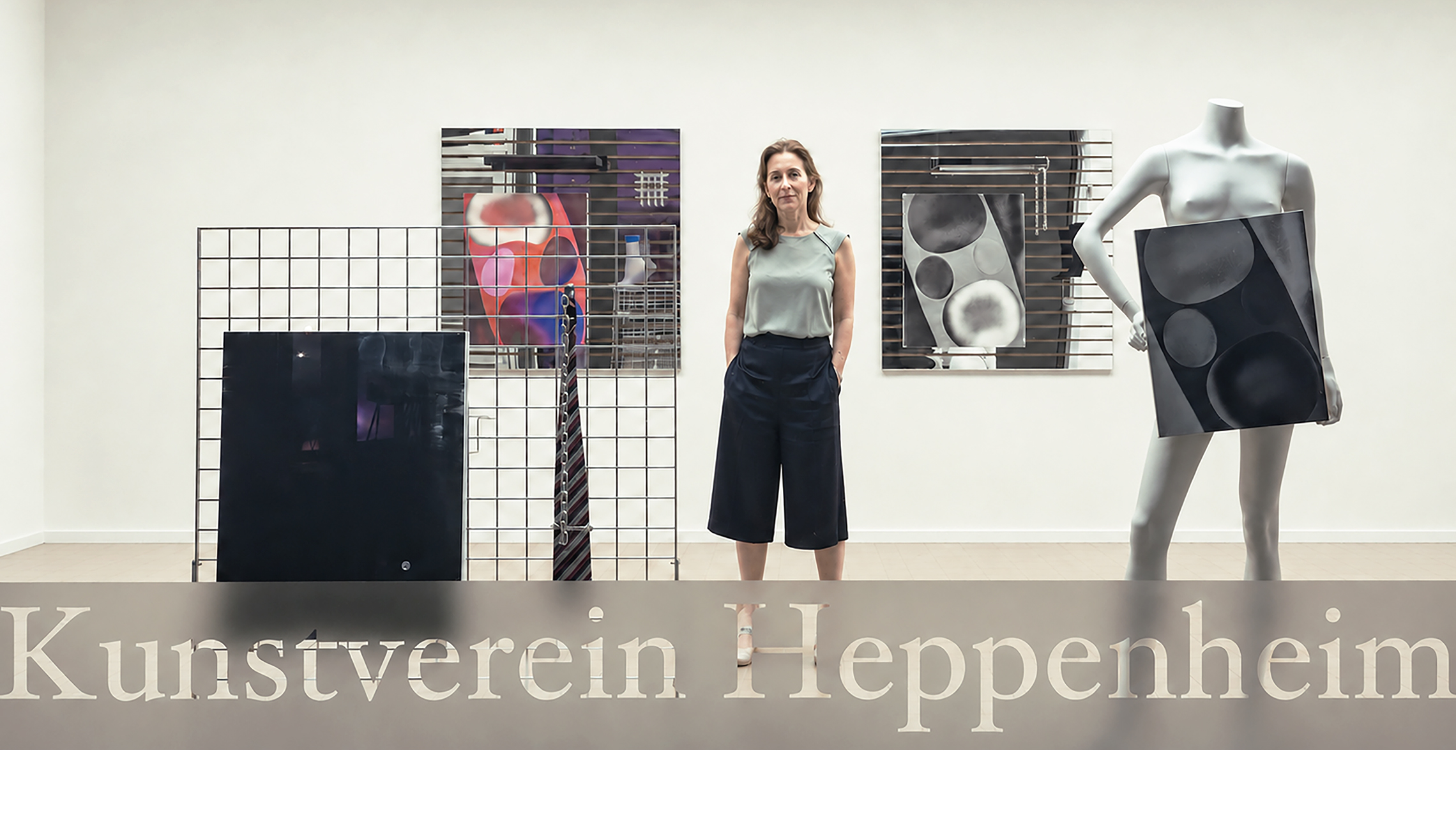
The exhibition "Six Five Four Three Two" featuring works by the New York-based artist Josephine Meckseper at the Heppenheim Art Society.
 9 min read
In the new premises of Plateforme 10 in Lausanne, the Photo Elysée Museum can finally unfold its potential.
 12 min read