
 8 min read
 8 min read
The fact that Christiane Löhr lives in Prato has been my firm conviction since we met. Prato, a city in the northwest of Florence, was once one of the centers of the Italian textile industry. Its remnants are today continued by more than twenty thousand exiled Chinese who form the third largest Chinese enclave in Europe here in Paris and Milan. In such a city there are plenty of idle industrial ruins. No question, then: Christiane’s studio will impress us just by the sheer number of its square meters. We will find it in an exciting neighborhood of the city center. And the monthly rent will make any artist north of the Alps blush with envy.
That is of course a mistake.
We have to get out of the city this very fresh morning. State road It leads northeast and winds through a valley that follows the course of the Bisenzio river. Here too, in the valley floor along the riverbank, there are numerous commercial ruins that tell of the size of the textile industry that used to be here. Somewhere, a few kilometers behind Vaiano, we leave the road; now we are going up the mountain. The development ends after only a few meters, and the track that leads diagonally up the slope becomes so narrow that the mere thought of oncoming traffic makes our faces sweat. At some point, a small church appears in front of us on the slope; it is partially built and apparently being renovated. Directly above it, two houses cling to the slope: here Christiane Löhr lives with her partner Salvatore Mazza.
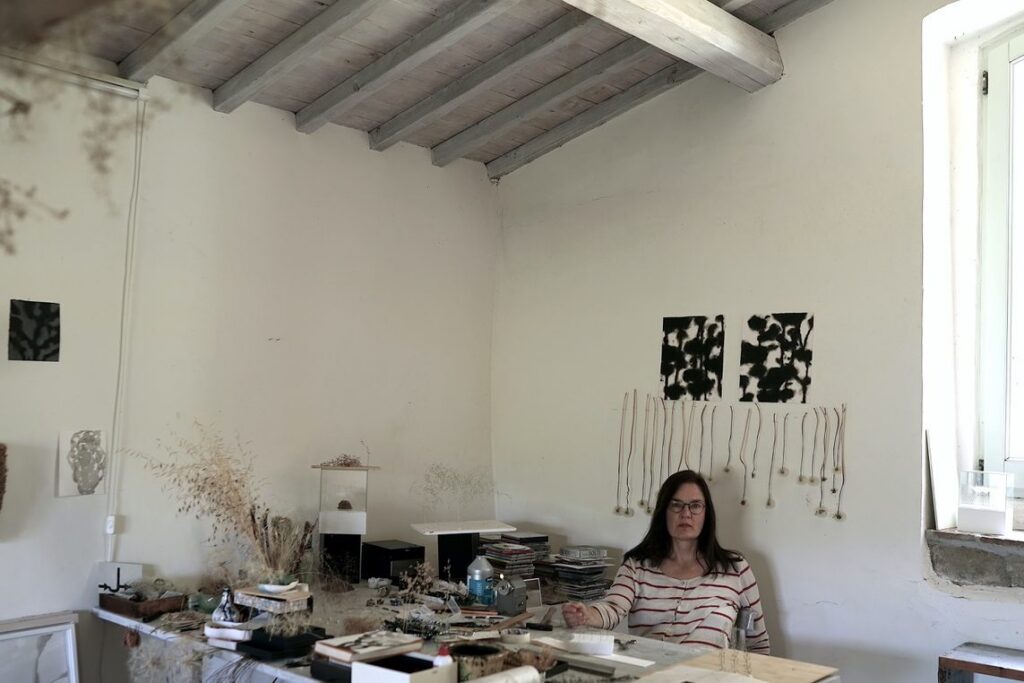

We are greeted with homemade cake and while sipping hot coffee, we learn that chestnut trees were roasted in the kitchen in the past. Originally, the property housed the farmhouse belonging to the chapel, which was also connected to a small agricultural business. The house is quaint and cozy, then we head over to the studio, where the barn was once located. It is located on the other side of the terrace. It opens onto the hillside, overlooking olive trees and a grove of trees down into the valley, and when you lift your gaze again, you see the ruins of a fortress on the tip of a mountain peak in the middle of the valley. The sun shines, but the cool moisture from the last rains sits in the crevices of the rocks. Furthermore, here on the hillside you can feel the wind. The former barn houses storage and a workshop on the ground floor, and into the studio we go up to the first floor. There, large-format paper hangs on the wall, still blank but ready to receive one of Christiane’s oil-pastel drawings. Through the large window, once again, the ruins of the fortress are visible. The room seems to hold the potential that only true isolation can offer.
Even when you can feel how much heart and soul Christiane put into the previous one Fattoria Since it connects, it is no coincidence that it quickly comes up as a choice for nearby airports. "It's a 45-minute drive to the airport in Florence," we learn, and so does the Bologna Airport It’s not very far away. As much as the rural tranquility of her home may impress us, the place wouldn’t be the one she would choose if she couldn’t leave it behind: as quickly as possible, as uncomplicated as possible, even if it means overcoming great distances. On the day of our visit, she will leave for Sardinia, but her work also takes her back to countries like Japan, the USA, and of course Germany. Because despite the good transport connections of her Italian home, there is still a second base in Germany. And that’s Cologne.
In the Maarweg in the Cologne district of Braunsfeld, Christiane Löhr has a second studio that she uses when she is in the Rhineland. This is something she does quite often, because the Rhine Valley with its dense museum landscape, the galleries represented here, the numerous art associations and off-space venues is an important hub of the art scene. Her Cologne gallery owner Werner Klein is also based here; in nearby Düsseldorf she is a member of the North Rhine-Westphalian Academy of Sciences and Arts. From here, she can better control and prepare those aspects of her activities that take place in Germany than from Italy. For example, the solo show at the Arp Museum in Rolandseck, which opens on October 8 and is already casting its shadow.
Because I have known Christiane for a long time, I remember that she hardly ever gives me direct answers to questions about her art. As a questioner, I have to slowly work out answers that are comprehensible to me. I have to test out different possibilities, also by asking questions and trying to let myself be absorbed by what I am given. Unlike many of her colleagues, she does not add any additional textual dimensions to the titles of her works. She sticks to what is already visible and provides rather descriptive factual information that offers little to no contribution to arbitrary interpretation. Her works are titled "Small Dreieckkuppel" or "Small cylindrical square" or, like all her papers, completely omit a title. This way, her works can be conveyed primarily through the visual aspect.
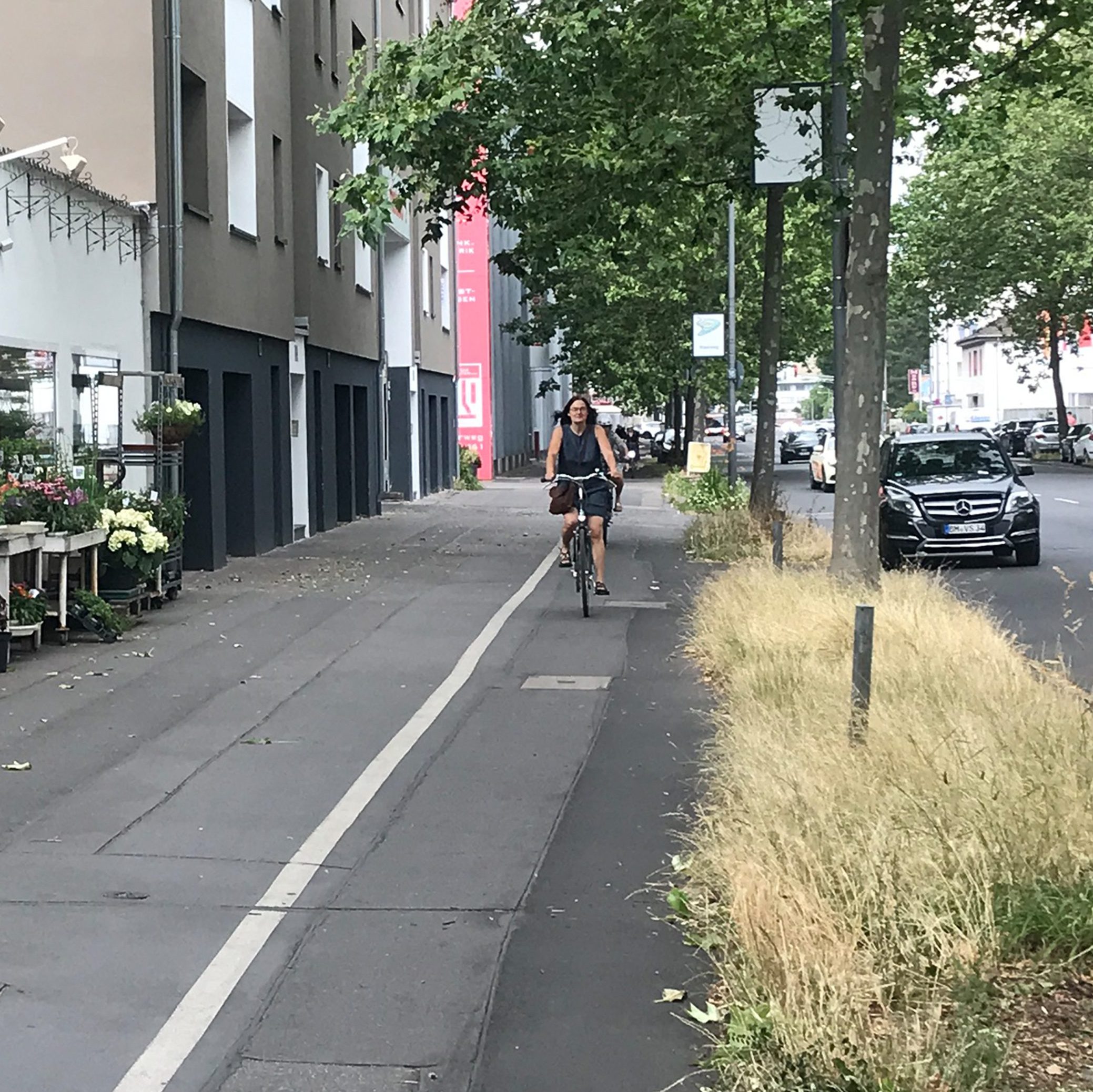
Of course I can, and indeed must, ask Christiane what these two places – one in Italy, the other in the Rhineland – mean to her. Her answer comes quickly and does not refer to her personal feelings, but immediately to her work as an artist without my intervention: "When you move your work, something happens to your work." Of course I would like to know more, but first it is clear that there is a difference between the two places and that difference concerns the background of her work.
Work is the constant element. Because it accompanies her wherever she goes. Of course, one cannot take this literally: there is no suitcase or travel bag that she has to open just to continue with one of her sculptures or drawings. It is the work in the mind that changes with the circumstances.
That makes sense to me. Cologne and Düsseldorf are both cities with a very vibrant art scene, with and without. DC Open, Art Düsseldorf and Artcologne There are countless opportunities to experience art, attend openings and vernissages, and meet people who have a significant impact on the operation of the gallery at almost every season. I know that despite her rather reserved nature, Christiane moves like a fish in water in this environment; that she is a sought-after guest because colleagues, curators, and art dealers appreciate her work. For me, it is therefore clear that Cologne (in collaboration with Düsseldorf) provides what a metropolis needs to offer to artists: opportunities for reproduction, opportunities to expand the network, and the ability to stay in touch with one another.
And it seems to me that, against this background, the function of the Fattoria On the hillside above the valley of the Bisenzio: Here, Christiane searches the surrounding nature for the material for her sculptures; for these she needs fly seeds, plant stems, twigs, tree blossoms, horse and dog hair. And despite the internet and mobile phone, this place offers a place of retreat that allows concentration and reflection, which brings the tranquility in which artistic work can flourish.
But that's also a mistake. Because it's exactly the opposite. "In Cologne I am more organized; in Italy I blend more with my surroundings." Because in Cologne I have a lot of friends who are like-minded people, and in Italy I have a lot of friends who are not like-minded people. Fattoria Northwest of Prato, living and working come together, so life there offers some opportunities to get distracted – whether by working on the house or just by the cat that wanders across the terrace during our visit.
In Cologne, however, the mere journey to the studio in a structured manner brings with it the opportunity to build up the concentration necessary for work. And the numerous appointments that must be attended here impose discipline. And she does not seek out her material; rather, she finds it. For that, there is no need to wander through the rural landscape around the former parish house. Material also flourishes in front of the parked cars behind the sun-drenched wall: "You look in the distance and have it in front of your eyes."
Christiane Löhr
Symmetries of the Saten
Arp Museum / Rolandseck Train Station
October 8, 2023 – January 28, 2024
https://arpmuseum.org/ausstellungen/wechselausstellungen/vorschau/christiane-loehr.html
Further articles from the series "Province or Metropolitan Area":
"What I have always been doing here, and have been doing from the very beginning, is photography!"Anne Schwalbe in Werben an der Elbe. The Berlin-born artist Anne Schwalbe has been traveling to Werben for the past 20 years and photographing landscapes: the Elbe river and the surrounding nature, gardens. A few years ago she bought an approximately 200-year-old vicarage in the smallest Hanseatic city on the Elbe, which she renovated and from which she has been photographing the river and the surrounding nature for the past 10 years…
Artist's colony for a timeVisiting the Mecklenburg Artist House Schloss Plüschow. It was a few years before the turn of the century when the artist Udo Rathke discovered the manor house Schloss Plüschow in the town of the same name in Mecklenburg and soon afterwards began living and working there. Miro Zahra, who, like Rathke, studied at the Berlin-Weißensee Art Academy in the 1980s, learned about this from Rathke…
"I can think not in terms of limits, but in terms of possibilities"A visit to Tilo Schulz in the Uckermark region It was in 2015 when the artist Tilo Schulz and his wife Sarah Johann, the handbag designer and owner of her own label, first traveled from Berlin to the village of Schönermark in the Uckermark region. A friend of theirs had just bought a house there, a friend of theirs, a…
World Heritage Site Völklinger Hütte: Spectacular Son-et-Lumière Art
 1 min read
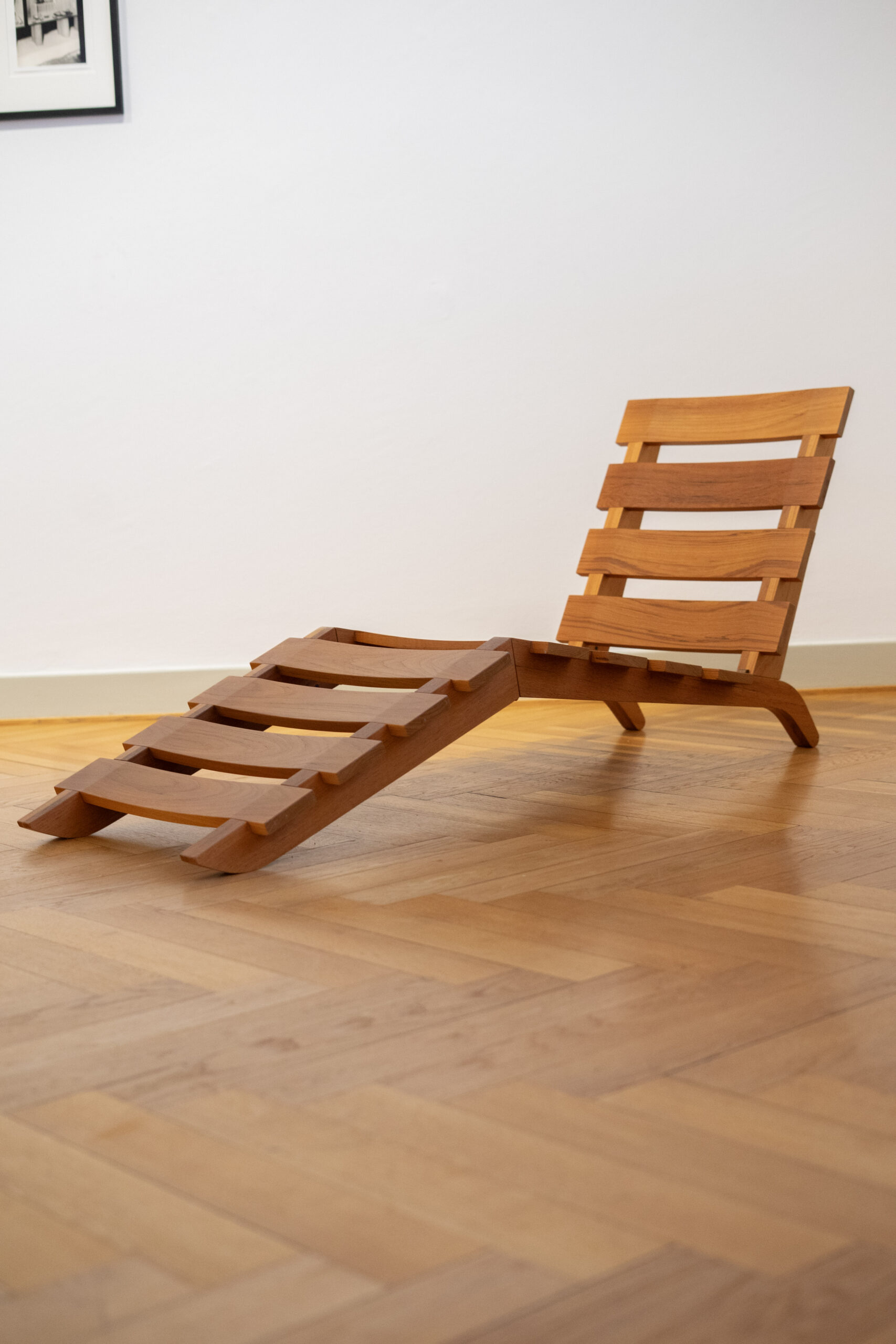
The Kunstmuseen Krefeld are dedicating the first retrospective in Germany to Charlotte Perriand’s multifaceted and astonishingly contemporary work.
 7 min read
The exhibition "Six Five Four Three Two" featuring works by the New York-based artist Josephine Meckseper at the Heppenheim Art Society.
 9 min read