 10 min read
 10 min read
It was in 2015 when the artist Tilo Schulz and his wife Sarah Johann, the handbag designer and owner of her own label, first traveled from Berlin to the village of Schönermark in the Uckermark region. A friend of theirs had just bought a house there; a well-known art collector had moved out of Berlin some time earlier to this small town, which is lined with vast meadows and wind turbines. The house, built in 1860 of brick and subsequently dilapidated, which was at that time on the market for sale in the neighborhood and which the couple observed during their excursion, did not immediately inspire a desire to own it. But the greenery of the property, which extended beyond endless meadows and fruit trees behind the old village house, left the two unswayed. In 2017, Schulz and Johann then decided to buy the small house in the Uckermark region. With the approval of a grant, they were able to bring the house back to life, preserve the original building structure, and make this place their place of work and living space. "I had no idea how much physical work I would have to put in over the years to renovate this house with my own hands and with the help of others," said Schulz. "But if we had stayed in Berlin, our situation would have gotten worse rather than better, for example due to rising rents and the disappearance of studio spaces due to gentrification. Now we have a house that houses Sarah's workshop and studio and my studio—a secure place that grows with every planting in the garden."
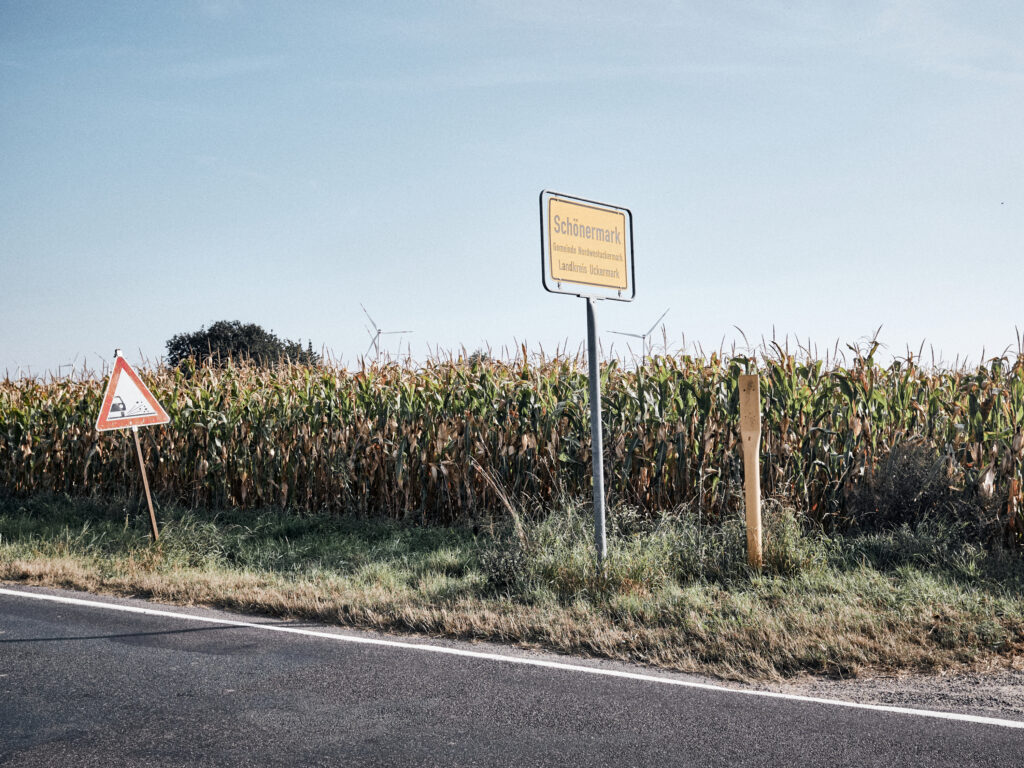
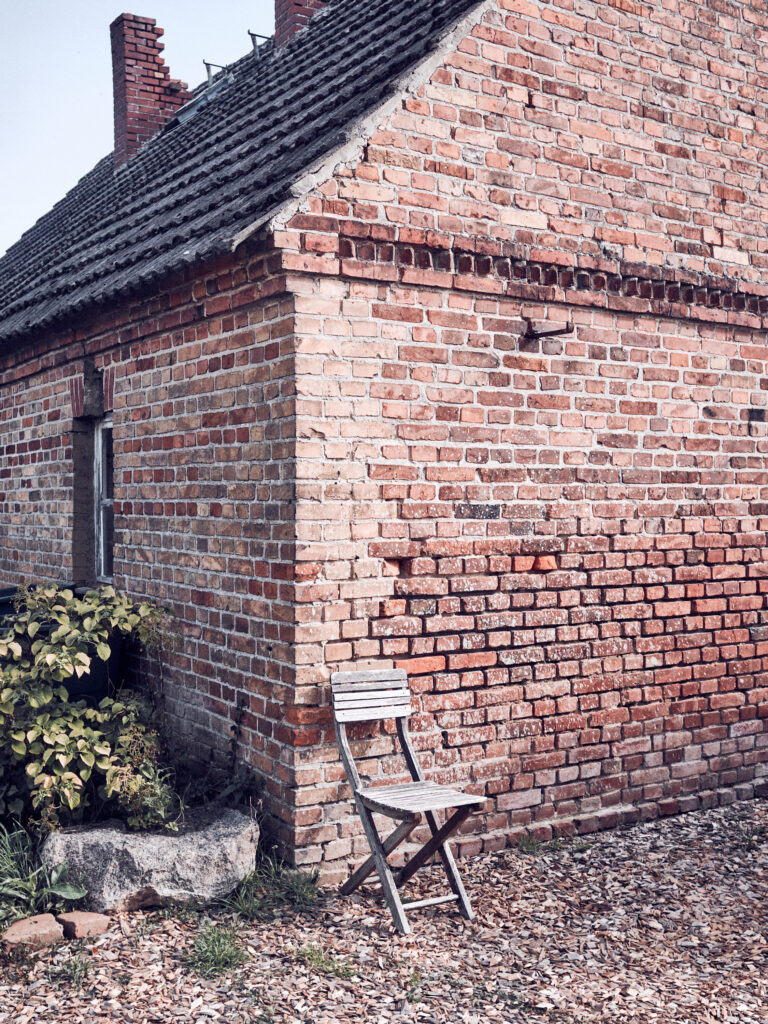
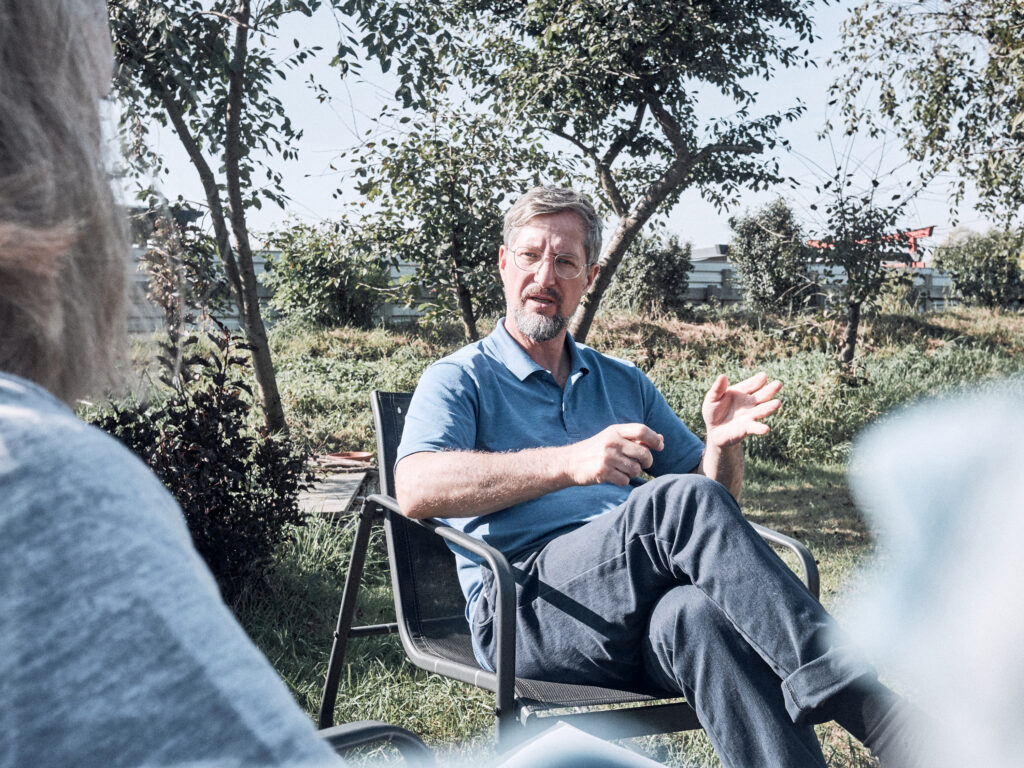
It is a sunny morning in early autumn when I meet Tilo Schulz in Schönermark at the house located on a side road. There he tells me about the decision to move to the country, about the renovations of the building and the possibilities that can be found here through a side building attached to the house. Passing by a stone ruin behind the main house, with freshly brewed lemon balm tea on the table from the garden, we sit outside near the old cherry tree. The view leads out into the vastness of the horizon, with cranes passing by, while he tells me: "I was born and raised in Leipzig in 1972 and started producing my art there. The discussions of many places and contexts have shaped me. This is still largely the case today."
It was the social and personal changes associated with the 1989 revolution that brought Tilo Schulz, an autodidact, into the world of art. During the course of his first exhibition in a psychosocial day care center in Leipzig, Schulz happened to meet the artist Olaf Nicolai, through whom further exhibition opportunities subsequently arose and whose understanding of an expanded concept of art fundamentally influenced Schulz. A few months later, as the youngest participating artist at the Artists' Association Dresden Organized exhibition abstract a grant prize of 30,000 DM. It was clear to him that he wanted to invest the money in developing his artistic language. At that time, Schulz worked with painted colorboards, on the basis of which he treated the fixed panel image in a freely combinable way, for example by assembling the colorboards as serial fields on the wall or as sculpture in the space. Form painting He called this. By changing the reference points through a changing interaction with the image elements in the exhibition space and thus making the change of location more active part of the viewing process, he evoked a fluid shift in perspective in the perception of his art.
"I was searching for a language," says Tilo Schulz. From a languagelessness that emerged from the changes of the turn of the century, Figurative Art became the first language. The curating he undertook shortly thereafter, but which at that time (as today) still perceived as a gathering of people and things, came second. Later, writing and working on the text became part of his work. Tilo Schulz' art does not serve the requirement of recognition – its methods are linked to what he wants to work on in terms of content: "I start from the problem and look for a solution. This can be a drawing, a painting, a sculptural work, a lecture, or a collaboration with someone else." Often I develop works for specific situations. I think that I am still searching for language today and therefore constantly try to choose different approaches for my work, which is why it is constantly changing." The artist Tilo Schulz is seen with his reflective attitude towards his own art production and the curating of works by other artists in a way that is a reflection of his work as a coach in the sport of boxing, which he pursued as a teenager. "In boxing, it is about cooperation. In the interaction of the bodies that occur during boxing, architectural figures and forms emerge. I approach art with the awareness that we can achieve nothing unless we are in interaction with one another."
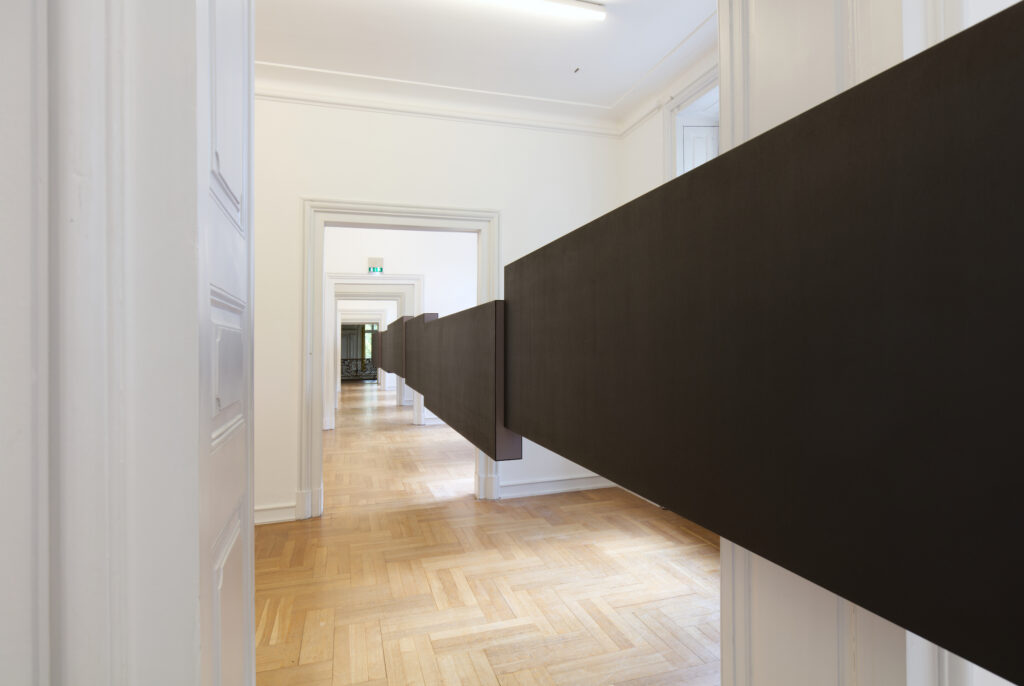
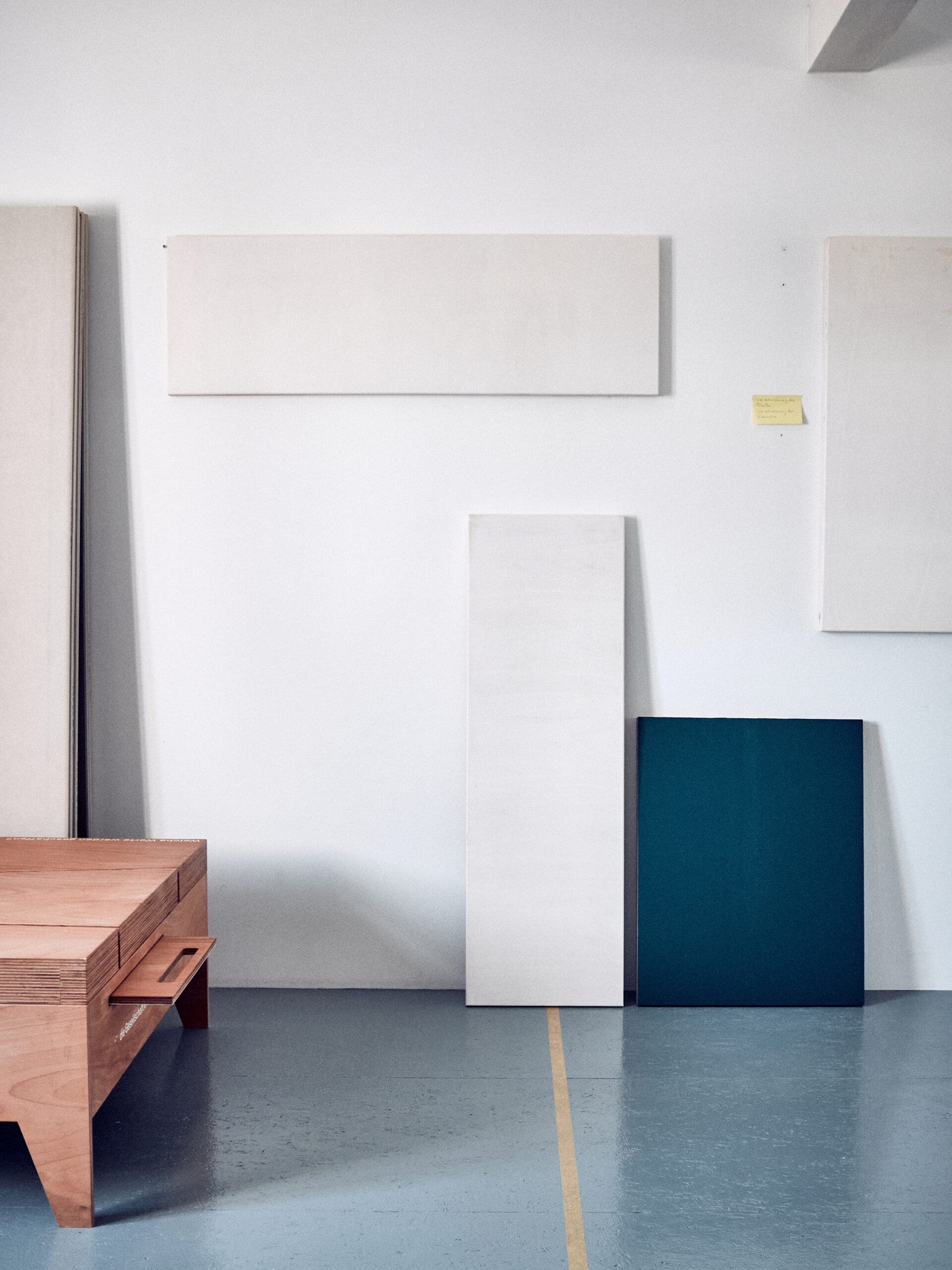
For example, by striving in curated projects to bring out the individual qualities of a work while also allowing them to interact in context with those of other artists. Or, by having his own works enter into a dialogue with those of other artists – as in his work Your blinds don't keep me from, which he will carry out in 2022/23 as part of the long-term project Workshop Morsbroich (2022-2026) implemented at the Morsbroich Museum in Leverkusen, where he had been the day before our conversation. There, Tilo Schulz erected a barrier on the upper floor of the museum that extends over several exhibition rooms and has been modified by the intervention of further artists. Schulz built the numerous bodies of the sculpture encased in black ink that form the basis of the work in Schönermark in his studio. It is a preliminary study for his work, which will be completed by the end of 2026. Workshop Morsbroich Projects to be realized for the Morsbroich Museum: the renovation of the courtyard and garden of the historic castle complex.
"I still have a Berlin gallery owner in my mind who said: 'What, are you moving to the countryside? Please don't do peasant art right now!' But living in the countryside brings to mind many more considerations for my own working method: which materials do I actually use, what is their sustainability like? How can the packaging of artworks be solved in a completely different way? These questions arise for me as I concretely address ecological and sustainable issues here, not just theoretically – and I am facing them."
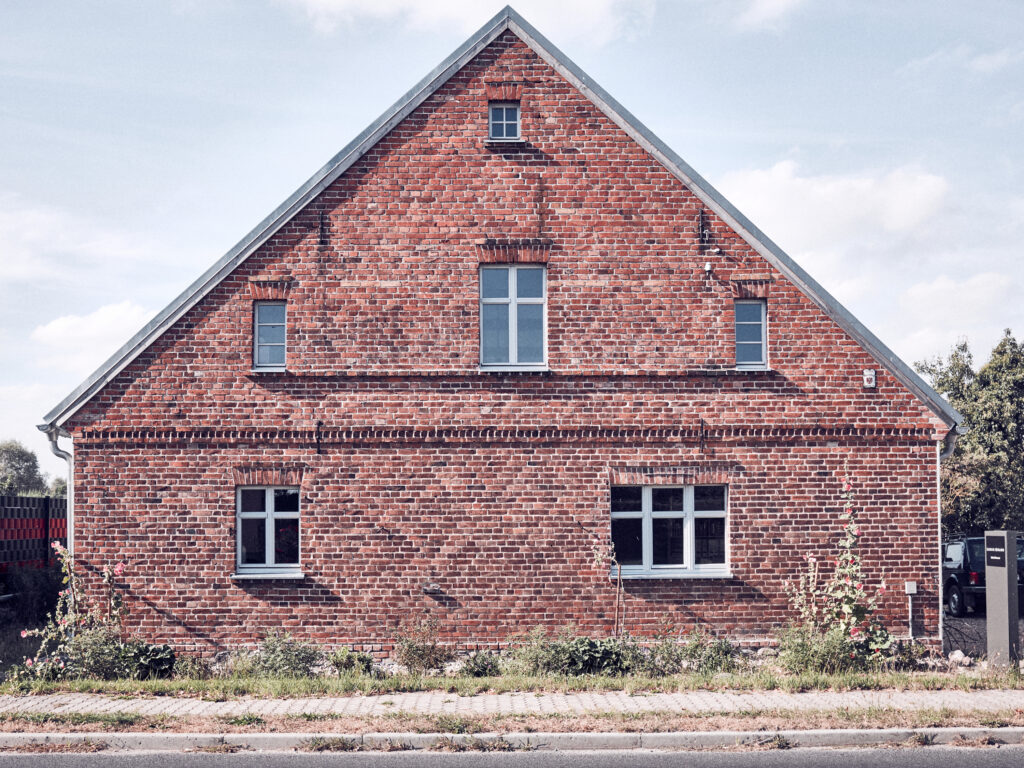
The artist's reflections also encompass the idea of regional production, which his wife Sarah Johann has already begun implementing with her handbag company: she processes all materials locally in her workshop, for which Schulz has dug deeper into the ground of the house, which is lined with timber beams, and created a large studio space on the ground floor from four rooms, where Johann sews and recently also presents leather and textiles. For her current campaign, she has implemented a photo shoot in the region. Sarah Johann and Tilo Schulz perceive the place where they live and the space they have created with their spatial structure as an opportunity and an offer to see and practice things differently. Schulz notes: "Part of my being is work, but also being here. This conscious shift is a change that this place has produced." Against this background, it is an interesting idea for me to say: Thinking about the sustainability of the meadows on this site with apple trees of old varieties that were cultivated in Riga in the 19th century is also 30 percent of my working time, because it involves important social issues."
Schulz adds that he does not produce explicitly political art. However, the aspects he deals with in his work always reflect different social contexts. He is interested in a way of thinking about society – as a human being and in his artistic gestures. This is also the case in the Uckermark region where Schulz and Johann live. Although it is a sparsely populated region with few public transport connections, the fact that they and Tilo Schulz live there does not make them isolated; they want to give something back to the region through their actions. Another possibility could be the small annex where Tilo Schulz sees a place of seeking dialogue and mediation. "Art will play a role, but not in the format of an exhibition. The fundamental question is: What is the need? How can this become a place of negotiation? But first we need to create the space, renovate the annex, and for that we still need financial investment."
As early as the beginning of his artistic practice, Tilo Schulz, in parallel with his work, explored other possibilities for artistic language through mediation. Around 1997, when he participated in the Art at the Leipzig Fair Organized bus trips, or in 1998 at the Manifesta 2 in Luxembourg, where he brought written images into the public space as subtle stimuli for action. It is important for Schulz to refer to the existing and to complement this through gentle interventions, sharpening the gaze through a specific (artistic) setting – both in life and in the art system.
By now the sun has set. Before we enter the house to the studio of Tilo Schulz, which is reached via a large staircase, where he is showing me his conceptually realistic text piece for the staging A brief poem of movement In the context of his Morsbroich sculpture, the artist digs into the earth and pulls out a handful of fresh potatoes for our shared lunch. "City or country: It's hard for me to balance one with the other. I think there needs to be a balance between city and country again, and that's important for the future."
The artist on the web: https://www.tiloschulz.com/
Further articles from the series "Province or Metropolitan Area":
"What I have always been doing here, and have been doing from the very beginning, is photography!"Anne Schwalbe in Werben an der Elbe. The Berlin-born artist Anne Schwalbe has been traveling to Werben for the past 20 years and photographing landscapes: the Elbe river and the surrounding nature, gardens. A few years ago she bought an approximately 200-year-old vicarage in the smallest Hanseatic city on the Elbe, which she renovated and from which she has been photographing the river and the surrounding nature for the past 10 years…
Staying in motionChristiane Löhr lives in a hamlet in northern Tuscany. It was my firm conviction that Christiane Löhr lived in Prato from the moment we met. Prato, a city in the northwest of Florence, was once one of the centers of the Italian textile industry. Its remains are today occupied by more than twenty thousand Chinese exiles who come here from Paris and Milan to work in the third-largest…
Artist's colony for a timeVisiting the Mecklenburg Artist House Schloss Plüschow. It was a few years before the turn of the century when the artist Udo Rathke discovered the manor house Schloss Plüschow in the town of the same name in Mecklenburg and soon afterwards began living and working there. Miro Zahra, who, like Rathke, studied at the Berlin-Weißensee Art Academy in the 1980s, learned about this from Rathke…
The Kunstmuseen Krefeld are dedicating the first retrospective in Germany to Charlotte Perriand’s multifaceted and astonishingly contemporary work.
 7 min read
World Heritage Site Völklinger Hütte: Spectacular Son-et-Lumière Art
 1 min read
The exhibition "Six Five Four Three Two" featuring works by the New York-based artist Josephine Meckseper at the Heppenheim Art Society.
 9 min read